








Cleaning Machine Installation Steps
6. Place the cured cylinder into a cleanroom oven to stop curing. Increase the curing temperature to 40-50℃ and cure for 30 minutes, then increase to 60-70℃ and cure for another 30 minutes. Finally, increase to 80℃ and cure for 2 hours before allowing natural curing for 24 hours and then perform a connection test. The curing temperature is controlled by a programmable intelligent temperature controller. 7. After curing, stop testing the ultrasonic transducers. The adhesive impedance of each transducer (60W, 22, 25, 28KHZ) should be around 250Ω and not exceed 300Ω. Perform tests on the transducer characteristics (no noise allowed), and ensure that the impedance values of the ultrasonic transducers on the same cylinder are as close as possible to each other, not exceeding 20% of the average value (about ±50Ω). Remove and re-adhere any ultrasonic transducers that do not meet the requirements.
Maintenance Guidelines
Washing time is to be determined based on the degree of oil污 on the workpieces. 7. Close the filter drain valve when the recirculating filtration is turned off. 8. Regularly clean the oil sludge at the bottom of the washing tank. 9. In summer, if the equipment is not used for a long time (7 days), drain the liquid in the washing tank completely. In winter, ensure the tank does not freeze. 10. If there is a lot of dust in the workshop, use compressed air to clean the dust inside the electrical control cabinet monthly.
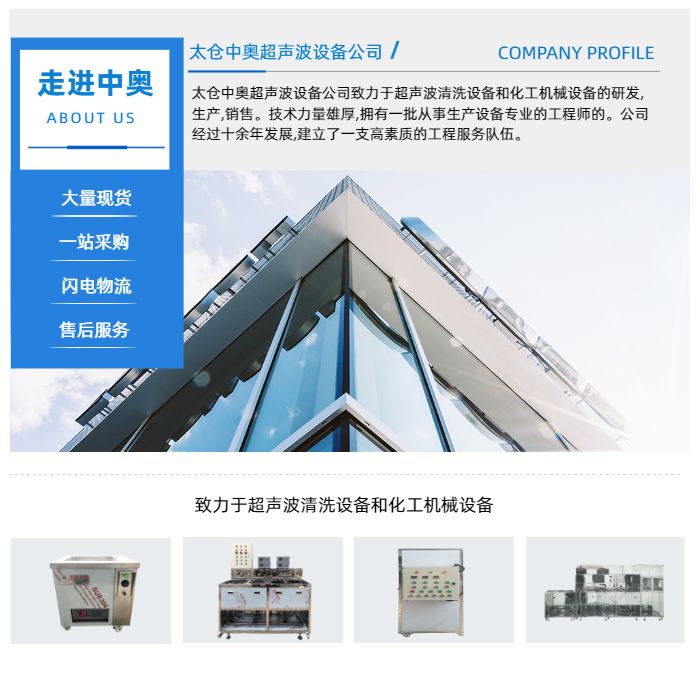
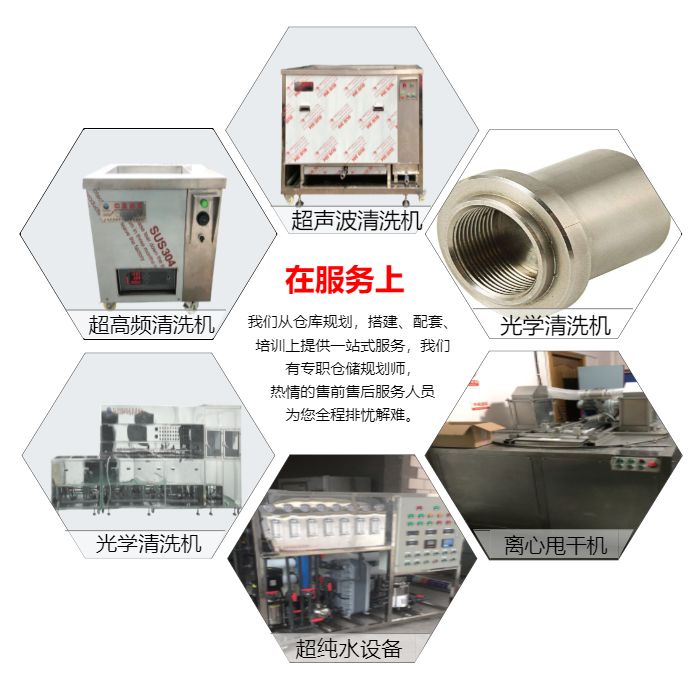
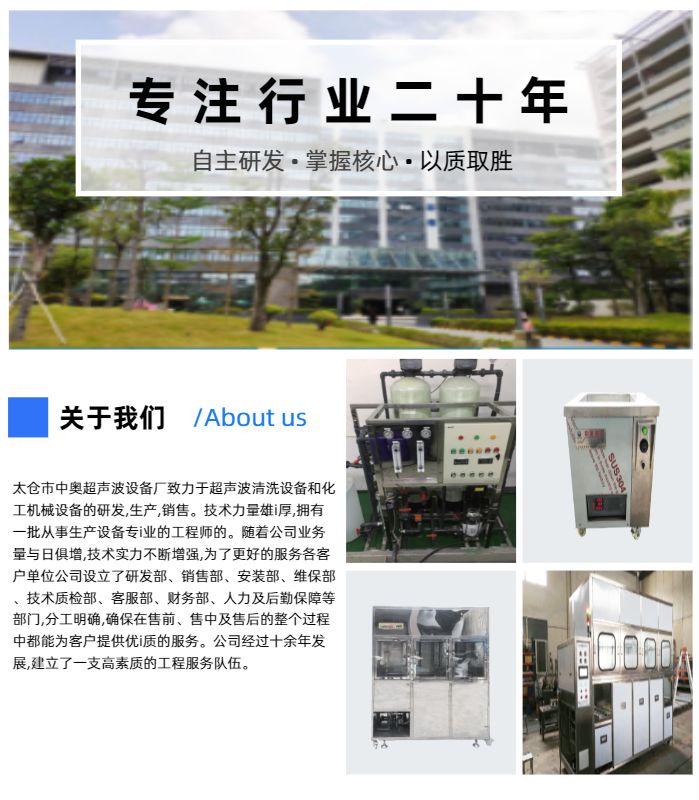
Wuxi Zhonglangao Ultrasonic Equipment Co., Ltd. is committed to the research, production, and sales of ultrasonic cleaning equipment and chemical machinery.
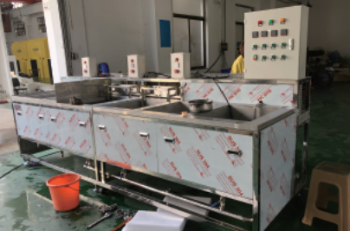
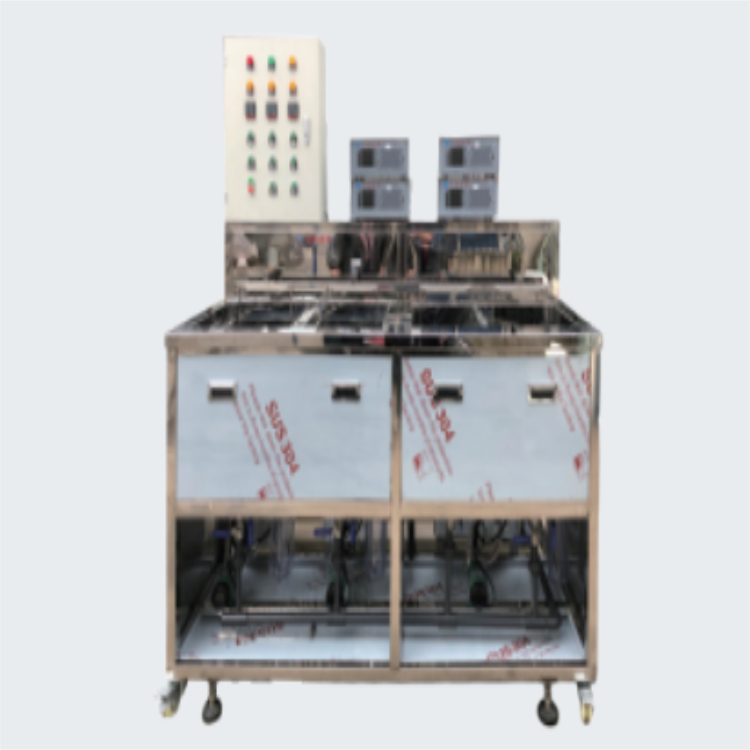
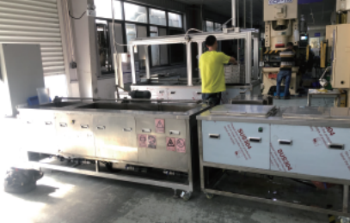
Ultrasonic Cleaning Machine High-Pressure Rinse
China commonly uses high-pressure washing pressures ranging from 1.5 to 2.0 MPa. Industrial ultrasonic equipment performs well in terms of cleaning efficiency and cost-effectiveness at such pressures. Overseas, high-pressure washing systems use higher pressures, typically around 5 MPa; when hot water is used, the pressure can be even higher (5 to 7 MPa). High-pressure washing is a specific application of high-pressure jet technology in cleaning. It is widely used internationally, and significant research has been conducted on the basic theories and applications of high-pressure jet technology. In China, high-pressure washing is applied to ship rust removal and the removal of marine organisms from the ship's exterior; the railway locomotive repair department has started using it to clean bogies and undercarriages, with excellent results, as it can remove dirt, rust, and old paint layers. One characteristic of high-pressure washing is that it typically uses plain water (untreated water) as the cleaning medium and does not require heating. To reduce environmental pollution and save water, wastewater is purified and reused through a waste water recycling system. The cost of high-pressure water washing is relatively low. It demands high specifications for the supply system (mainly pumps and their driving mechanisms) and the discharge system (mainly high-pressure pipes and their connecting devices). It must also be noted that high-pressure liquid columns or water columns can be harmful at close range to humans, so safety precautions must be taken during operation.
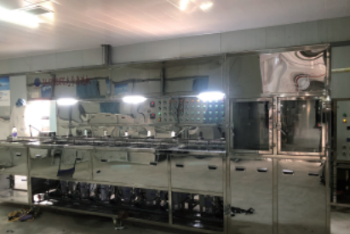
Industrial Ultrasonic Equipment - China Austria Ultrasonic Equipment (Image) provided by Taicang China Austria Ultrasonic Equipment Factory. Taicang China Austria Ultrasonic Equipment Factory is a company specializing in "mainly ultrasonic equipment, ultrasonic cleaning machines, drying equipment, and chillers." Adhering to the philosophy of "honest business operations and dedicated service," we offer better products and services. Welcome to call for inquiries! Contact Person: Yan Jiabing.