







The ancient name of Xiangmen was Jiangmen. "The Jiangmen is also known as the Goujian Gate. King Helu had Goujian set up a foundry here to forge swords." It was named after the many artisans living nearby.
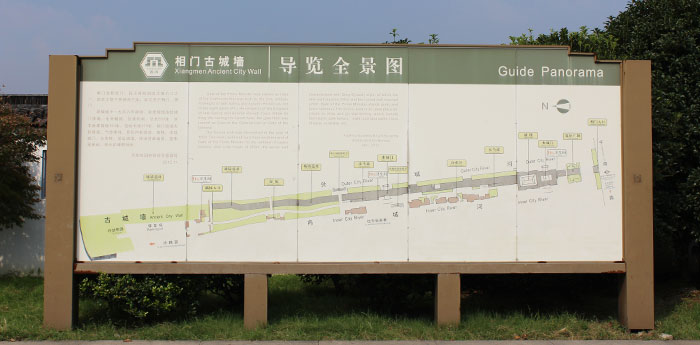
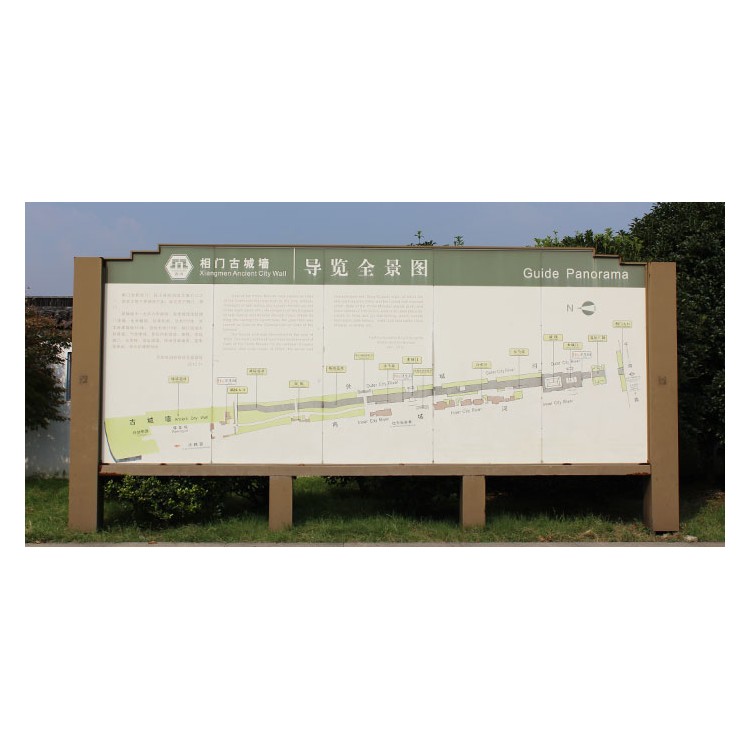
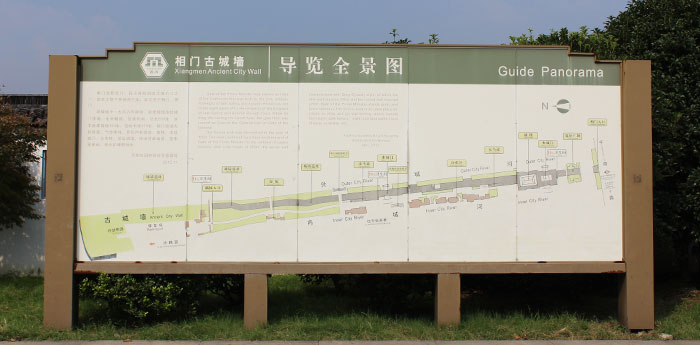
On September 27, 2012, with the formal completion of the Suzhou Ancient City Wall preservation and restoration project, the Xiangmen area has been revitalized. The Xiangmen section of the ancient city wall extends from the Gengjiang Road to the E Garden, with the newly constructed section being 370 meters long. Including the northern section ruins, the total length is nearly 650 meters. The base width of the wall is 12 meters, while the top width is 9 meters, with the city tower reaching 23.8 meters.
This massive structure has quite an appetite; the usage of city bricks alone reaches 400,000. In addition to some old bricks being reused, a considerable amount of "new bricks" have also been employed in the restoration of the ancient city wall.
There are eight water and land city gates in Suzhou, scattered throughout the ancient city area at key attractions. They are the Xumen, Panmen, Loumen, Qimen, Changmen, Jinmen, Pingmen, and Xiangmen. The newly repaired Xiangmen city tower stands at 23.6 meters tall with a top width of over 8 meters, constructed with 400,000 bricks, most of which were produced by the Lianmu Imperial Kiln. Some bricks were donated by citizens, and they bear the inscription "Supervised by the Suzhou Garden and Greening Administration Bureau, Made in the Year of the Snake at Suzhou Jinfeng Ancient Construction Brick and Tile Factory." There are also some bricks with faint or missing inscriptions, with locals saying those are the original old bricks.
.jpg)