









Picking typically involves three methods: order-by-order picking, batch picking, and composite picking. Order-by-order picking involves picking items according to each individual order; batch picking accumulates multiple orders into a batch, totals the quantities, and then picks items based on the consolidated picking list before sorting; composite picking leverages the strengths of both methods and integrates them into the picking process.
1. Create Picking List - The picking list is generated and printed by the system after processing the customer's order information in the warehouse. It indicates storage locations and arranges item numbers in sequence according to these locations, allowing staff to pick items more efficiently, thereby shortening picking paths and enhancing picking operation efficiency.
2. Determine Picking Routes: The warehouse, based on the product codes and storage location numbers indicated on the picking list, can pinpoint the exact location of the goods and establish a reasonable picking route for pickers to carry out their picking tasks. (PS: The basis for assigning pickers to perform picking tasks lies in the warehouse staff's familiarity with the basic warehouse conditions, as well as regular foundational training.)
3. Post-Picking Sorting: Items picked are then sorted and grouped according to different customers or delivery routes. For Wuhan warehousing outsourcing, some goods that require processing must be sorted by processing methods before being dispatched. After processing, they are sorted and dispatched in a certain manner. The process of sorting diverse items is complex and challenging, prone to errors. It is crucial to enhance operational accuracy based on coordinated planning and economies of scale. When items are small in volume and light in weight, manual sorting can be employed, or mechanical assistance can be utilized, or automatic sorting machines can be used to automatically classify and aggregate the picked goods.
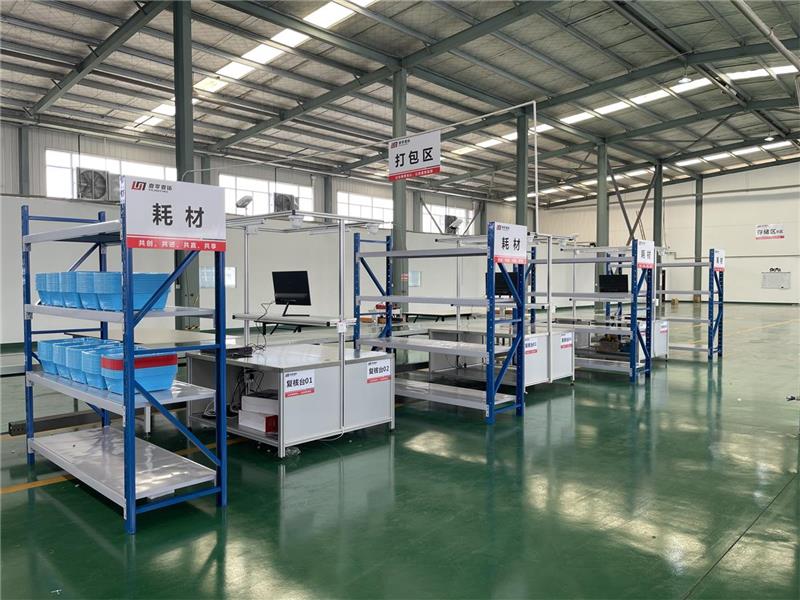
In recent years, with the continuous advancement of technology, e-commerce has experienced robust growth. As a new business model, e-commerce has widely permeated people's lives at this stage, and the e-commerce warehousing under this background has shown many distinct characteristics. Warehousing is a crucial link for the realization of e-commerce and plays a decisive role in the development level of e-commerce. Let's take a look at the characteristics of e-commerce warehousing together below.
1. Informationization and robust data processing capabilities
From the current development perspective, warehouse logistics systems are primarily focused on internal business management and data collection within the storage department. The level of informatization is continually improving. Warehouse management is centered on relatively simple material receiving and dispatching, with a rather single-functionality. Due to the enhanced informatization of the logistics system and the flow of information across the entire supply chain based on the internet, communication of information is very smooth.
2. High employee quality
Furthermore, the development of e-commerce has raised the quality requirements for employees. Personnel in warehousing and logistics need to enhance their knowledge and practical experience, particularly in the informatization and networking of logistics distribution. The full realization of logistics information automation and the formation of inter-enterprise sharing mechanisms are emphasized. Additionally, investments in e-commerce warehousing hardware and software facilities have been strengthened. These aspects will improve the accuracy and timeliness of logistics services.
3. Management System
Warehouse Management System primarily involves inquiries about e-commerce inventory and management of storage locations within the warehouse, along with basic data analysis for customer feedback. From a business management system perspective, it mainly applies to the operational layer in customer service, providing information like waybill inquiries and tracking. Information management is primarily achieved through computer systems, and the electronic accounting system allows customers to track shipping costs in real-time.

Regulations for Goods Security Management
1. Goods must be stacked according to the "Five Distance Principle," following safety stacking instructions on the packaging, ensuring classification, orderliness, stability, and height restrictions.
2. For goods with poor stability in packaging materials, items with sharp, diamond-shaped corners in packaging, and stacked goods that are excessively tall, perimeter fences and warning signs must be installed.
3. Prohibit goods from blocking fire facilities and fire escape routes.
4. Prevent Termite Infestation: Regular termite control inspections and treatments must be conducted in the warehouse. All staff members are required to inspect goods upon entry and exit. Entry and exit of goods infested with termites is strictly prohibited.
5. Ensure robust anti-theft measures within the warehouse area, secure all doors and windows effectively, prevent unauthorized personnel from entering, and implement a registration system for anyone entering the warehouse for operations or inspections. Warehouse staff must lock the main gate upon leaving the warehouse, and the main gate should not be entrusted to others carelessly.
6. Prior to the rainy season and typhoon season, check that the warehouse doors and windows are securely fastened, and that there are no leaks in the walls or roof. Address any issues promptly. Prepare ropes, tarpaulins, and other wind and flood prevention tools within the warehouse area. Additionally, closely monitor weather forecasts. If a typhoon is approaching, arrange for personnel to patrol and on-duty. Report emergencies immediately and organize rescue efforts to ensure the safety of personnel and property within the warehouse.
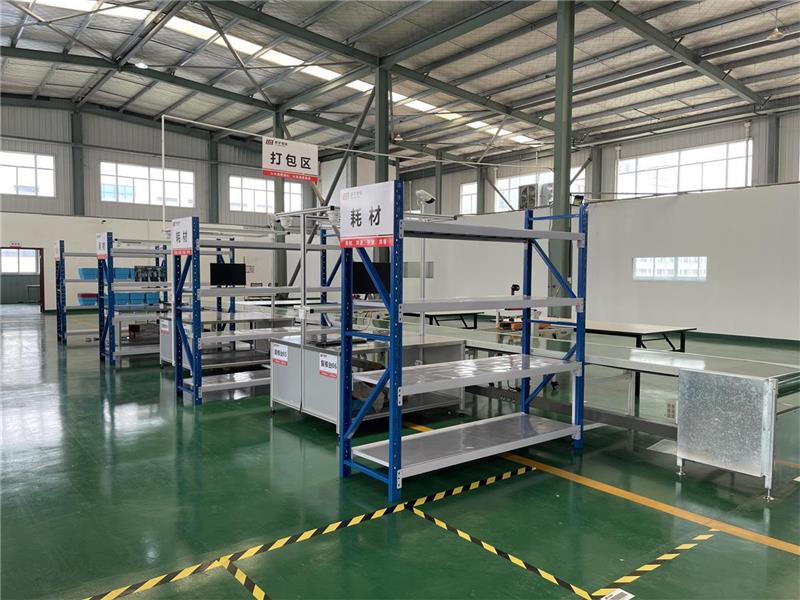
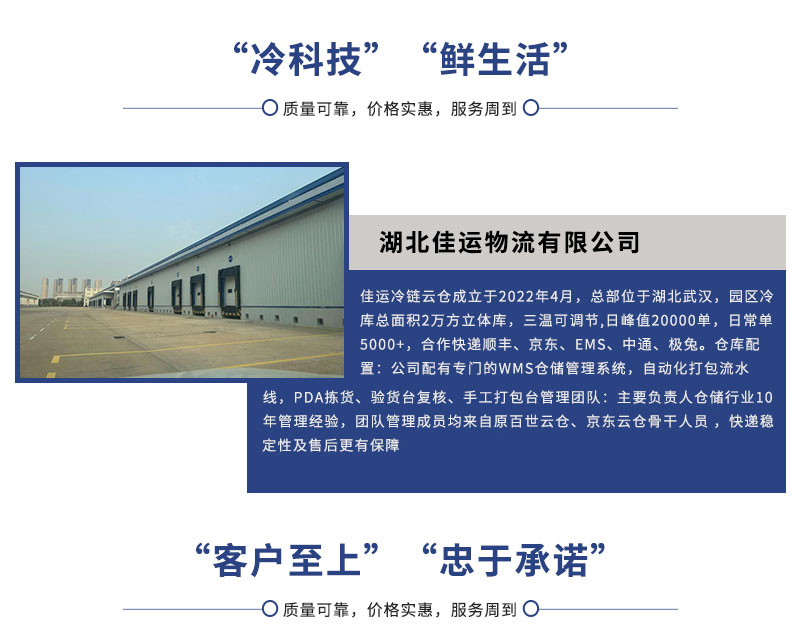
Wuhan Warehouse Outsourcing - Jiayun Cloud Warehouse (Online Inquiry) is provided by Hubei Jiayun Logistics Co., Ltd. Located in the Huarong District of Ezhou City, Hubei Province, at the No. 2 Warehouse of Wuhan Central China 10,000-ton Cold Chain Port. Navigating the surge of market economy, Jiayun Logistics has gained a favorable reputation in warehousing and distribution. The entire staff of Jiayun Logistics is eager to develop together with people of insight from all sectors, creating a beautiful future.