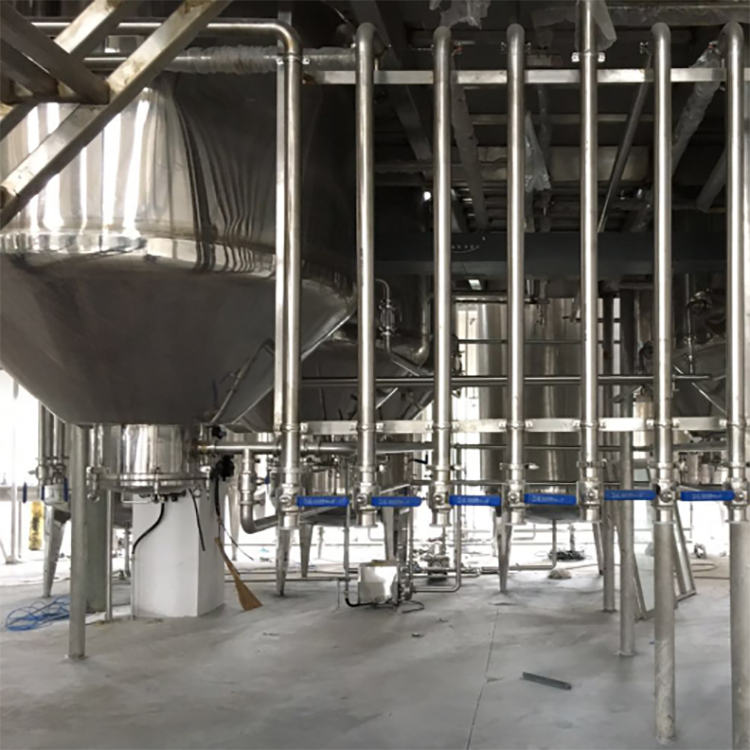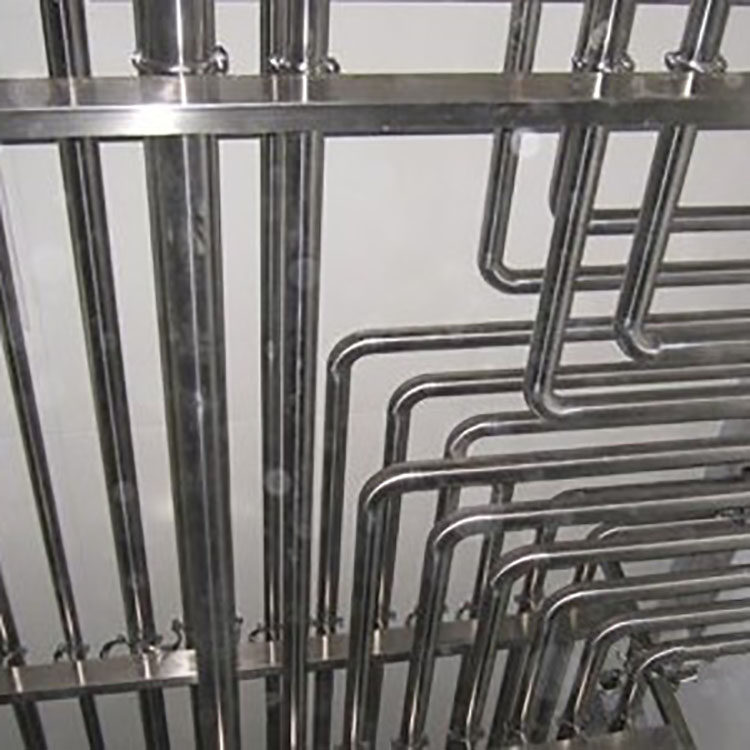

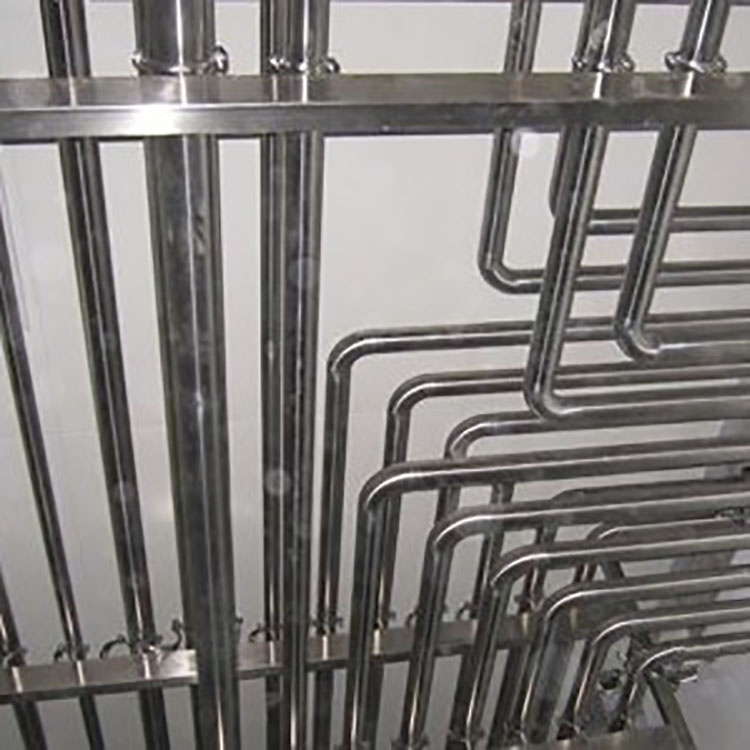
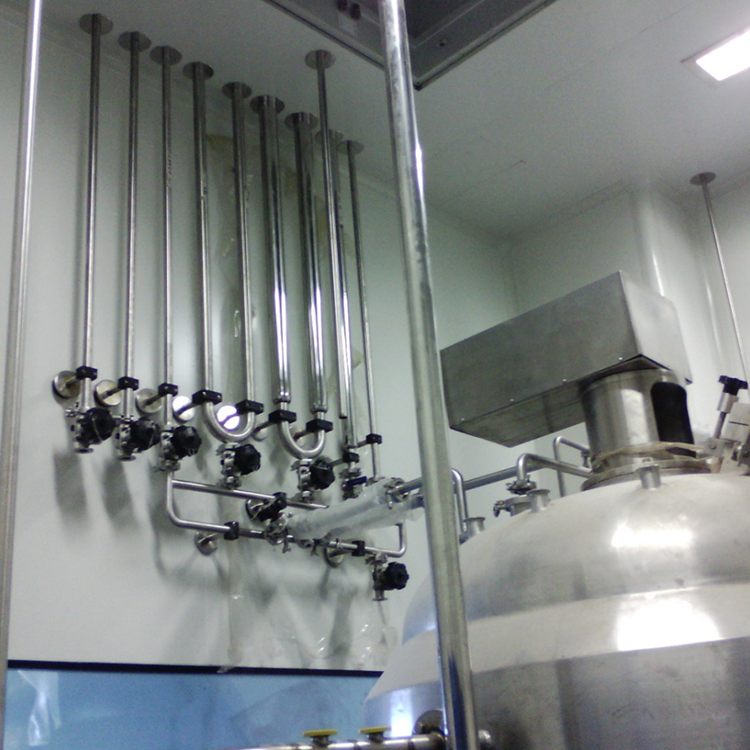
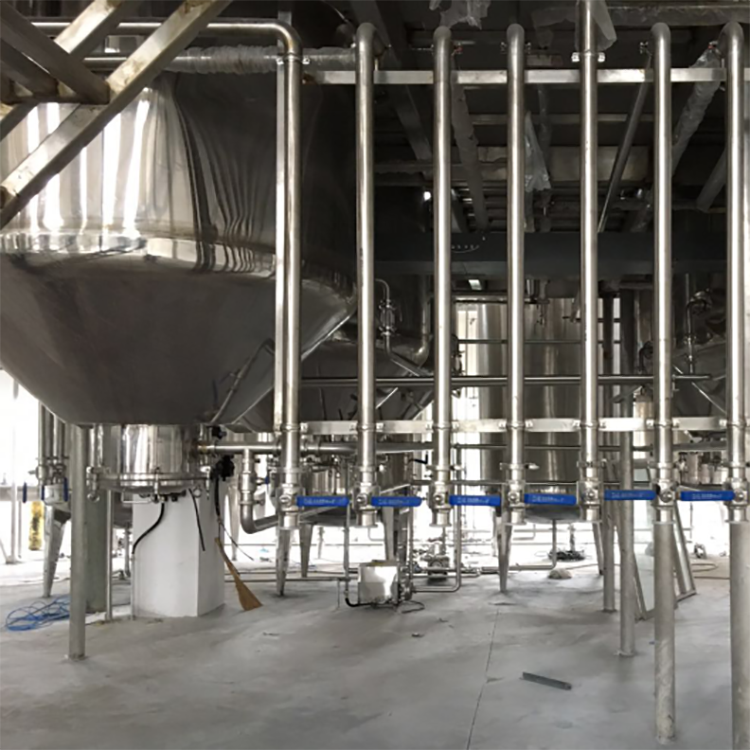







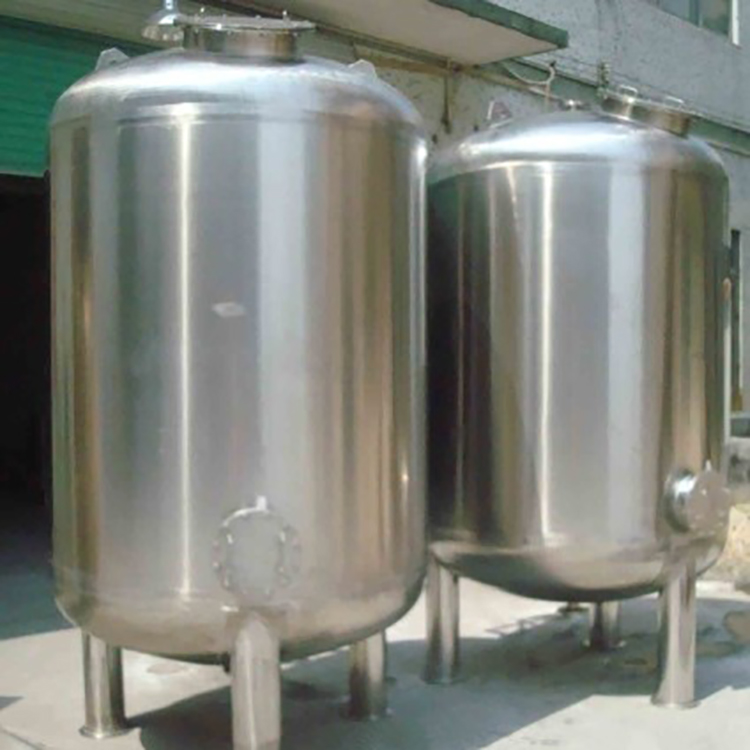
Purified water of high quality is prepared and stored in the purification water tank. It is then pumped to various usage points and recirculated back to the tank. During operation, the water quality and process are automatically controlled through elements such as level, temperature, conductivity, and flow rate.
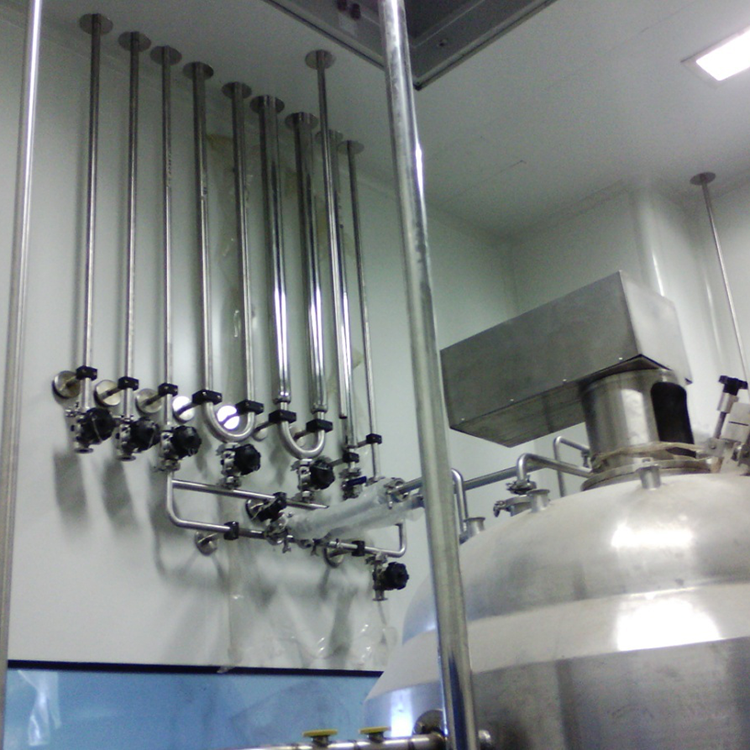
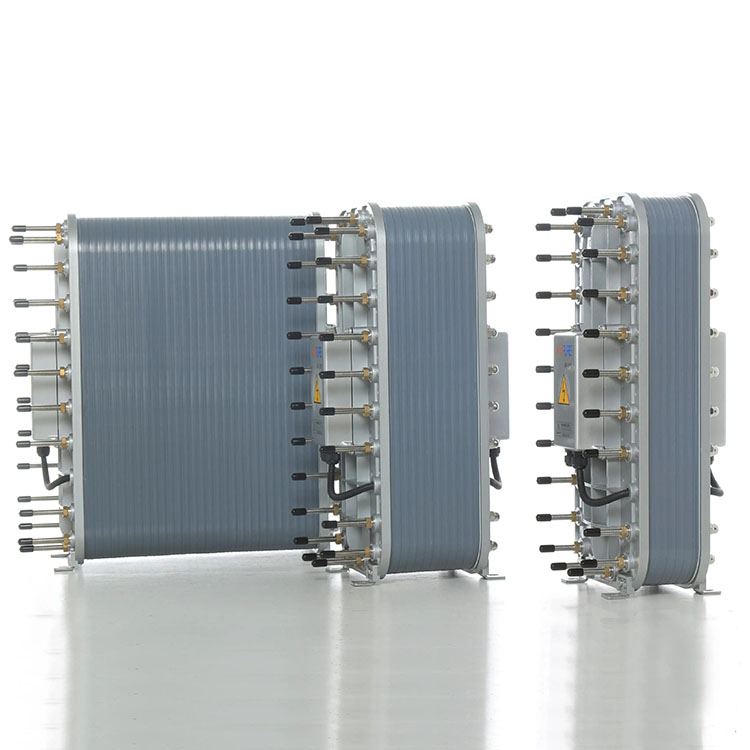
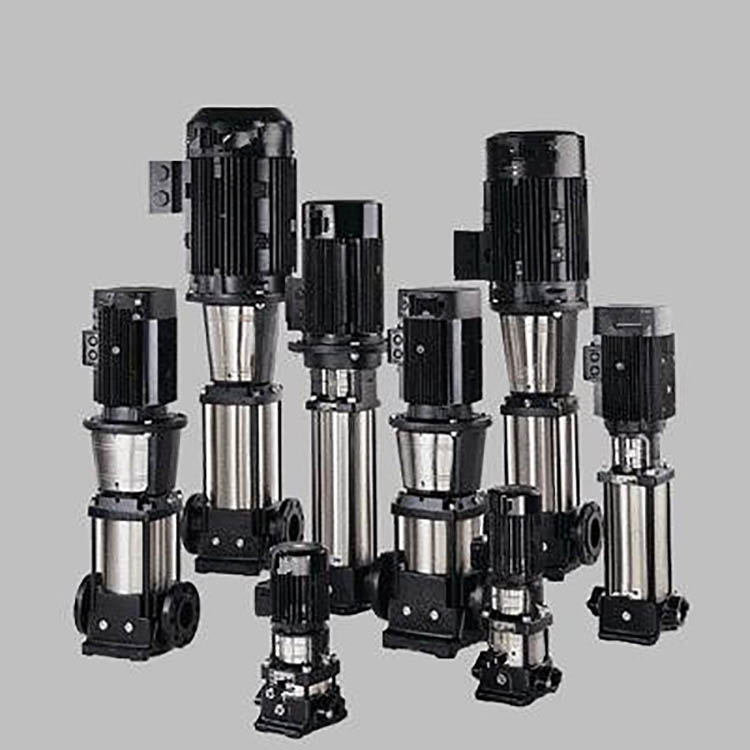
The system includes pure water storage tanks, sanitation-grade centrifugal pumps, sanitation-grade heat exchangers, diaphragm valves, respirators, on-site display control systems, and various instruments.
1) Purified water is produced by the preparation equipment and then circulated through the pipeline system to the purified water buffer tank.
2) Pure water storage and recirculation temperatures are at room temperature.
3) The purified water recirculation system is equipped with a variable frequency controlled recirculation sanitary pump. It adjusts the pump output based on the flow meter signal before returning to the tank, ensuring the pipeline flow rate meets the requirements.
4) Monitor the purified water conductivity using an online conductivity meter before refilling the tank. If the conductivity value exceeds the required level, the meter sends a signal to the PLC, which triggers an alarm. Simultaneously, the PLC controls the opening of the online pneumatic diaphragm valve to discharge the non-compliant water. If the conductivity value remains above the required level for a continuous period, the system automatically shuts down and sends an alarm signal, prompting the operator to inspect.
5) Install a temperature gauge and temperature sensor on the pipeline before the heat exchanger to control the temperature during pasteurization of the pipeline.
6) The pure water storage tank is equipped with a level gauge and set with maximum and minimum level parameters. When the level exceeds the maximum value, the inlet valve at the top of the tank is closed. When the level is below the minimum value, the conveying pump is turned off.
7) Control the variable-frequency pump via an online flow meter installed before the return tank to ensure the flow rate of pure water within the pipeline is not less than the minimum flow rate of 1 m/s.
8) During the sterilization process, the system records the temperature, pressure, flow rate, and electrical conductivity within the piping and tanks.
9) The system features an electrical control system (1 set of PLC) installed directly in a stainless steel control cabinet on the storage and distribution system支架, containing electrical equipment, PLC & OIT. This control system facilitates the operator's operation, monitoring, and control of the equipment. The Operator Interface Terminal (OIT) is a monitoring panel that displays operational parameters of the equipment. Alarms, actions, sterilization steps, process set points, and process values are all displayed on the OIT.