
Technical Key Points
(3) Scale and Specifications ① Storage Capacity: 100-5,000 tons. ② Storage Variety: Apples, pears, peaches, grapes, cauliflower, bell peppers, and a variety of fruits and vegetables. ③ Floor Area: 150-10,000 square meters. Based on storage capacity, 1 square meter of floor area can store 0.7-10 tons of fruits and vegetables. ④ Construction Type: Since cold storage relies on natural cooling sources, construction costs can be significantly reduced based on the site's climate conditions, especially in colder regions or areas with accessible caves. ⑤ Management Staff: Due to the absence of complex refrigeration equipment and automatic temperature regulation, a storage facility for 100-5,000 tons of fruits and vegetables requires only 2-8 staff members.
(4) Applicable to the preservation and storage of fruits and vegetables in cold regions of northern China, such as Inner Mongolia and Heilongjiang. This storage facility can also be used for the storage of animal products like fish and meat.
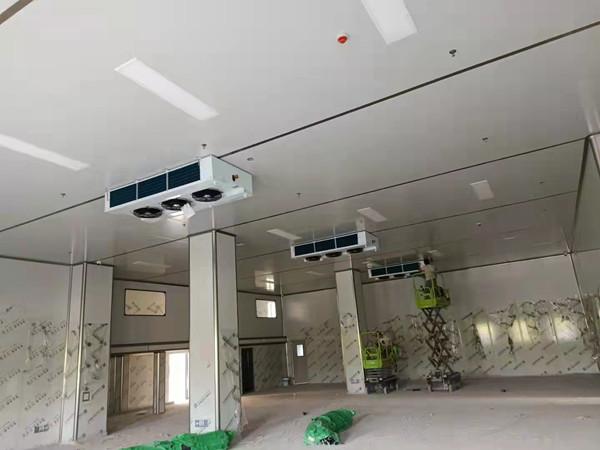
Formulation and fire safety requirements for cold primer oil application
To prevent moisture from seeping in through the exterior walls, moisture-proof felt should be pasted on the walls of the cold storage. Before pasting, it is also necessary to coat the walls with cold primer oil. Since it involves extensive brushing, fire safety precautions must be taken.
(1) When mixing base oil, melt asphalt with an open flame and transfer it to a safe location. Allow it to cool slightly before gradually adding kerosene. Continuously stir to ensure a uniform mixture.
(2) When applying cold primer oil, especially during continuous large-area application, all other construction operations within the warehouse should be halted. Lighting should use explosion-proof spotlights with protective casings. The junctions, outlets, and switches of the lighting cables should not be installed inside the warehouse. Additionally, do not open the protective casings and shells of the lighting fixtures for repairs during the construction period to prevent sparks that could lead to a fire.
(3) After all the cold primer oil has been applied, a 5-7 day safe drying period is required to ensure both the surface and interior reach a certain level of dryness. During this period, the storage area must remain fireproof and a staff member should be on duty. It is forbidden to substitute kerosene with gasoline or benzene, or to mix gasoline with kerosene to prepare the cold primer oil. Additionally, the application should not involve spraying techniques during construction.
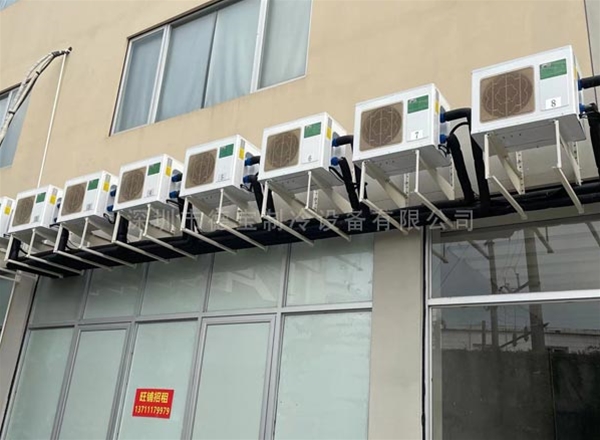
Fruit and Vegetable Cold Storage
1. Refrigerated warehouse envelope structure
The cooling capacity of the cold storage is proportional to the unit heat flux of the protective structure of the refrigerated storage. Therefore, efforts should be focused on reducing the unit heat flux of the protective structure of the refrigerated storage. To lower the unit heat flux of the protective structure, one must ensure that the thermal conductivity of the insulation material is low and the protective structure layers are thick. However, the thickness should generally not be excessive, as it may increase construction costs and waste space. Therefore, it is important to select insulation materials within an appropriate thickness range. Typically, the insulation material should have low thermal conductivity, low water absorption, good low-temperature performance, and reasonable cost.
Common insulation materials for cold storage include rice husks, foam plastics, and polyurethane rigid foam plastics. Rice husks are easy to source but have low thermal resistance, are moisture-absorbent, and require large quantities, making the construction time-consuming and costly. The actual cost, when calculated, is not low. There are many foam plastic manufacturers, and the cost of small cold storage is affordable, easy to purchase, with high thermal resistance, and moderate pricing; easy to construct and install. Polyurethane rigid foam plastics have high thermal resistance and good insulation properties, but are expensive.