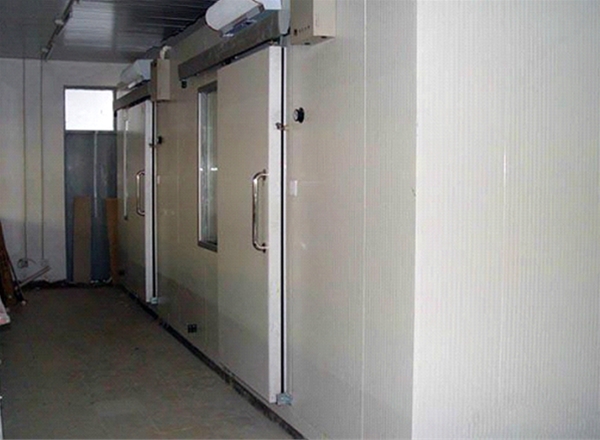

Fruit and Vegetable Cold Storage
4. Cold Storage Defrosting Operation
Generally, before the frost on the compressor evaporator surface significantly resists air flow and before the air flow through the evaporator has decreased, the frost's impact is not severe and defrosting is not necessary; however, when the air flow is notably reduced, defrosting should be performed.
The higher the humidity in the air and the greater the temperature difference between the evaporator and the cold storage, the more likely frost will form on the evaporator. By combining preservation techniques, packaged cold storage can help reduce the moisture loss of fruits and vegetables, decrease the frequency of defrosting the evaporator, and actually contribute to energy-saving in the cold storage.
2. Methods for Eliminating Odors in Cold Storage
(1) Causes of Odor in Cold Storage
Offensive odors refer to abnormal smells that develop in cold storage from the physical and chemical changes of cooking ingredients and food due to external factors. Over time, these odors adhere to the walls, ceilings, and equipment and tools within the cold storage. The presence of offensive odors in cold storage, such as Huizhou's refrigerated cold storage, can generally be attributed to the following reasons: An existing odor before food is stored. Food showing signs of spoilage upon entering the cold storage, such as rotten eggs, meat, or fish. Storing meat, eggs, or fruits and vegetables in a cold storage previously used for fish without cleaning, leading to odor contamination. Poor ventilation in the cold storage, excessive temperature and humidity in quick-freezing and refrigerated storage, causing mold to thrive and produce a musty smell. Leakage in the refrigeration pipeline, allowing refrigerants (ammonia) to contaminate the food, resulting in an offensive odor. Failure of the cold storage to maintain a proper temperature, leading to meat spoilage and a foul smell, often occurring when fresh meat is not properly frozen before being transferred to storage. Different food items with various odors stored in the same cold storage room can cause cross-contamination and flavor mingling.

5. Cold storage storage temperature and cold storage utilization rate
Different fruits and vegetables require varying storage temperatures, each having an optimal range. To preserve the quality of the produce without compromise, cold storage warehouses and energy-efficient cold storage facilities should use higher storage temperatures. As the warehouse temperature increases, the evaporation temperature of the refrigeration system also rises, resulting in an increased cooling capacity of the refrigeration unit and, consequently, a higher circulation efficiency. More importantly, raising the warehouse temperature can also reduce the heat transfer through the warehouse body. The energy-efficient cold storage utilization rate is the ratio of the actual volume of produce stored to the effective volume of the warehouse. For micro cold storage, the volume utilization rate should generally not be less than 0.3. When installing refrigerated cold storage, it's also important not to exceed this limit, as it could lead to difficulties in cooling. When the volume changes of the produce to be stored are significant, it should be divided into two or more cold storage compartments. Additionally, selecting a reasonable storage cycle is crucial for energy savings in cold storage facilities.