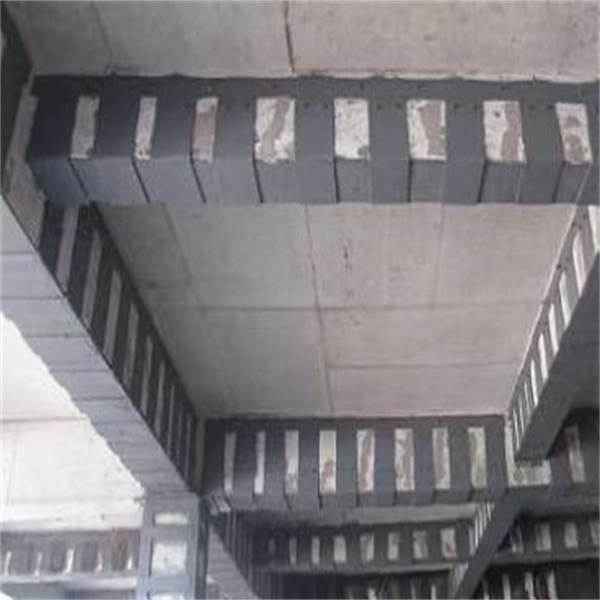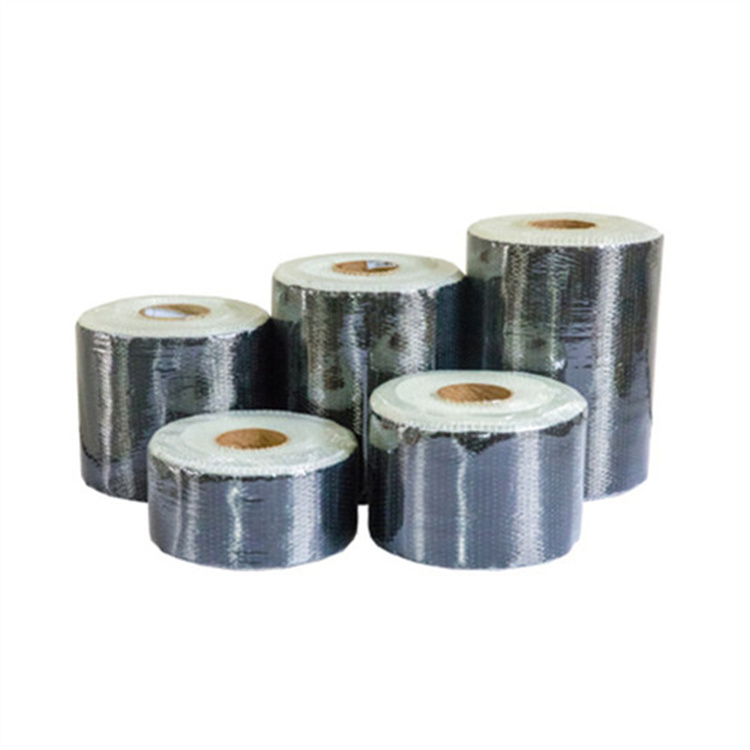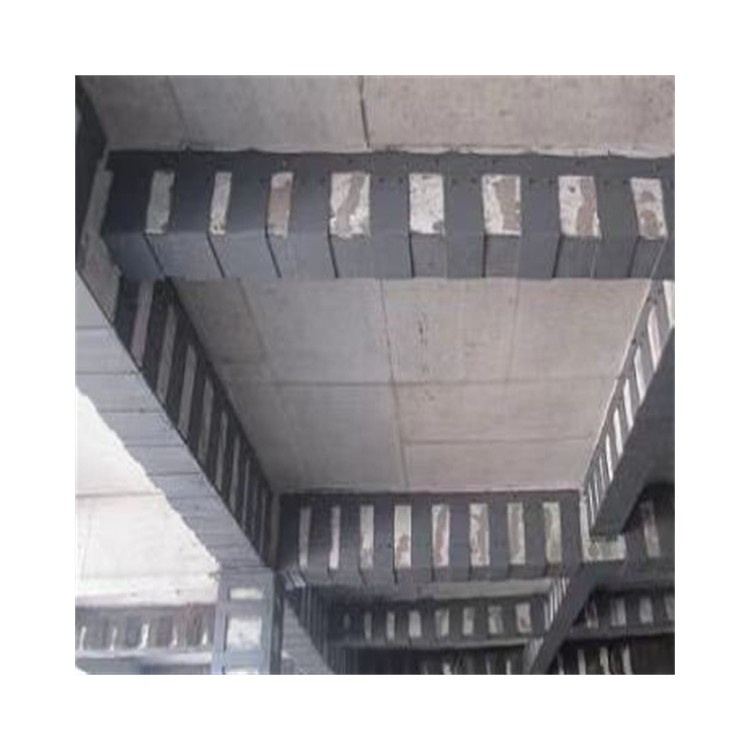

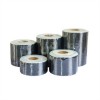












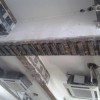
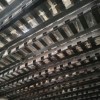
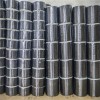
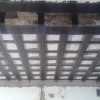

Our company holds the qualification for reinforcement, and we accept projects such as: reinforced grouting, steel plate bonding, crack repair and reinforcement of houses, carbon fiber reinforcement of houses, seismic reinforcement of campuses, bridge repair and reinforcement, tunnel reinforcement, factory reinforcement, floor crack reinforcement, hotel renovation reinforcement, carbon fiber reinforcement of structural beams and columns, reinforced angle steel and grouting reinforcement of columns, etc.; and we produce: anchoring adhesive, steel plate bonding adhesive, grouting adhesive, joint filling adhesive, carbon fiber adhesive, carbon fiber cloth, sealing adhesive, and repair adhesive. We warmly look forward to your visit for business discussions and cooperation!
Purpose of using carbon fiber fabric:
Enhance load-bearing capacity.
Increase ductility; (For seismic-resistant structures, this is achieved in the reinforcement design by increasing ductility.)
Carbon fiber cloth reinforcement effect
Improve structural condition (reduce deformation, decrease existing structural stress, minimize cracks)
Technical points for carbon fiber cloth reinforcement?
During bending reinforcement, the fiber direction should be consistent with the reinforcement's load direction.
When reinforcing against shearing and seismic forces, the fiber direction should ideally be perpendicular to the component's axis.
When subjected to bending reinforcement and shearing reinforcement, the concrete strength grade should not be lower than C15.
When using closed-joint carbon fiber to reinforce concrete columns, the concrete strength grade should not be lower than C10.
The effectiveness of carbon fiber reinforcement primarily depends on the adhesive process of the fibers, which should be handled by the construction team.
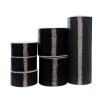
Ordos Structural Reinforcement Carbon Fiber Fabric, Grade 1 Carbon Fiber Fabric Price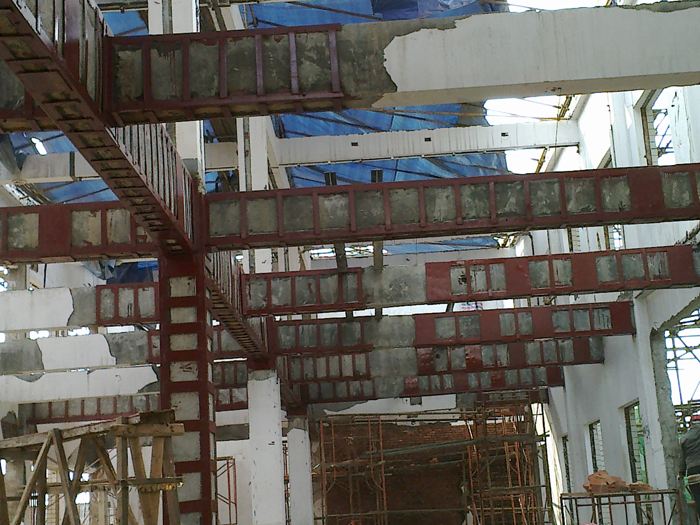
When it comes to building reinforcement, the first thing that likely comes to mind is rebar bonding, which is one of the methods used. During the process of bonding rebars to a structure, the bonding adhesive is an indispensable reinforcement material, playing a crucial role in the reinforcement process. There are specific requirements for the bonding adhesive when reinforcing a building, as it is a vital component of the reinforcement construction.
Reinforcing epoxy not only needs to be of high quality but also should be used in conjunction with reinforcing materials. How do you choose the right reinforcing epoxy for the bonding process? Let's dive in and find out.
One, Performance of Grouting Adhesives: The superiority of the performance of grouting adhesives is a factor that must be considered when purchasing. There are many low-quality grouting adhesives on the market that do not meet expectations in their application effects, only high-quality grouting adhesives can ensure the effectiveness of the reinforcement.
Section II: The Environmental Friendliness of Reinforcement Adhesives
In recent years, the "environmental concept" has gained increasing attention. Many property owners now demand the use of environmentally friendly reinforcement materials during the anchoring process. This is because some buildings have been constructed without environmentally friendly materials, leading to the production of a large amount of harmful gases post-construction. Not only does this affect the living environment of the owners, but it also poses health risks. Therefore, the selection of reinforcement adhesives must possess environmental properties to ensure that the living environment post-construction remains unaffected.
Three, Grout Adhesive Quality: The quality of grout adhesives on the market varies greatly, as does the price. The selection of grout adhesive must be accurate, as good grout adhesive ensures the quality of reinforcement and can better perform during construction, enhancing project efficiency.
Carbon fiber materials for the reinforcement and repair of concrete structures began to be researched in the 1980s in developed regions like the U.S. and Japan. Our country's entry into this technology was late, but with the rapid development of China's economic construction and transportation, a significant portion of existing buildings suffer from historical issues due to low design load standards at the time. Some buildings, due to changes in their use functions, struggle to meet current code requirements and urgently need repairs and reinforcement. There are many commonly used reinforcement methods, such as: increased cross-section method, steel jacket reinforcement method, adhesive steel reinforcement method, and carbon fiber reinforcement method. Carbon fiber reinforcement and repair technology is a new type of structural reinforcement technique following the increased concrete cross-section and adhesive steel methods.
Japanese Toray imported UT70-30, Japan Asahi Carbon Fiber Fabric, Hefei Plant筋胶, German Hilti Plant筋胶 wholesale agents, COD, welcome to call for consultation and negotiation! Purchasing our materials includes technical guidance services, construction plans, and construction qualifications. This information is valid for a long time, nationwide supply, COD. Quality guaranteed, COD! Carbon fiber fabric supplied in all provinces, cities, and counties nationwide, shipping fees are borne by our factory.
WeChat Official Account

Scan to follow Official Account