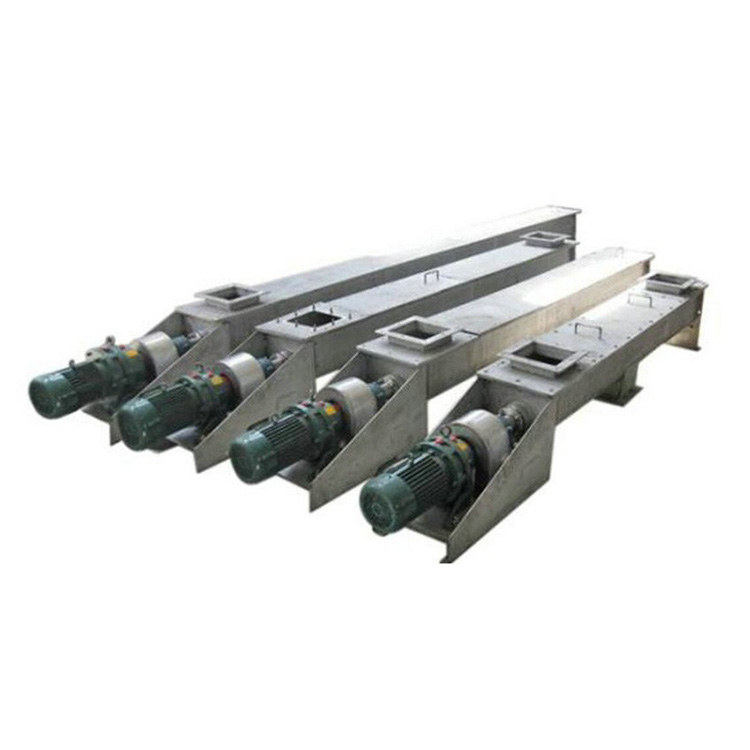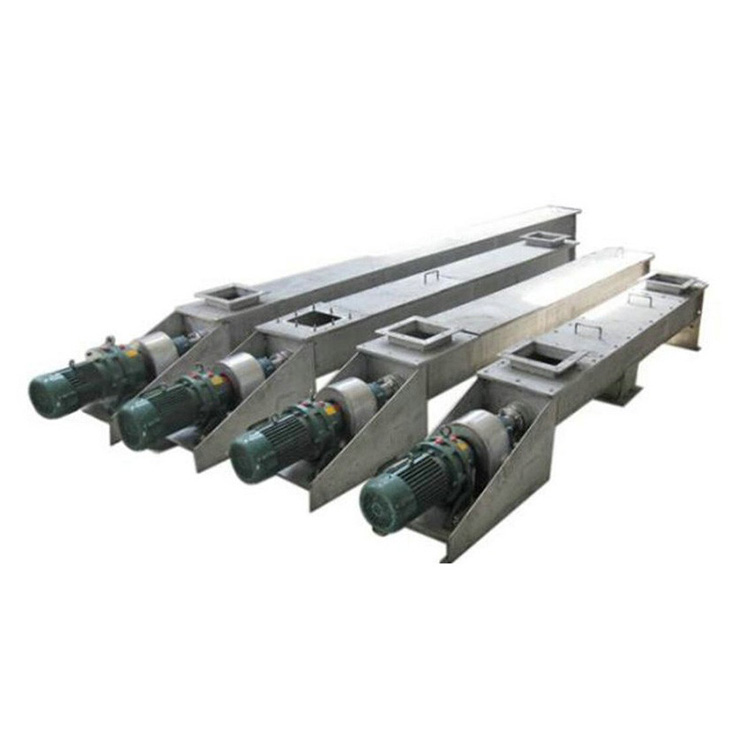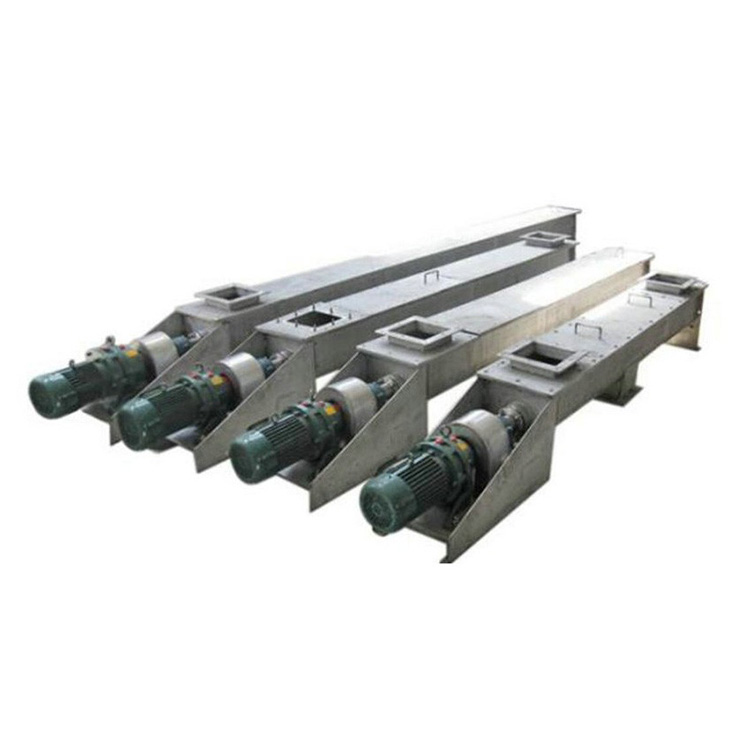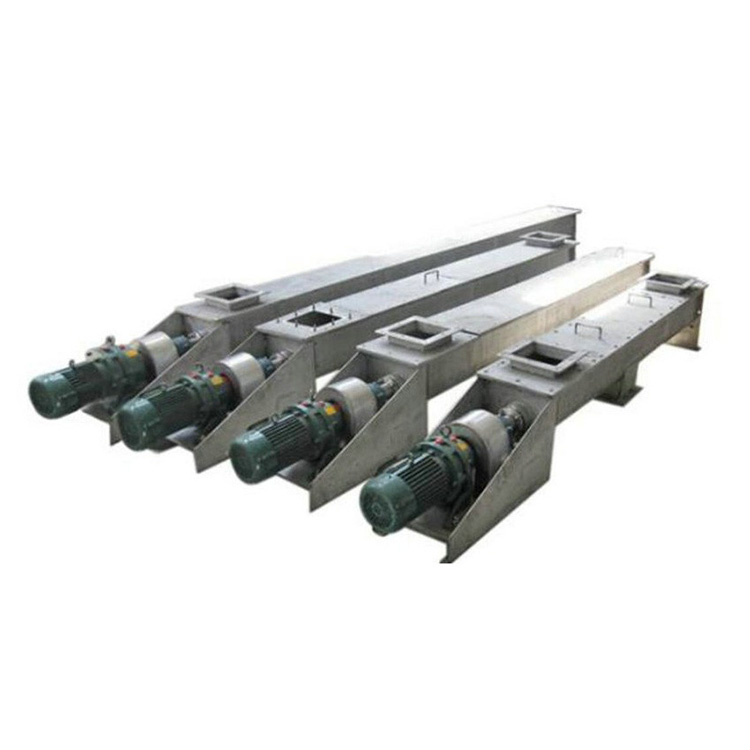









The U/V-type spiral conveyor is widely used in various industries such as construction materials, chemicals, electricity, metallurgy, coal, and grain. It is suitable for horizontal or inclined conveying of powdery, granular, and small piece-like materials like coal, ash, slag, cement, and grain, with material temperatures below 200°C. Spiral conveyors are not suitable for conveying materials that are prone to spoilage, highly adhesive, or easily caked.
The conveying angle of the U/V-type helical screw conveyors should be less than 20°. If the inclination angle is too great, please choose a tube-type helical conveyor.
Operating Principle:
As the spiral shaft rotates, the material is moved forward along the bottom of the conveyor trough under the force of gravity and the friction between the material and the trough walls, much like a non-rotating nut sliding along a rotating screw. The movement of the material between the intermediate bearings relies on the thrust from the advancing material ahead. Therefore, the conveyance of material within the conveyor is purely a sliding motion. To ensure the spiral shaft is in a more favorable tensile state, the drive unit and the discharge outlet are typically positioned at the same end of the conveyor, while the feed inlet is placed as close as possible to the end of the opposite side. The rotating spiral blades push the material for conveyance, and the force preventing the material from rotating along with the spiral conveyor blades is the material's own weight and the frictional resistance from the conveyor housing. The blade shape varies depending on the material being conveyed, with options such as solid face, belt face, and blade face types. The spiral shaft of the conveyor has thrust bearings at the end of the material's path to counteract the axial reaction force from the material, and intermediate suspended bearings should be added if the conveyor length is significant.