
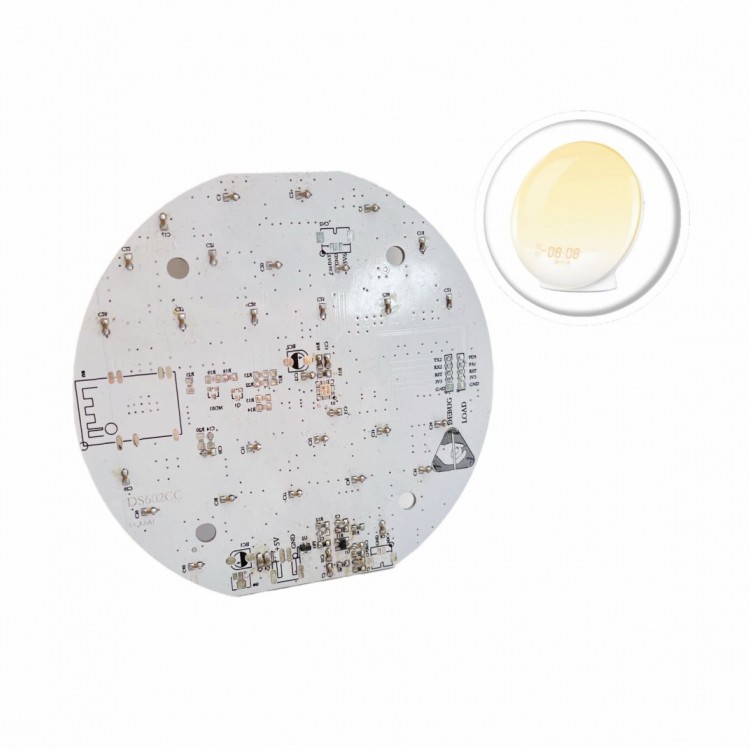

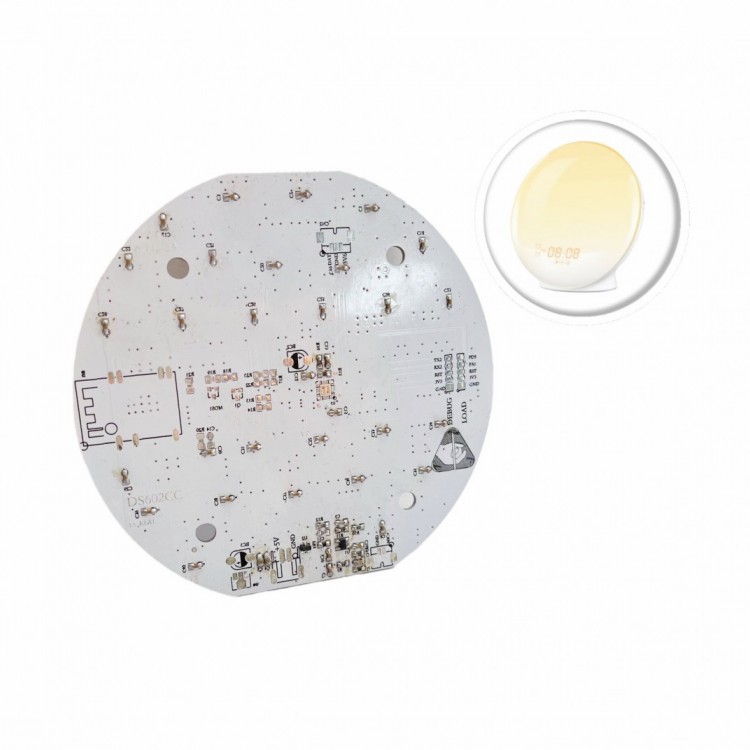









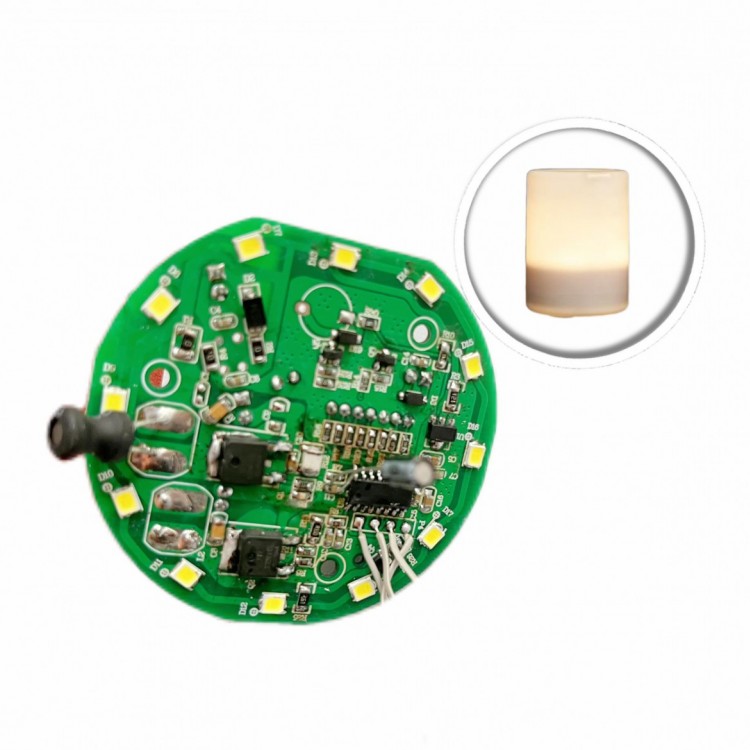
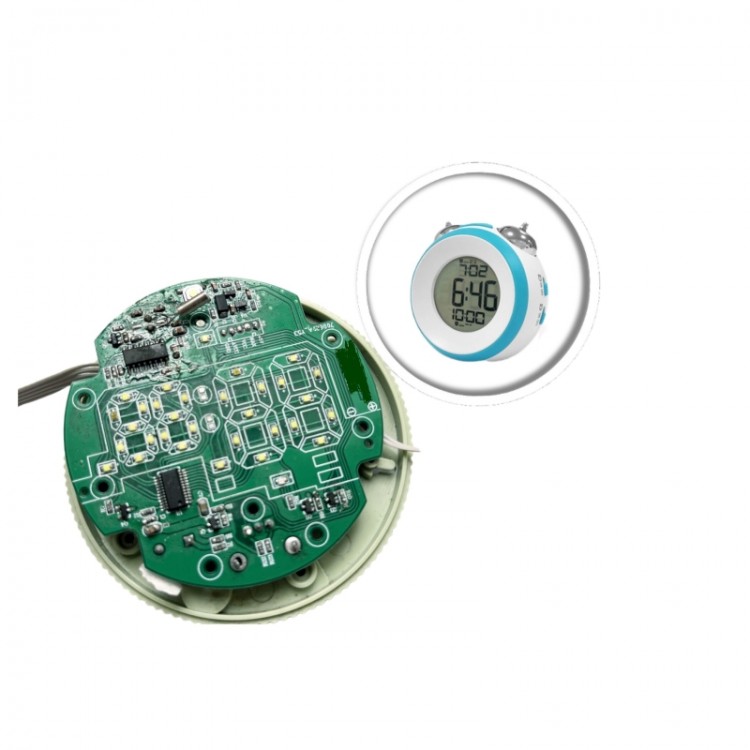

Design an LED wake-up clock chip solution, considering the following aspects:
Clock Module: Select a stable and accurate clock module, which can be a quartz crystal or MEMS oscillator. The clock module must provide precise time signals.
Controller: Choose between a microprocessor or a microcontroller as the controller. Select the appropriate model based on specific requirements to ensure adequate processing power and storage capacity.
Power Management: Design a stable power management module to ensure the clock chip operates normally under various power conditions. Consider factors such as power noise and power consumption.
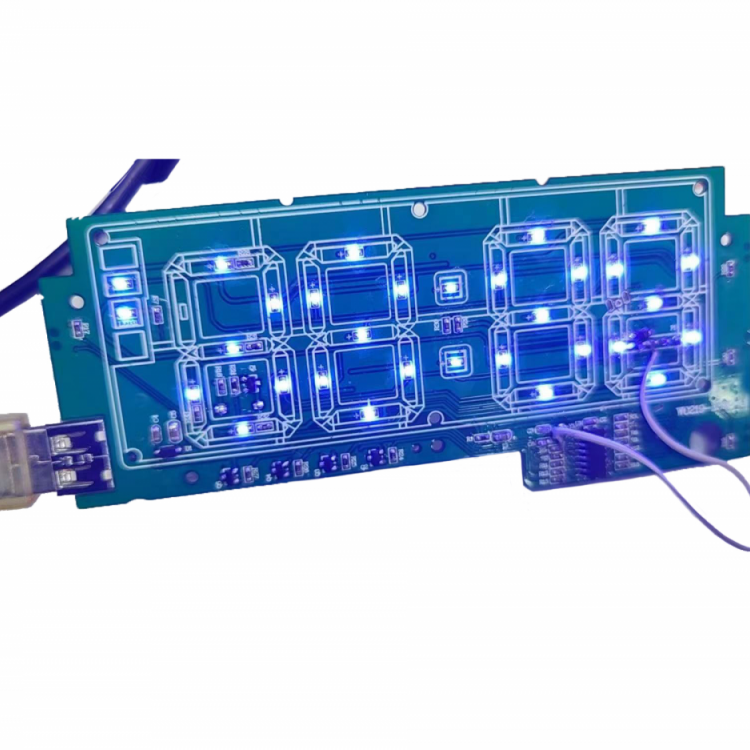
Choose the appropriate LED display components to ensure clear and suitable brightness for the display. Options include conventional digital tubes, LCD monitors, or OLED displays.
Peripheral Interfaces: Various peripheral interfaces can be designed to meet specific requirements, such as serial ports, I2C buses, and SPI buses, facilitating communication and control with other devices.
Wake-up Function: Design a wake-up function that can be activated via a button or touchpad, etc. Upon triggering the wake-up signal, the clock chip should respond quickly and display the time.
Software Design: Appropriate software programs must be written to facilitate clock functions such as timing, display, and wake-up. Factors such as program stability, reliability, and ease of use must be considered.
Above are the basic elements of the LED wake-up clock chip design scheme, which need to be adjusted and optimized according to actual requirements.