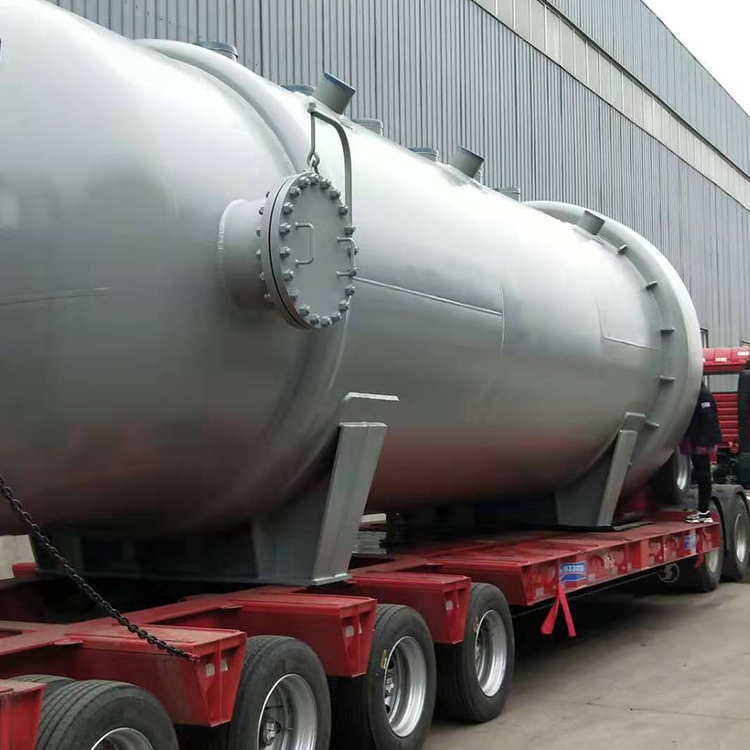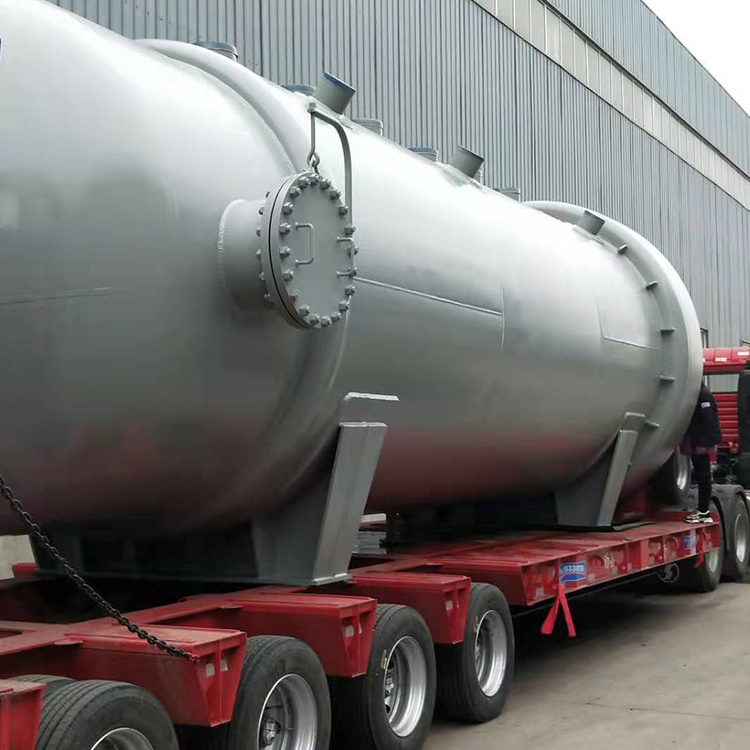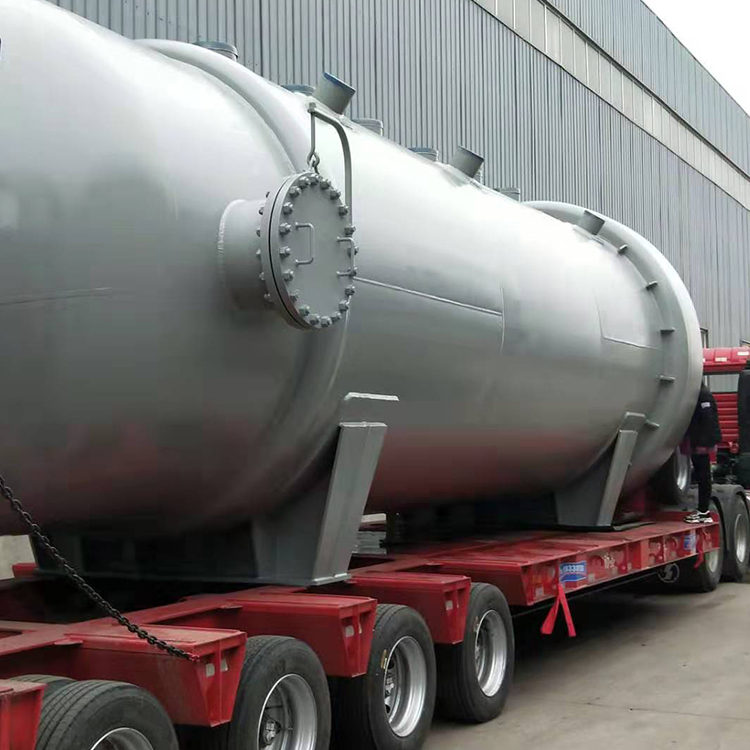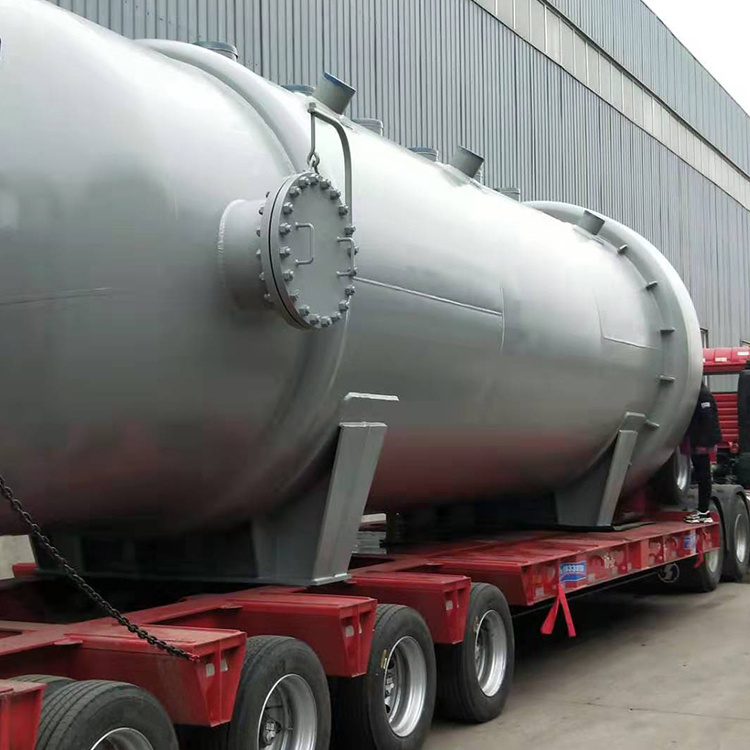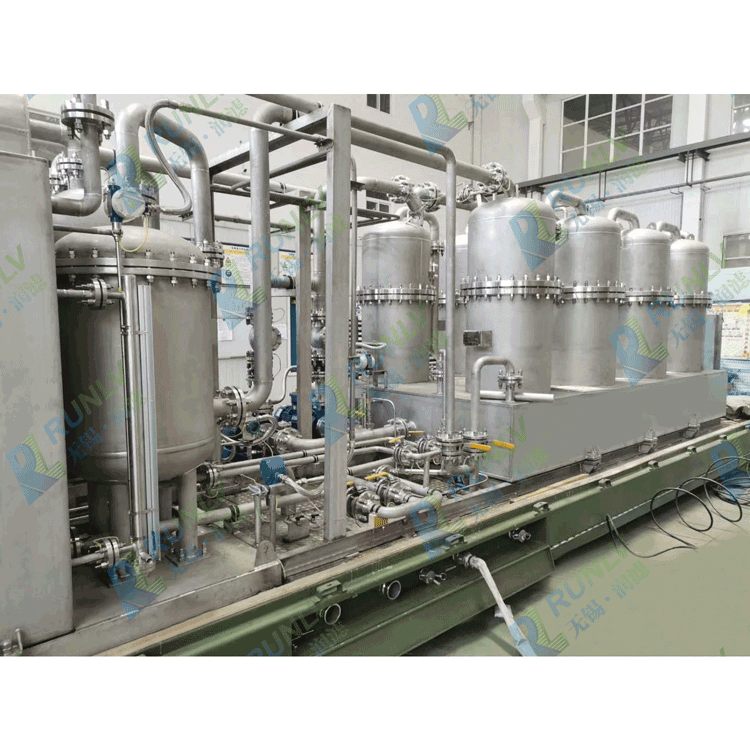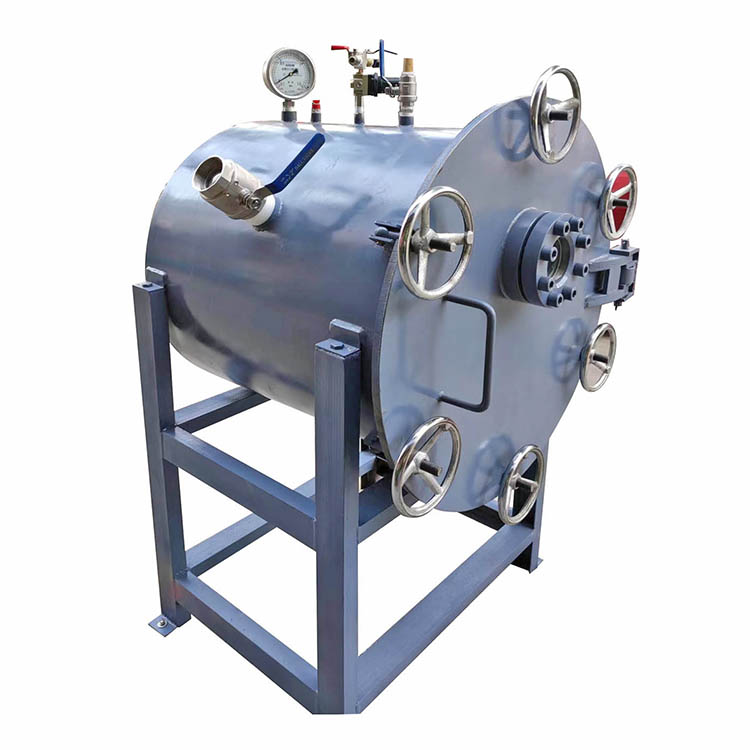

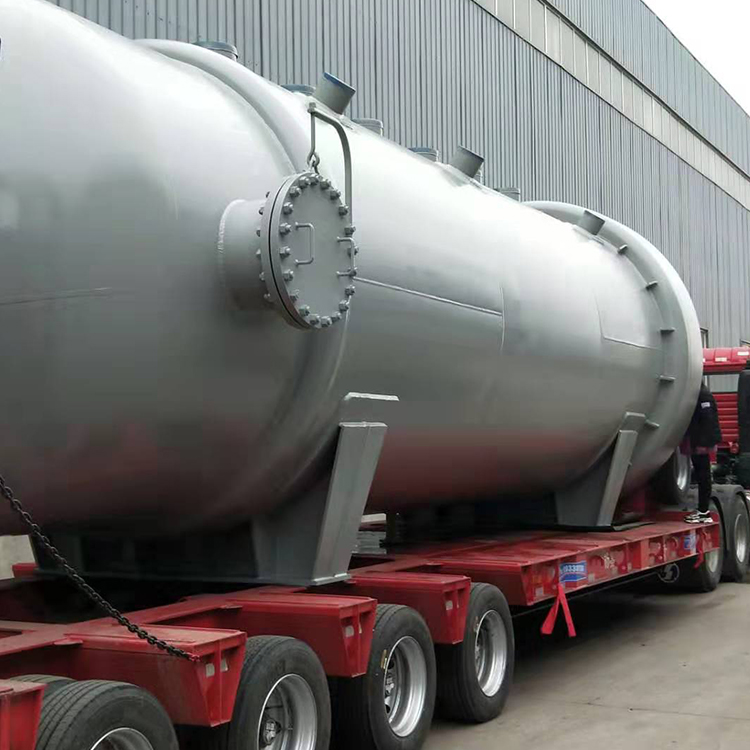

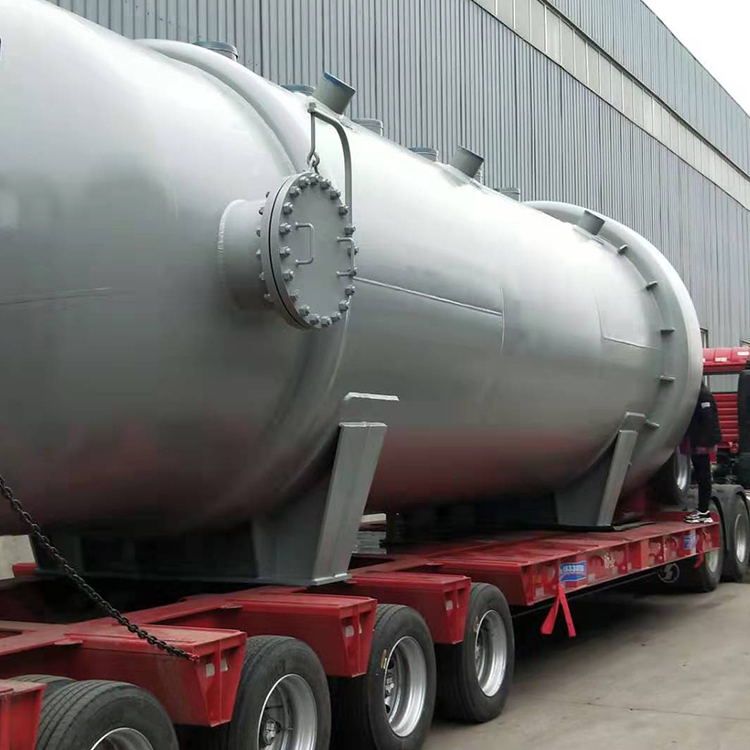








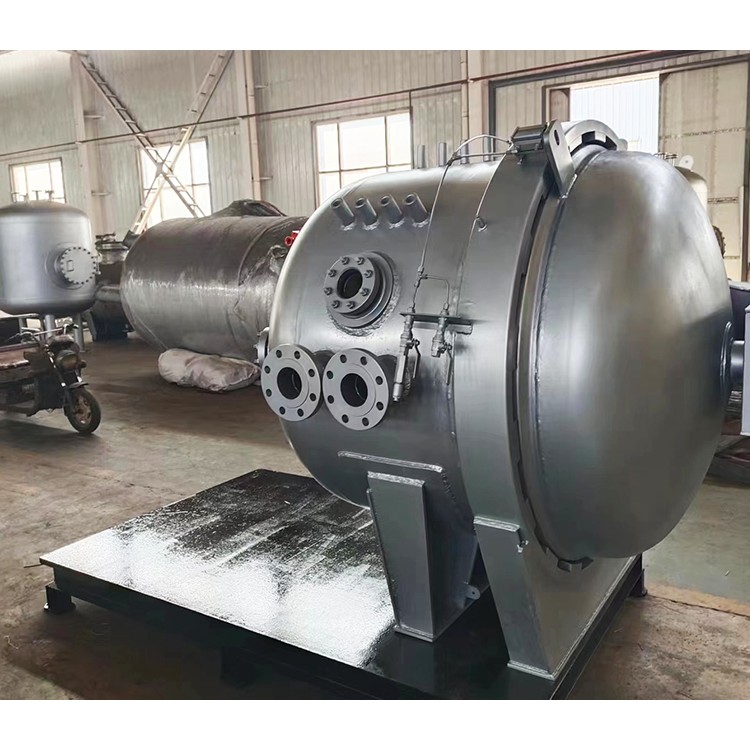
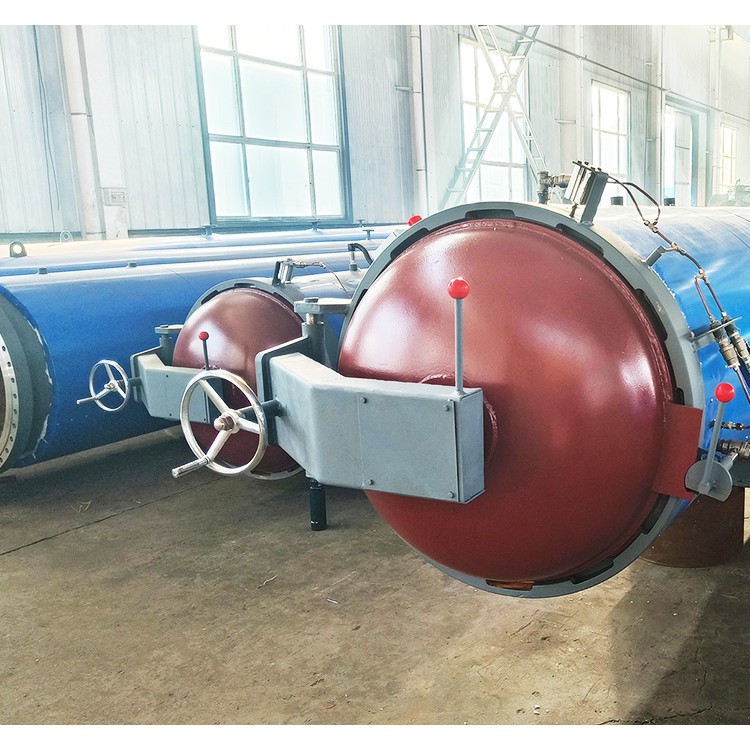
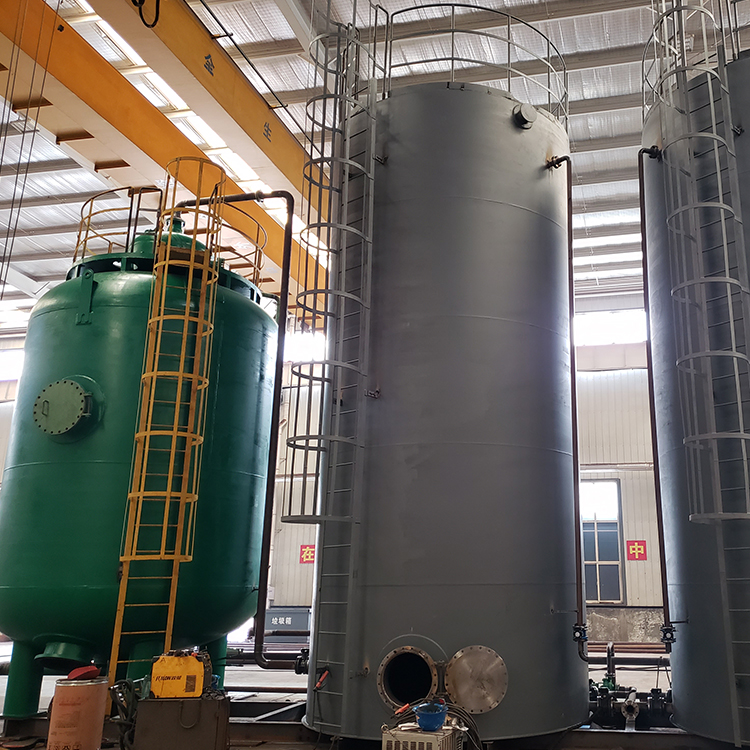
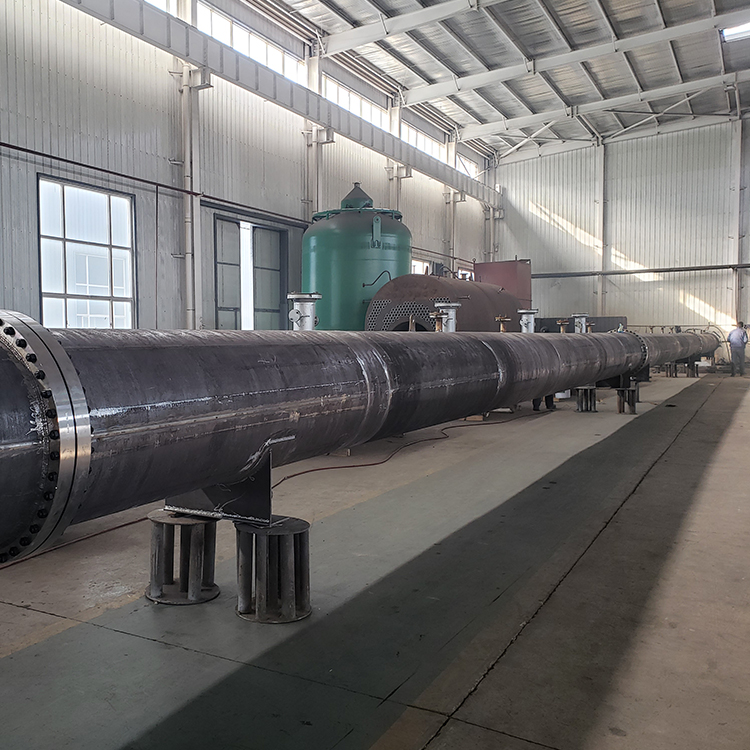

The reactor structure consists of components such as the gas collection chamber and anti-coking plate, stripping section, shell, cyclone separator installed internally, feed bend and distribution plate, etc.
(1) The gas collection chamber and anti-carboning plate are designed to concentrate and exhaust gases from the outlet of the cyclone separator (secondary) installed on the shell. Located at the top of the reactor, the anti-carboning plate prevents carbon buildup at the reactor's top and is composed of many sector-shaped plates connected by bolts or welded into a single flat, circular plate.
(2) The stripping section is equipped with 15 to 20 rows of steel plate H-beams, welded to the shell of the stripping section, located at the bottom of the reactor.
(3) The reactor shell is divided into three sections: dense phase, dilute phase, and stripping sections. The shell is a cylindrical container made by bending and welding steel plates. It provides space for oil-gas and catalyst to complete the reaction and separation.
(4) The feeding elbows for the feeding elbow of the distribution plate are lined with a 20mm thick stainless steel turtle shell mesh wear-resistant lining. This is to prevent material wear on the tube wall, and its function is to allow the regenerative catalyst and raw materials to enter the reactor. The distribution plate is generally made of carbon steel boiler plate, shaped as two concave spheroidal panels. The outer distribution plate is convex, with a diameter about half that of the outer distribution plate and a protrusion height about half the arch height of the outer distribution plate. It primarily serves to uniformly distribute the catalyst gas before entering the reactor.