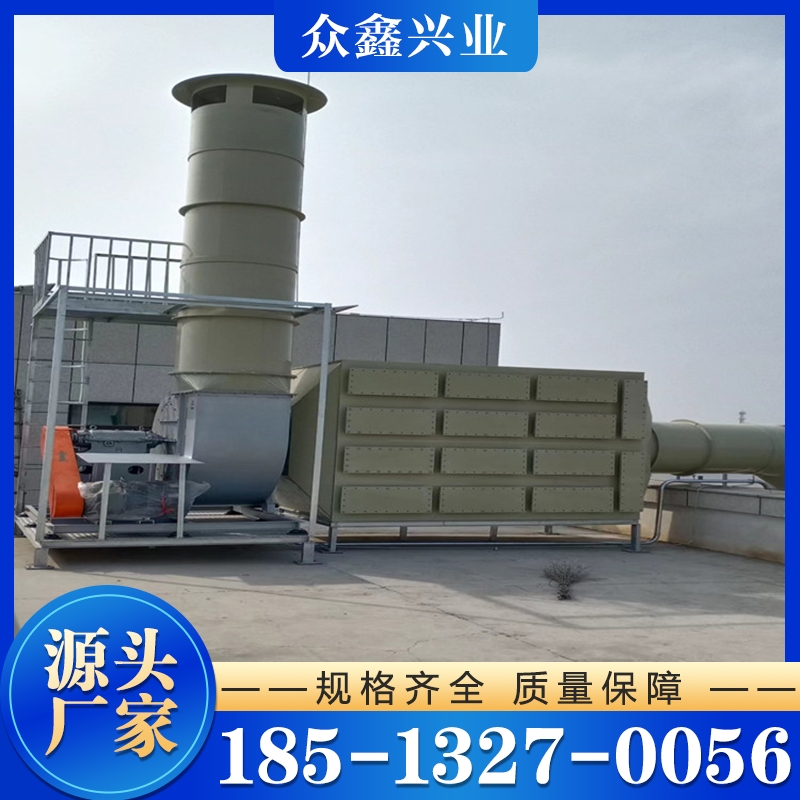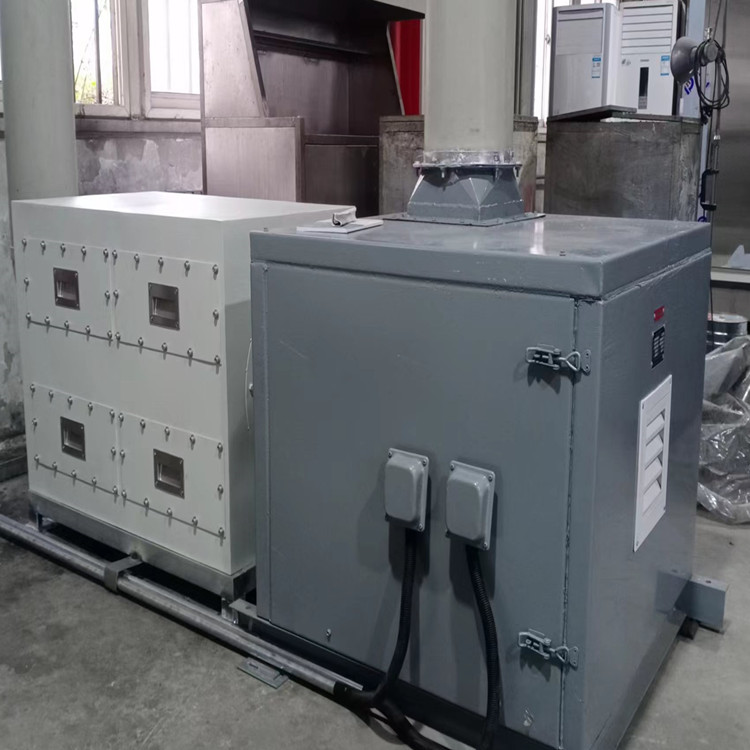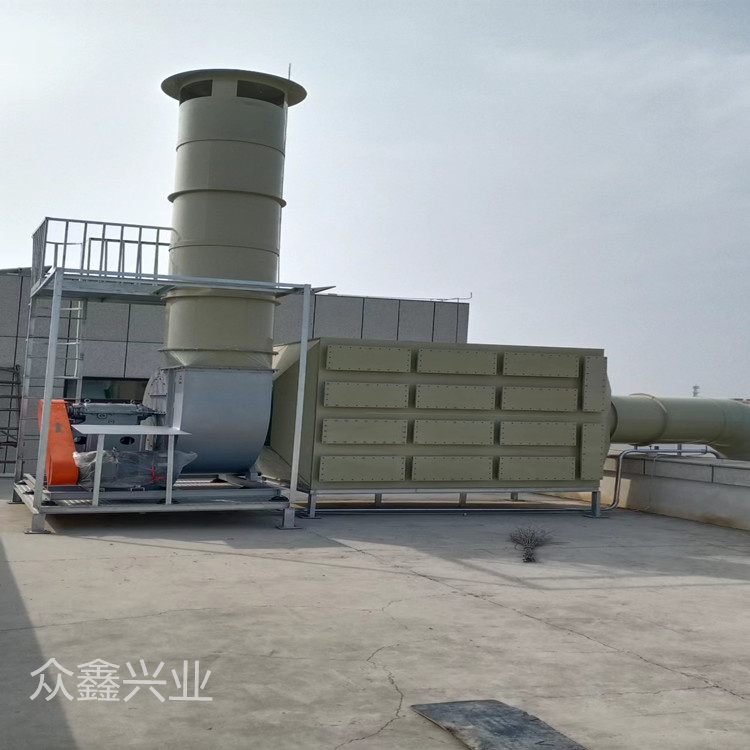

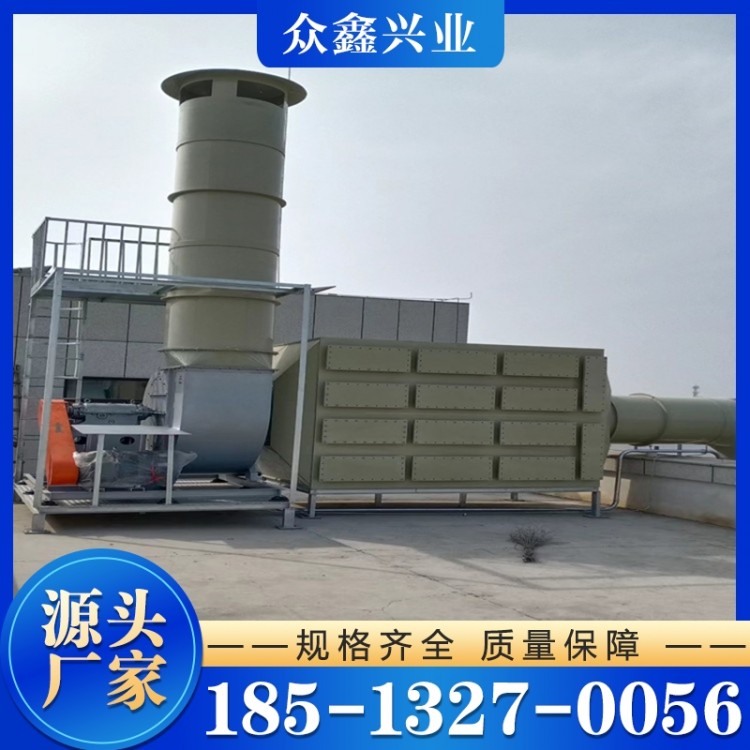

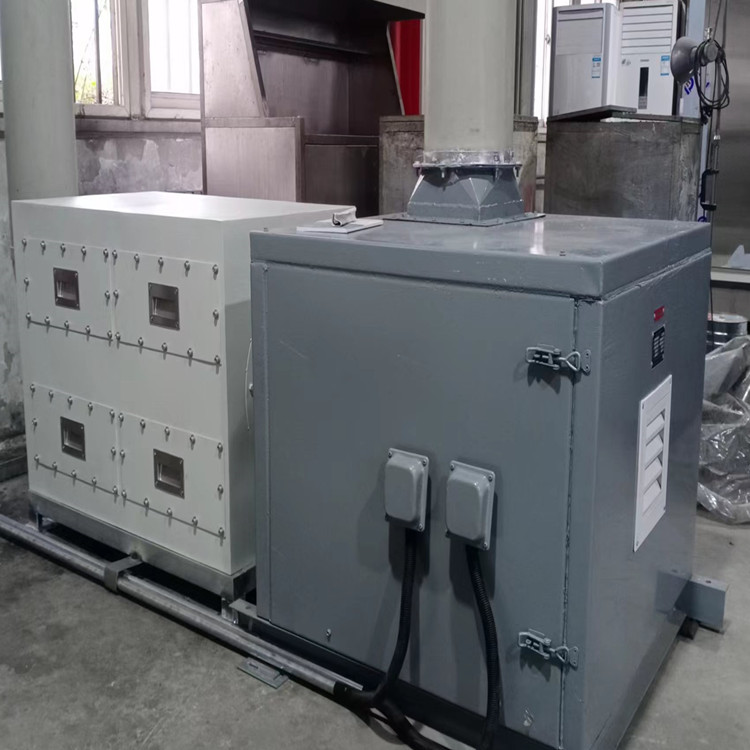






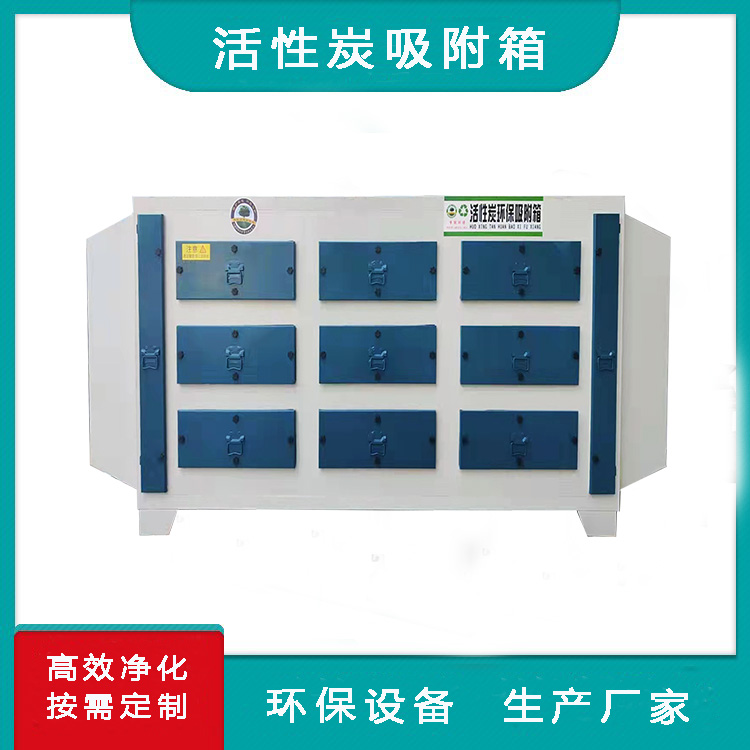


The Odor Control Equipment Activated Carbon Adsorption Box collects organic waste gases through a gas collection hood, then passes them through the cross-sectional area of the fixed activated carbon adsorption bed. Within a certain residence time, physical adsorption occurs due to the mutual attractive force between the activated carbon surface and the organic waste gas molecules, thereby adsorbing the organic components of the waste gases onto the porous surface of the activated carbon, purifying the exhaust gases. The purified clean gas is then extracted by the main fan and discharged through the chimney in compliance with standards.
During the adsorption process for odor treatment, the differences in the interaction forces between activated carbon molecules and exhaust gas molecules are divided into two categories based on the adsorption principle: chemical adsorption (also known as active adsorption) and physical adsorption. In the adsorption process, when the interaction force between activated carbon molecules and exhaust gas molecules is electrostatic attraction, it is called physical adsorption; when the interaction force is based on chemical bonds, it is called chemical adsorption. The adsorption strength of physical adsorption is primarily related to the physical properties of activated carbon and has nothing to do with its chemical properties. Due to the weak electrostatic attraction, it has little impact on the arrangement of exhaust gas molecules, so physical adsorption can be analogized to condensation phenomena. During physical adsorption, the chemical properties of the exhaust gas remain stable.