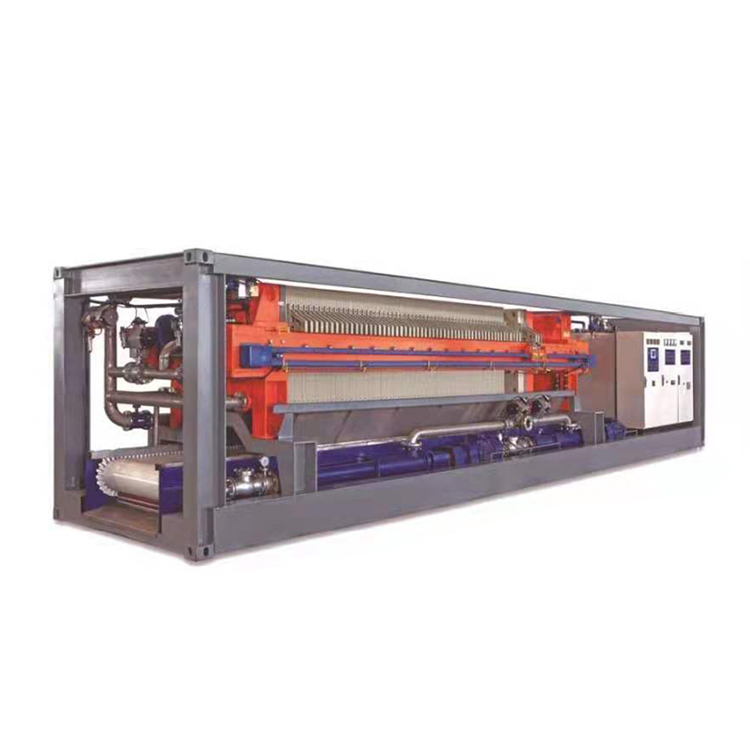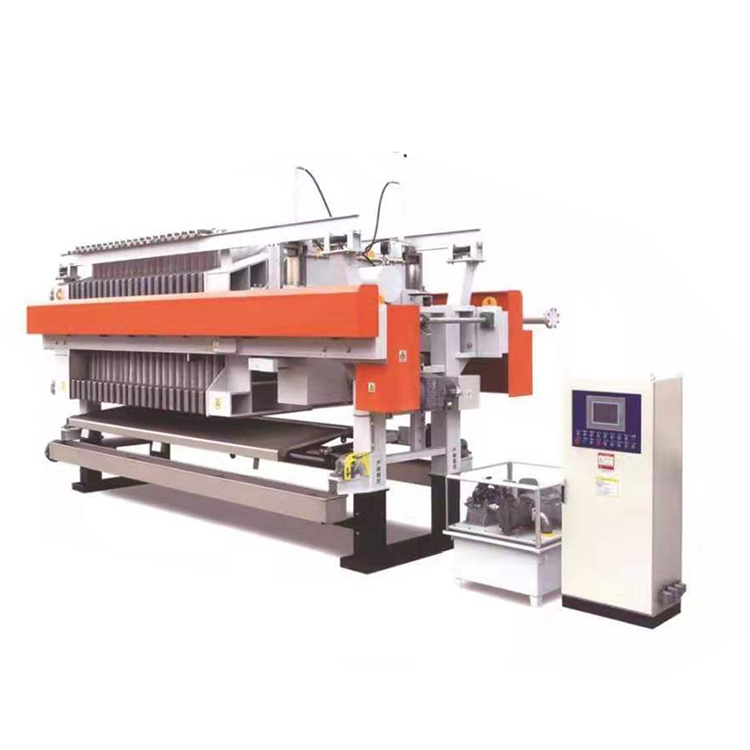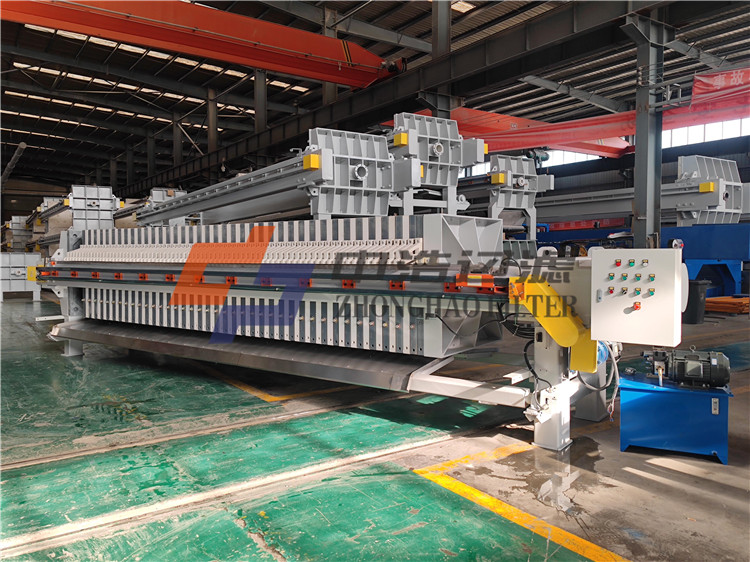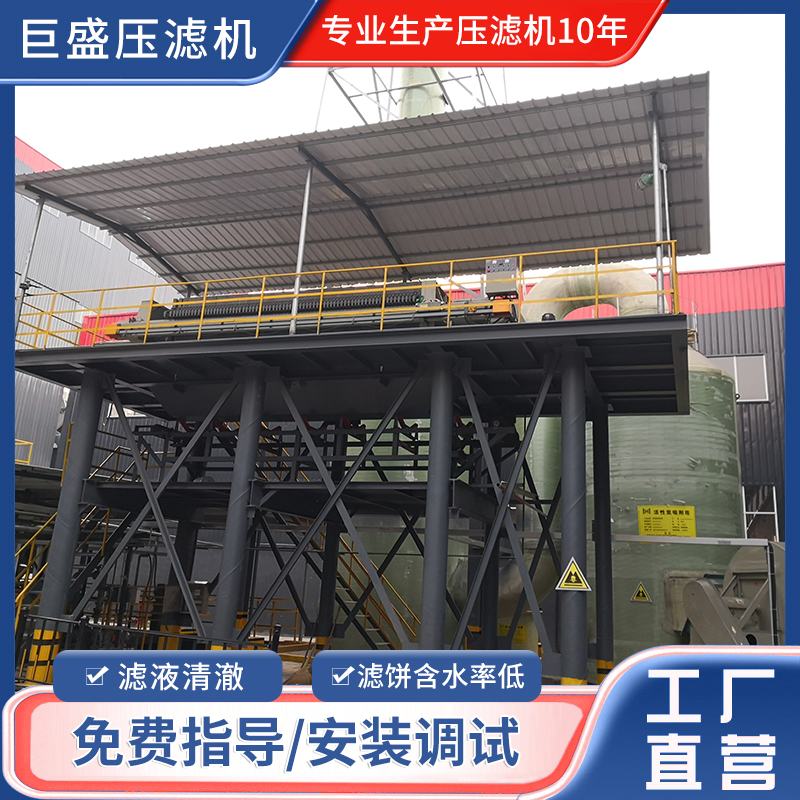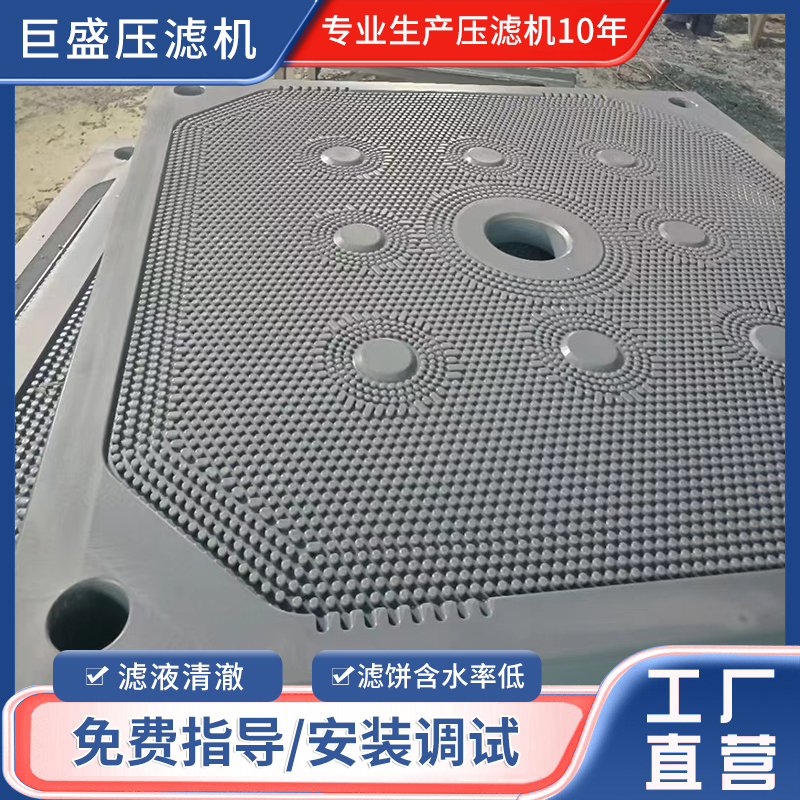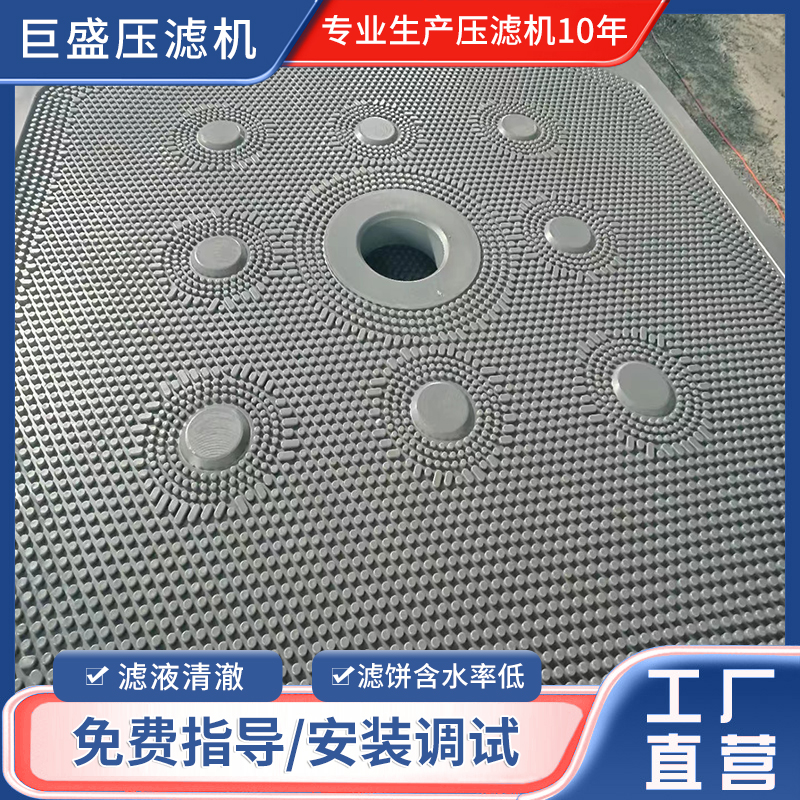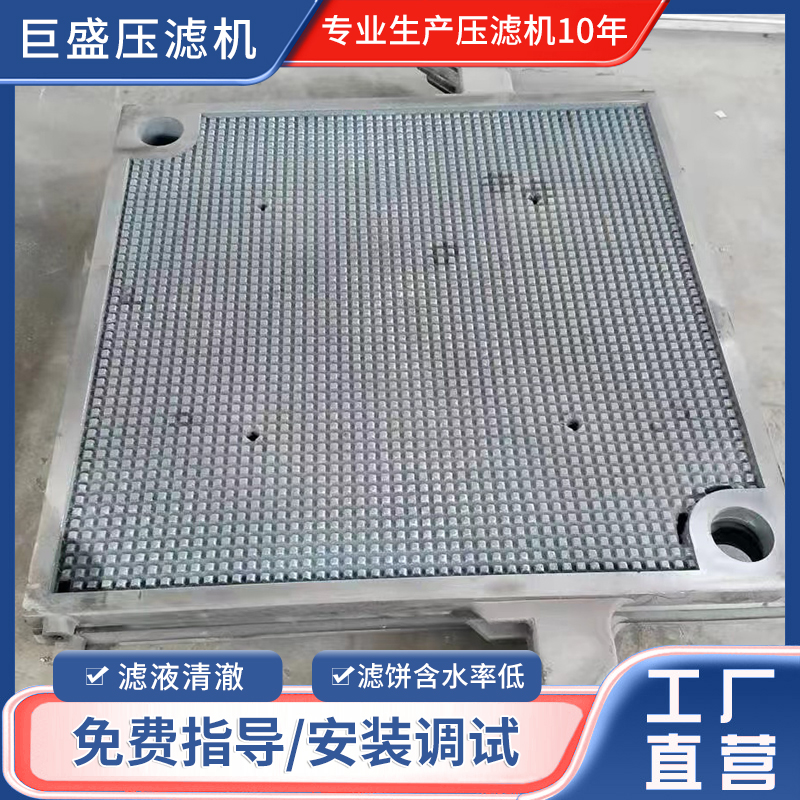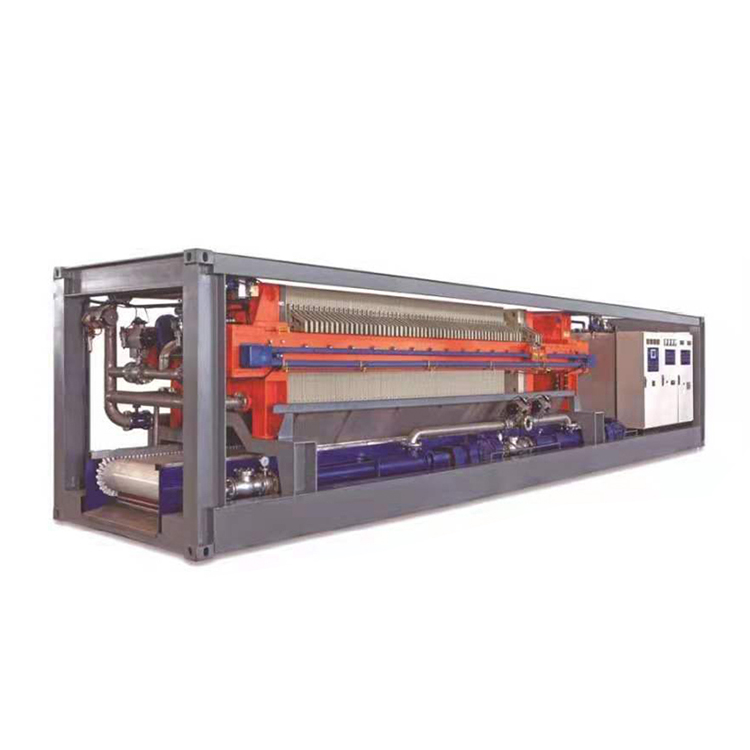

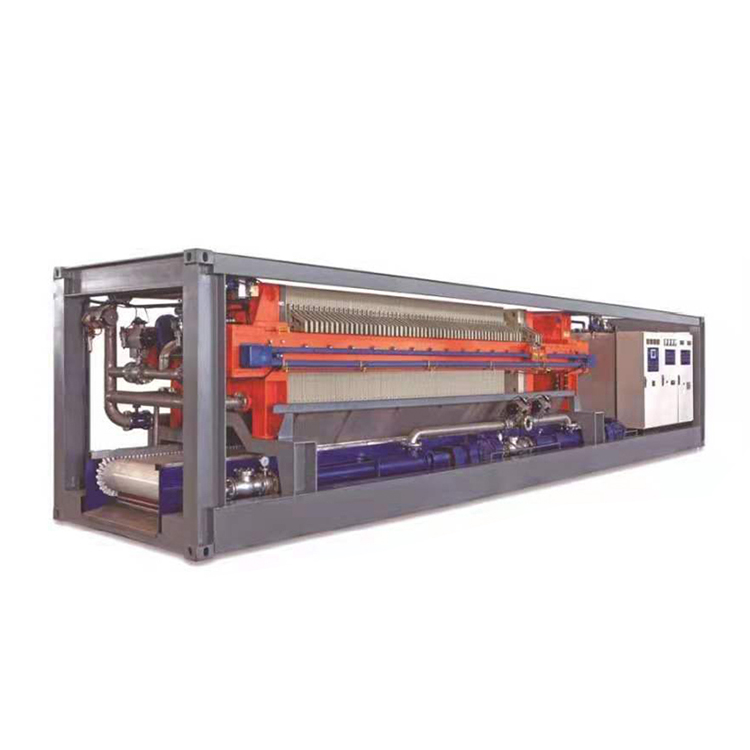


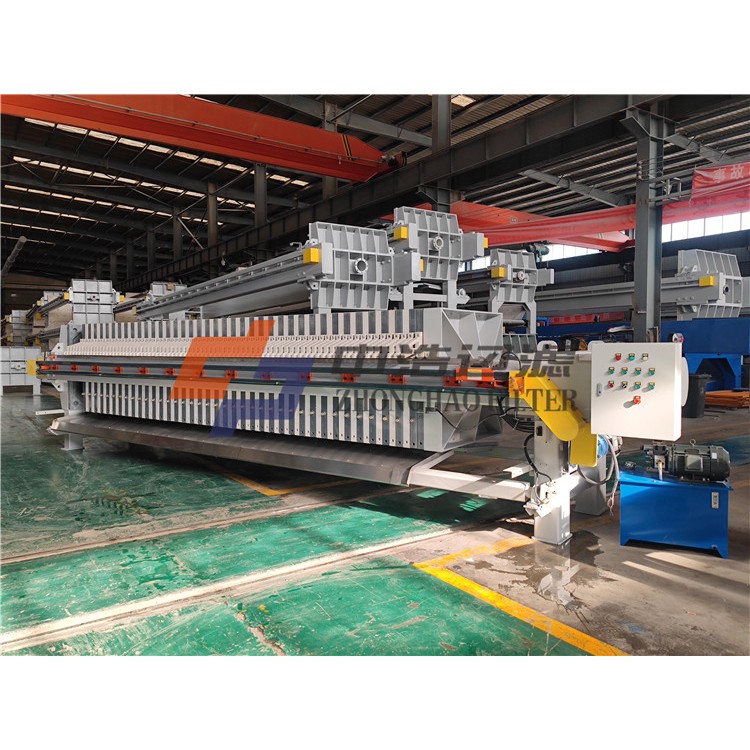







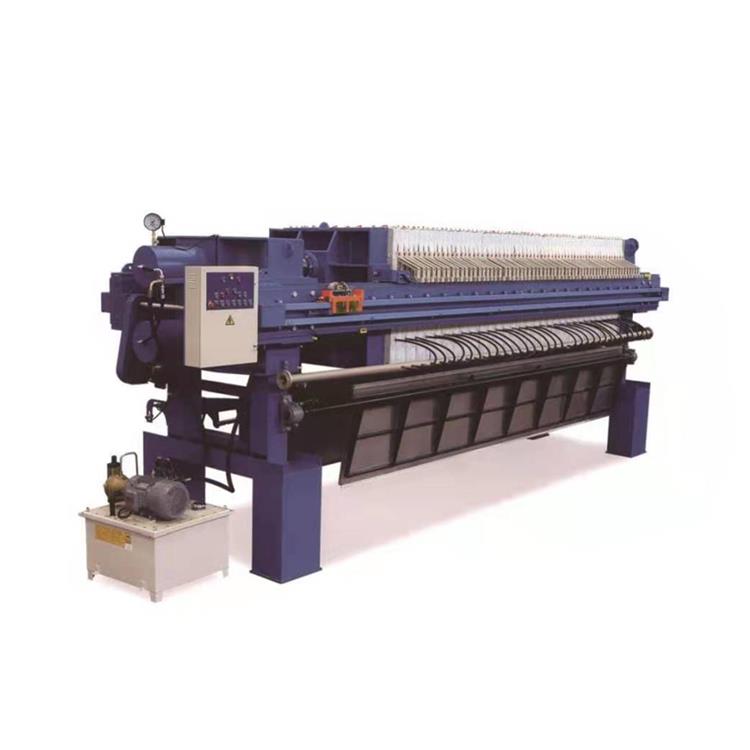
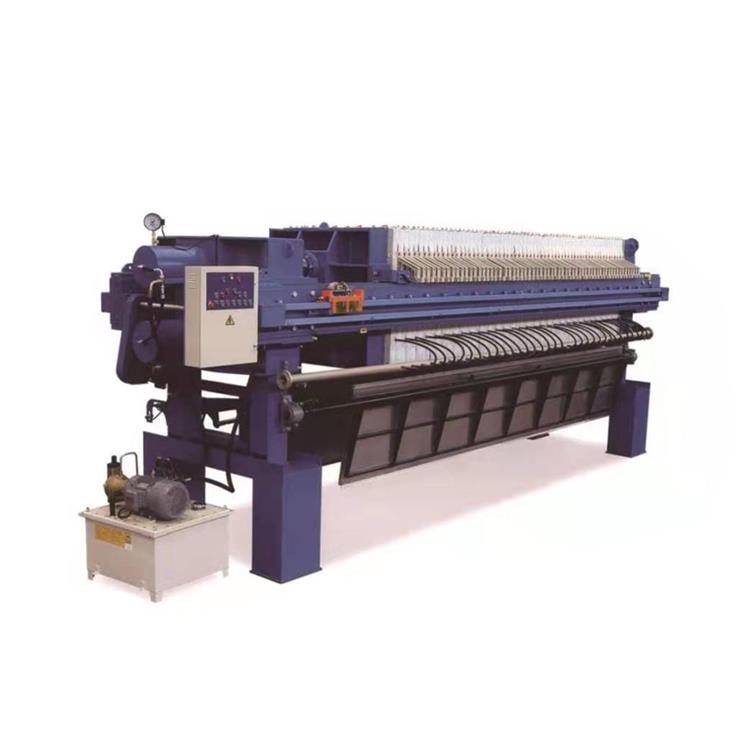
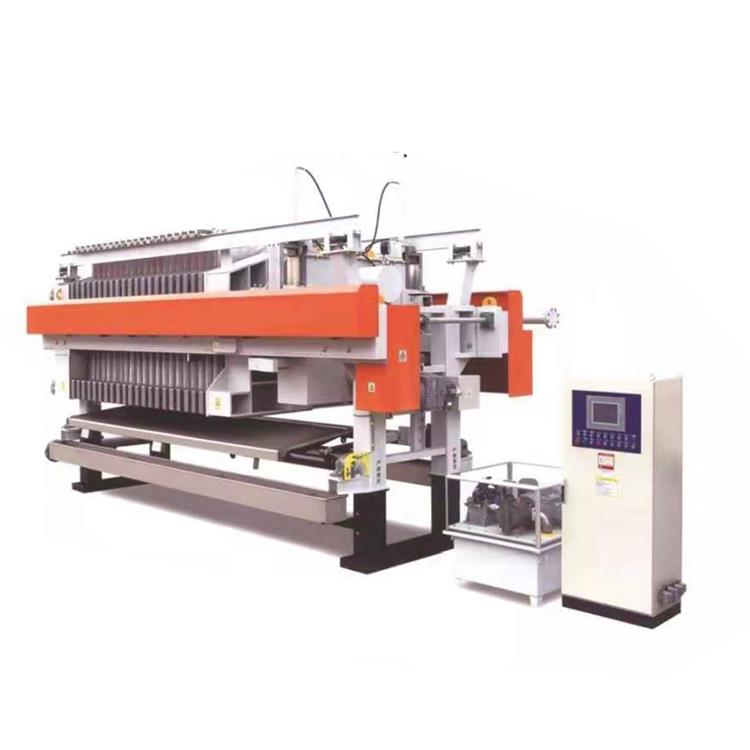
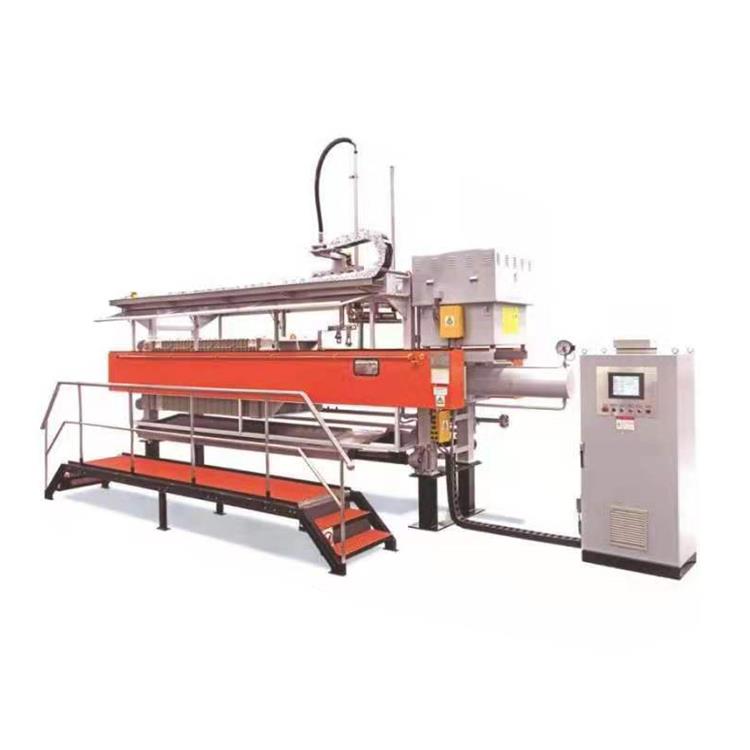
The working principle of the container press filter is composed of filter plates arranged to form filter chambers (with concave sides on both sides of the filter plates, two plates combined to create a box-like filter chamber).
The filter plates feature surface grooves and ridges for supporting the filter cloth. There are through-holes at the center and corners of the filter plates, which, when assembled, form a complete channel for introducing suspension liquid, wash water, and extracting filtrate. Handles on both sides of the filter plates are supported by beams and are clamped down by a tightening device. The filter cloth between the plates serves as a seal.
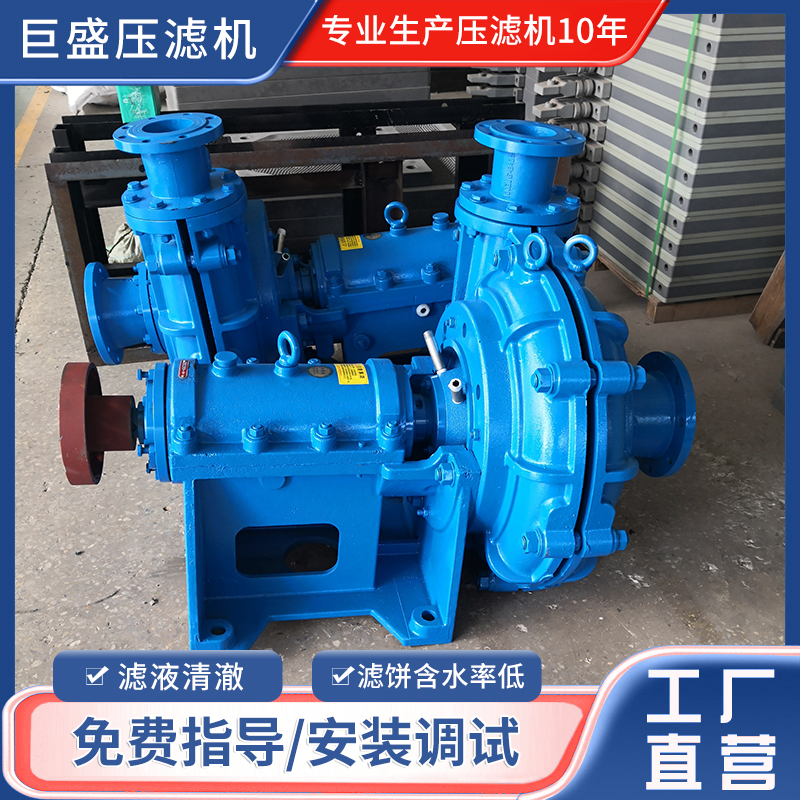
Under the pressure of the feeding pump, the material liquid to be filtered is sent into each filter chamber, where it is separated from solids and liquids through the filtering medium (selecting the appropriate filter cloth based on the industry). The solids accumulate on the filter cloth to form a filter cake until the filter chamber is full. The filtrate passes through the filter cloth and flows along the filter plate grooves to the lower outlet channel, where it is discharged collectively. After filtering, the filter cake can be washed with cleaning water. Sometimes, compressed air is introduced after washing to remove any remaining cleaning liquid. Once the filtering process is complete, the pressure filter is opened to remove the filter cake (stored between adjacent filter plates), the filter cloth is cleaned, and the plate filter is re-tightened to begin the next work cycle.