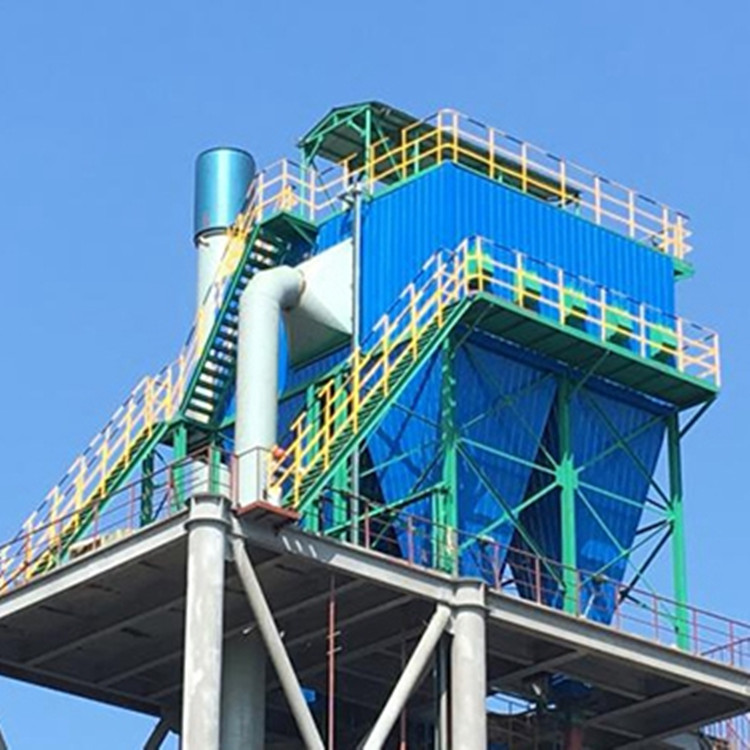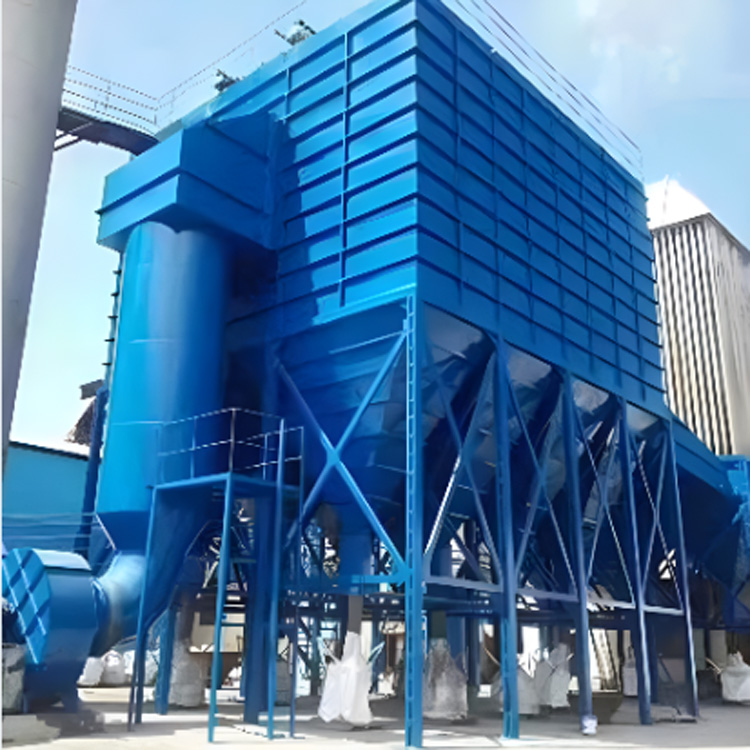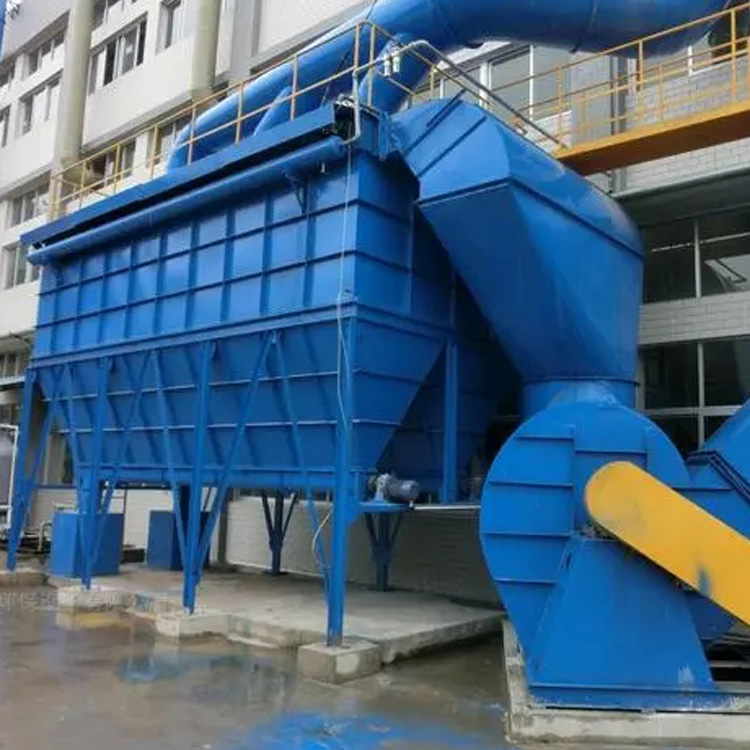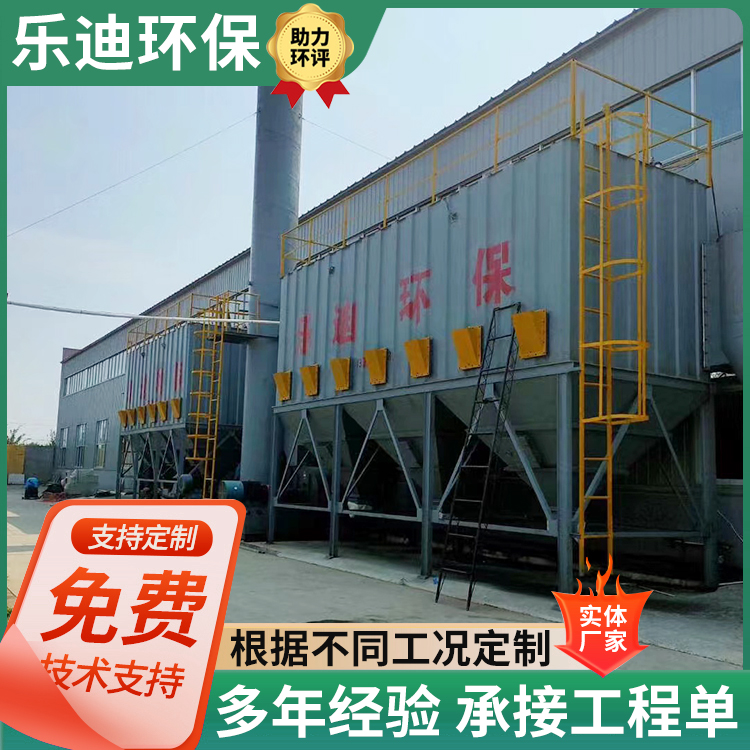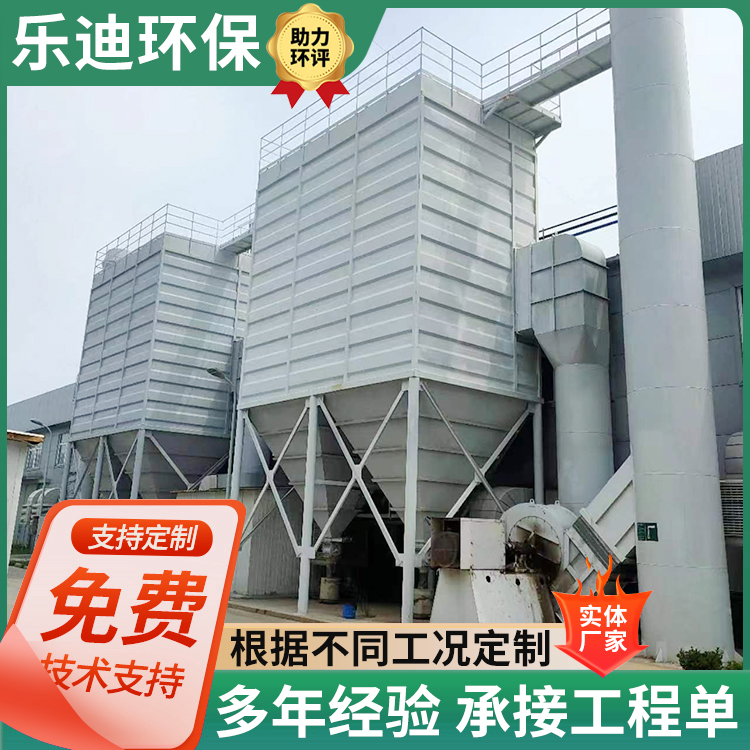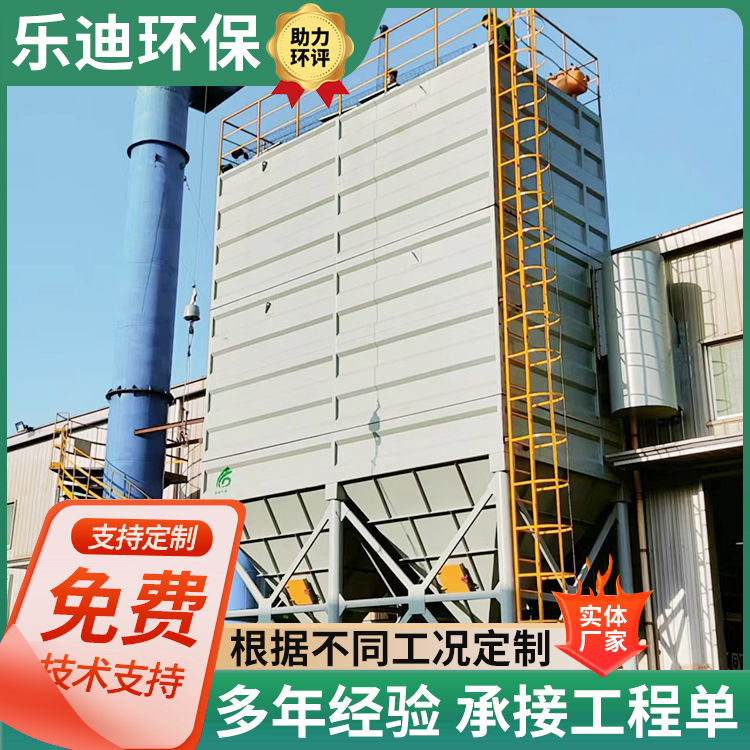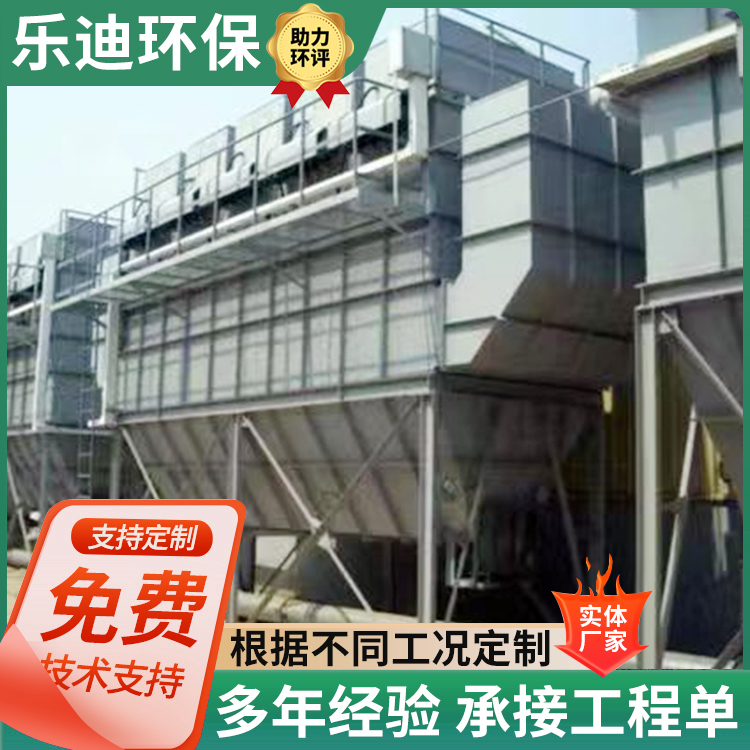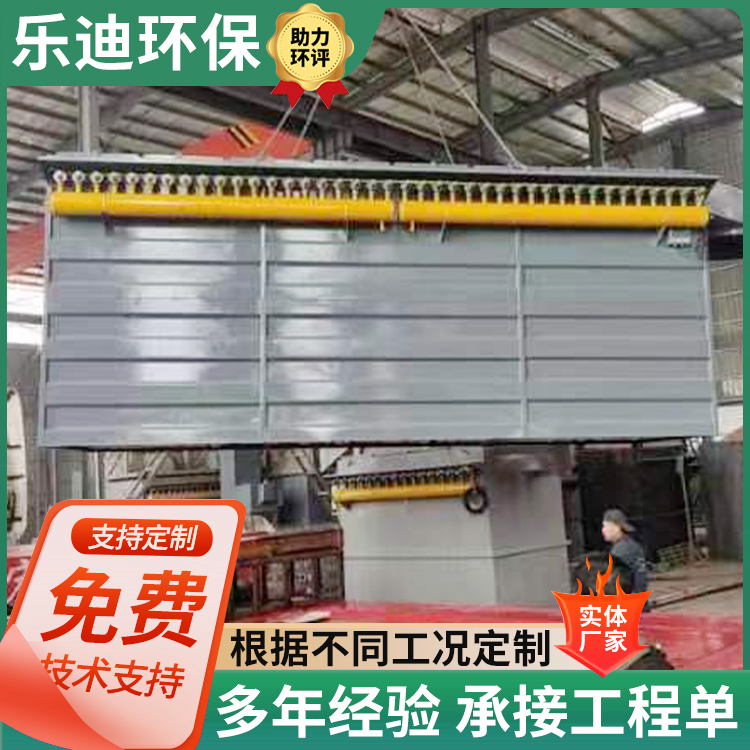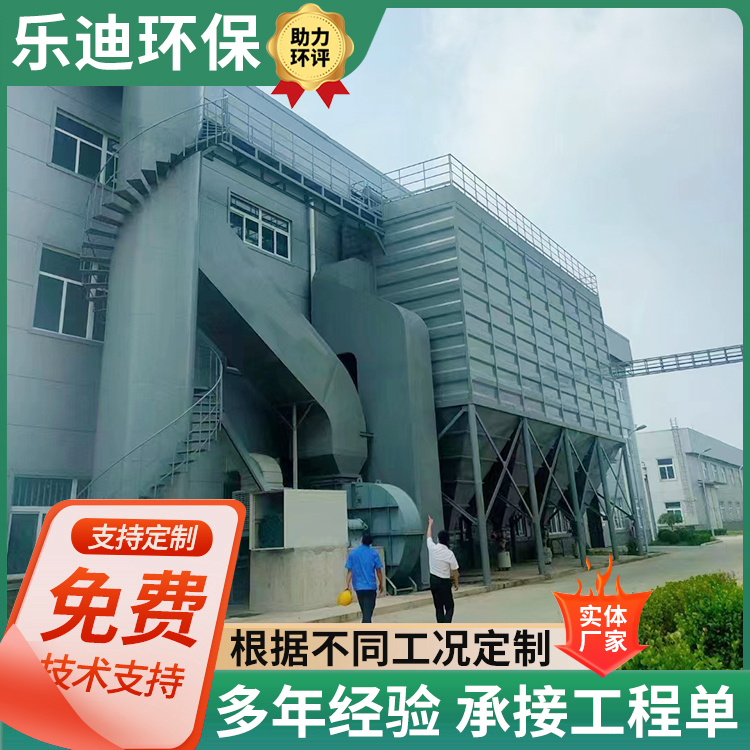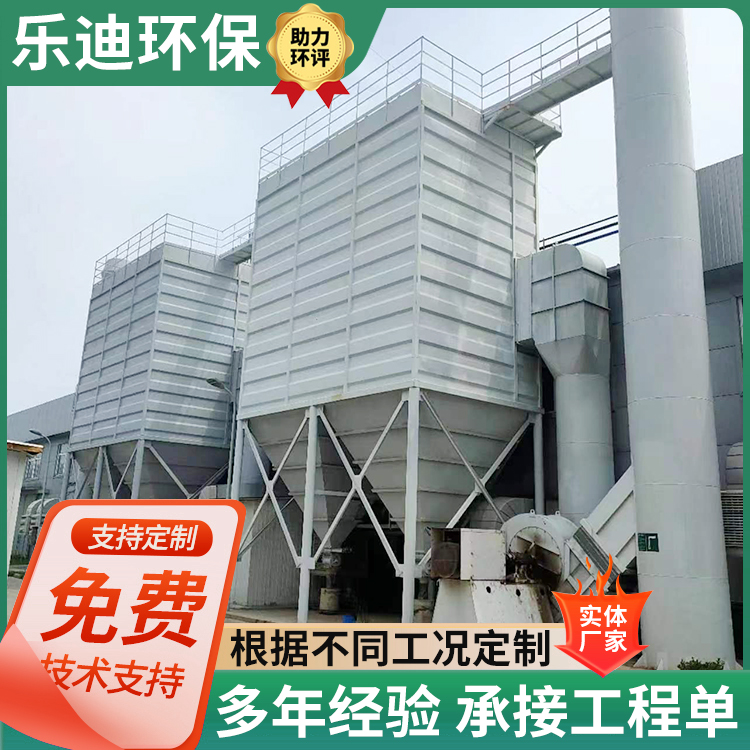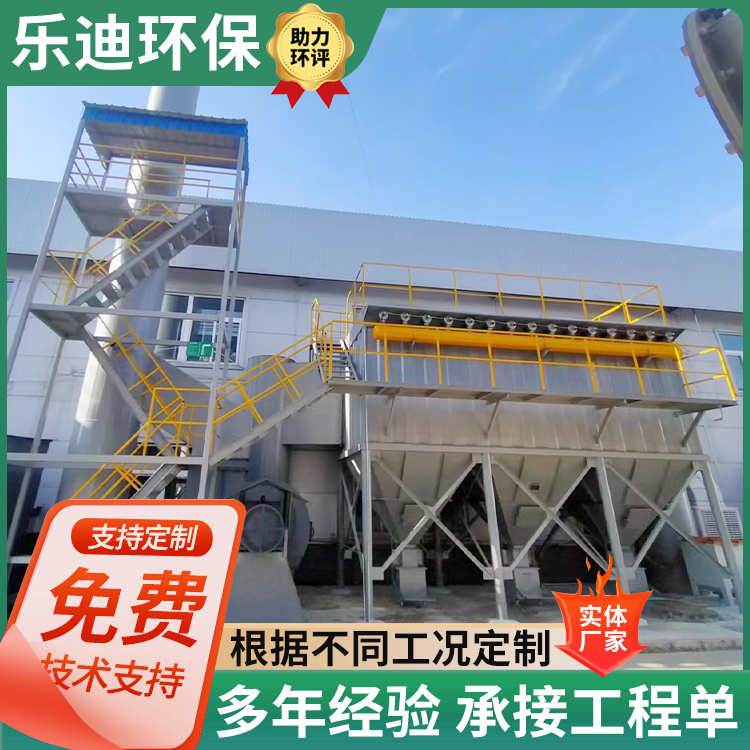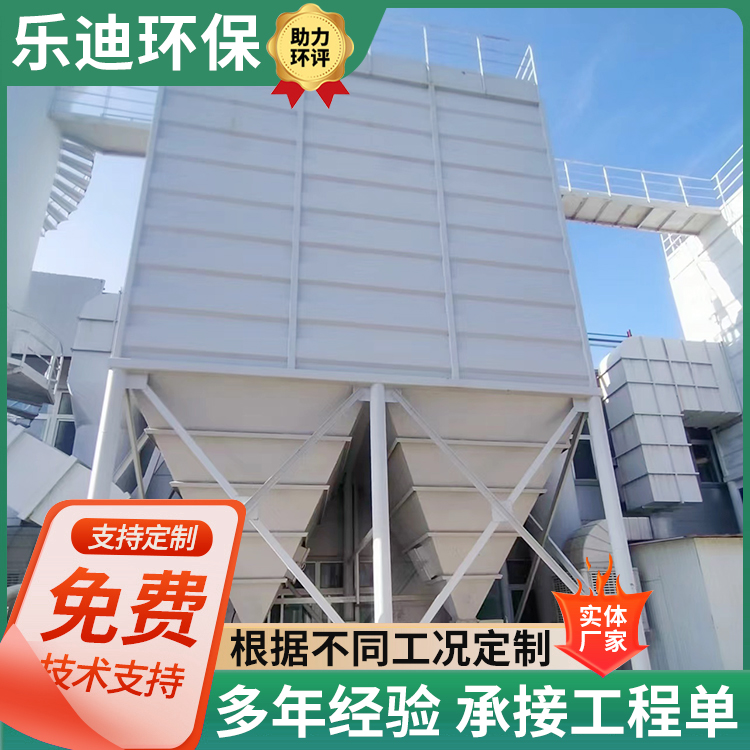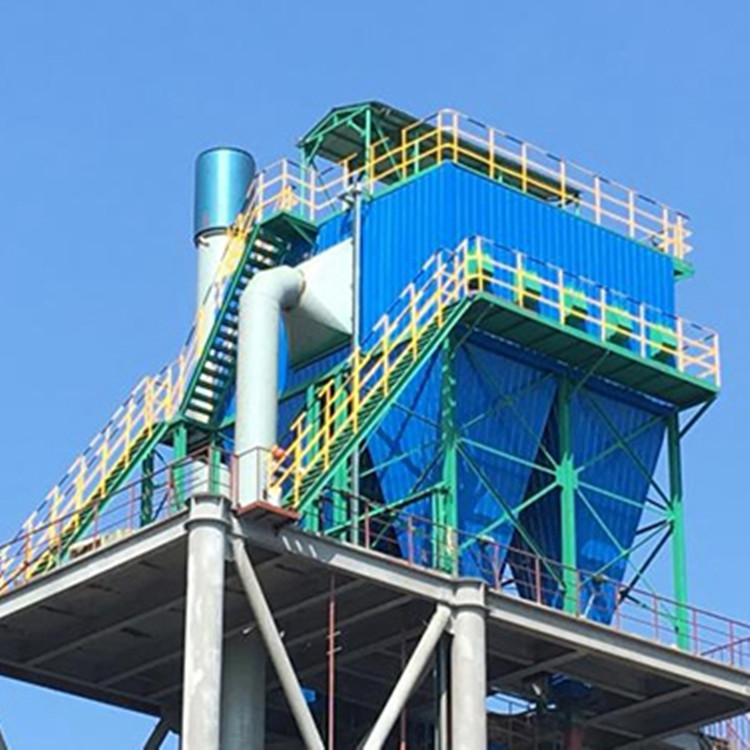

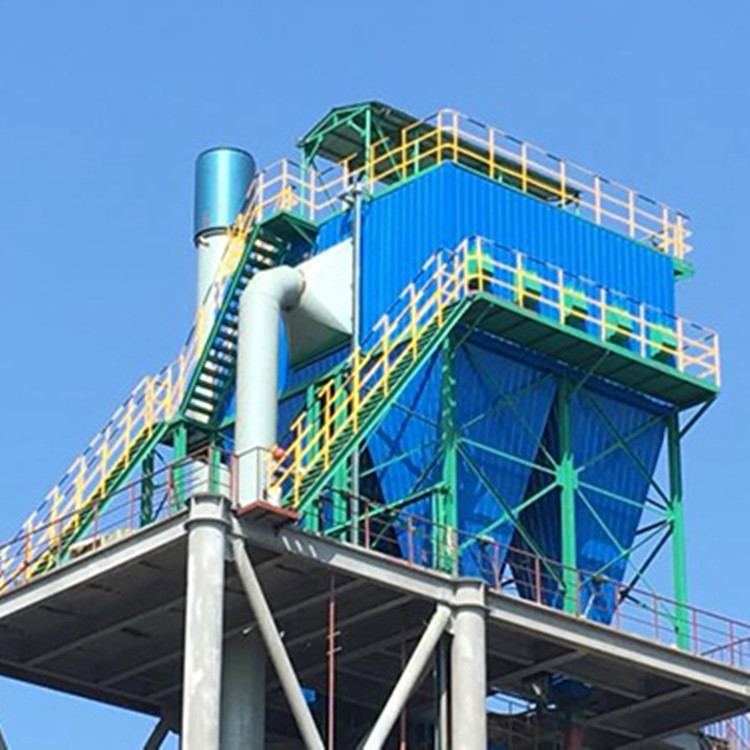
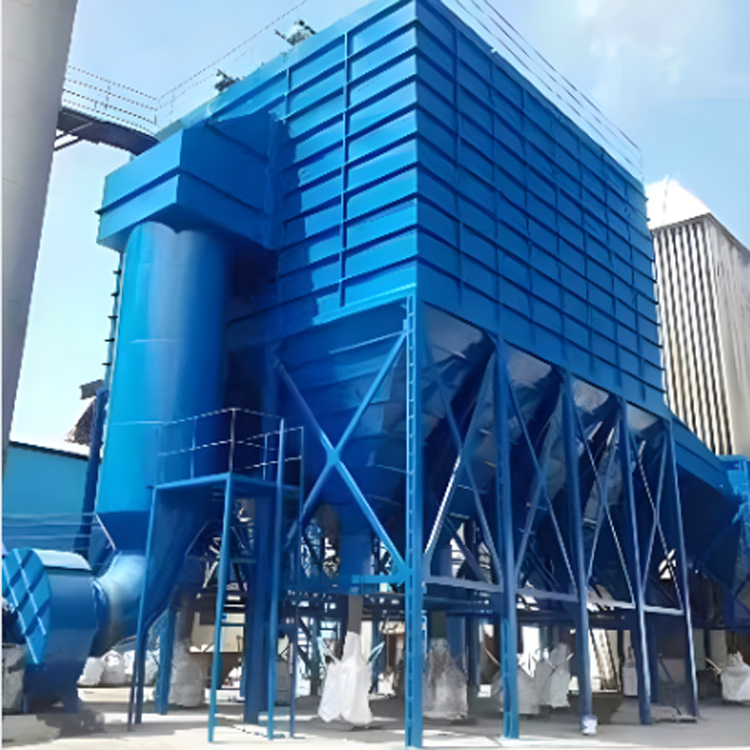
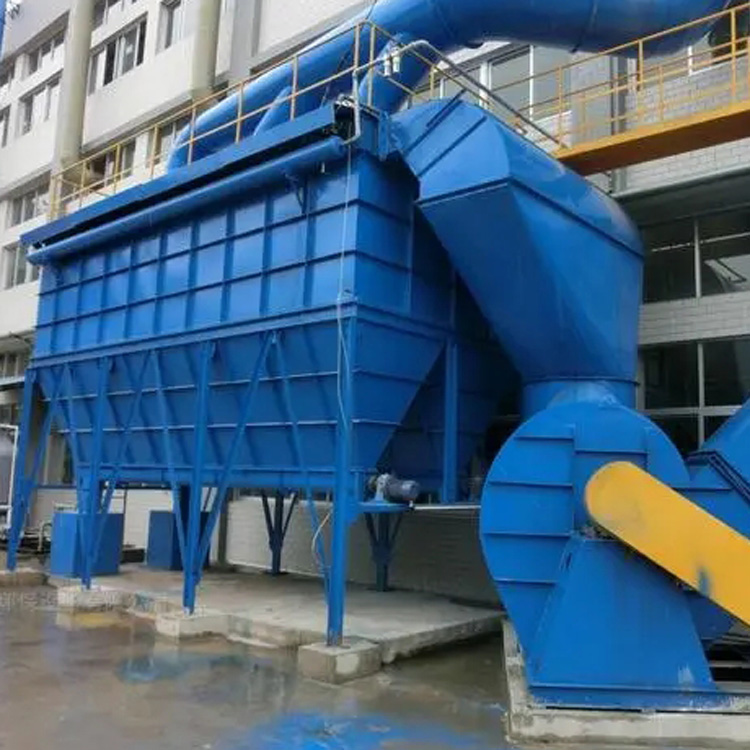


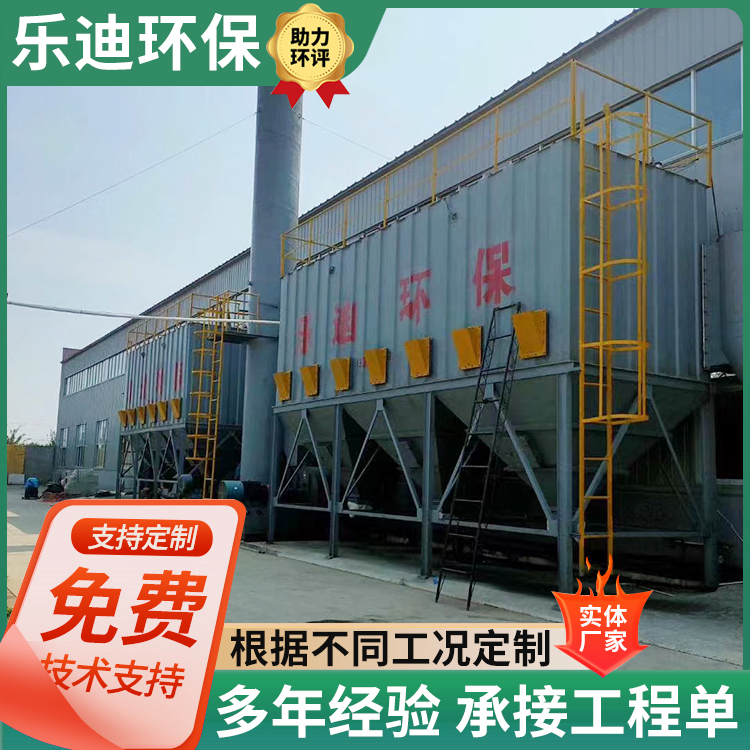
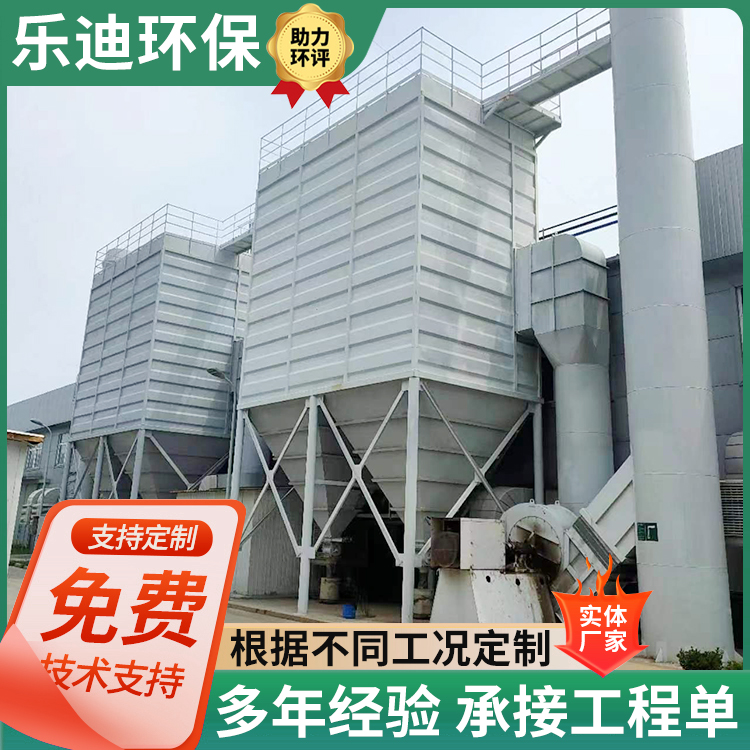
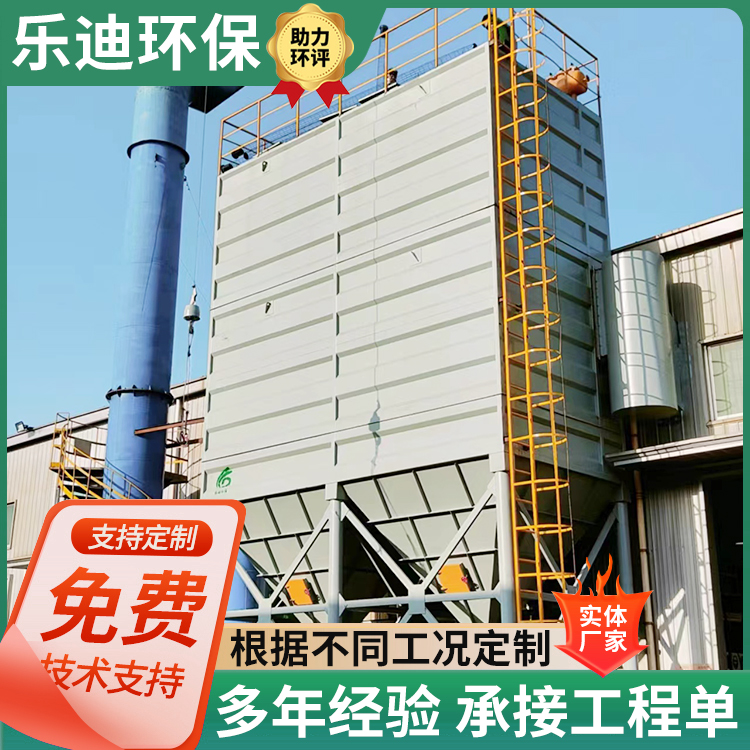
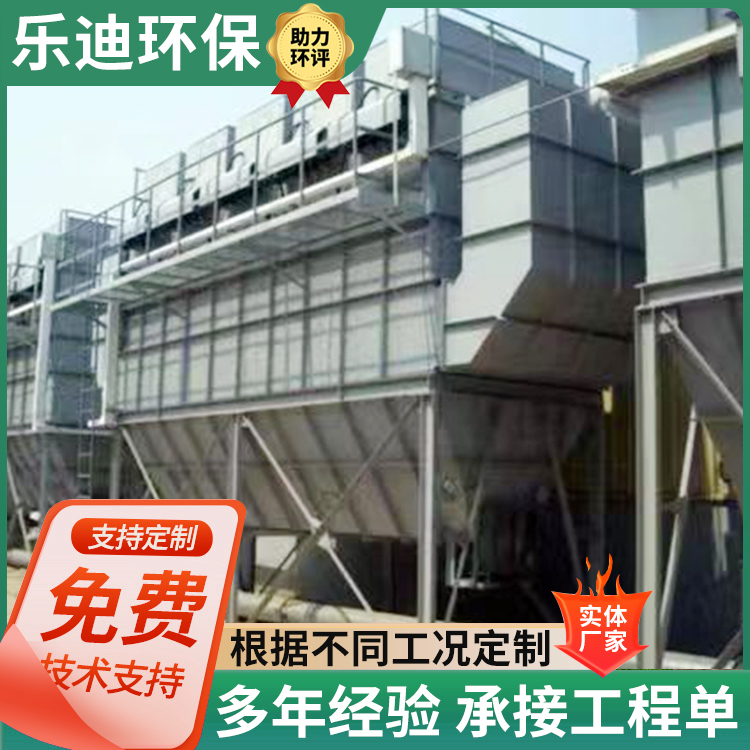
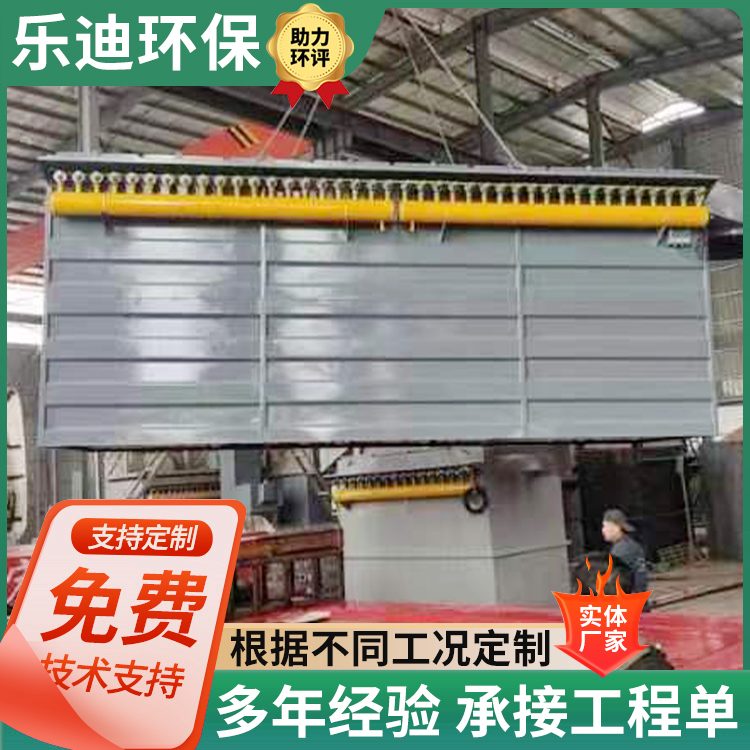






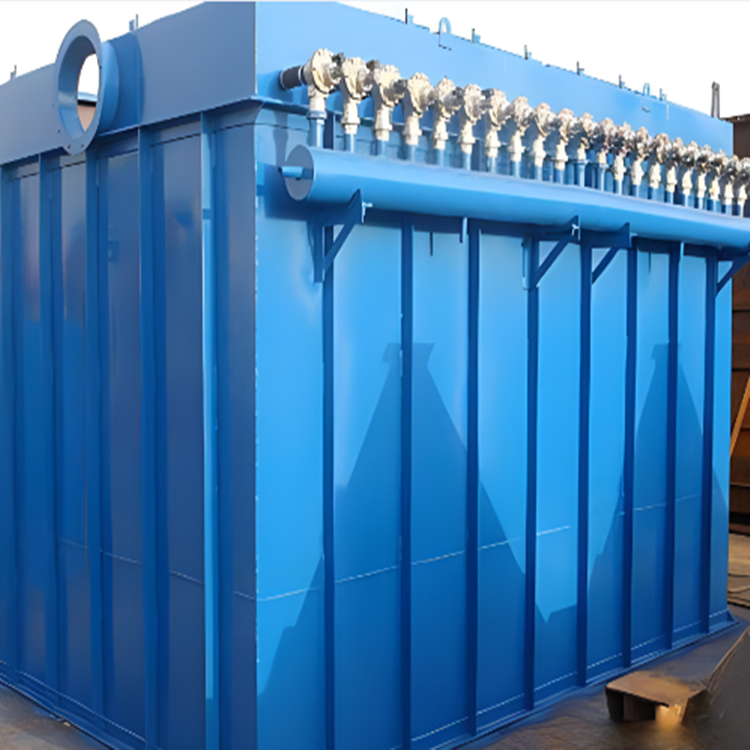


The PPC pulse jet bag dust collector is a unit-type dust collector with a large air volume handling capacity, good cleaning effect, reasonable dust removal efficiency, stable operation, easy maintenance, and small land occupation. It consists of the upper and middle housing, ash hopper, guiding pipe, bracket, filter bag assembly, and blowing device, as well as the ash conveying system. Arranged in a single column, each column represents an ash hopper. It integrates the advantages of various pulse-jet bag dust collectors with room reverse blowing, overcoming the shortcomings of poor cleaning strength with room reverse blowing and the necessity of simultaneous filtering with pulse-jet cleaning, thereby expanding its application range. The PPC pulse jet bag dust collector features overall cleaning in separate rooms, using large-scale electromagnetic pulse valves for cleaning, which offers good cleaning capacity, excellent results, and a long service life.
The PPC pulse jet bag filter is equipped with a separate cleaning chamber. During cleaning, each chamber is isolated individually and cleaned in rotation. The pulse and cleaning cycles of each chamber are automatically and continuously executed according to a pre-set program by the cleaning program controller, ensuring the effectiveness of compressed air cleaning. The entire cabinet design is integrated with the main pipeline structure, allowing the ash hopper to extend below the main pipeline, so that the incoming dust-laden gas directly enters the expanded ash hopper, achieving pre-dust removal. Therefore, the PPC pulse jet bag filter can handle dust-laden gases of general concentration and is capable of processing dust-laden gases.
The PPC pulse bag dust collector is widely used in cement plants for dust collection systems such as crushing, packaging, storage, clinker cooling, and various grinding machines. For coal mill dust collection, additional stable performance measures must be added, and the dust collector structure is correspondingly modified. It is also suitable for dust-laden gases with very high dust concentrations, such as the powder grinding system with an O-Sep washing machine, where the dust content exceeds 1000g/m³. Using this series of dust collectors for dust collection eliminates the need for a cyclone dust collector as the main product. Besides the cement industry, it is also applicable to dust collection of waste gases in metallurgy, chemicals, machinery, and civil boilers. The filter bags of this series are generally made of polyester needle felt, allowing temperatures below 120°C. If aramid needle felt is used for the filter bags, the allowable temperature can reach up to 210°C, but this material is expensive. If the temperature of the waste gas to be treated is higher than the allowable temperature of the above filter material, cooling measures should be taken before the waste gas enters the dust collector.
The PPC pulse jet bag dust collector features filter material and a stable structure with a pressure relief device, offering excellent performance stability. It performs well in coal powder preparation systems and the collection of flammable and explosive dusts. The PPC pulse jet bag dust collector has few mechanical moving parts, requiring minimal maintenance and easy bag replacement. Due to its pulsating chamber cleaning method, it achieves excellent dust collection efficiency and maintains long-term operation. The PPC pulse jet bag dust collector, in addition to its stable performance, shares the same advantages as the MDC stable performance bag dust collector.
The PPC pulse jet bag filter is used for dust collection in industrial exhaust gases such as cement, power, metallurgy, and chemical industries. It is widely employed in dust collection points like cement grinding, raw material grinding, ore crushing, material hoisting, and transportation.
PPC dust collector pulse bag filter working principle:
During the operation of the PPC pulse bag dust collector, it primarily involves the dust-laden gas being吸入 into the housing by the dust hood, entering the filter bags for filtration. The dust is trapped on the surface of the bags, and the purified gas is then exhausted through the outlet by the fan. After a period of continuous operation, the dust on the surface of the filter bags accumulates, prompting a cleaning process. The dust is shaken off into the dust collector (drawer) and then manually handled. The PPC pulse bag dust collector has demonstrated good application effectiveness after undergoing tests.
The PPC pulse jet dust collector should be regularly maintained and inspected after commissioning. This not only prolongs the lifespan of the collector but also ensures that any faults can be promptly repaired, preventing major issues.
PPC pulse bag dust collector maintenance matters:
1. Regularly inspect the pressure regulating valve for compressed air, the water separator filter, the oil mist eliminator. The water separator filter should be drained regularly, and the oil mist eliminator should be oiled at scheduled intervals. Adjust the pressure promptly if the air source pressure is unstable. Ensure there are no leaks in the compressed air pipeline system.
2. Regularly inspect the cylinder's movement; if there is any leakage, it should be repaired promptly.
3. While the dust collector is operating, continuously monitor the emission conditions. If the chimney is emitting dust, check the filter bag immediately.
4. Perform a dusting before shutdown, ensuring the filter bags are clean and empty the accumulated dust from the hopper to prevent dust from sticking or coal dust from naturally adhering to the equipment.
5. All rotating parts should be regularly oiled.
Installation Precautions for the PPC pulse bag dust collector:
1. The PPC pulse-jet dust collector can be installed indoors or outdoors. It's recommended to install it indoors, especially in cold northern regions. When installed indoors, leave sufficient space around the equipment for maintenance, repairs, and filter bag replacements. Outdoor installation is also an option. If there's no space indoors or for other reasons, outdoor installation requires a rain shelter to prevent the equipment from being damaged by wind and rain over time, thereby extending its lifespan.
2. All flange connections on the box should be tightened with seals and bolts; no gas leakage should occur at any weld seams. There should be no slag or debris.
3. After installation, a tightness check must be conducted on the overall components of the dust collector equipment, ensuring that the pressure relief valve, inspection door, and connections have no air leakage.
4. All mechanical action parts must be flexible and precise. The reverse blower must rotate in the correct direction, and there should be no friction between the pulse valve and the housing.
5. Once all equipment is fully installed, it can operate normally. Technical malfunctions will not occur unless there is human damage.