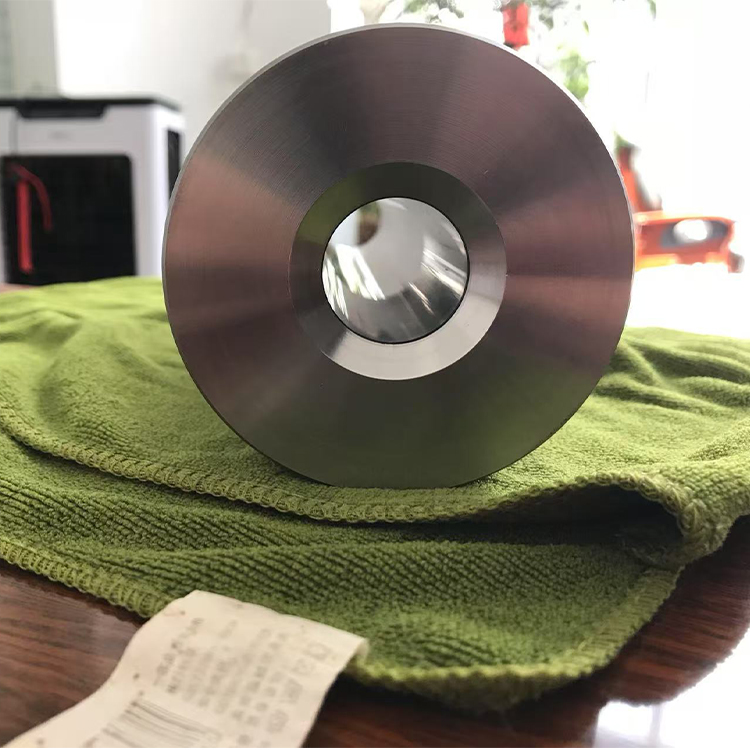







Check valves are valves that maintain fluid flow in a specific direction and prevent backflow. The valve disc opens under fluid pressure, but in the event of backflow, it seals tightly against the valve seat due to back pressure to prevent backflow.
The valve is represented in two forms.
①Swing Check Valve
A structure featuring a disk-shaped valve disc hinged at one end to allow free movement above the valve body, resulting in minimal pressure loss and easy fluid flow.
Also suitable for vertical piping (flowing from bottom to top)
②Rising and falling check valve
It is a structure that has been assembled by removing the valve stem (valve rod), handwheel, and other operating parts from the shut-off valve, and then adding a cover.
Usage Instructions
If the valve disc maintains an opening of more than a certain degree, a certain flow rate is required.
For instance, the standard flow rate within the pipe to ensure the valve disk maintains a certain opening is as follows: for butterfly valves with fluid being water, the flow rate is 1~3 m/s; for fluid being gas (assuming air pressure at standard temperature is 100 kPaG), the flow rate is 30~50 m/s.
②This valve exhibits self-excited vibration when the flow rate is too slow or too fast, which consequently shortens the valve's lifespan. Therefore, please carefully select the valve size to ensure an appropriate flow rate.
The "self-oscillating vibration phenomenon" refers to the unstable state where the valve disc repeatedly strikes the valve body seat.
In cases where self-excited vibration occurs during gas or steam use, it is primarily due to insufficient flow velocity.
As a countermeasure, a swing check valve can be equipped with a counterweight, or a tilting disc check valve can be used for industrial applications.