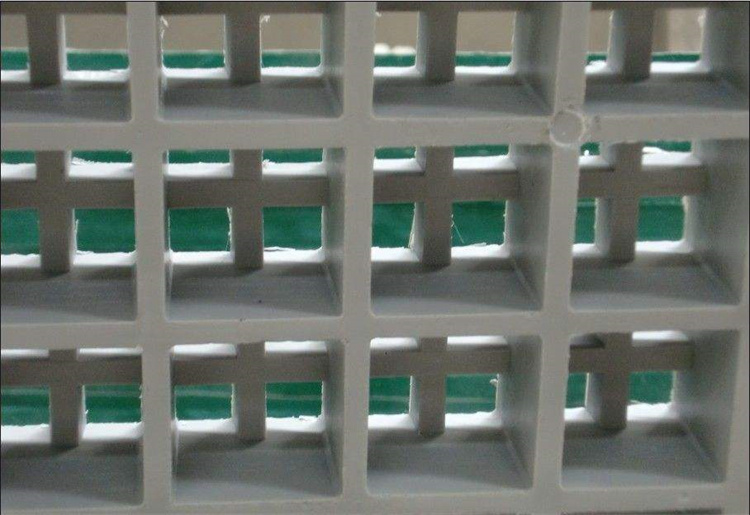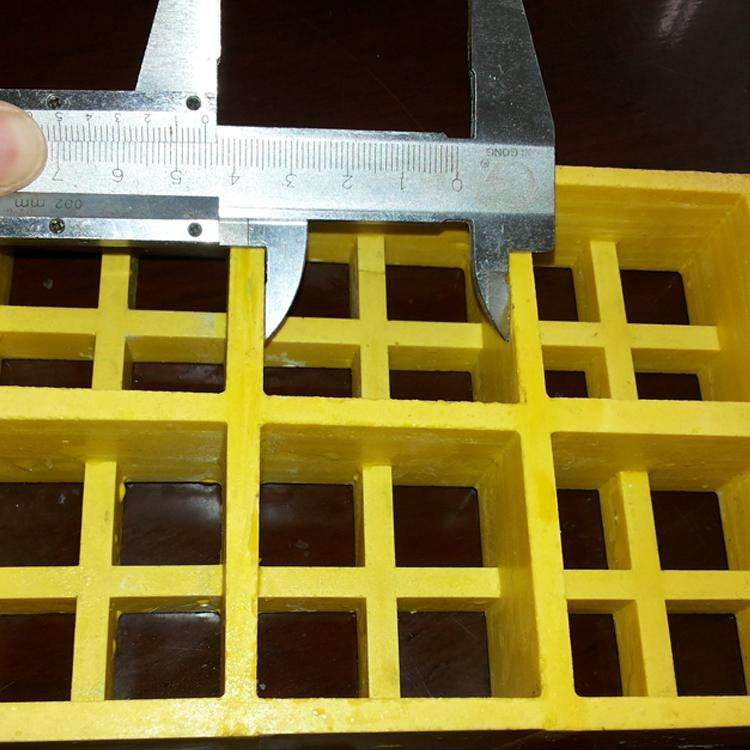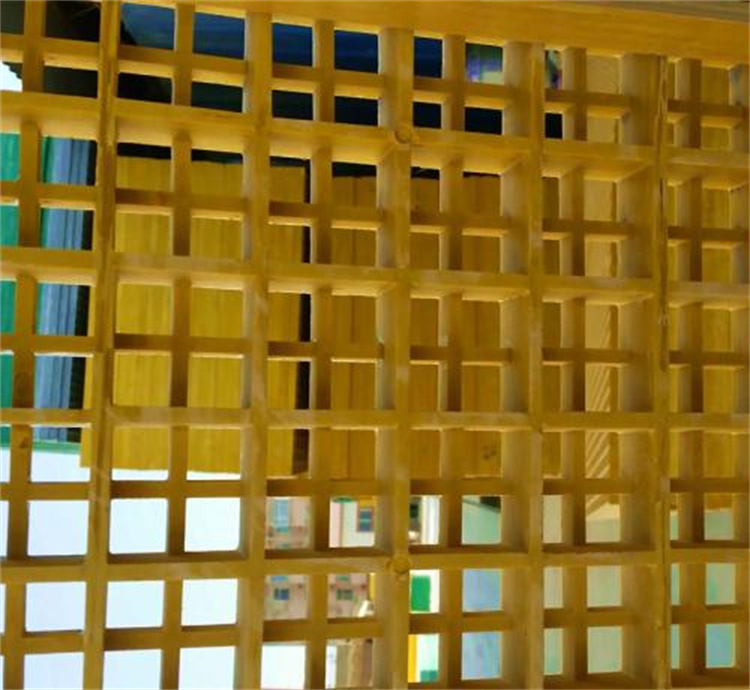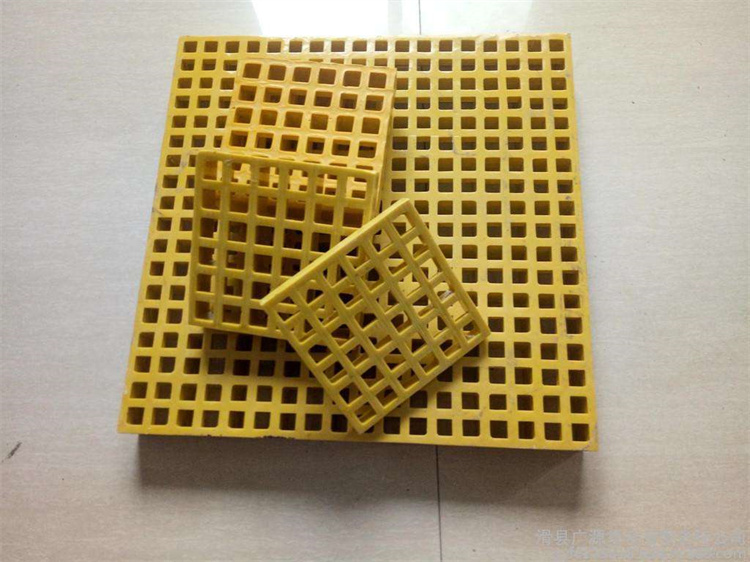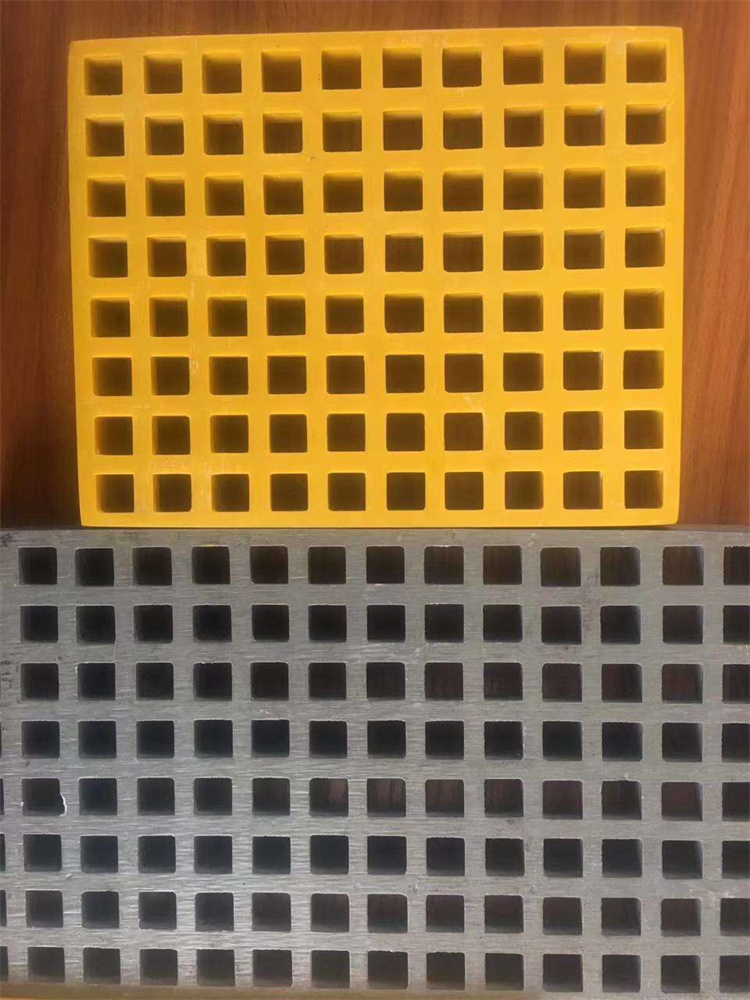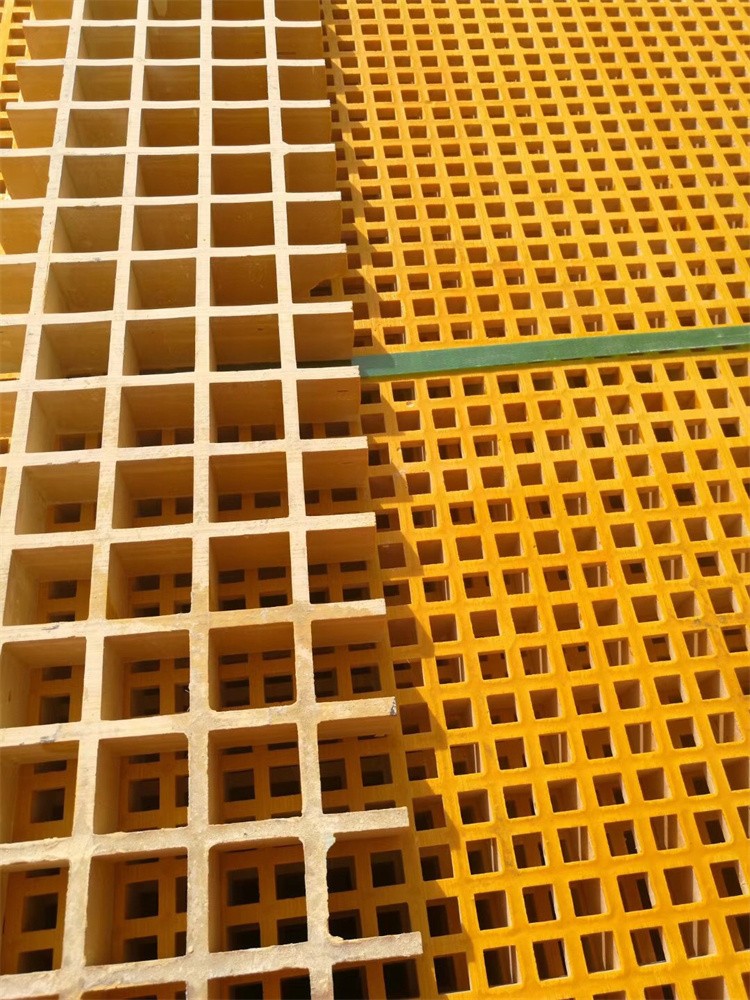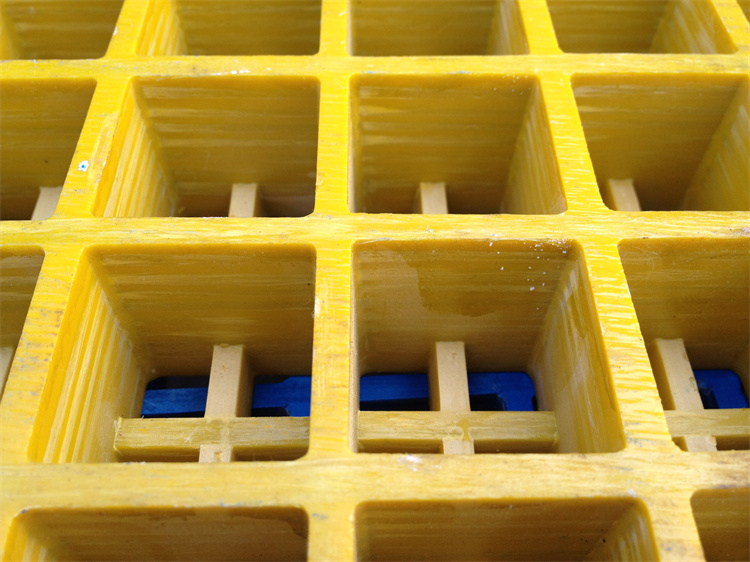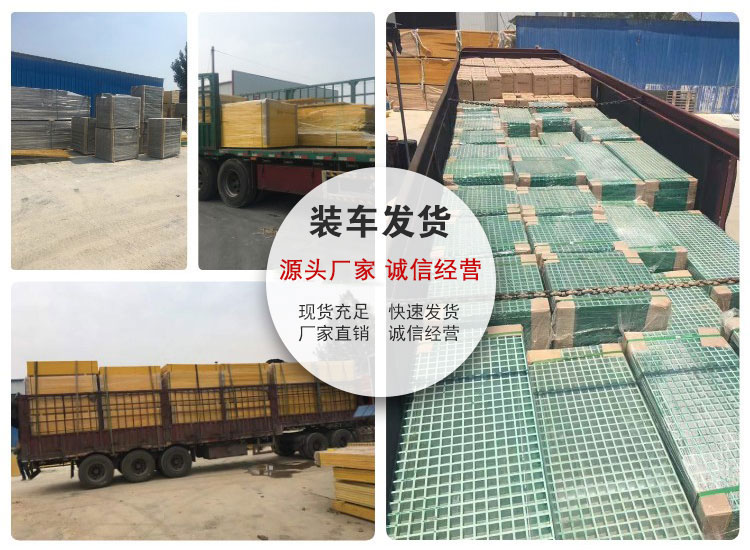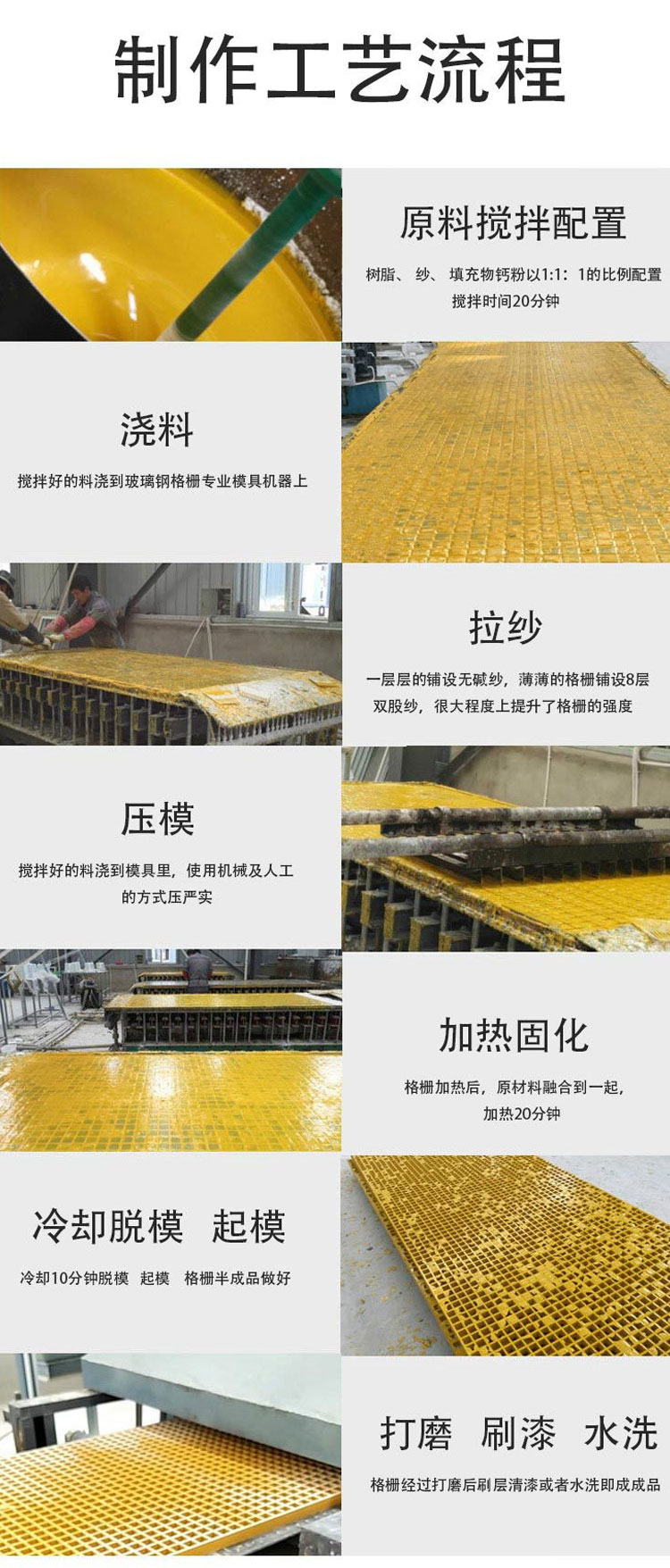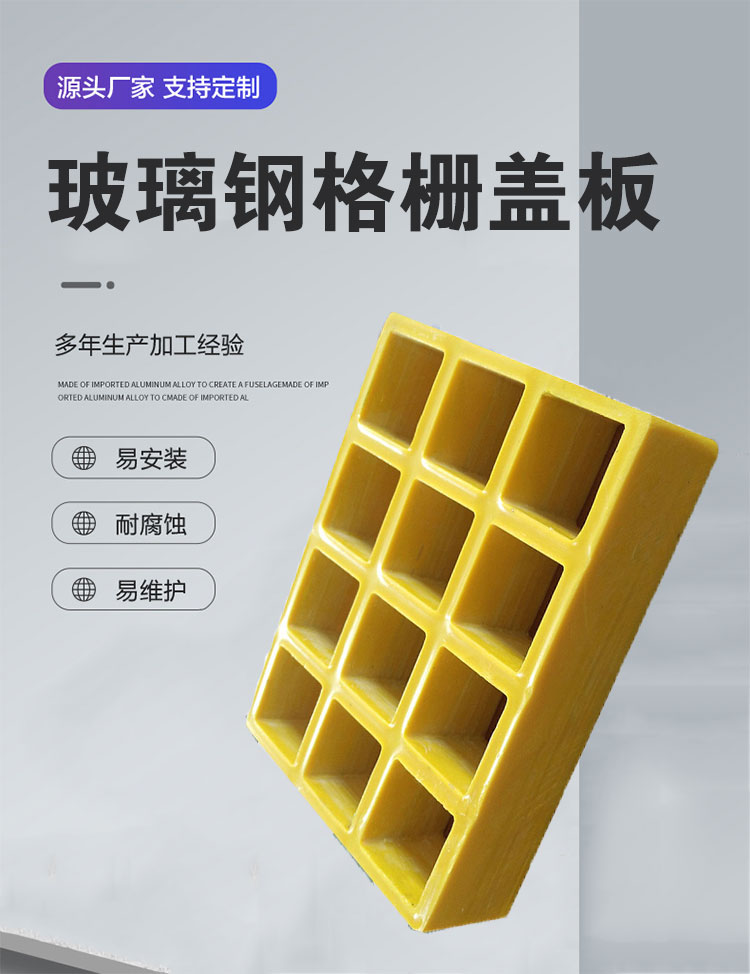

Glass fiber grid panels with many regularly distributed rectangular and square openings are made by interlacing glass fibers and then casting them with resin, resulting in bidirectional isotropic mechanical properties. They are widely used in work platforms, equipment platforms, drilling platforms, walkways, etc., in industries such as petrochemicals, electronics, electricity, papermaking, dyeing, electroplating, marine exploration, and wastewater treatment. Ideal for corrosive environments, they are also suitable for civil building facilities.
Application Occasions: Inspection Walkways, Drainage Covers, Large Containers, Cleaners, Silt Traps, Flume Channels, Biochemical Water Treatment Pool Accessories, Ventilation Windows, Stairs, Cooling Towers
Operation Deck for Chemical Plant: Stair Treads, Operating Platforms, Railings, Double-Layered Floors, Drainage Covers, Filtration Grates, Petroleum Industry
Ocean Oil Platform Textile Factory: Replacing metal grating, wooden platforms, and covering cement floors, dyeing tanks, floors, near valves, etc. Power Plant: Chemical water workshop manhole covers, wastewater ponds, etc. Metal Surface Treatment: Acid washing liquid sites, machines surrounded by wooden floors, high corrosive container areas, electroplating line walkways, double-layered ground.
Seafood Processing Plant: Slippery surfaces and harsh conditions
Ship Transportation Industry: Platform, Deck, Walkway, Stair Tread
Beverage Industry: Stair Treads, Cost-effective Alternative to Expensive Stainless Steel, Load-Bearing Flooring
Pulp and processing plant: stair treads and floors, ground walkways, humid areas
Electronics Industry: manhole covers, pickling workshops, anti-static (static-dissipative grating) and high-purity clean rooms. Meat Processing Plants: corrosive ground surfaces, staircases, slippery floor workbenches, and stair treads. Others: corrosion-resistant shelves, decorations, square fountains, scaffolding, civil building facilities, farming enclosures, and double-deck floors.
Operation Platforms: Many chemical plants have numerous operation platforms, which are made with glass fiber reinforced plastic grating as the surface material. These platforms are corrosion-resistant, paint-free, maintenance-free, and have a long service life, lasting up to 15 to 20 years. They are lightweight, reducing weight by three-quarters compared to steel, thus eliminating the need for lifting equipment during installation. As support platforms on equipment, they are even more suitable. The hole cutting for glass fiber reinforced plastic grating is very convenient, and can be easily cut with a curved blade saw to meet installation requirements without altering the mechanical properties of the grating or causing its disintegration. For mobile operation platforms, the use of lightweight glass fiber reinforced plastic grating is even more ideal. Furthermore, the appropriate design allows for the grating to have sufficient elasticity, which can reduce the fatigue of workers who work on it for long periods, improving work efficiency, making it the ideal material for operation platforms.
Aisles: Factories, such as chemical plants and steel mills, often have numerous aisles, some serving as passages between equipment and others for inspection purposes. These aisles are typically made of welded round steel, which requires annual anti-corrosion coatings due to deterioration. Walkways constructed from FRP grating require no maintenance, ensuring long-lasting vibrancy and a lightweight structure. With a non-slip sand-coated surface, they are the primary choice for outdoor walkways during the snowy and icy seasons in the north.
Manhole covers: Many electrochemical workshops in chemical factories and smelting plants, as well as chemical treatment workshops in power plants; electroplating factories, battery factories, and acid washing workshops in machinery factories; dyeing and printing factories, salt mines, etc., all have a large number of ground ditches filled with corrosive liquids. Traditional ditches are often lined with angle iron grates, flat iron grates, or cast iron covers, which are not resistant to corrosion and can be damaged within a few years or even months, leaving workshops in a state of disarray. FRP grates can effectively address the corrosion issue, facilitate the drainage of wastewater into the ditches, and allow for easy observation of the ditches at any time.