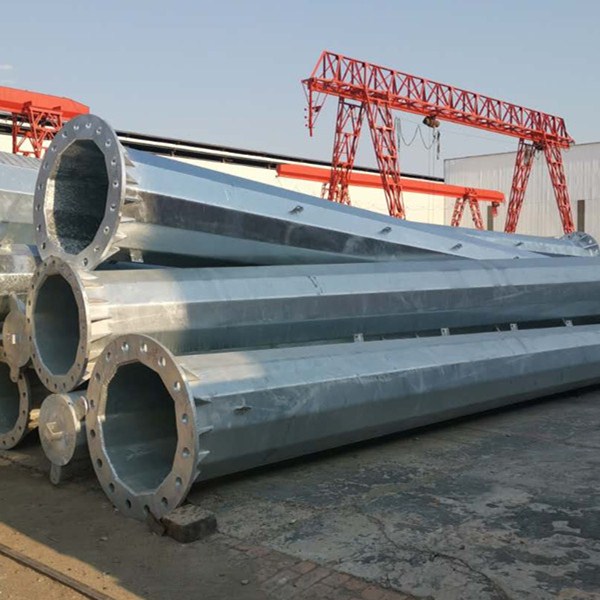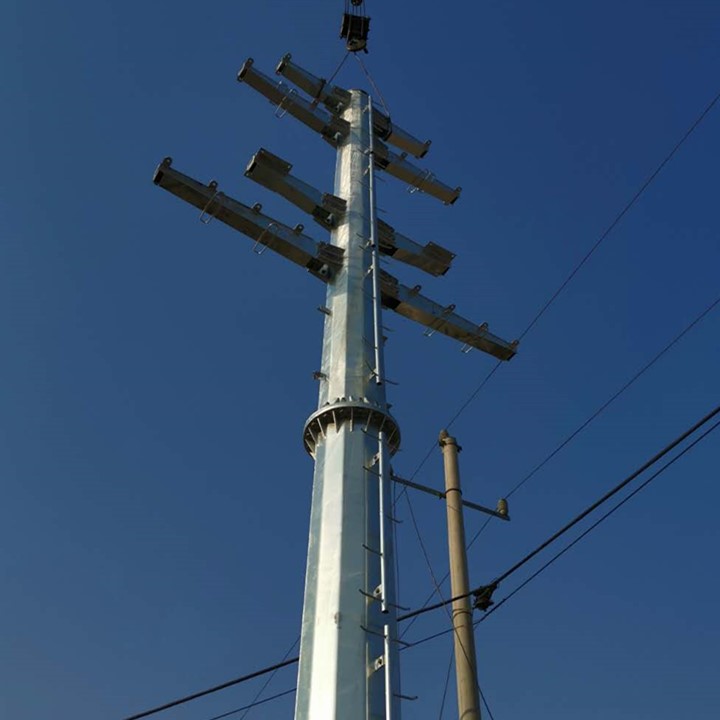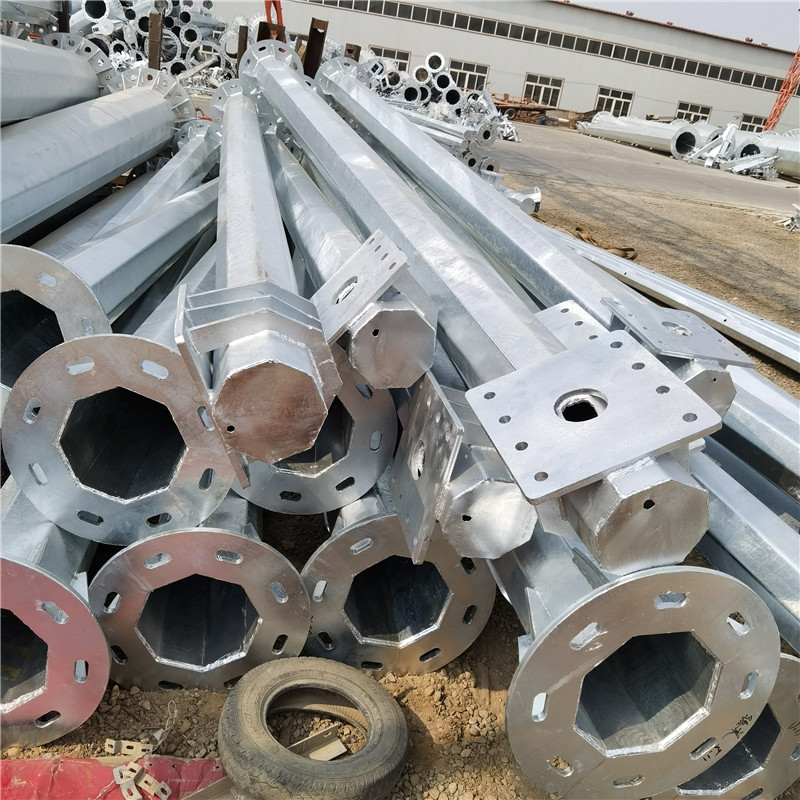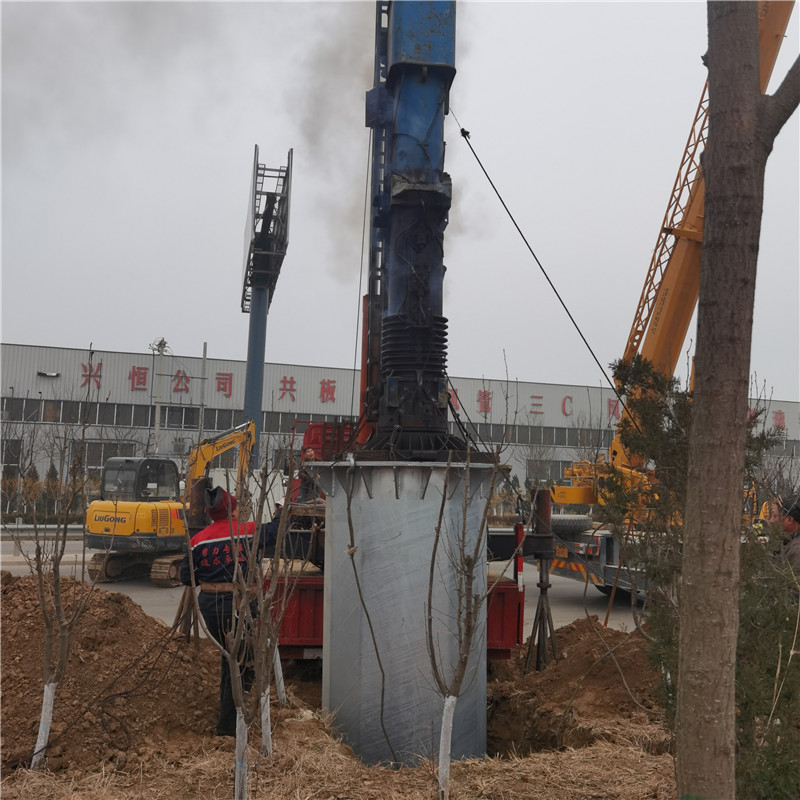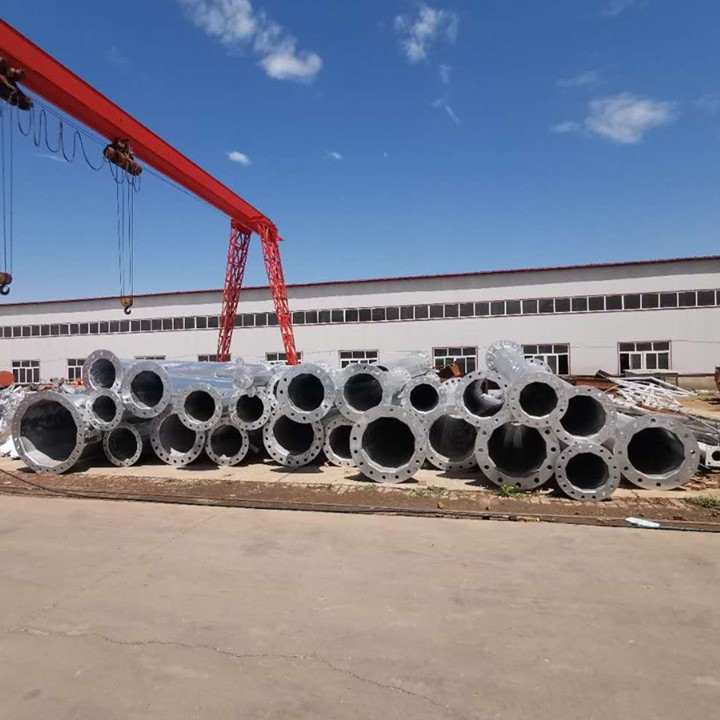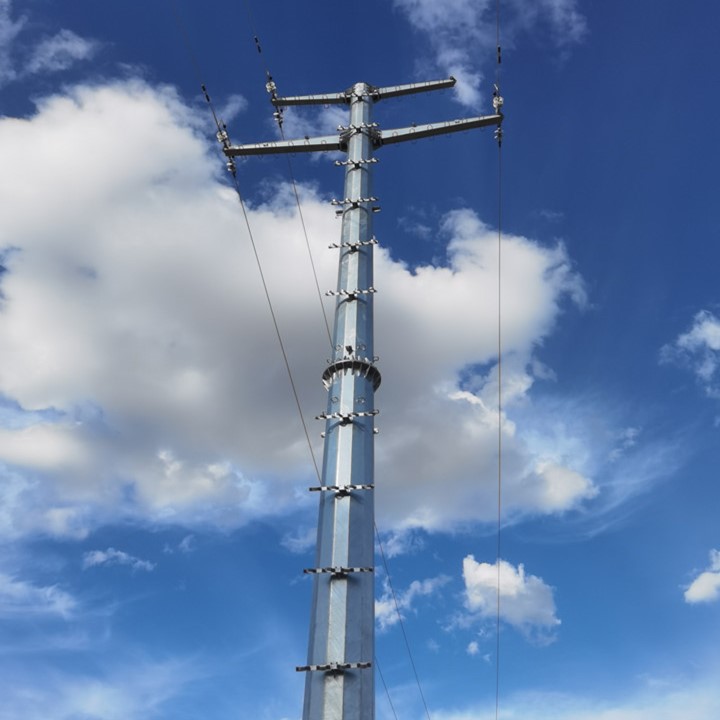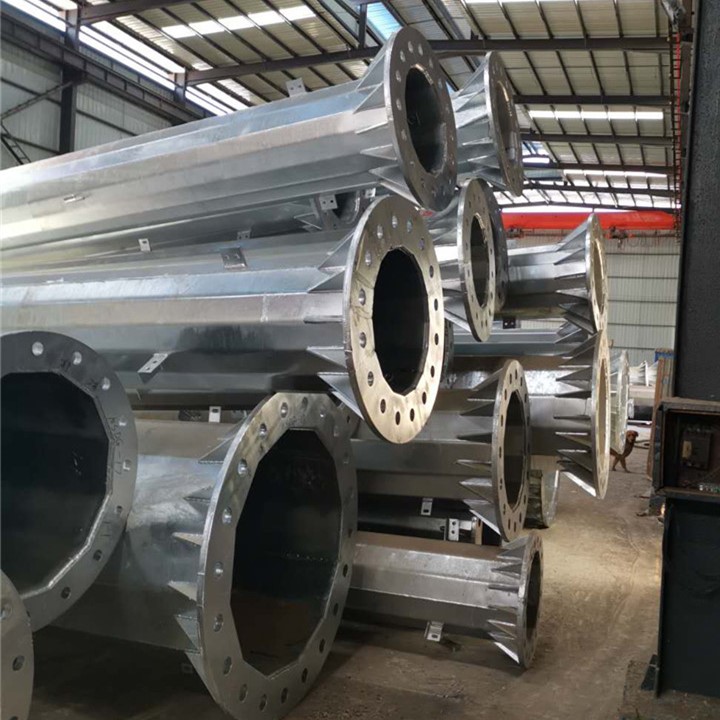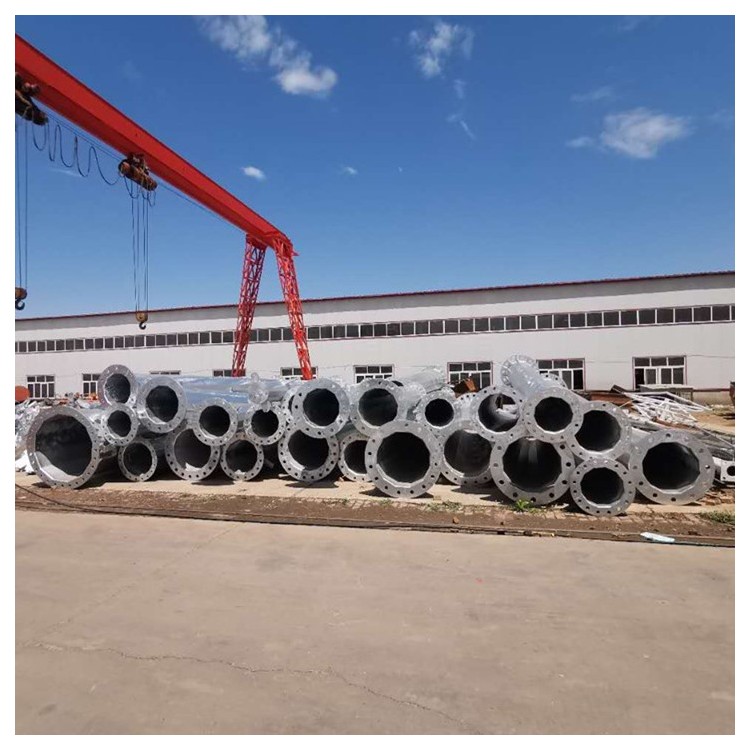

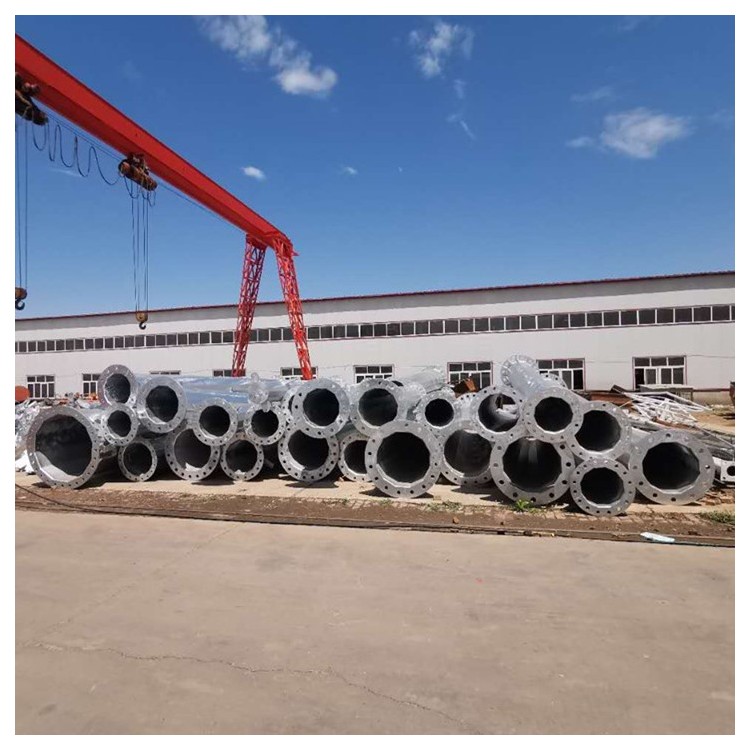
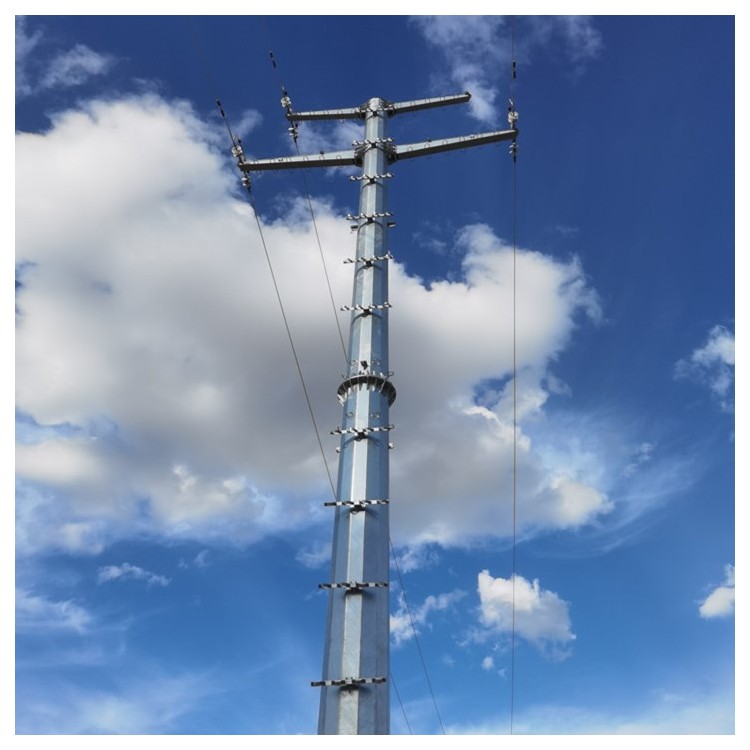










Main steel rod profiles:
1. Straight Rod: Used on the straight section between tension type towers in the transmission line, primarily bearing vertical and lateral loads. It can also withstand irregular longitudinal forces. Typically a single rod with conductors arranged in a triangular pattern.
2. Tensioning Pole: Used at line turns or in areas with special requirements, it can bear large lateral and longitudinal loads, enhancing the longitudinal strength of the line and limiting the scope of line accidents. It also serves as a tensioning tower for construction and maintenance work. It is divided into turn tensioning poles and straight tensioning poles, which are generally H-shaped poles arranged horizontally with added guy wires.
3. Terminal Pole: A single tower at the entry or exit of a power plant or substation, commonly using a terminal pole, which is characterized by needing to withstand significant longitudinal tension differences between the conductors and ground wires. Typically, it is a gantry-type pole with horizontal conductor arrangement and additional guy wires.
The effectiveness of tensioned-type pole application in steel poles for lines:
To establish a robust power supply enterprise with three strengths and two advantages, reinforcing the power grid, and ensuring the safe operation of the lines is imperative. Through long-term practice, replacing reinforced concrete poles with steel poles in the construction of 35KV lines has yielded excellent results. This is evident in the following aspects:
1. The use of steel poles in tension towers is highly economical when considering the lifespan and overall cost calculations.
2. Steel rods occupy minimal ground space, are aesthetically pleasing, and can accommodate the installation of 35KV lines in urban corridors.
3. The steel rod has no attachments at the base, eliminating any items that could be stolen. This prevents the theft of line equipment from threatening the operation of the line, thereby ensuring the safe operation of the line and enhancing its power supply reliability.
4. The steel rod is slightly thicker at the base than the electric pole, but it does not require additional guy wires. When it is located in farmland, it occupies less space and has a minimal impact on farmers' planting. The community work is relatively easier, and the construction timeline can be shortened, ensuring the project is completed on schedule.
5. Steel poles now, compared to electrical poles, also do not require land acquisition. They only incur fees for occupying the pole pit, thus skipping the complex land requisition procedures and saving time.