












I. Overview of Pipeline Pumps
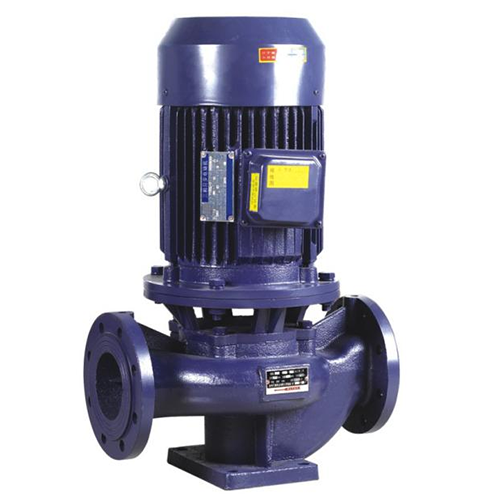
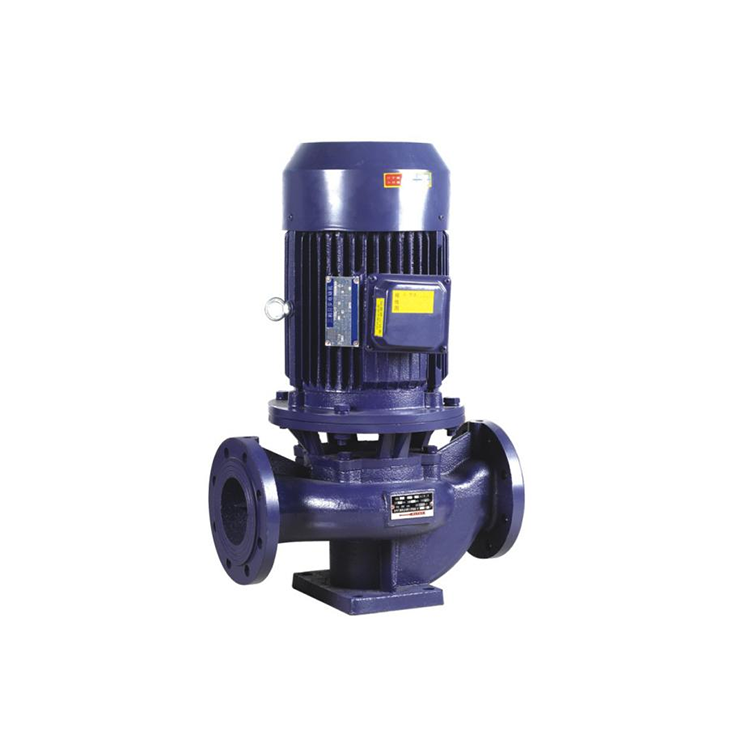
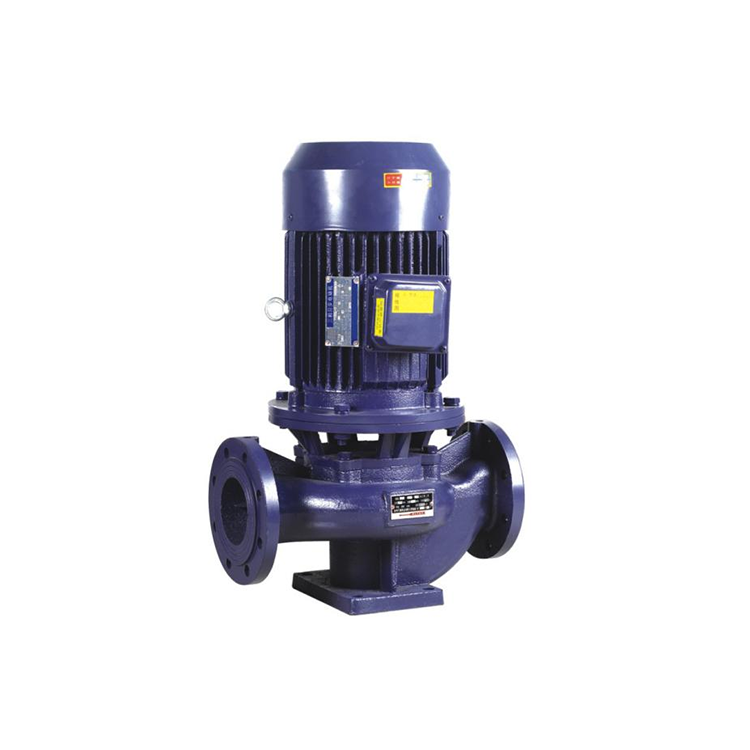
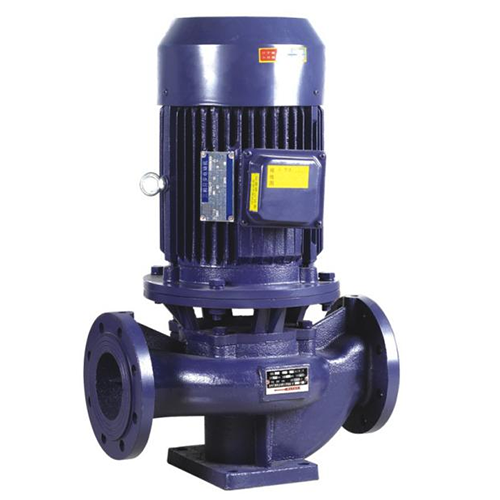
IHG (ISG) series single-stage single-suction centrifugal pumps, utilizing the performance parameters of IS type centrifugal pumps, are ingeniously designed by combining the features of general vertical pumps. They also derive from the IG type, offering models suitable for hot water, high-temperature, and corrosive chemical applications, depending on the operating temperature and medium. This series features energy-saving, low noise, and reliable performance. Explosion-proof motors (IRG, IHG, ISG, IHGPB, etc.) can be equipped upon customer request. The products are designed and manufactured in accordance with ISO 2858 standards.
II. Pipeline Pump Features
1. The pump features a vertical structure with the same inlet and outlet diameters aligned on a single centerline. It can be installed in the pipeline like a valve, offering a compact and aesthetically pleasing design with minimal floor space and low construction costs. With a protective cover, it can be used outdoors.
2. The shaft seal employs a mechanical seal. Seal face materials: static ring is solid alloy or silicon carbide, dynamic ring is graphite; service life is generally over one year.
3. Easy installation and maintenance; no need to dismantle the pipeline system. Simply remove the pump housing bracket nuts to remove all rotor components.
4. Pumps can be operated in series or parallel configurations based on the required flow rate and head.
5. Pumps can be installed in either vertical or horizontal orientation, as required by the pipeline layout.
III. Usage
1. ISG vertical pipeline pump, designed for transporting clean water and other liquids with similar physical and chemical properties to clean water. Suitable for industrial and urban water supply and drainage, high-rise building pressure boosting, garden irrigation, fire protection pressure boosting, long-distance transportation, and HVAC cooling and heating cycles. Pressure boosting for bath water circulation and equipment matching, operating temperature T≤80℃.
2. IRG vertical hot water (high temperature) circulating pumps are widely used for: energy, metallurgy, chemical industry, textiles, papermaking, and hotel and catering industry boiler high temperature hot water pressure boosting circulation, as well as urban heating system circulation pumps, with operating temperature T≤120°C.
3. The IHG vertical corrosion-resistant centrifugal pump is suitable for conveying chemically corrosive liquids in industries such as light industry, textiles, petroleum, chemicals, sanitation, food, and oil refining, with operating temperature T≤100℃.
IV. Working Conditions
1. Suction pressure ≤ 1.0 MPa, or pump system's high working pressure ≤ 1.6 MPa, i.e., pump suction pressure + pump head ≤ 1.6 MPa; static pressure test pressure of the pump is 2.5 MPa. Please specify the system working pressure upon ordering. If the pump system's working pressure exceeds 1.6 MPa, it must be mentioned separately when ordering.
2. Environmental temperature ≤ 40°C, relative humidity ≤ 95%.
3. The volume content of solid particles in the conveyed medium does not exceed 0.1% of the unit volume, with particle size less than 0.2mm.
Note: If the medium contains fine particles, please specify at the time of order.
V. Meaning of ISG Centrifugal Pump Model
ISG100-160 (I) AB
ISG - Vertical Centrifugal Pump
100 - Nominal Diameter of Inlet and Outlet (mm)
160 - Impeller Nominal Diameter (mm)
I- Traffic Classification
AB-Blade wheel after first and second cuts
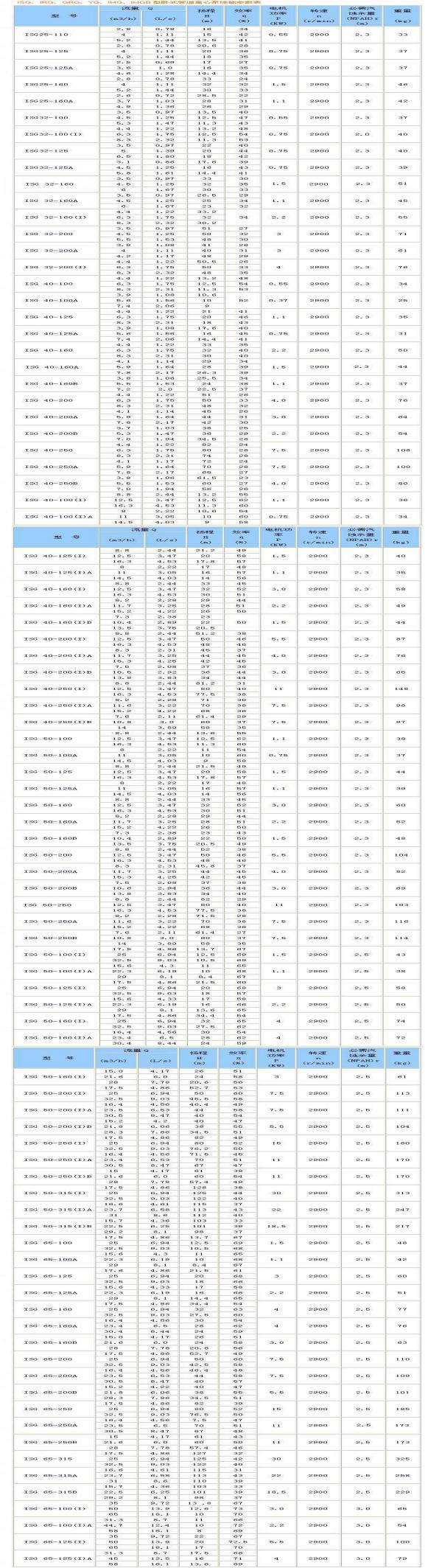
Six, IHG (ISG) Pump Performance Parameters
Section 7: Installation Instructions
Before installation, check for any loose fasteners on the unit and ensure the pump body flow paths are clear of any foreign objects to prevent damage to the impeller and pump body during operation.
Do not add the pipe weight to the pump during installation to prevent deformation of the pump.
3. Ensure the ground bolts are tightened during installation to prevent vibration affecting the pump's performance upon startup.
4. For ease of maintenance and safe operation, install a regulating valve on each of the pump's inlet and outlet piping and a pressure gauge near the pump's outlet to ensure operation within the rated head and flow range, ensuring the pump runs smoothly and extends the pump's service life.
5. After installation, turn the pump shaft; the impeller should not produce any rubbing noise or jamming. If it does, the pump should be disassembled to check the cause.
8. Start-up and Shutdown
1. Test the motor's direction of rotation; it should rotate clockwise when viewed from the top of the motor towards the pump. Keep the test brief to prevent dry wear on the mechanical seal. (Specifically, refer to the direction indicator on the pump.)
2. Open the exhaust valve to fill the pump housing completely with liquid, then close the valve after it's full.
3. Inspect all parts for proper functioning.
4. Rotate the pump manually to allow the lubricant to enter the mechanical seal face.
5. Preheat the high-temperature type first, increasing the temperature at a rate of 50℃ per hour to ensure even heating throughout.
Start-up:
1. Full-open imported valve.
2. Close the discharge pipeline valve.
3. Start the motor and observe if the pump operates correctly.
4. Adjust the outlet valve opening to the required operating conditions. If the user has a flow or pressure gauge installed at the pump outlet, the valve opening should be adjusted to ensure the pump operates at the rated points listed in the performance parameter table. If a flow or pressure gauge is installed at the pump outlet, the valve opening should be adjusted to test the motor current, ensuring it operates within the rated current. Otherwise, the pump may operate at an overload (i.e., high current) and potentially damage the motor. The adjustment of the outlet valve's opening size is related to the pipeline conditions.
5. Inspect the shaft seal for leakage; under normal conditions, the mechanical seal leakage should be less than 3 drops per minute.
6. Check that the motor and bearing temperature rise is ≤70°C.
Parking:
1. Cool down the high-temperature type first, at a rate of 10℃/min. Only when the temperature drops below 80℃ can the vehicle be parked.
2. Close the exhaust pipe valve.
3. Turn off the power.
4. Close the import valve.
5. If parking for an extended period, it is recommended to drain the liquid inside the pump.
Section 9: Pump Maintenance
1. Ongoing maintenance:
(1) Imported pipelines must be filled with liquid at all times; operation of pumps in a cavitation state is strictly prohibited.
(2) Regularly check the motor current value; it must not exceed the motor's rated current.
(3) After prolonged operation, if the pump's mechanical wear causes an increase in noise and vibration, the unit should be stopped for inspection. Replace worn parts and bearings if necessary. The general overhaul period for the unit is typically one year.
2. Mechanical Seal Maintenance:
(1) Mechanical seal lubrication should be clean and free of solid particles.
(2) Absolutely prohibited to operate mechanical seals under dry grinding conditions.
(3) If the medium has high viscosity or is prone to crystallization, the pump should be flushed with steam after shutdown to prevent damage to the mechanical seal upon restart.