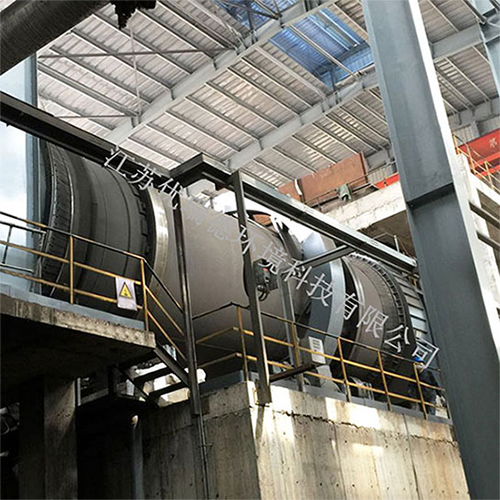
The rotary kiln incinerator is widely used in the field of industrial waste treatment across various countries, accounting for about 85% of the market share in the incineration sector. It is also recommended as a type of incinerator in China's industrial waste treatment technology policy issued by the Ministry of Science and Technology and the State Environmental Protection Administration, capable of handling both solid and liquid waste simultaneously. Solid waste is fed into the kiln by dedicated conveying equipment, while liquid waste is sprayed into the furnace through effective atomization equipment. The waste undergoes the process of moisture evaporation, volatile component separation, ignition, and combustion within the kiln. The ash and slag composition is discharged from the bottom of the secondary combustion chamber, and the generated flue gas enters the secondary combustion chamber, where it mixes with secondary combustion air to achieve complete combustion of the flue gas, ensuring safe and compliant emissions. The features of the rotary kiln incinerator include broad adaptability to waste, simple operation and maintenance, and a long service life.