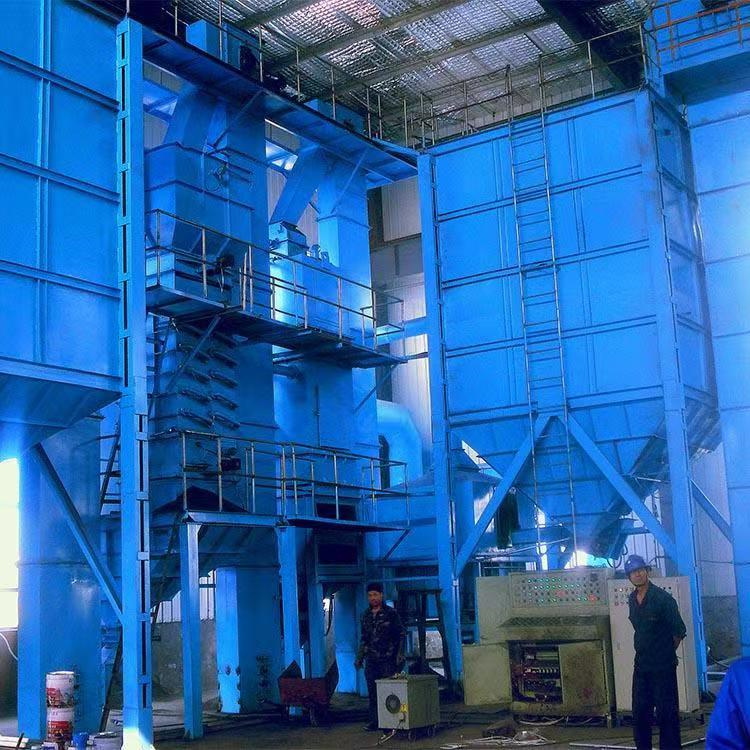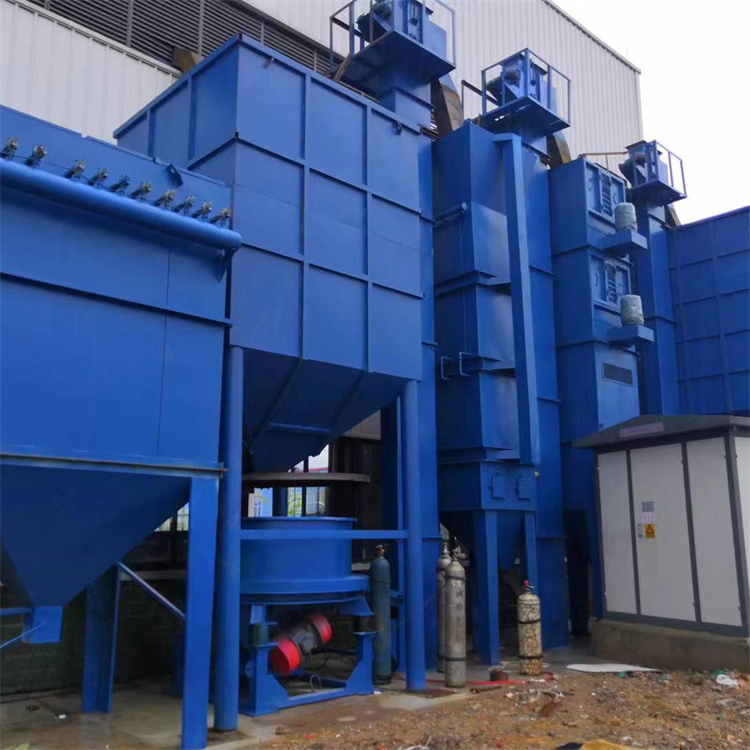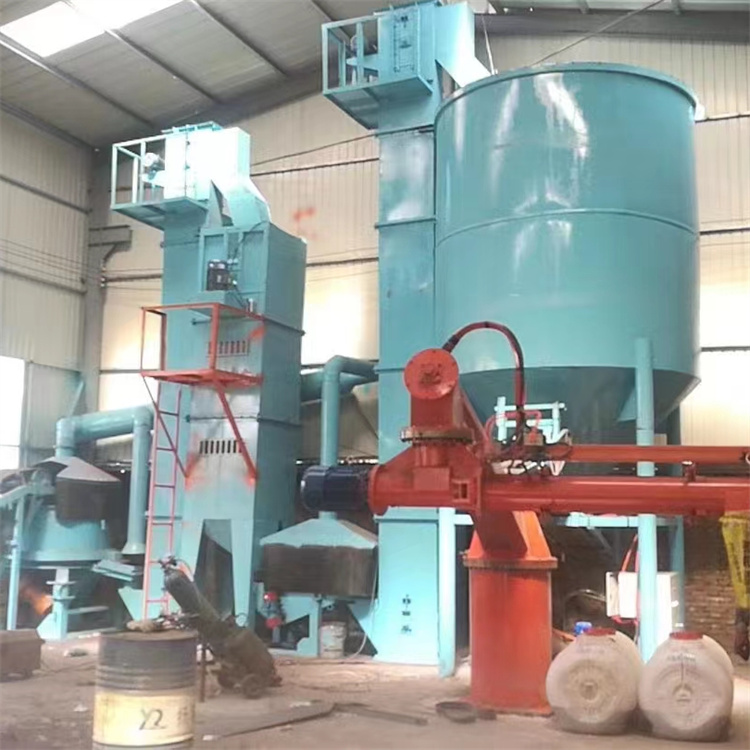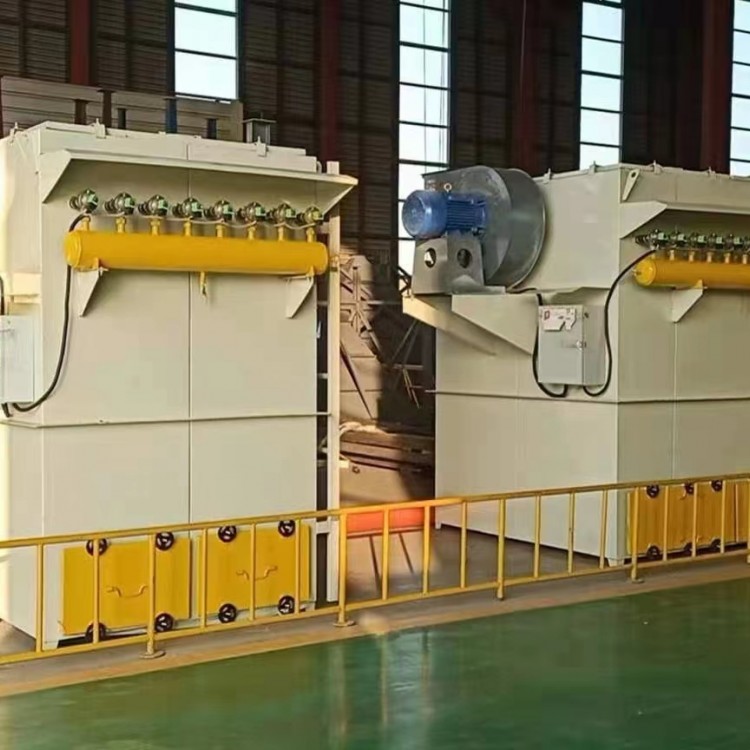

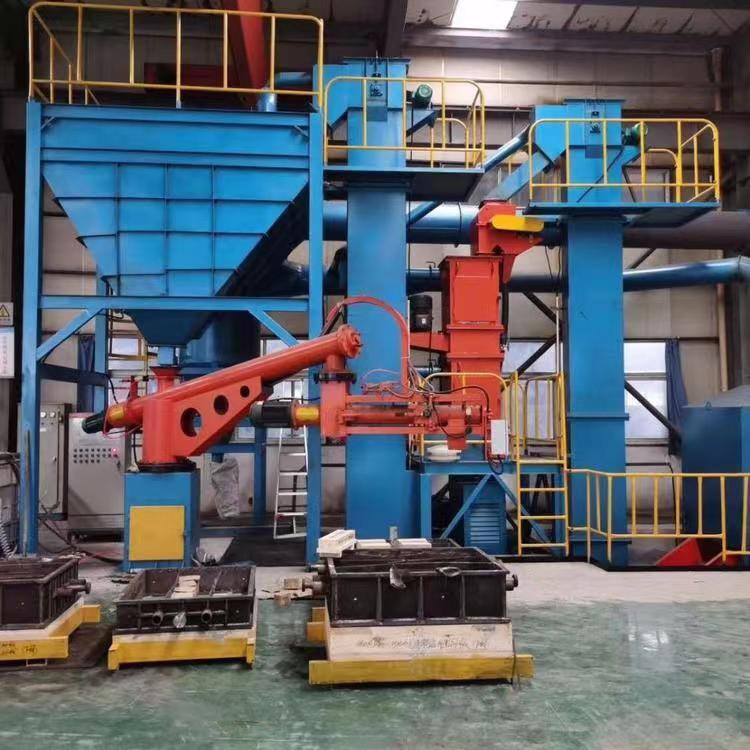

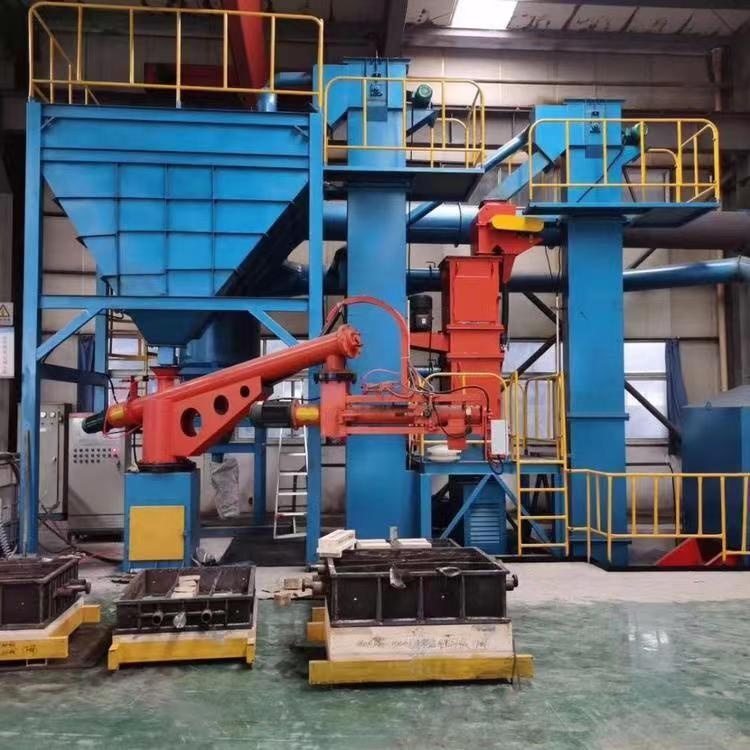
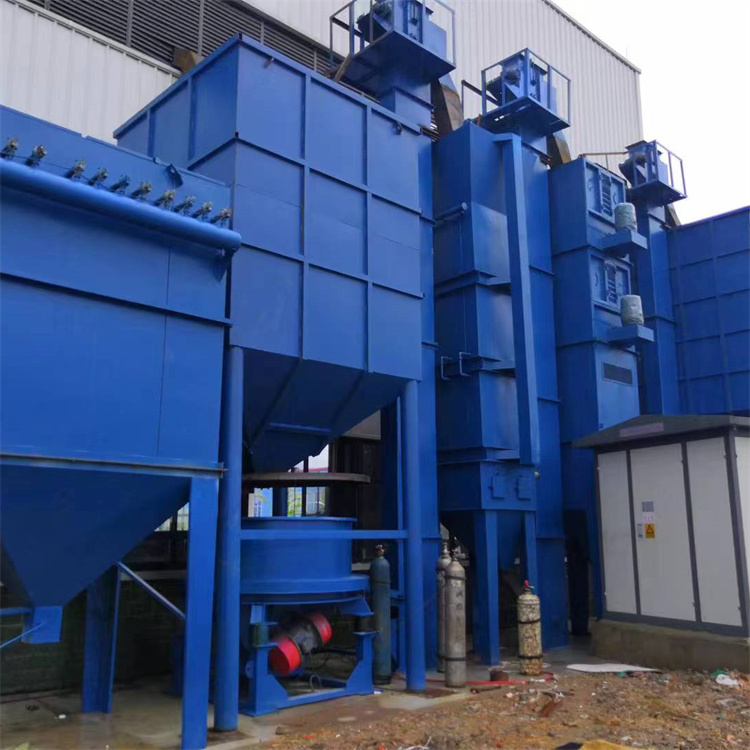
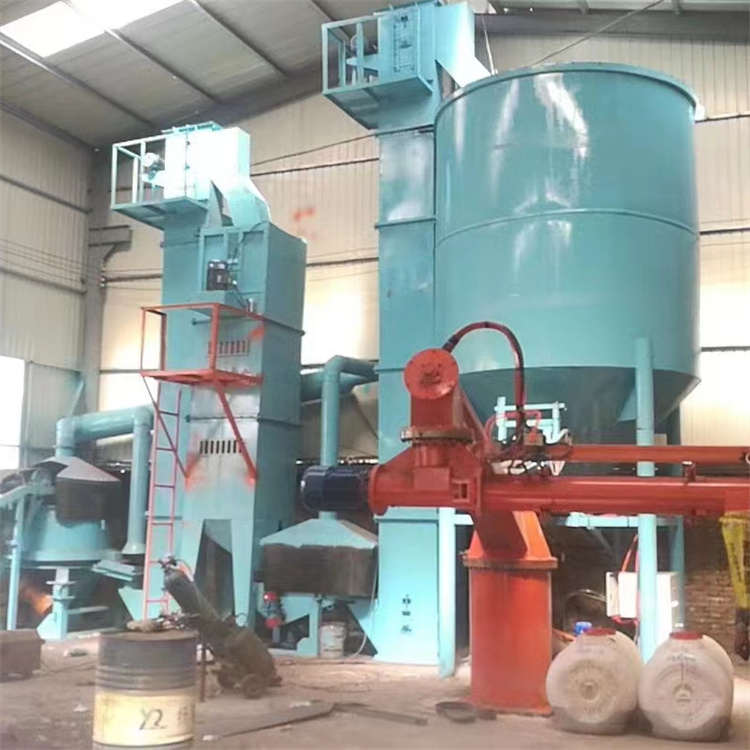








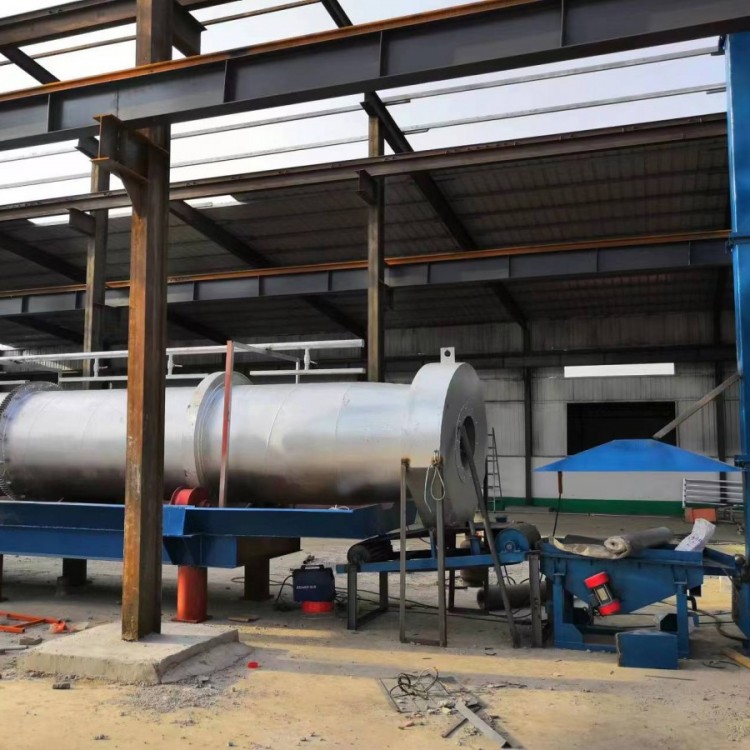

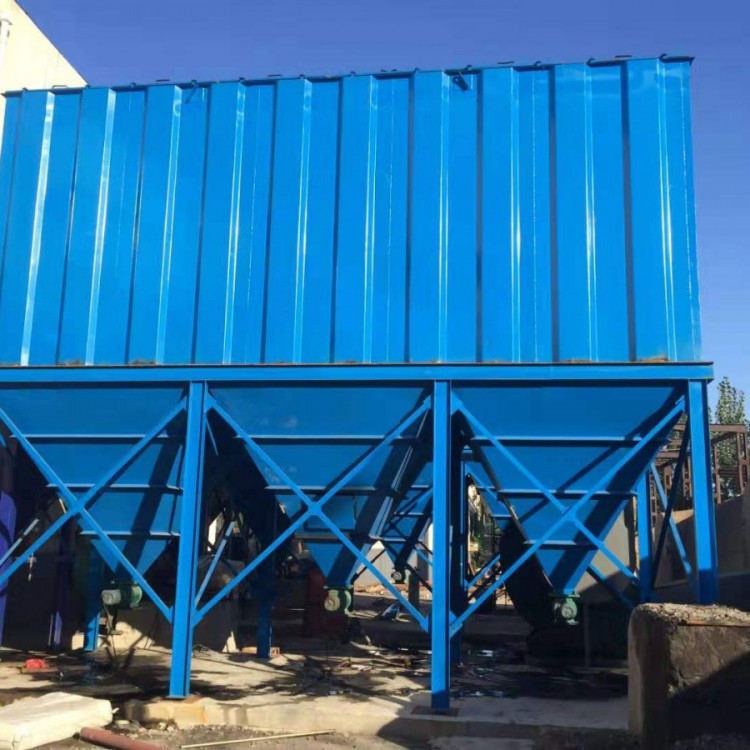
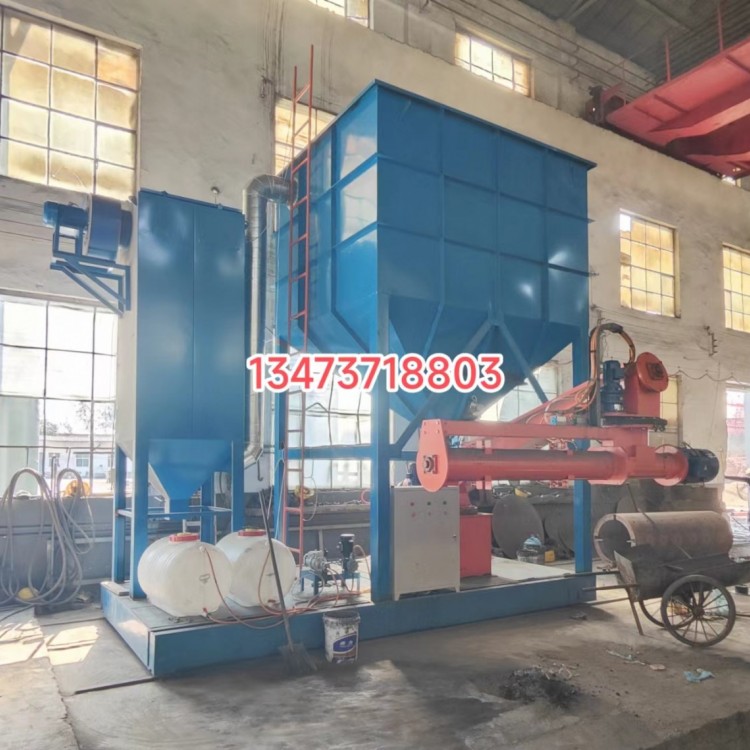
Resin Sand Production LineMechanization of the sand processing process is an important component of foundry production, typically consisting of magnetic separation conveyor belts, sand storage, hoists, resin sand demolding, screening machines, vibrating crushers, pneumatic conveying tanks, and resin sand mixing machines.
Resin sand molding production line working principle:
1. The old sand is transported to the sand storage by a magnetic separator belt and thrown outward to a stable-performance ring under the action of centrifugal force. The sand particles repeatedly rub and collide with each other and with the stable-performance ring, removing the adhesive film on the surface of the sand particles. The sand then falls between the stable-performance ring and the disk. At the same time, a fan located on the same axis as the disk blows upwards, creating a strong air current that boils, separates, removes the adhesive film and dust from the falling sand, resulting in sand that meets the process requirements.
2. Low dead clay content after reclaimed sand processing, minimal addition of new sand, good wet pressing strength of the mixed molding sand, and excellent fluidity and permeability.Based on the layout of the foundry workshop, process requirements, and compatibility with different molding forms, the resin sand processing production line can vary in design. However, the general process typically includes old sand recovery, old sand crushing and screening, old sand cooling and temperature reduction, clay and coal powder conveying, the transport of new and old sand, and the mixing of molding sand.
3、Old sand recycling involves the sand being dropped by a sand separator, then collected by a collecting bin. It is then transported to the next stage of screening equipment via conveying devices (vibrating conveyors, belt conveyors, elevators, etc.). During the transportation process, magnetic separation equipment removes iron particles and iron beans from the sand.
4、Old sand is crushed and sifted through screening equipment (such as excellent hexagonal screens, linear sand sifters, etc.), where large pieces in the sand are broken and sifted. Large debris and uncrushable sand pieces are separated, while fine dust is simultaneously extracted through air suction.