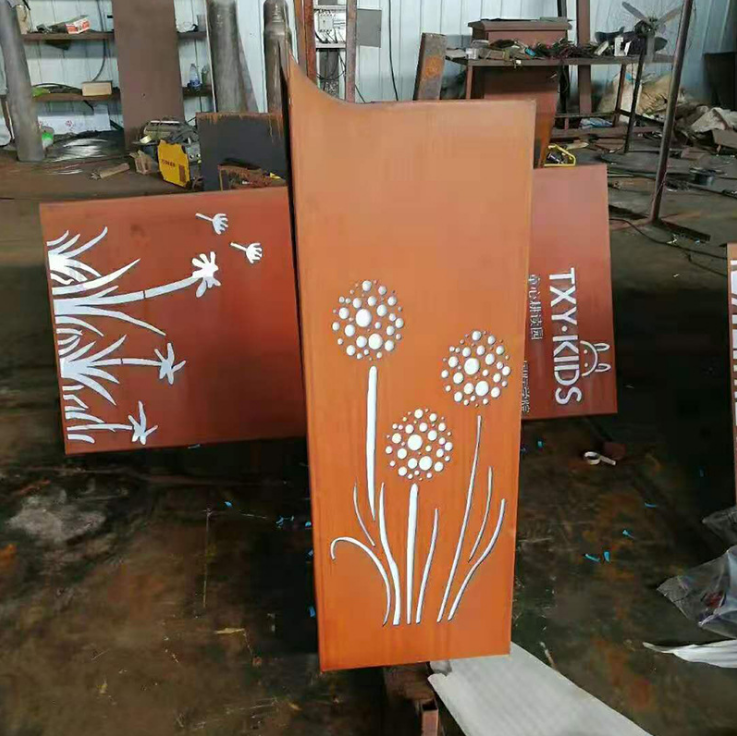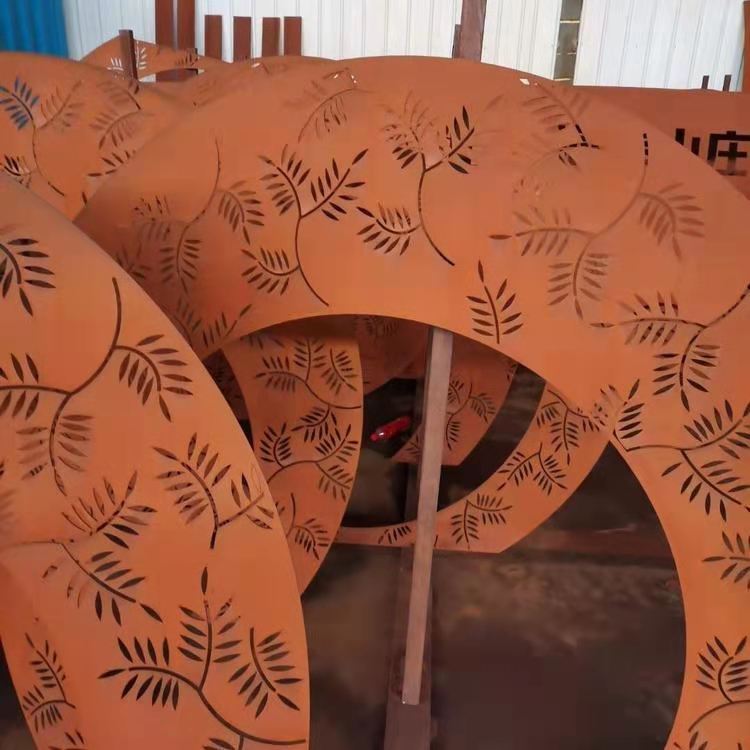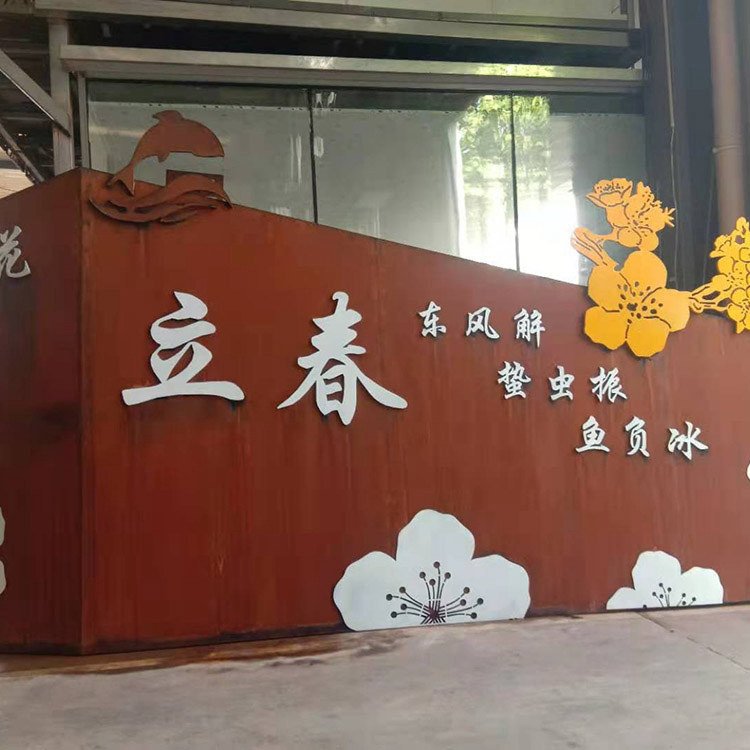


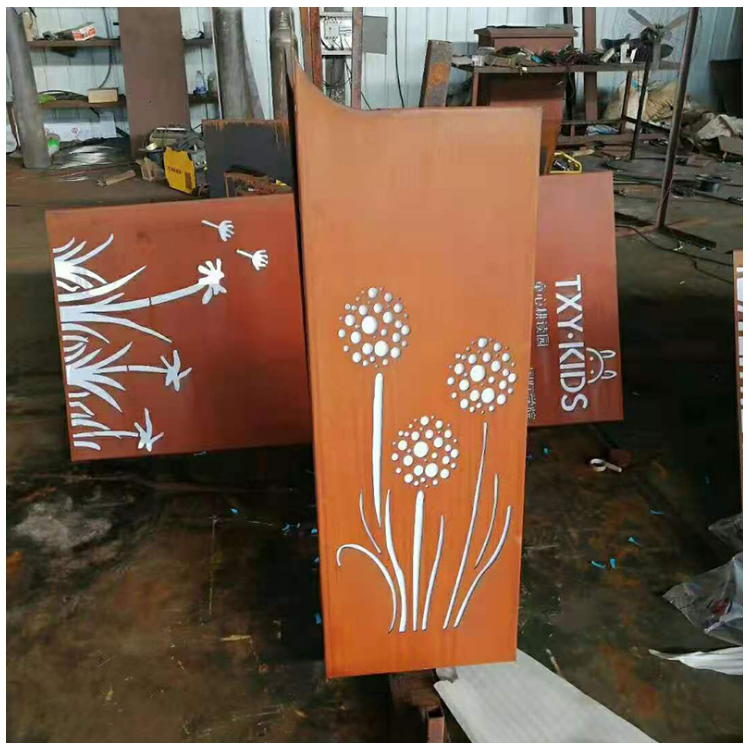









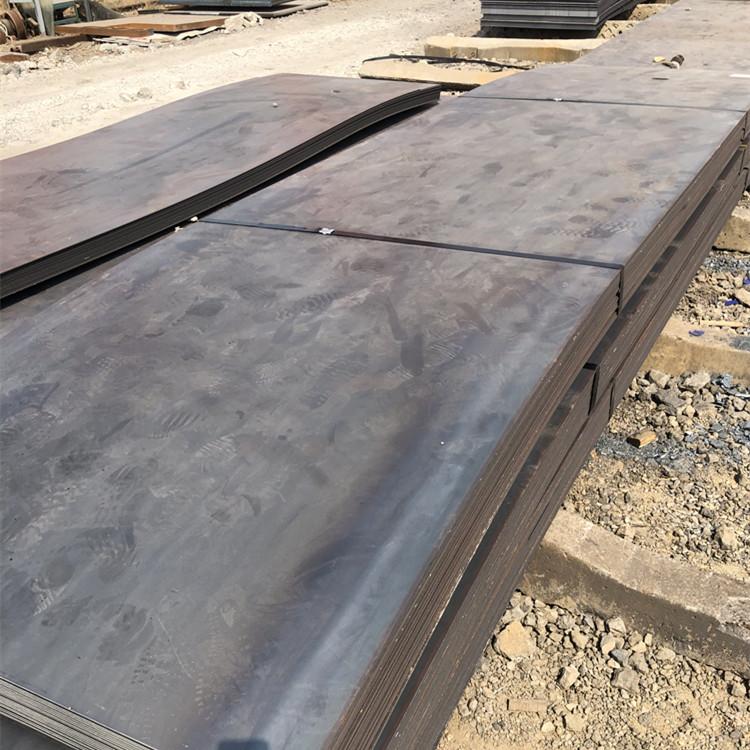
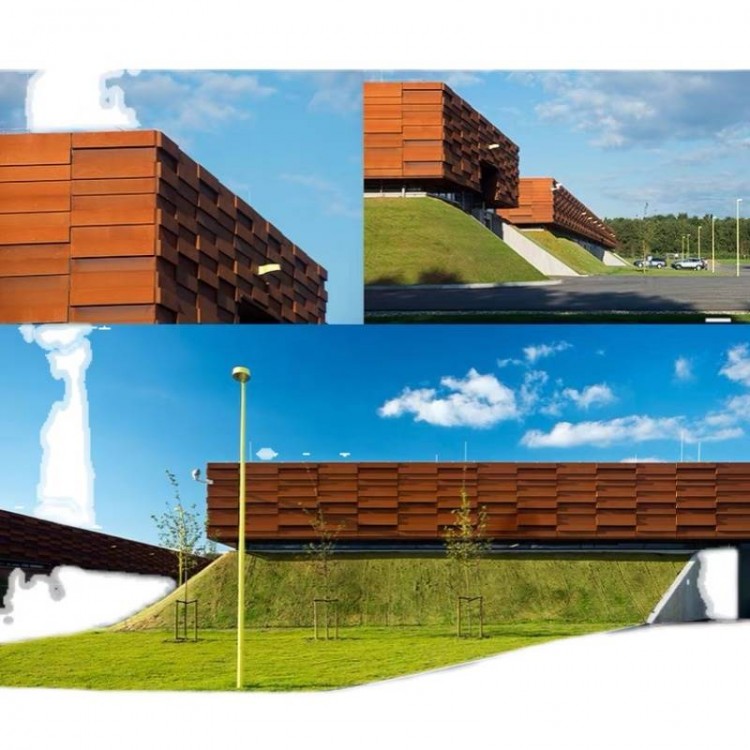
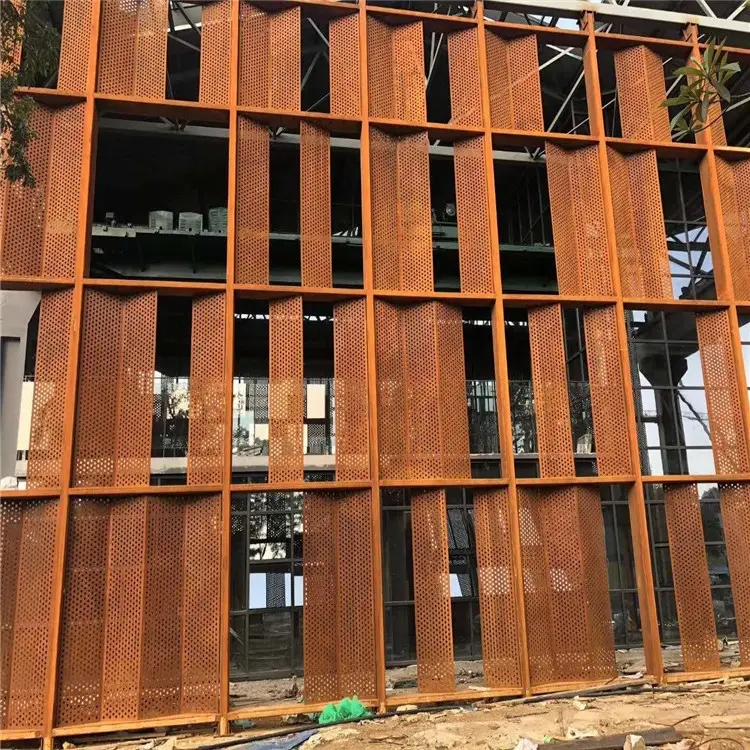
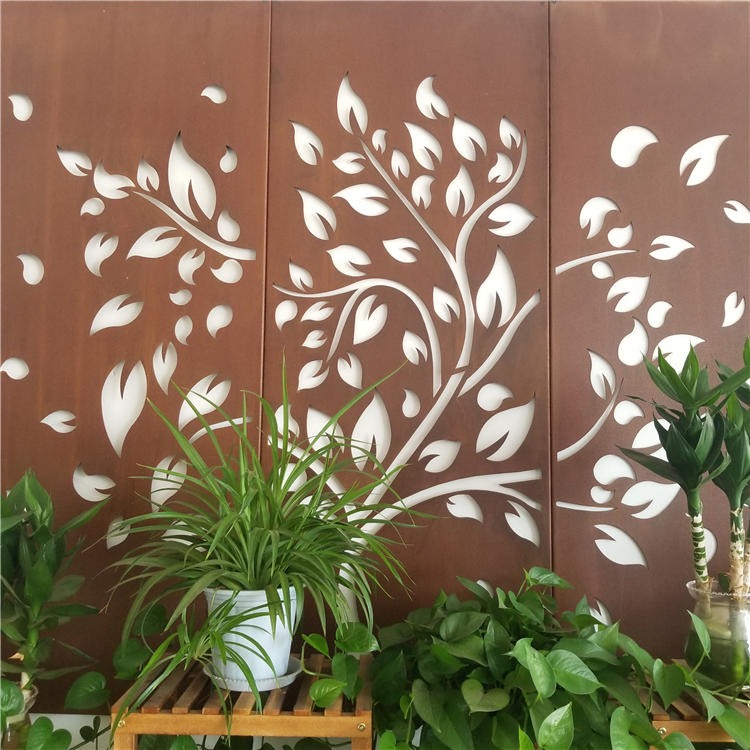
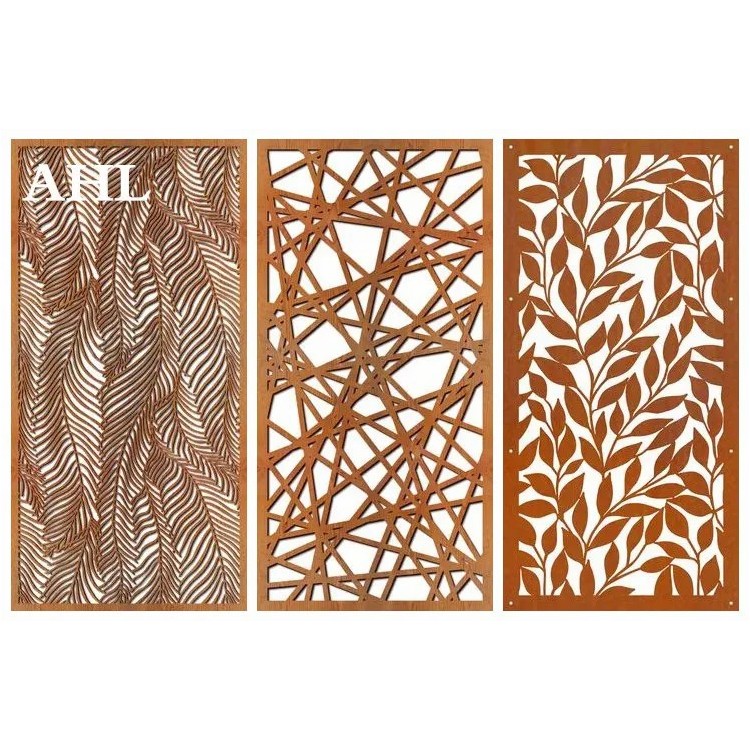
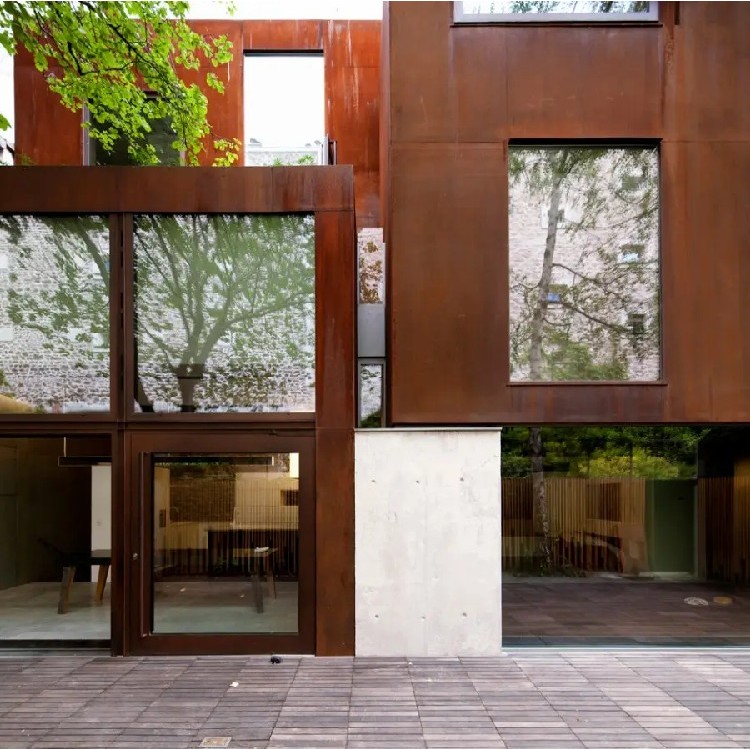



Processing projects include weather-resistant steel carving, weather-resistant steel modeling, weather-resistant steel scene walls, weather-resistant steel light boxes, weather-resistant steel flower beds, weather-resistant steel tree grates, weather-resistant steel sculptures, weather-resistant steel plate signs, and steel plate hollow carvings. How to control the thickness of weather-resistant steel plates in landscape design? Today, we'll delve into the details of weather-resistant steel.
Thickness accuracy is a crucial quality indicator for the basic dimensions of weather-resistant landscape boards. To ensure that high-precision steel strips have the same board thickness and thickness variation, and to improve the thickness accuracy and yield of weather-resistant steel strips, it is necessary to continuously develop and apply automated thickness control systems. Currently, a variety of automatic thickness control systems are used in the production of weather-resistant landscape boards, including automatic thickness control, hydraulic control, automatic monitoring, feedforward control, automatic monitoring, and precision thickness gauges.
The precision of the thickness of architectural weathering steel plates refers to the degree of thickness accuracy achieved through various automatic control methods and means in the industrial production of architectural weathering steel plates. The thickness precision of architectural weathering steel plates had reached a level of 525 mm before 1990. Between 1990 and 1998, there was a significant increase in the thickness of architectural weathering steel plates, achieving a high degree of precision.
The reason for the precision of rolled sections over 525mm lies in the use of various automatic thickness control systems during the rolling process.
During the rolling process of sheets, commonly used automatic control systems include: automatic control systems for reduction position, automatic control systems for electrical thickness measurement, etc.
Manufacturing (electric), hydraulic (hydraulic), monitoring (monitoring), feedforward (monitoring), thickness measurement (automated), automatic control systems, etc.
To master and apply various basic forms and principles of automatic thickness control systems, it is essential to clearly understand their basic forms and principles. This includes automatic electric punch position control, automatic hydraulic punch position control, automatic computer control systems, automatic punch position control mathematical models, and automatic thickness control adaptive learning technologies. These solutions address practical production issues, enabling recognition and mastery of the specific applications and actual effects of automatic thickness control.
So, this chapter will divide the planning into five sections based on the fundamental elements of automatic thickness control: (1) Automatic thickness control system for plate rolling mills; (2) Basic forms and principles of automatic thickness control systems; (3) Automatic weathering control system; (4) Automatic weathering control system; (5) Automatic weathering control system.