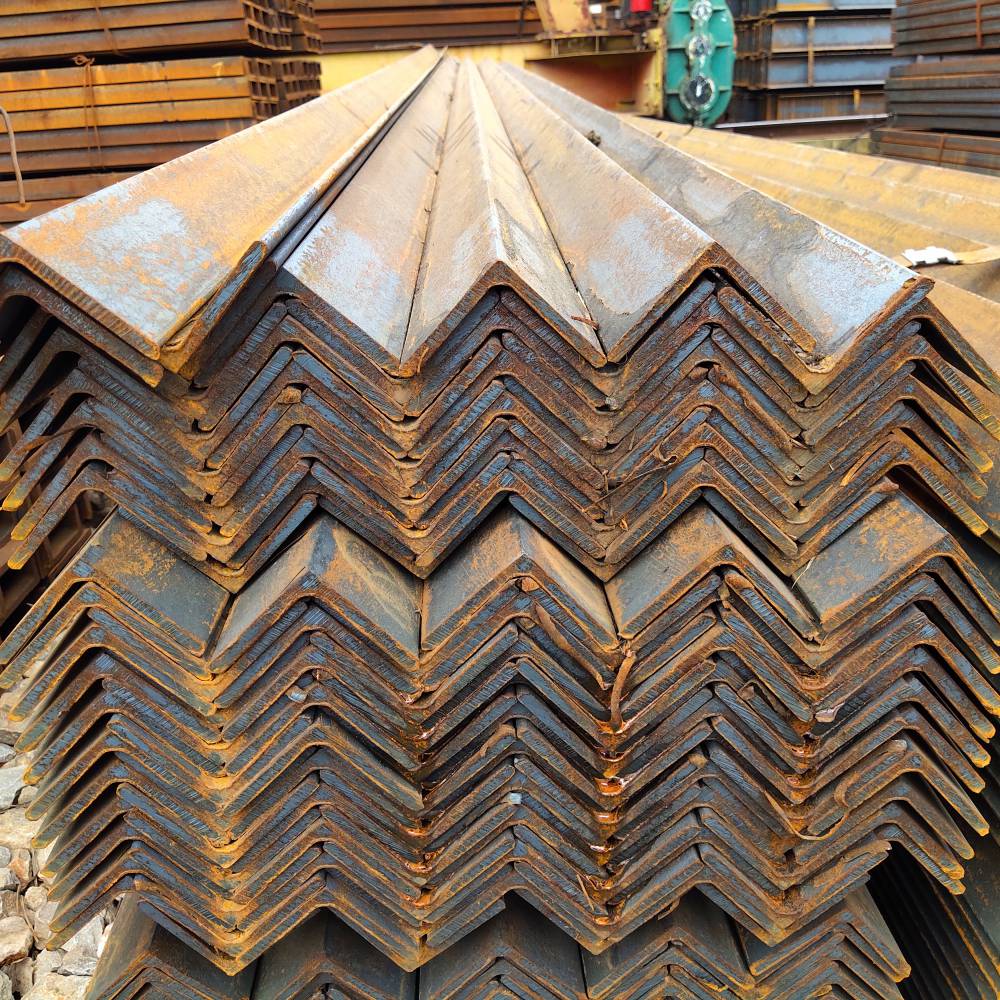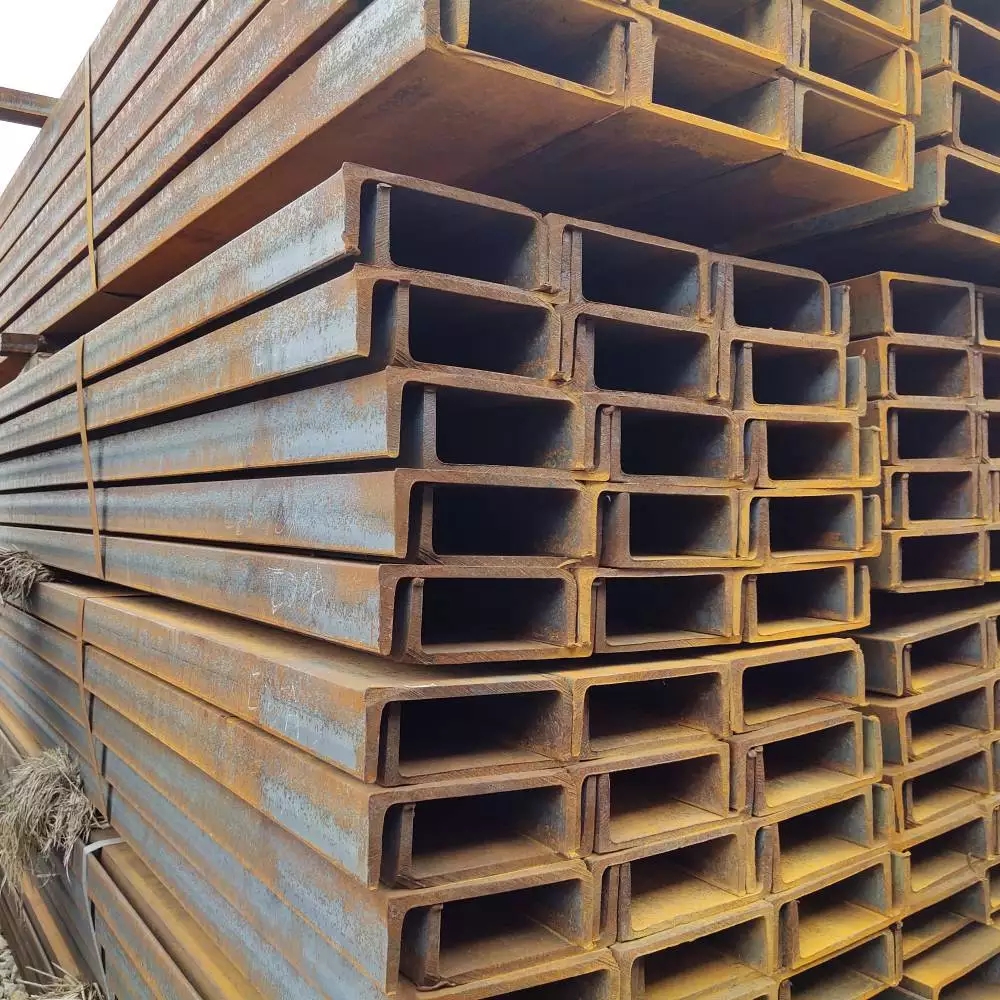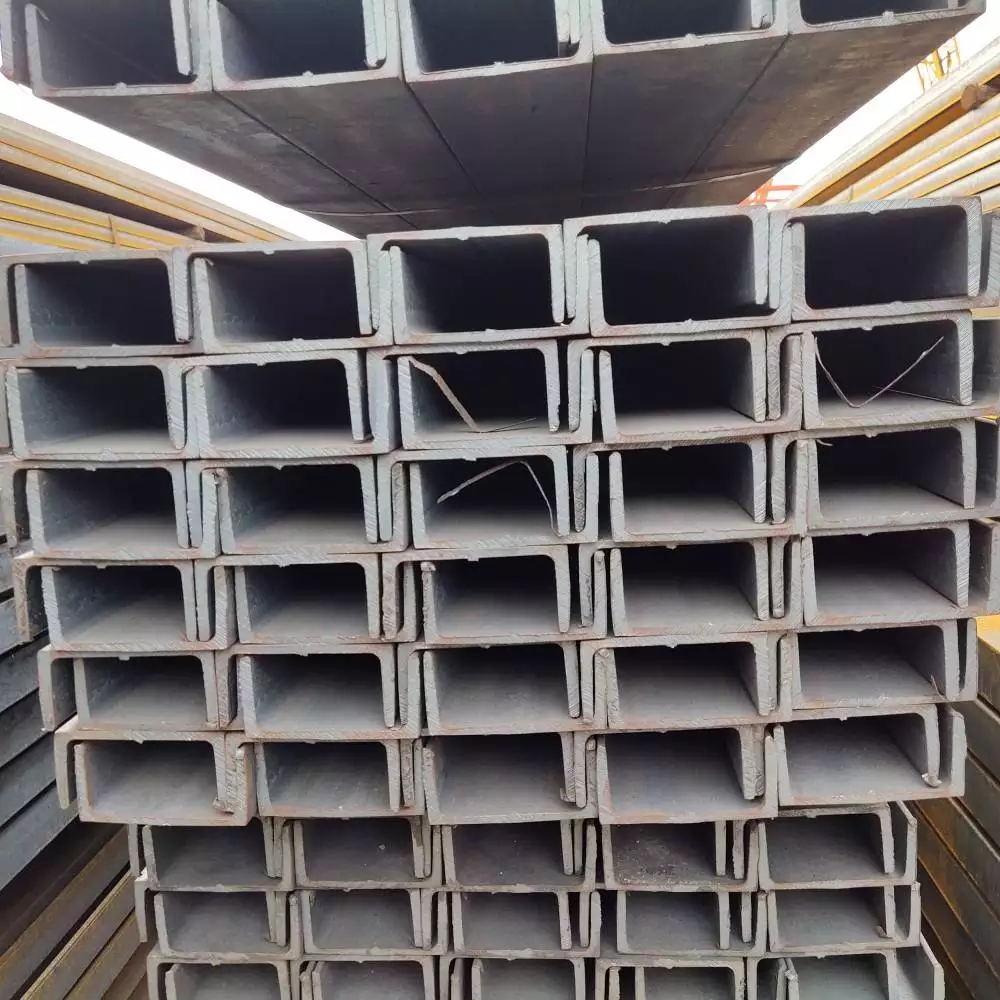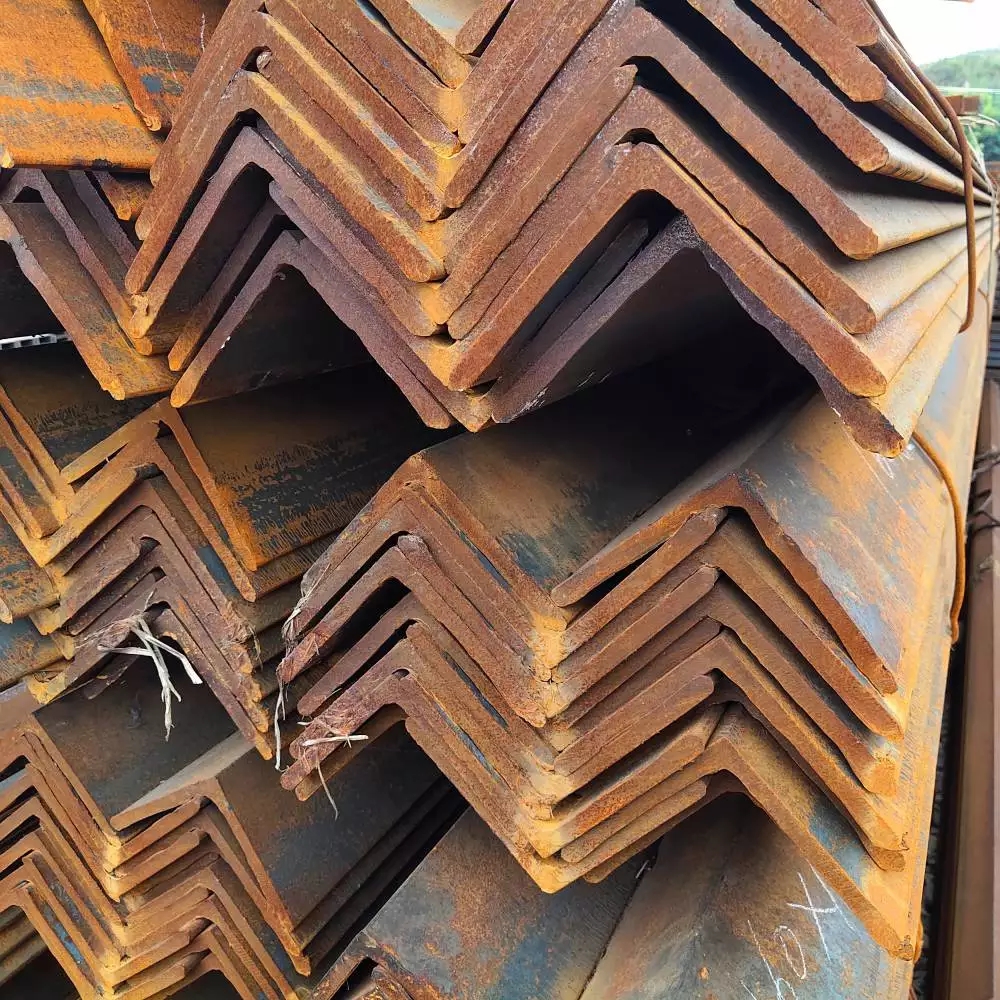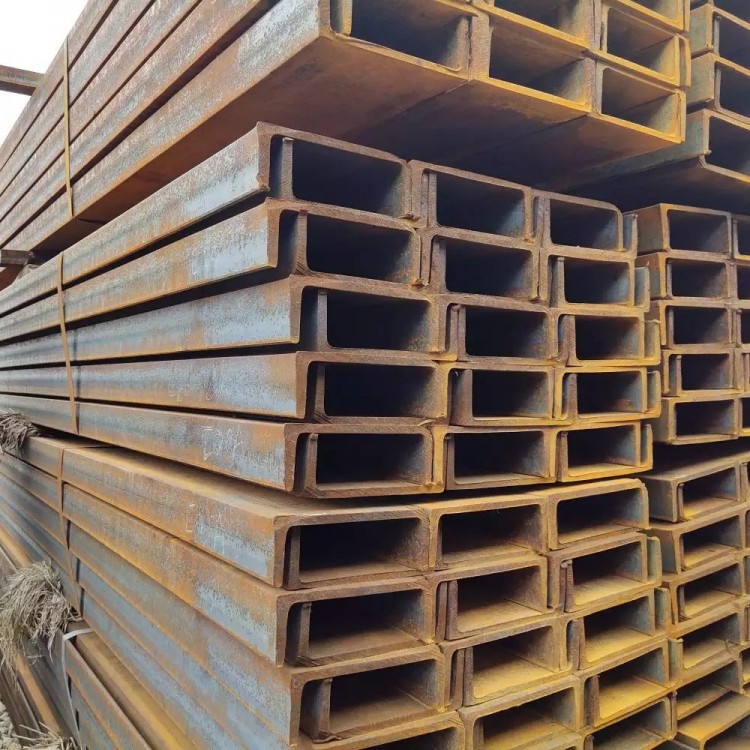

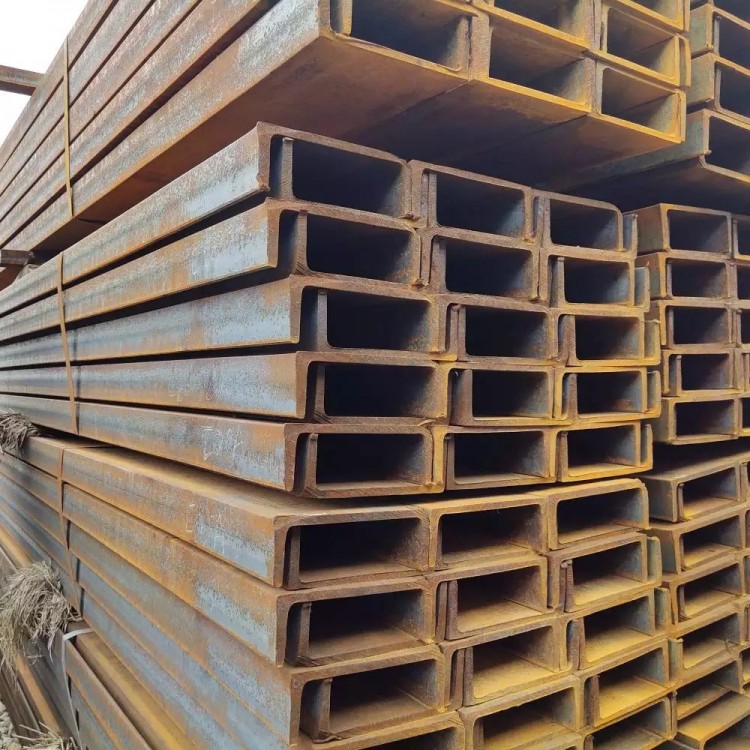

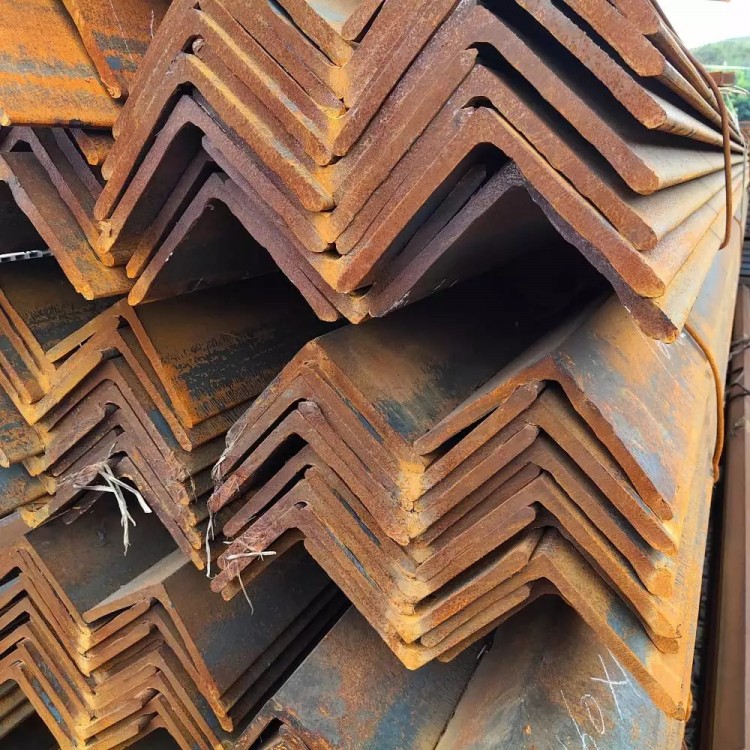












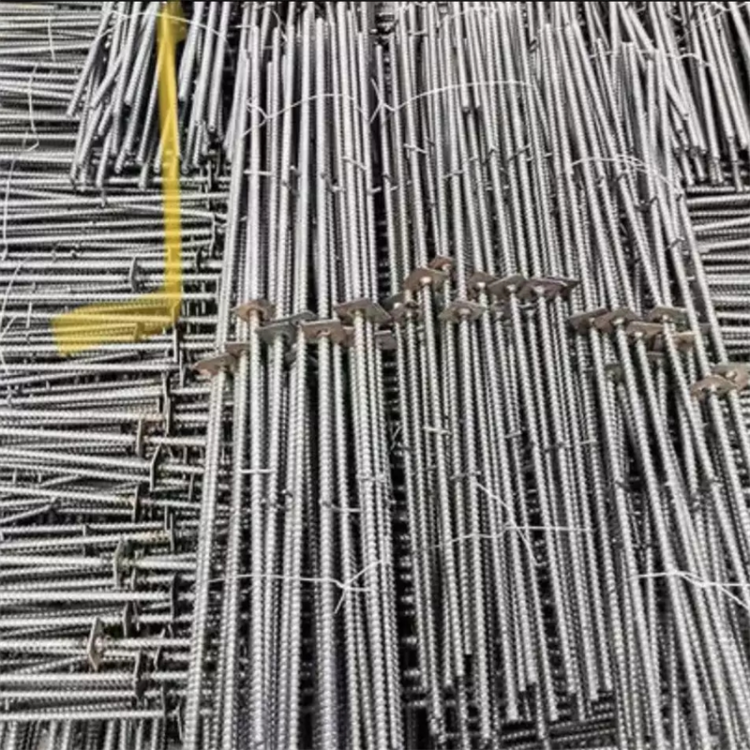
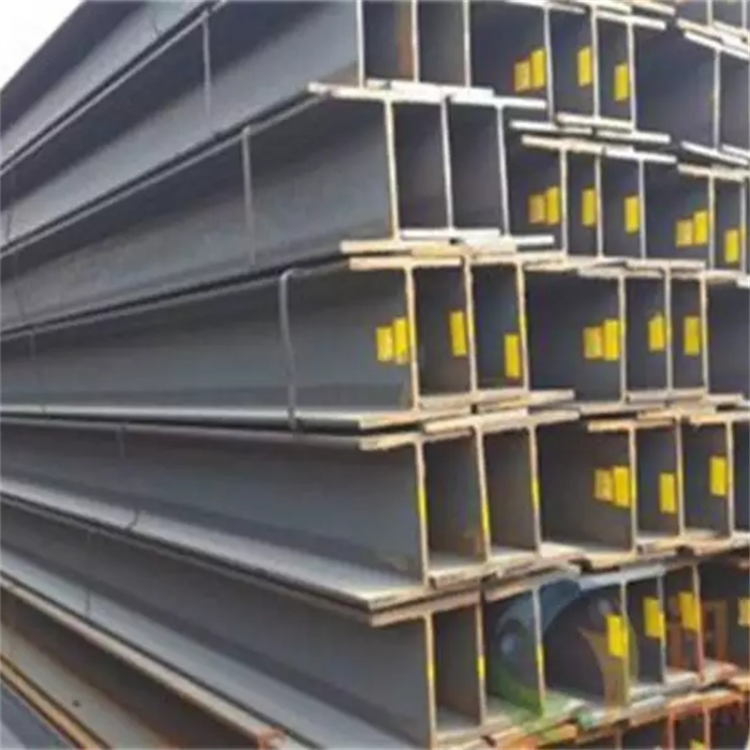
Angle steel can be assembled into various different load-bearing components according to different structural requirements and also serves as a connecting piece between components. It is used in a variety of building and engineering structures such as beams, bridges, transmission towers, lifting and transporting machinery, ships, industrial furnaces, reaction towers, container racks, cable trench supports, power piping, busbar supports, and warehouse shelving.
Angle steel is a carbon structural steel used for construction, characterized by its simple cross-section, and is primarily used for metal components and the frames of buildings. It requires good weldability, plastic deformation properties, and a certain degree of mechanical strength during use. The raw material for the production of angle steel is low-carbon square billets, with the finished angle steel being delivered in the form of hot-rolled, normalized, or hot-rolled condition.
Primarily divided into equal-leg angle steel and unequal-leg angle steel, with the latter further categorized into equal thickness unequal-leg and unequal thickness unequal-leg types.
Angle steel specifications are indicated by the dimensions of the side length and thickness. Current domestic angle steel specifications range from 2 to 20 numbers, with the number corresponding to the centimeters of the side length. The same number of angle steel often has 2 to 7 different thicknesses. Imported angle steel specifies the actual dimensions of both sides and the thickness, along with relevant standards. Generally, angle steel with a side length of 12.5cm or more is considered large, between 12.5cm and 5cm is medium, and less than 5cm is small.
Ordering angle steel for import and export is generally based on the specifications required in use, with the steel grade corresponding to the carbon structural steel grade. Besides the specification number, angle steel does not have a specific composition and performance series. The delivery length of angle steel is divided into fixed length and multiple lengths. The range of fixed length options for domestic angle steel varies according to the specification number, with four ranges of 3-9m, 4-12m, 4-19m, and 6-19m. The length selection range for Japanese angle steel is 6-15m.
The cross-sectional height of unequal angle steel is calculated based on the length of the longer side of the unequal angle steel. It refers to steel with a triangular cross-section where the lengths of the two sides are unequal. It is a type of angle steel. The side lengths range from 25mm×16mm to 200mm×125mm. It is produced by hot rolling mill. The general specifications of unequal angle steel are: ∟50*32 to ∟200*125, with thicknesses of 4-18mm.
Unequal angle steel is used in various metal structures, bridges, machinery manufacturing and shipbuilding, as well as in a wide range of architectural and engineering structures, such as beams, bridges, transmission towers, lifting and transporting machinery, ships, industrial furnaces, reaction towers, container racks, and warehouses, etc.