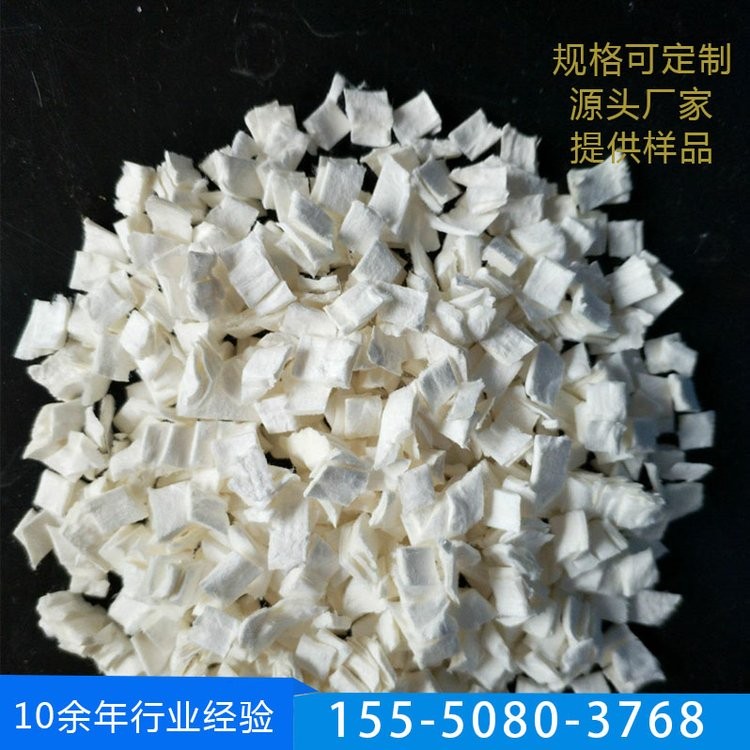







Cellulose fibers are made from a unique plant species adapted to high-altitude regions, representing a new type of durable concrete fiber developed after chemical synthetic fibers, known in the engineering field as the third-generation concrete fiber. They possess natural hydrophilic properties and high strength and modulus. These fibers are produced from the special plant species of high-altitude regions, through a series of unique chemical treatments and mechanical processing. They inherently have natural hydrophilic properties and high strength and modulus, and due to their natural cell division growth in plant cells and non-artificial manufacturing, they exhibit a strong gripping power on the surface.
Effectively prevent the occurrence of concrete shrinkage cracks
Due to the inherent properties of cellulose fibers, such as their natural hydrophilicity, excellent gripping power, large fiber specific surface area, and high tensile and strength, when added to concrete, they form a large number of uniformly distributed fine fibers under water immersion and external forces. This effectively prevents the occurrence of cracks in concrete caused by plastic shrinkage, drying shrinkage, and temperature changes.