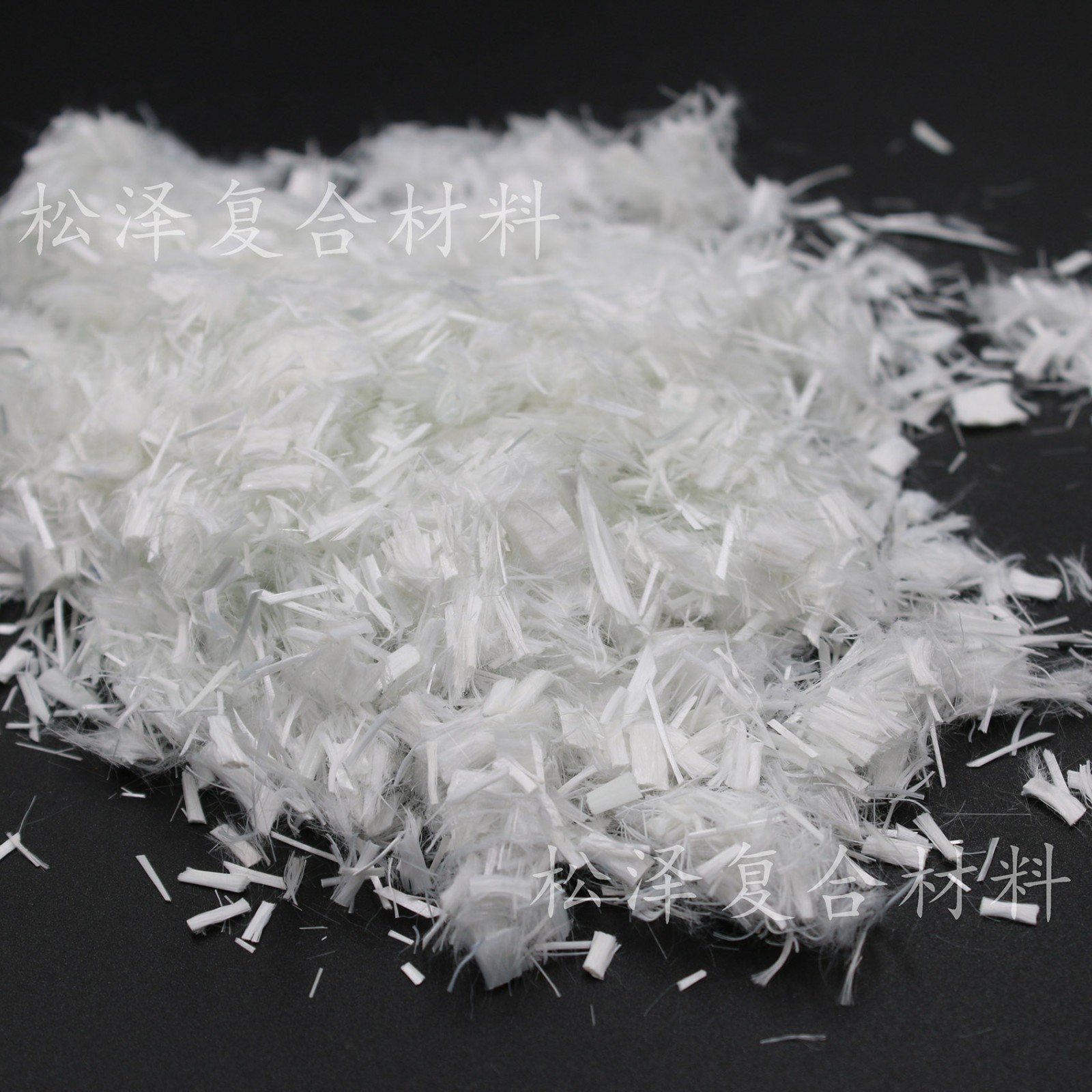







Polyester fiber, commonly known as "Dacron," is a synthetic fiber obtained by spinning a polyester made from condensation of organic dicarboxylic acids and diols. Abbreviated as PET fiber, it is a high molecular compound. Invented in 1941, it is a major variety of synthetic fibers. The advantages of polyester fiber include excellent wrinkle resistance and shape retention, with high strength and elasticity recovery capabilities. It is durable, resists wrinkles, and does not pill.
Enhanced high-temperature stability and improved viscosity and cohesion are achieved due to the three-dimensional distribution of polyester fiber filaments, which have a strong adsorption capacity for asphalt without tangling. This allows for the absorption of excess free asphalt, thereby increasing the asphalt's viscosity and cohesion. Additionally, the interlaced reinforcing and bridging effects reduce the flow properties of asphalt, limiting the lateral displacement or flow of aggregates. This effectively improves high-temperature stability, significantly enhancing the stability of fiber asphalt concrete.
Enhanced low-temperature crack resistance, due to the fibrous adsorption of asphalt, results in increased asphalt content in asphalt concrete. A higher asphalt content allows the fiber asphalt mixture to retain flexibility and high tensile strength at -40°C, effectively resisting shrinkage stresses. This enhances the mixture's low-temperature crack resistance, reducing the occurrence of temperature shrinkage cracks and preventing the progression of reflective cracks.