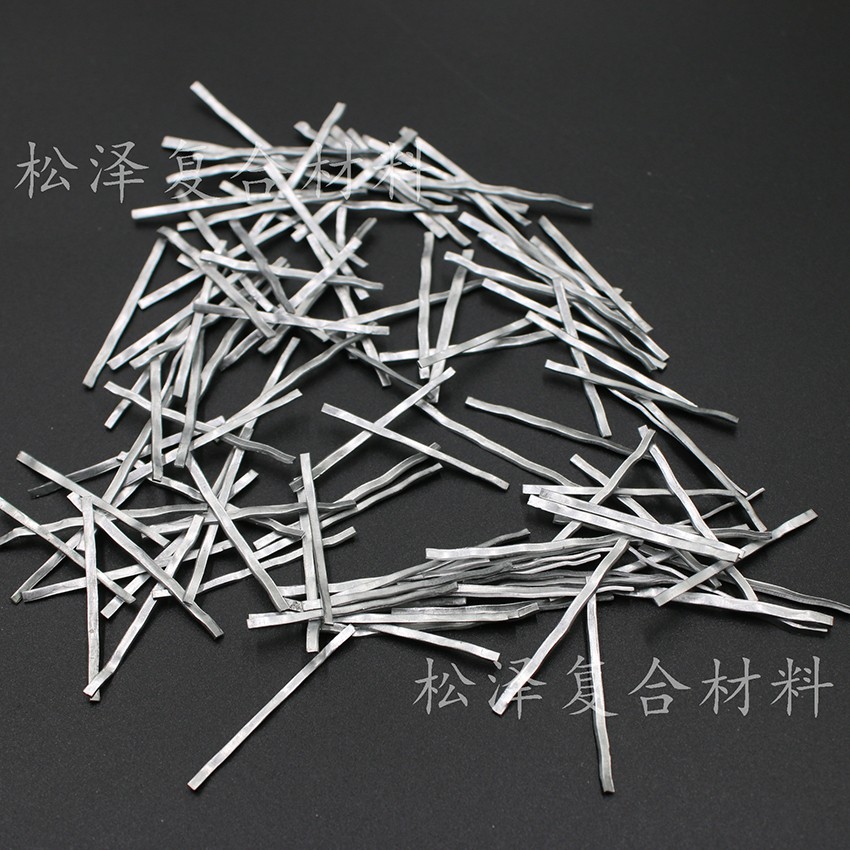







Steel fiber reinforced concrete is a significant approach to enhance concrete quality. Fiber concrete is typically a cement-based composite material, consisting of a matrix of cement paste, mortar, or concrete, reinforced with discontinuous short fibers or continuous long fibers. Its primary function is to constrain the development of interfacial cracks through bridging, thereby improving the properties of the concrete.
The role of steel fiber in the cement matrix:
1. Crack Resistance. Inhibits the expansion of defects (microcracks) in the cement matrix and effectively delays the formation of new cracks.
2. Waterproofing. Enhances the compactness of the cementitious matrix through crack resistance, preventing external moisture intrusion.
3. Durable. Enhances the cement matrix's frost and fatigue resistance, improving its durability.
4. Impact Resistance. Enhances the cement matrix's ability to withstand deformation, thereby improving its durability and impact resistance.
5. Tensile Resistance. Under the premise of using high modulus of elasticity fibers, it can enhance the tensile strength of the matrix.
6. Attractive. Enhances the appearance of cement structures, making them finer, smoother, flatter, and more attractive.