














317L Stainless Steel
317L stainless steel is an austenitic stainless steel based on molybdenum.
317L Overview
317L (00Cr19Ni13Mo3, UNS S31726) is a molybdenum-based austenitic stainless steel. Compared to conventional chromium-nickel austenitic stainless steels like the 304 alloy, it boasts superior resistance to chemical corrosion. Additionally, the 317L alloy offers higher ductility, stress corrosion resistance, pressure strength, and high-temperature resistance than conventional stainless steels. It is classified as a low-carbon grade or L grade, which exhibits resistance to sensitization during welding and heat treatment.
The 317L steel grade offers superior corrosion resistance and SCC resistance compared to 316L, making it suitable for chemical ships and reactors for chemical products, among other high-corrosion-resistant equipment.
SUS317L Mechanical Properties: YS (MPa) ≥ 176, TS (MPa) ≥ 480, EL (%) ≥ 40, Hv ≤ 200
SUS317L Chemical Composition:
Carbon (C) ≤ 0.030
Mn ≤ 2.00
Nickel (Ni) 11.0~15.0
, Silicon (Si) ≤ 1.00,
Phosphorus (P) ≤ 0.045
S(Sulfur) ≤ 0.030
Chromium (Cr) 18.0~20.0
Molybdenum (Mo) 3.0~4.0
317L Physical and Chemical Properties
Alloy 317L and 317LMN stainless steel can withstand atmospheric and other mild corrosion better than conventional chrome-nickel stainless steels. Generally, environments that are non-corrosive to 18Cr-8Ni steel will not cause corrosion to molybdenum-containing alloys.
Alloy 317LMN and 317L stainless steel are more resistant to corrosion from sulfuric acid solutions than standard chrome-nickel stainless steels. Their corrosion resistance increases with the addition of molybdenum in the alloy. These alloys can withstand concentrations up to 5% sulfuric acid in an environment with temperatures reaching 120°F (49°C). In environments with temperatures below 100°F (38°C), these alloys exhibit excellent corrosion resistance and can resist the corrosion of more concentrated solutions.
317L stainless steel corrosion resistance
Chromium-nickel-molybdenum steel exhibits excellent anti-corrosion properties and has a low scale formation rate in ordinary atmospheres at temperatures not exceeding 1600-1650°F (871-899°C).
These grades cannot be hardened through heat treatment.
317L Applications
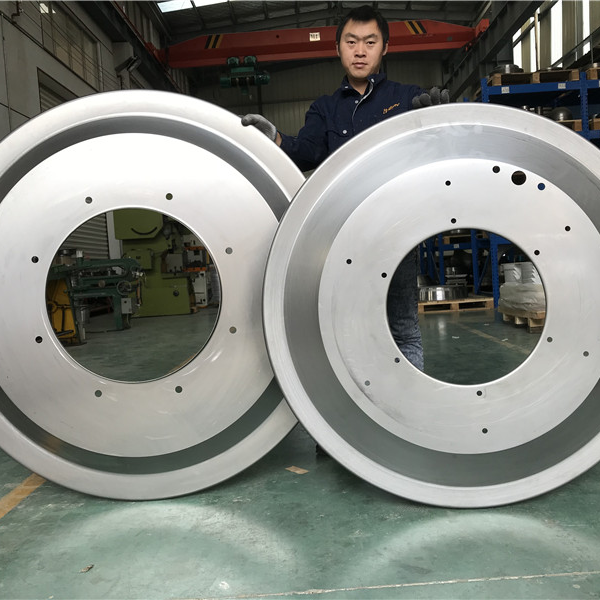
Primarily applied in large-diameter butterfly valve components, including butterfly valve shafts, butterfly valve sleeves, and internal butterfly valve fasteners.