Landscape water body quality maintenance primarily involves inhibiting and removing common pollutants from the water body, while strictly controlling the levels of...COD, BOD5, TN, TP levels and algae growth, preventing excessive proliferation, to maintain water clarity and cleanliness. The purpose of landscape water treatment is to preserve the overall water quality of the water body. This goal can only be achieved if the water's purification rate of pollutants exceeds the rate of degradation and contamination.
Landscape Water RecyclingProcessing Technology
Step 1: Adjust the water quality of the landscape water first, then separate the muddy water (turbid water, cloudy water with slight flocculation) through micro-flocculation sedimentation and self-flow filtration. This results in clear and transparent water that enters the post-treatment equipment. It first resolves issues of water turbidity and cloudiness, while also ensuring the process requirements for subsequent treatment equipment.
Step 2: Then, targeting the characteristics of pollutants that cause water quality deterioration, turbidity, algae, and microorganisms, utilize photocatalytic oxidation to effectively decompose organic impurities while simultaneously eliminating various pathogens; this thoroughly resolves issues of water quality deterioration in landscape water and inhibits the growth of aquatic life. It maintains clear and transparent water quality for an extended period.
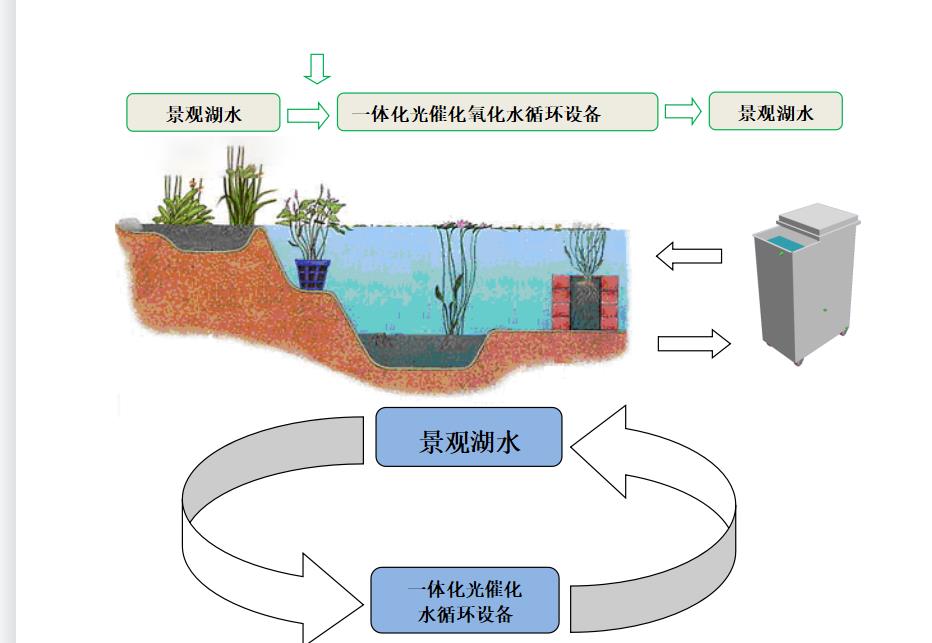

Process Description:

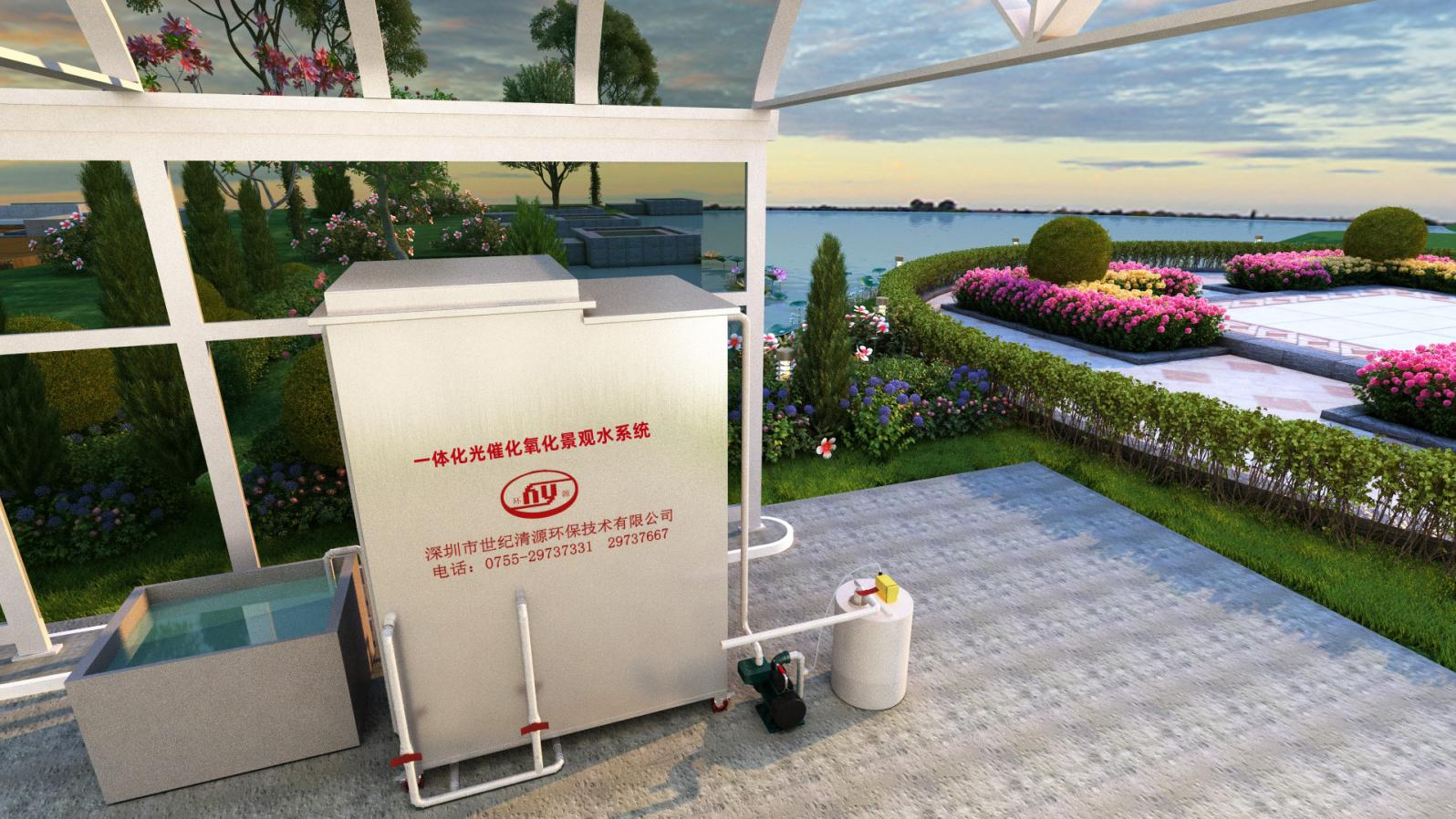
Landscape water is first pumped from the lake into an絮凝沉淀unit by a booster pump.pH adjustment and flocculation reactions cause colloidal substances in the lake water to form flocs. Pollutants sink to the bottom of the sedimentation equipment under the action of gravity and inclined plates, separating from the water. The treated water then enters a buffer pond and also flows into an integrated photocatalytic oxidation unit. This unit effectively decomposes organic impurities and simultaneously kills various pathogens, as well as inhibits and decomposes harmful substances like microorganisms. The sludge produced by the sedimentation equipment is periodically pumped into a bag filter by a sludge pump, forming a sludge cake that is disposed of with garbage.
Equipment Advantages and Features:
² Low comprehensive investment and operating costs; this product has lower investment than other products both in the early and later stages.
² Reliable performance, long lifespan; easy installation—simply connect the water pipes upon arrival and it's ready for operation.
² Large lake areas can accommodate underground structures or complete setups on the ground, while small treatment equipment can be freely moved for processing. There's no need for frequent replacement of various filter media and other materials.
² Deep treatment for rainwater and landscape water. A perfect blend of traditional technology and modern science, effective and practical in application.
² High water quality processing; no secondary pollution; thus achieving true recycling and effectively protecting the water environment.
² High degree of equipment control automation, utilizingIC control, fully automatic operation, easy to move and assemble.
² For variousCOD and organic pollutants in rainwater and landscape water are treated for true decontamination.
² One-year warranty.Replacement with a new unit provided for damage caused by quality issues with the main structure of the equipment within 3 years.