







1.2 Main Structure Description
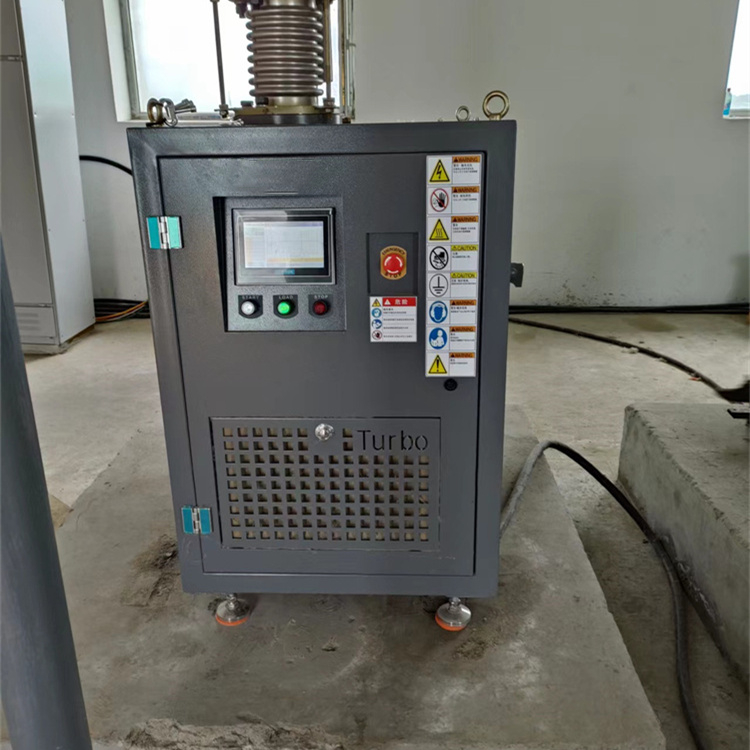
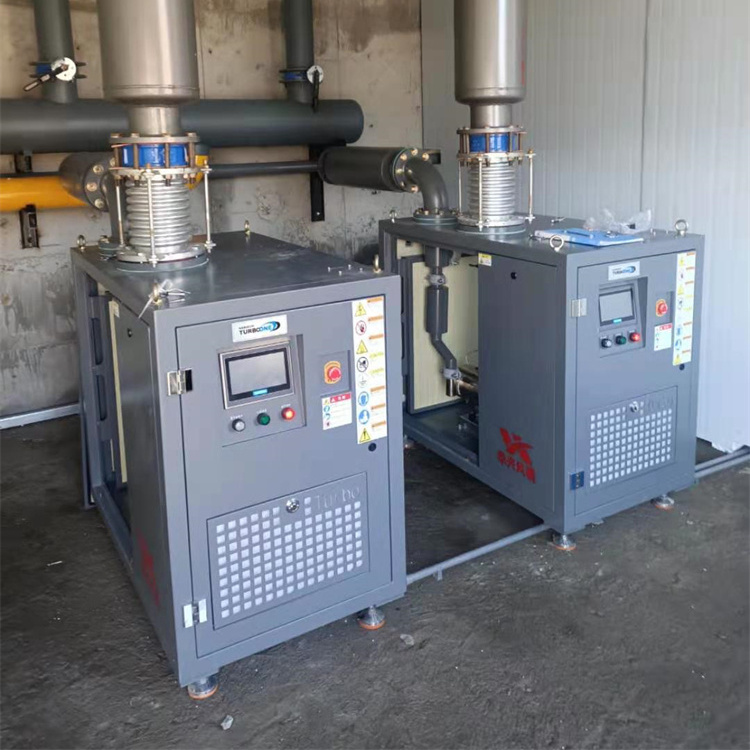
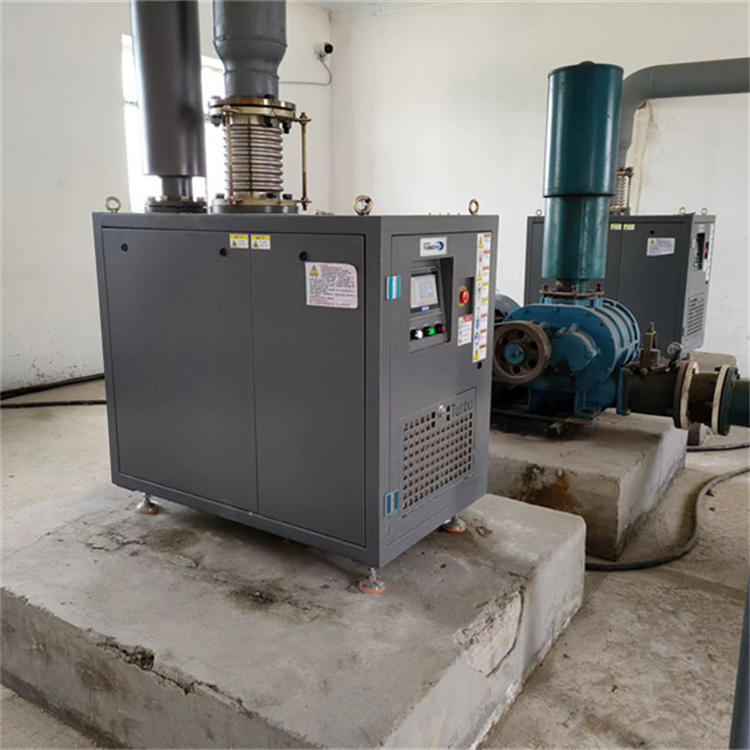
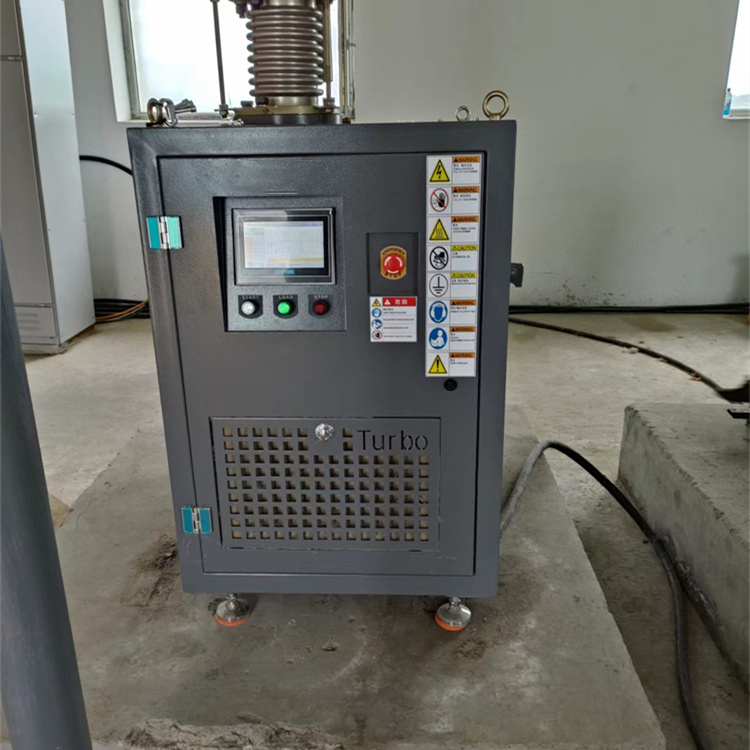
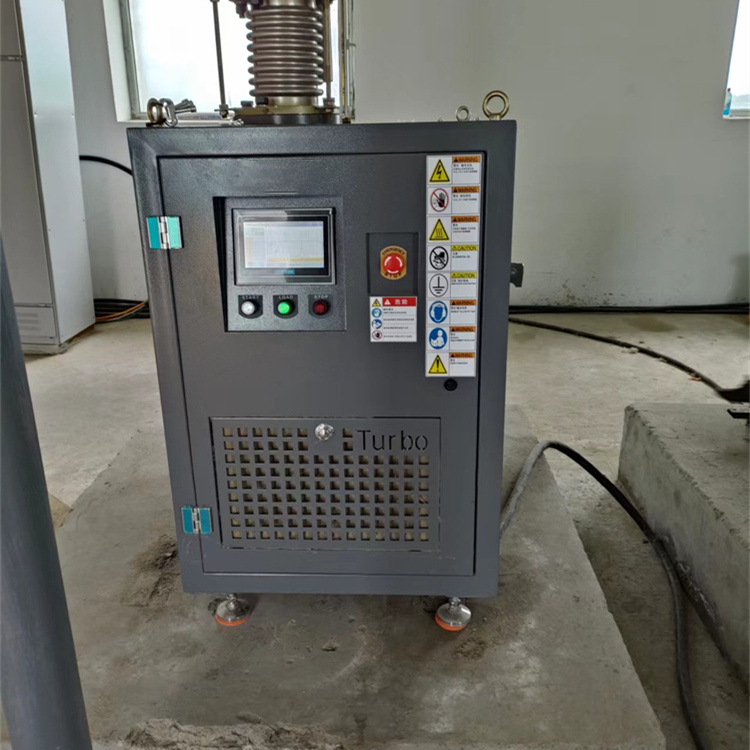
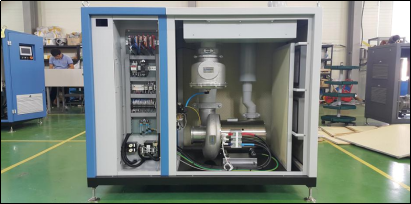
The blower is driven by an electric motor, single centrifugal type, and adopts axial air inlet and radial exhaust methods. It is equipped with a filtering and silencing system, an outlet diffuser, an electric motor, an outlet corrugated compensator, an outlet check valve, an outer box, a pneumatic vent valve and its silencer, an air bearing and its lubrication system, a local control system, and a main control system. The internal device structure is as follows:
1.2.1 Host
Adopting a single structure type, the configuration is complete, and the air volume of each blower can be adjusted.
1.2.2 High precision impeller
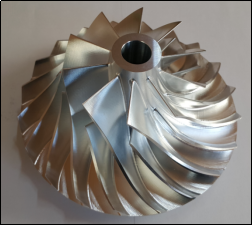
The impeller is made of AL7075 (aviation aluminum material), precision machined by a 5-axis machine tool, and undergoes strict testing. The impeller is directly connected to the electric motor. The impeller has sufficient strength and stiffness, with a safety margin of 1.2 under the stress conditions of rotational speed operation.
Material: AL7075 (aviation aluminum) has deformation resistance.
Connection method: The impeller is directly connected to the motor;
The shaft is made of titanium metal material, and the impeller efficiency can reach 92;
The impeller has been in use for over 30 years.
The frequency conversion mode should be "AC-DC-AC".
Surface precision machining ensures a tight connection between the impeller and shaft, with sufficient interference fit between the impeller and shaft under operating conditions. The impeller is well aligned and easy to assemble and disassemble. Conduct static and dynamic balance tests on the impeller. The axial clearance between the impeller and the blower casing can be adjusted through gaskets.
1.2.3 Permanent magnet motor


Each blower is equipped with a permanent magnet synchronous direct coupled motor, with a motor power greater than 10% of the load value within the entire design operating range. To avoid the influence of harmonics, the motor will not overload at various operating points of the blower.
The motor casing is made of aluminum alloy material. The motor is suitable for a power supply of 380V, 3-phase, 50Hz, with a frequency conversion mode of "AC-DC-AC".
The motor is installed on the frame through elastic fasteners. The motor should have thermal protection function.
1.2.4 Inverter
Select a low-noise, low vibration, and soft operated variable frequency speed control system to achieve the regulation of air volume and pressure, while maintaining the efficiency of the blower throughout the entire working range (meeting standards when deviating from design conditions, operating at low temperatures, high temperatures, and low pressures).
The frequency converter should achieve stepless frequency regulation of air volume and pressure, while keeping the blower running throughout the entire working range, with a control efficiency of over 97.
Using a specialized frequency converter, the performance is relatively stable
Inverter frequency converter split: can be connected within 200m range
Can be rotated using HZ operation
Has variable frequency control performance
1.2.5 Aluminum alloy vortex shell
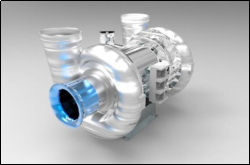
The vortex shell cast with aluminum alloy (AL Alloy) has high efficiency. Horizontal on the suction side and vertical or horizontal on the outlet side.
1.2.6 Oil free air suspension bearings

Air suspension bearings mainly include radial bearings and thrust bearings. Before starting, there is physical contact between the rotating shaft and the bearing. During starting, the rotating shaft and the bearing move relative to each other to form a fluid dynamic field, which creates a buoyancy force in the radial bearing. The buoyancy force keeps the rotating shaft in a suspended state, achieving the goal of free rotation. This type of bearing is different from traditional ball bearings in that there is no physical contact point between the rotating shaft and the bearing during operation, so no lubricating oil is required. It has low energy loss, high efficiency, and is suitable for various working environments. This technology can be applied to high-power, high-speed machinery with speeds up to 100000 rpm. After rigorous testing, it has been shown that the starting frequency of the bearing can reach over 20000 times, and the service life of the bearing exceeds 100000 hours, fully meeting the design and practical application requirements. Air bearings should have protective functions and will not experience a reduction in bearing life or any damage due to sudden power outages or malfunctions.
The shaft directly connected to the impeller is heat-treated with titanium alloy steel and machined to maintain balance during high-speed rotation. The shaft surface is fitted with a pressure film to prevent friction damage. Any lateral critical speed of the rotor should be at least 15 degrees within the normal speed range.
1.2.7 World Patent 2-Stage Wind Cooling System

The motor adopts a two-stage air cooling structure system for air suspension bearing compressors. The first stage of cooling is forced to cool outside the motor's main shaft, while the second stage is forced to cool inside the air suspension main shaft Air Coil Bearing and WLding. After the two-stage forced cooling process, the motor does not require any additional auxiliary cooling system. The cooling system will not be affected by summer temperature and humidity conditions and will not shut down.
1.2.8 Fan Touch Frequency Control System
1.2.8.1 Wireless Communication Service Technology
We have developed a wireless communication service system for air suspension fans. In addition to the main control system, it is also equipped with a global wireless communication after-sales service system. The system uses wireless communication technology to transmit various data on the mechanical status during on-site operation, including speed, temperature, pressure, flow rate, power, etc., to the manufacturer's headquarters at all times. The manufacturer analyzes the operating status at all times and provides remote services through this system information, achieving unmanned operation for users.
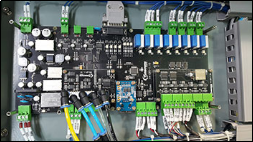
1.2.8.2 Motor Variable Frequency Intelligent Speed Control System
The high-precision pressure sensor integrated inside the fan works together with the PID control system to operate the fan in an economical state through fuzzy control.
1.2.8.3 Local Control Cabinet (LCP)
1. Each blower is equipped with a local control cabinet, which includes control for starting, stopping, and running, as well as fault detection, and can automatically stop the blower in case of a fault. The control cabinet also has all the functions to ensure the normal operation of the blower, and the control system is centrally installed in the local control cabinet.
2. Functions of the local control cabinet:
The local control cabinet of the blower is a digital multi-channel input/output protection panel, which adopts a programmable logic controller (PLC) and a touch screen display. The on-site control cabinet includes the following functions:
Display screen in Chinese;
Multiple optional control modes, including constant air volume, constant air pressure, constant speed, and on-site DO analog interlock control;
Surge protection;
Motor overload protection;
Temperature of blower bearing;
Vibration of blower bearings;
Export vent valve control;
Fault signal display;
Fault signal output;
Alarm function;
Fault shutdown, etc;
The local control cabinet should provide PLC interface;
Provide power supply for all equipment inside this cabinet.
External power supply: 3-phase, 380V, 50HZ
1.2.9 Outer box

The outer box is bright and beautiful, and has anti-corrosion, dustproof and supporting functions to protect the internal devices. It is made of carbon structural steel casting.
Under simulated earthquake conditions, by conducting static and dynamic tests on the equipment, the wind turbine and its ancillary equipment, including foundations and supports, can withstand the seismic forces in the area. Our company promises that under the seismic action of the designed earthquake intensity level, the equipment can withstand it. And maintain structural integrity.
Its low design temperature is 250 degrees and low design stress is 6 bar. The inlet of the blower is connected to the inlet filtering and silencing system, and the air inlet is axial centripetal, with no inefficient air flow directly entering the impeller. The blower is equipped with lifting rings for lifting.
Each blower is equipped with a common base and casing for installing the blower, motor, frequency converter, control system, and other accessories. The base should be made of formed steel, have sufficient rigidity, and be lifted at four points. During the overall lifting of the equipment, there will be no deformation or other damage to the box.
The blower should be installed on the mounting feet provided by the blower manufacturer to absorb the weight and vibration of the blower, while preventing inappropriate stress and deformation.
The foundation of the blower has a leveling function to ensure the installation accuracy of the blower.
1.2.10 Supporting equipment for blower
1.2.10.1 Imported filters and soundproof covers
Each blower is equipped with an imported filter and an integral silencing box, which are directly connected to the blower to reduce pressure loss and noise from the inlet pipeline. The filter and muffler cover are made of steel casing and contain sound-absorbing materials.
The overall imported soundproof box is made of a thin sheet structure made of good sound-absorbing materials, and the sheet core is used to reduce the imported noise. When the filter element is contaminated and the large pressure drop through the filter/muffler reaches 60 millimeters of water column, it can automatically prompt to replace the filter.
1.2.10.2 Export Elastic Connection
Each blower outlet is equipped with an expansion joint, which can reduce pipeline stress caused by thermal expansion and pipeline vibration caused by the blower. Expansion energy-saving can withstand the pressure and temperature of 0-200 ℃ under all operating conditions.
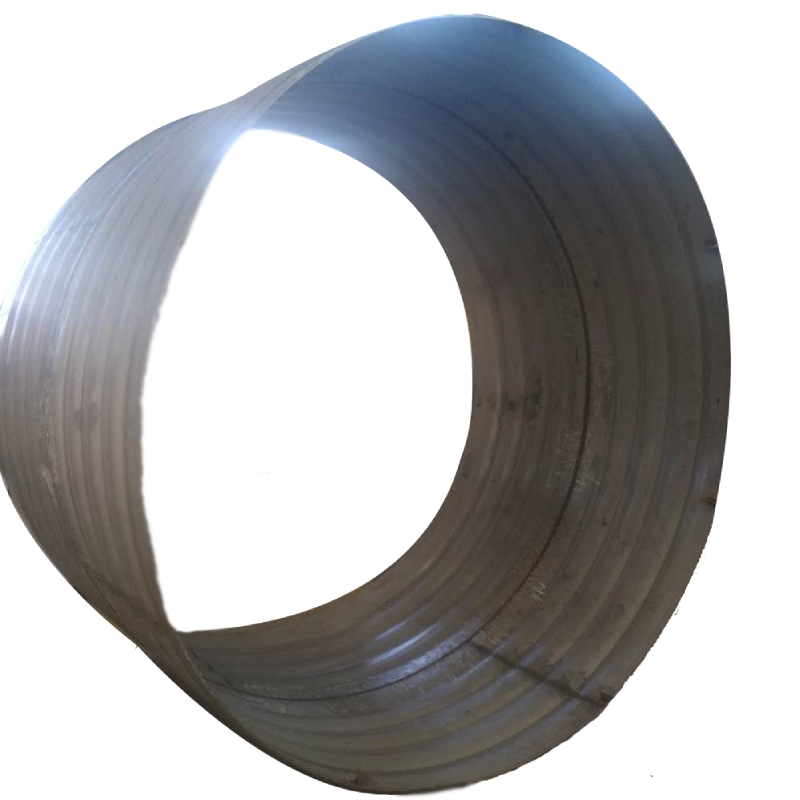
1.2.10.3 Export expansion pipe
Each blower is equipped with a diffuser pipe between the blower outlet and the outlet pipe to reduce the air flow rate to 20 meters per second. The length of the outlet expansion tube is designed for aerodynamics to recover dynamic pressure and reduce airflow disturbance to a minimum. The export expansion pipe is made of galvanized steel plate and equipped with flanges and interfaces for installing sensors.
1.2.10.4 Check Valve
Each blower is equipped with a check valve. The check valve is a clamp type butterfly check valve, double flat plate type, with spring baffle and hinge support, cast iron valve body and aluminum/copper valve plate. Stainless steel hinge pin and silicone or fluororubber sealing ring, with elastic sealing ring on the valve plate surface facing the valve body. Both valve plates are supported by hinges and have their own springs. The valve body is annular and has two flat end faces for connection with bolts and flanges. When the valve passes through the rated outlet flow of the blower, its pressure loss shall not exceed 100 millimeters of water column. The valve is suitable for a temperature of 200 degrees Celsius.
1.2.10.5 Instruments
The fan includes instruments, and all instrument electrical wiring is connected to the control cabinet terminals or junction boxes.
Including the following instruments:
Imported air filter differential pressure gauge
Inlet air temperature (high) switch
Export thermometer
Airflow meter
anemometer
tachometer
galvanometer
Surge protection, etc
1.2.10.6 Air filtration device
The blower is equipped with a built-in air filtration device, which is easy to clean and replace.
1.2.10.7 Pneumatic vent valve
Each blower is equipped with a low-pressure pneumatic vent valve controlled by an electromagnetic valve linkage. The driving pressure of the vent valve is lower than 0.3kgf/cm2, and it can be driven by the blower's own air pressure higher than 0.3kgf/cm2. The design of the venting system is: shutdown, power loss
There is a vent valve inside the chassis, equipped with a muffler, and its shell is made of carbon steel with sound-absorbing material inside