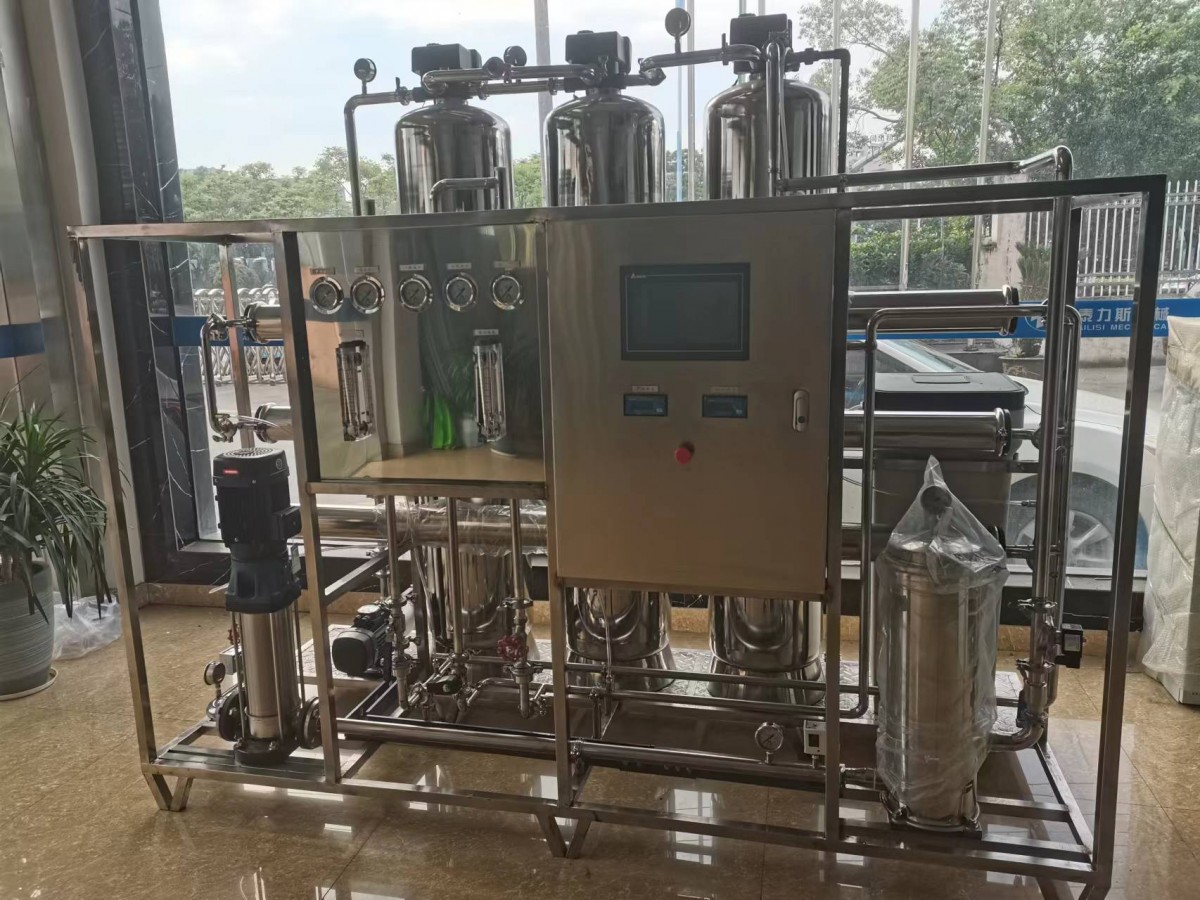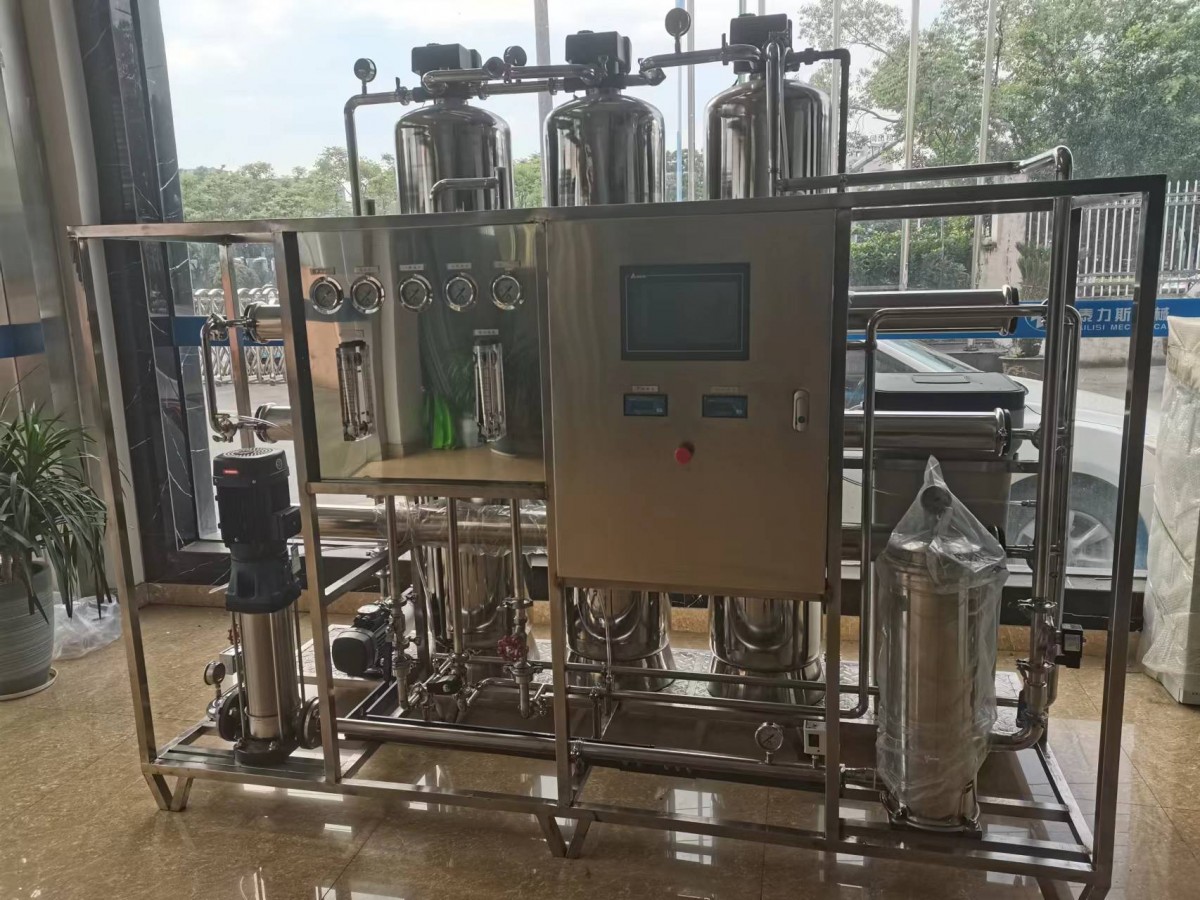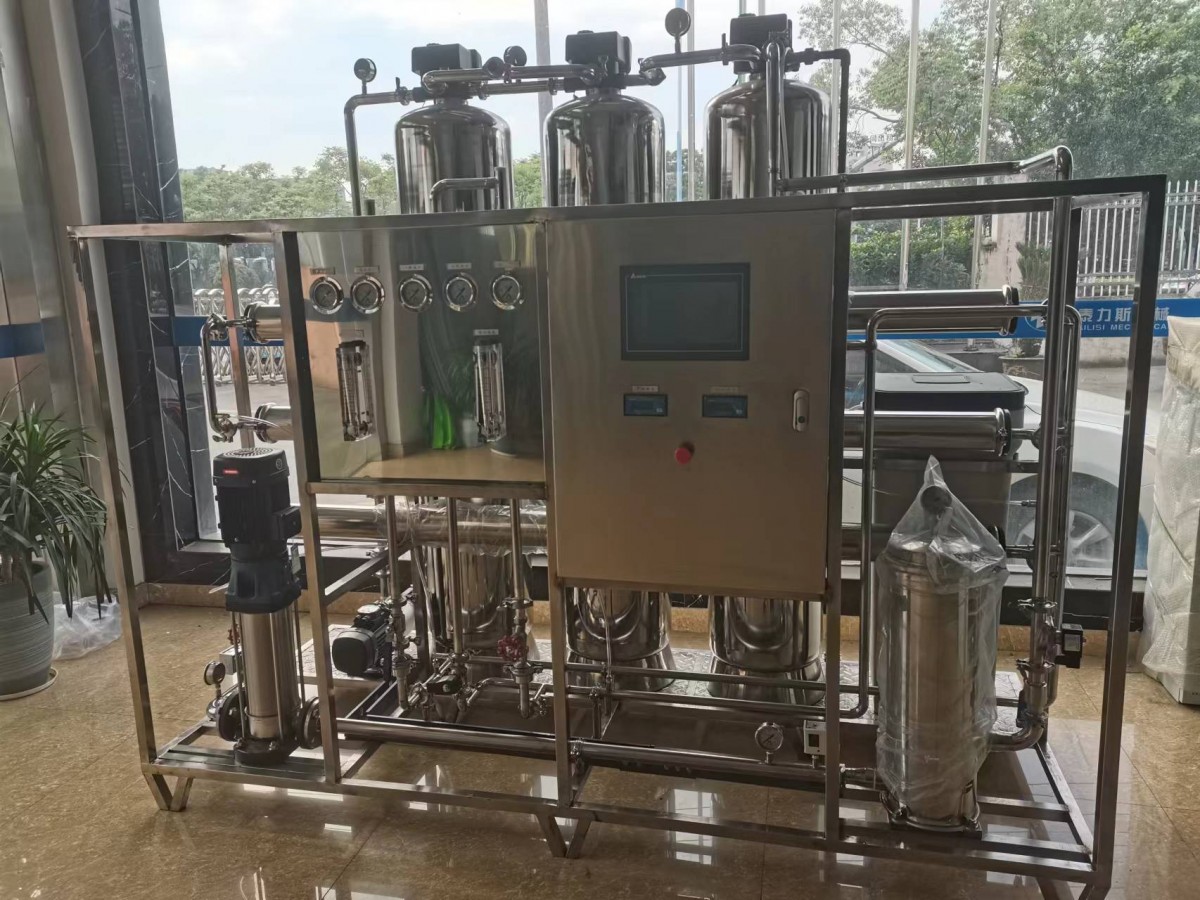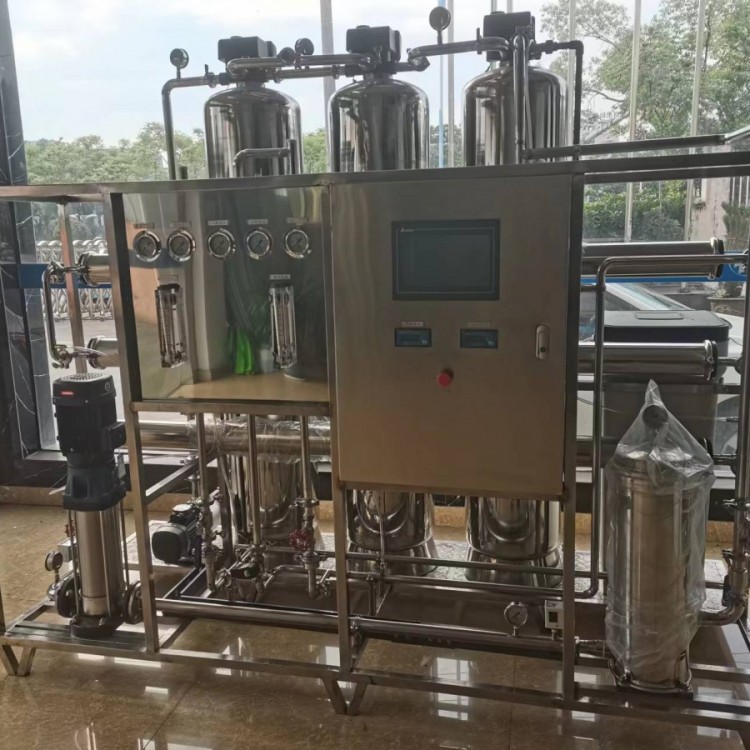
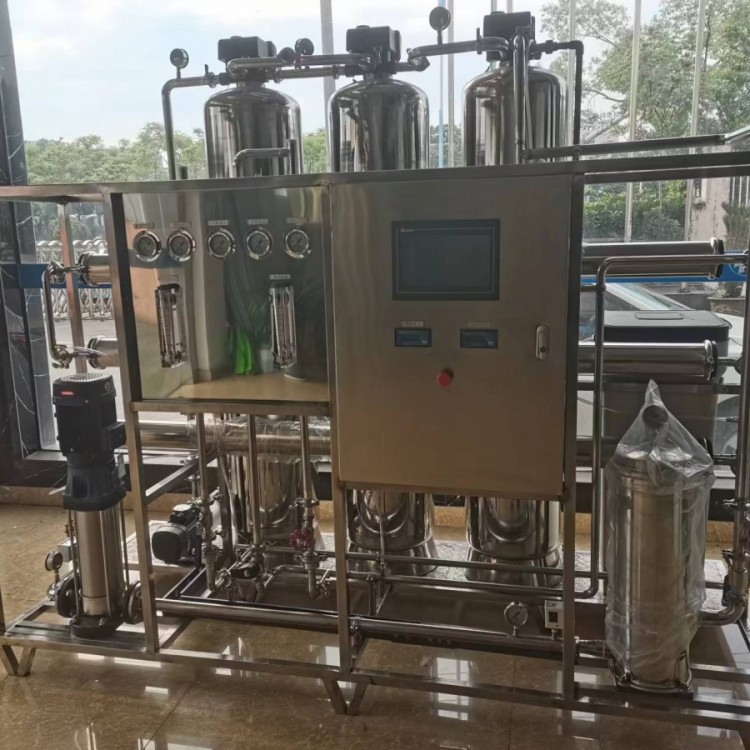







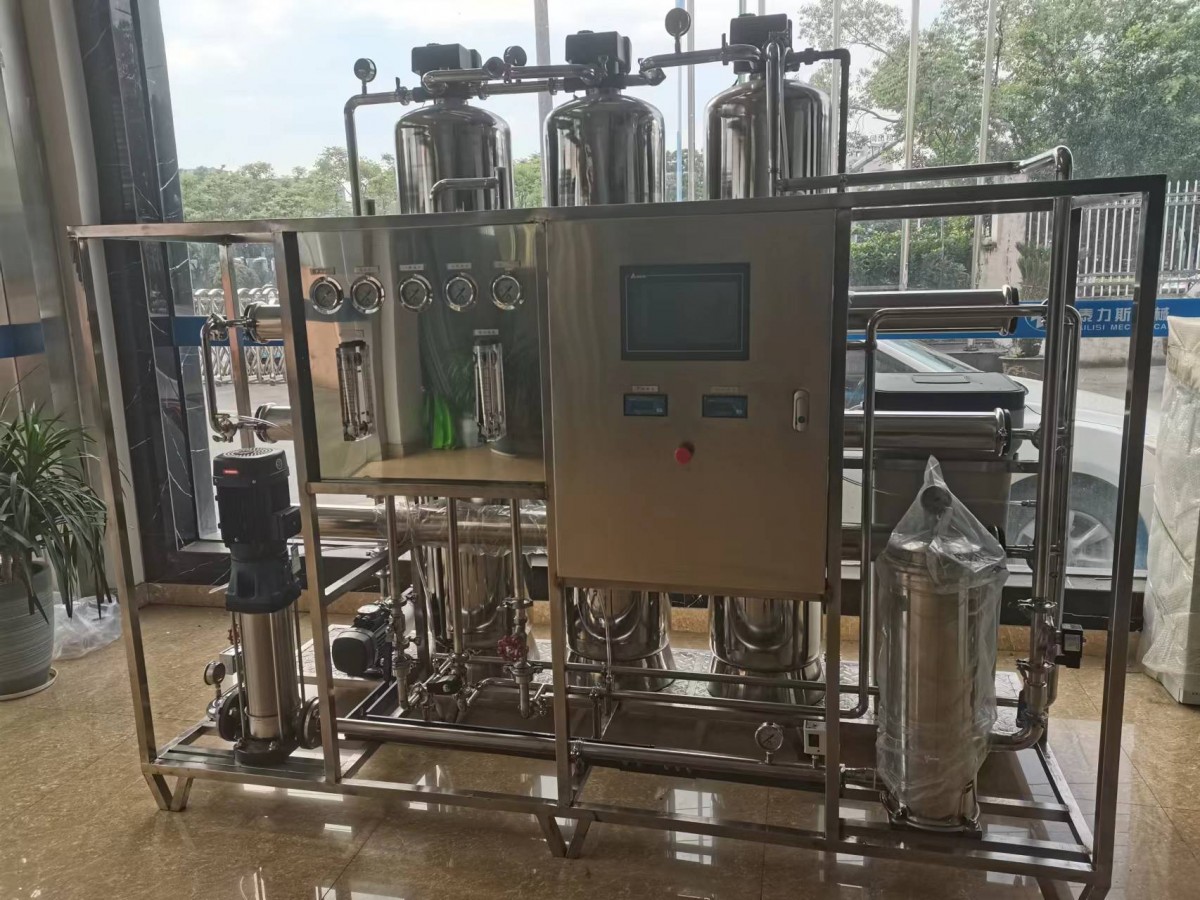
Electrodeionization (EDI) technology is a new membrane separation technology formed by the organic combination of electrodialysis and ion exchange. It not only utilizes the advantages of electrodialysis for continuous desalination and ion exchange resins for deep desalination, but also overcomes the negative effects of electrodialysis concentration polarization and the defects of ion exchange resins that require acid-base regeneration and cannot work continuously. The water production process can be carried out continuously for a long time.
working principle
In the EDI component, a certain number of EDI units are separated by a mesh to form a concentrated water chamber. Negative/positive electrodes are also installed at both ends of the unit group. Driven by direct current, the anions and cations in the water flow of the fresh water chamber pass through the cation exchange membrane and enter the concentrated water chamber, where they are removed. And the ions are carried out of the system by the water in the concentrated water chamber, becoming concentrated water EDI equipment generally uses reverse osmosis (R0) pure water as EDI feed water. The pure water resistivity of R0 is generally 40~2 μ S/cm (25 ℃). EDI pure water resistivity can reach up to 18M Ω· cm (25 ℃), but depending on the purpose of deionized water and system configuration settings, EDI pure water is suitable for preparing pure water with resistivity requirements between 1-18.2M Ω· cm (25 ℃).