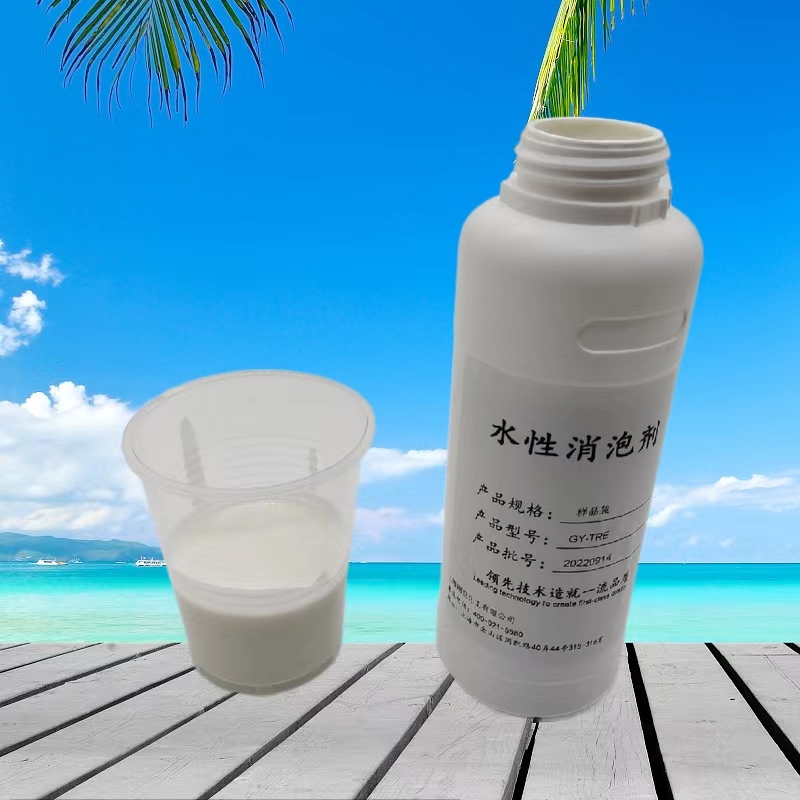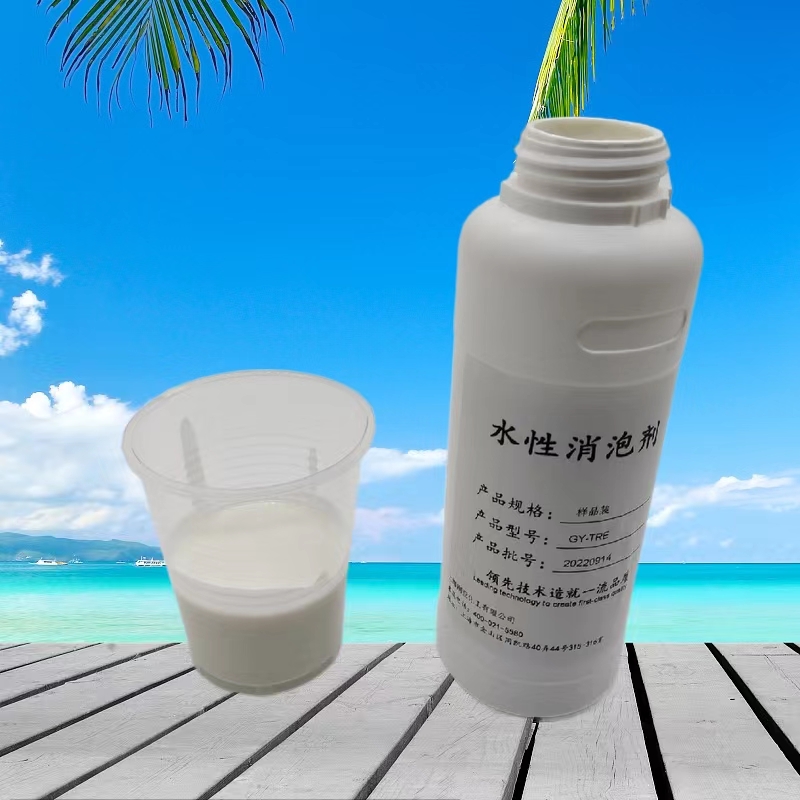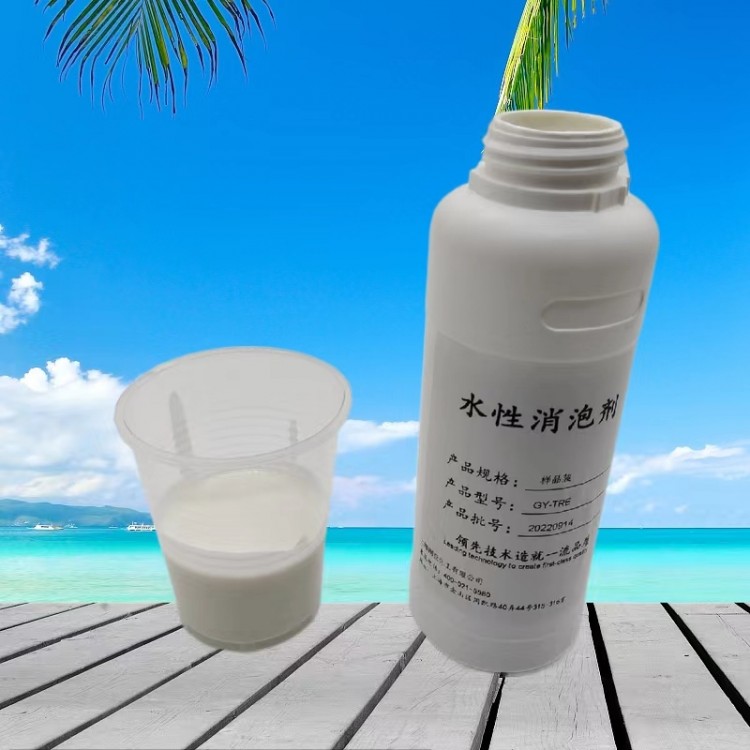

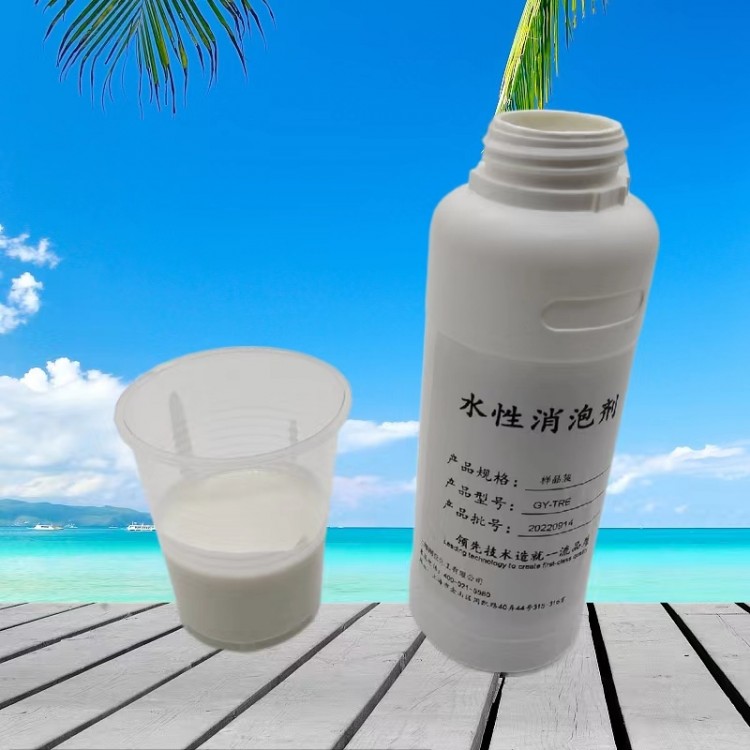










Water-based Defoamer, Silicone Defoamer, Wastewater Treatment Defoamer
1) Wide Application: Due to the unique chemical structure of silicone oil, it is neither soluble in water nor in substances containing polar groups, nor in hydrocarbons or organic compounds containing hydrocarbon groups. Because of its insolubility in various substances, silicone oil has a wide range of applications, including both water-based foam control and use in oil systems.
(2) Low surface tension: The surface tension of silicone oil is typically 20-21 dynes/cm, which is lower than that of water (72 dynes/cm) and most foaming agents, making it highly effective in defoaming.
(3) Excellent thermal stability: Taking dimethyl silicone oil, a commonly used material, as an example, it can withstand temperatures up to 150℃ for a long time and over 300℃ for short periods without decomposition of its Si-O bonds. This ensures that the silicone defoaming agent can be used over a wide temperature range.
(4) Excellent Chemical Stability: Due to the stability of Si-O bonds, silicon oil has high chemical stability and is difficult to react with other substances. Therefore, as long as properly formulated, organosilicon defoamers can be used in acidic, alkaline, and saline systems.
(5) Physiological inertness: Silicon oil has been proven to be non-toxic to humans and animals, with a median lethal dose exceeding 34 grams per kilogram. Therefore, silicone defoamers (when paired with suitable non-toxic emulsifiers) can be safely used in industries such as food and cosmetics.
(6) Strong Defoaming: The silicone defoamer is not only effective in breaking down existing foam but also significantly inhibits foam formation. It requires a minimal amount for defoaming, just 1ppm (one part per million) of the foaming medium's weight. Its typical usage range is between 1 and 100ppm. It's cost-effective and does not contaminate the defoamed material.