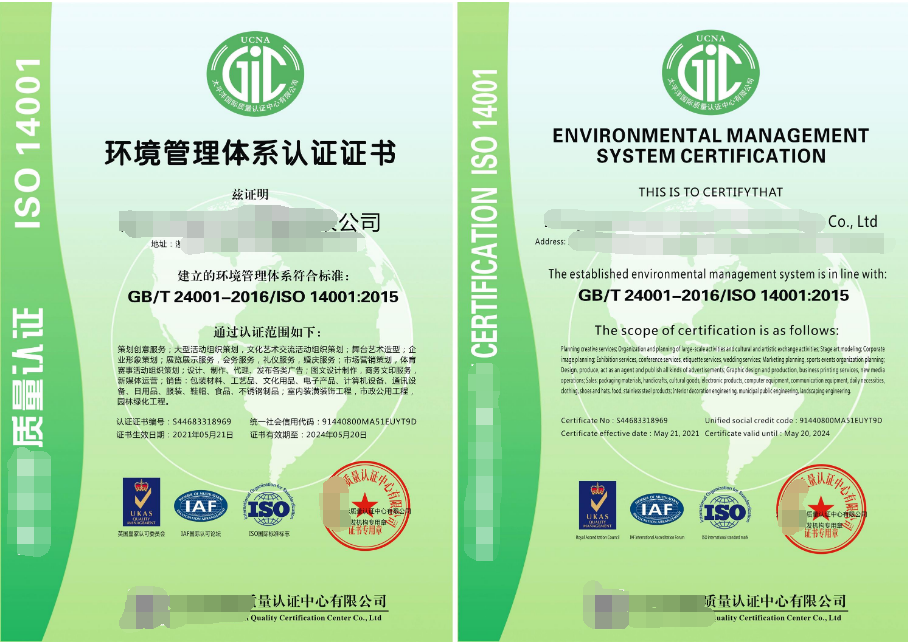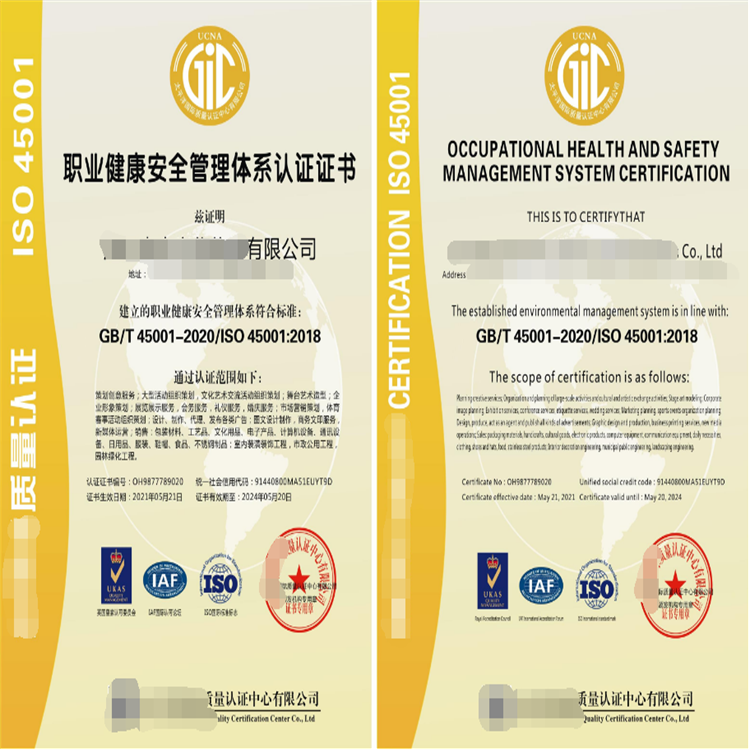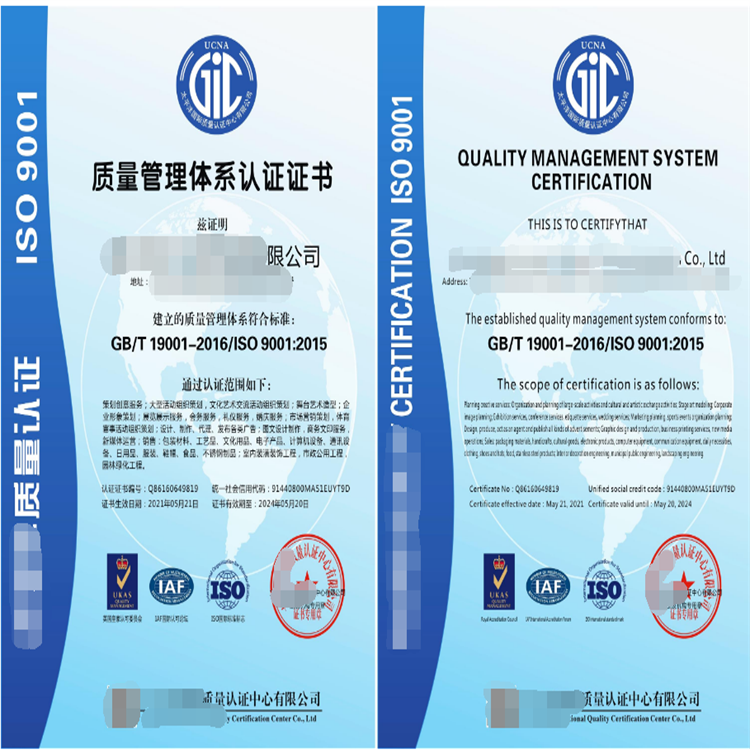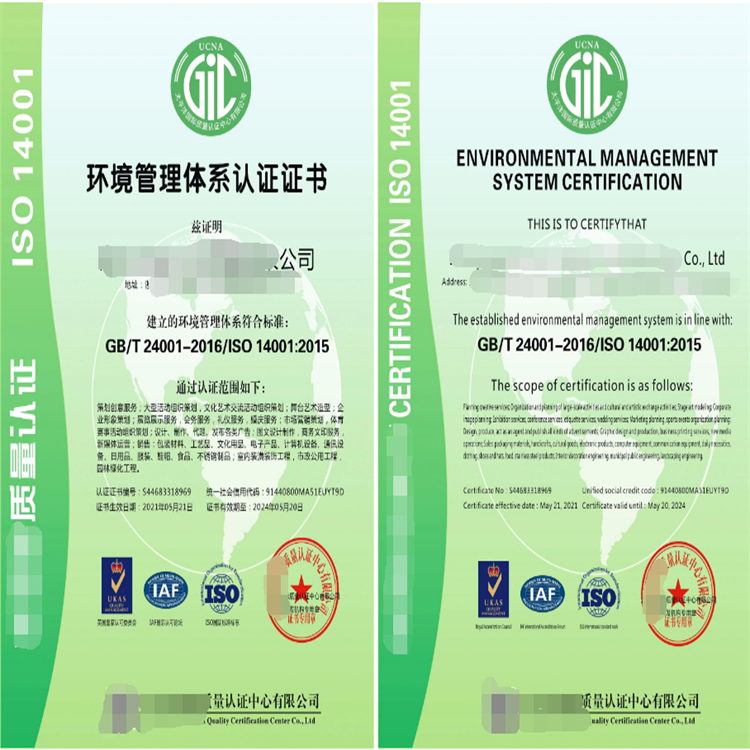
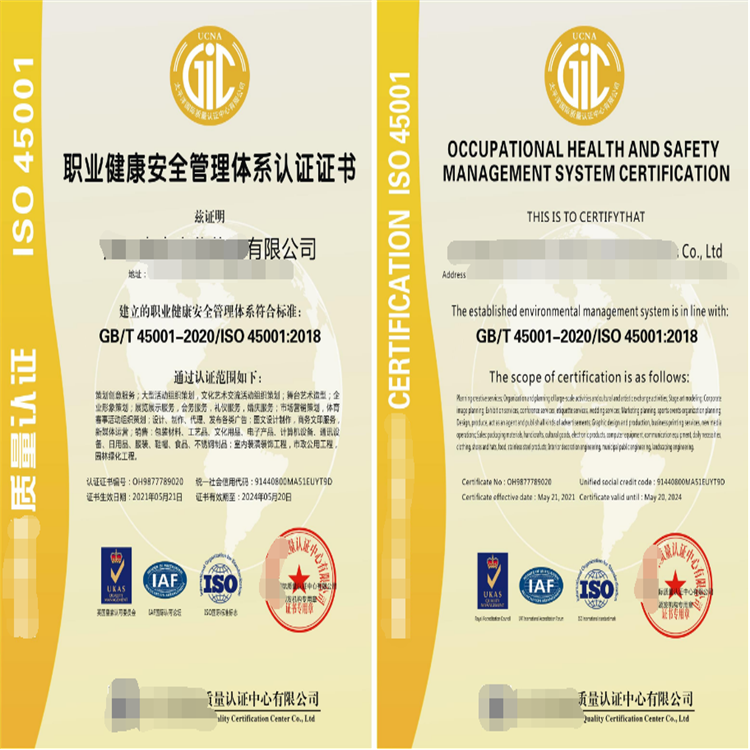
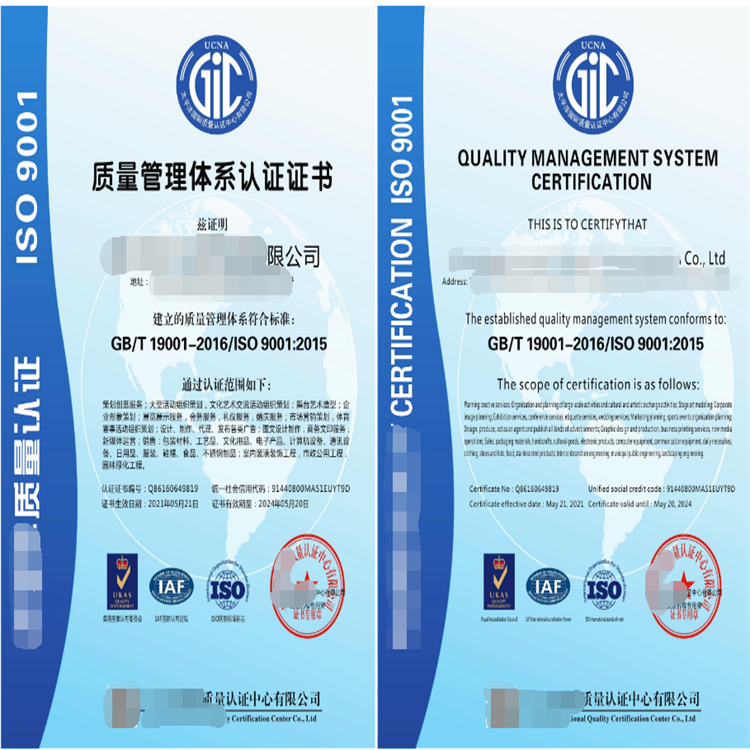










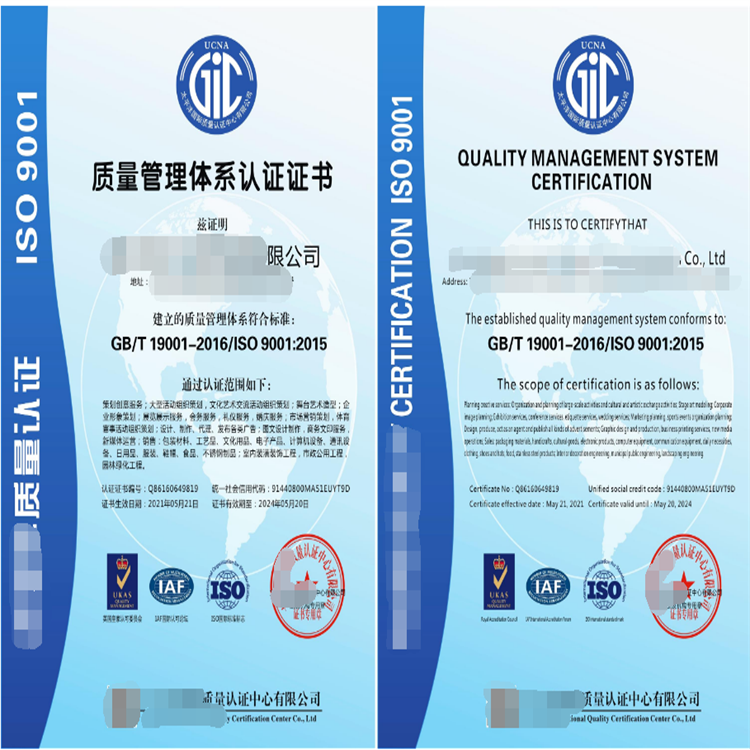
ISO certification, specifically ISO 9001 certification, is provided by third-party quality system assessment bodies. To ensure the validity and credibility of the supplier's quality system certification, the certification must be undertaken by a third-party organization that has no economic interests or administrative affiliation with the certified entity (supplier). This organization, in addition to having experienced and trained personnel, adequate resources and procedures, must also earn support and societal trust through its excellent certification practices and integrity.
ISO Certification Application Requirements
1. Chinese enterprises hold a "Business Legal Person License" issued by the relevant authorities; foreign enterprises hold a registration with the relevant departments and institutions.
2. Product quality is stable and capable of regular mass production. Quality stability refers to the product passing continuous random inspections for over a year. Products produced in small batches do not represent the stability of product quality, and only companies that officially produce products in bulk are eligible to apply for certification.
3. The product complies with local standards, industry standards, and their supplementary technical requirements, or with standards confirmed by the standardization administrative authority. The standards referred to here are regional or industry standards of a *level. Whether the product meets the standards is to be confirmed and approved by sampling inspections conducted by testing institutions authorized by the local quality and technical supervision bureau.
4. The quality system established by the manufacturing enterprise complies with the requirements of the GB/T19000-ISO9000 series quality standards, establishes an applicable quality standard system (usually selecting ISO9002 to establish the quality system), and ensures its effective operation.