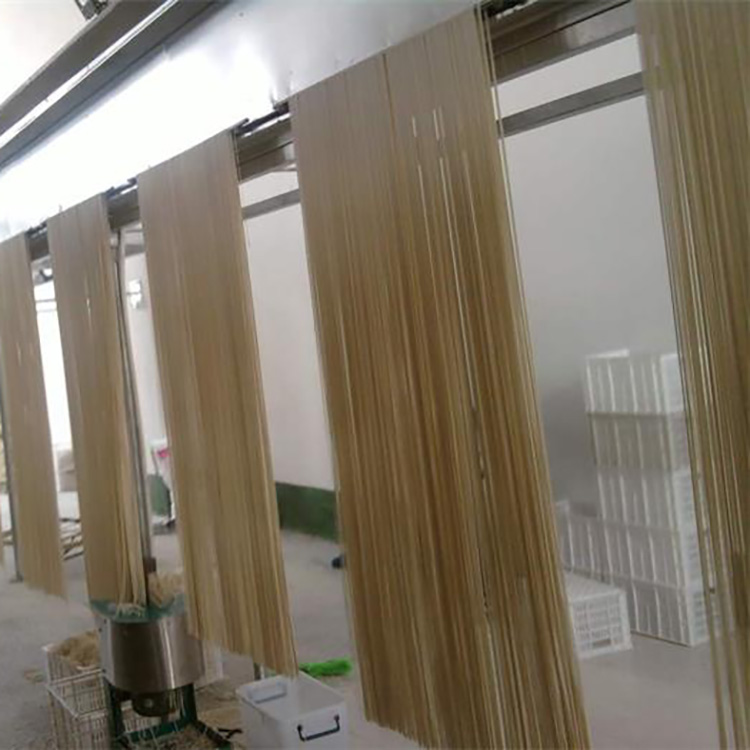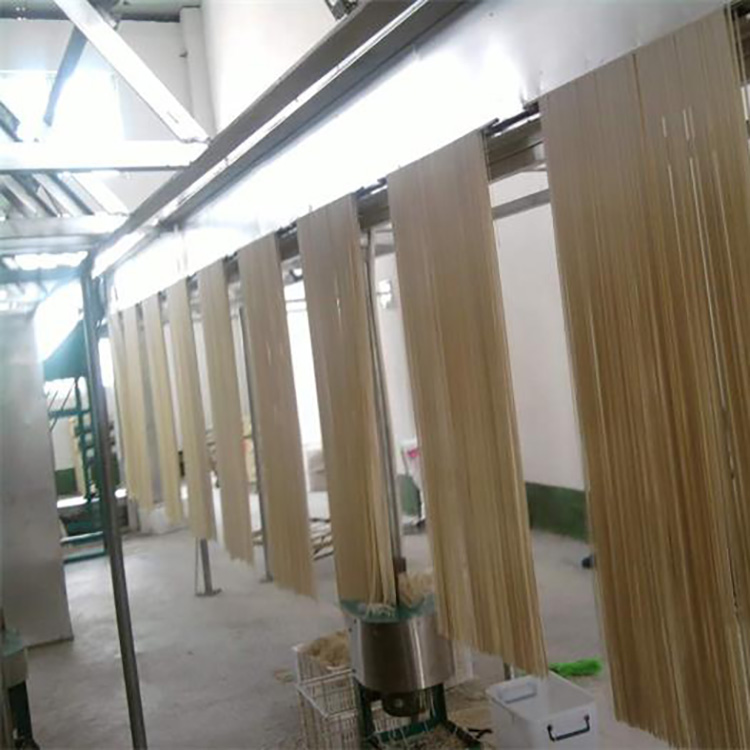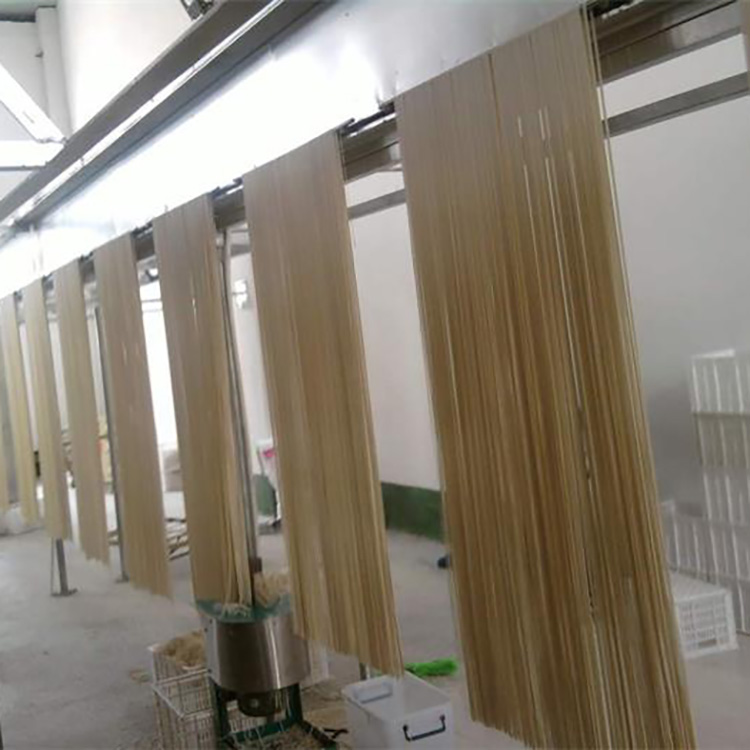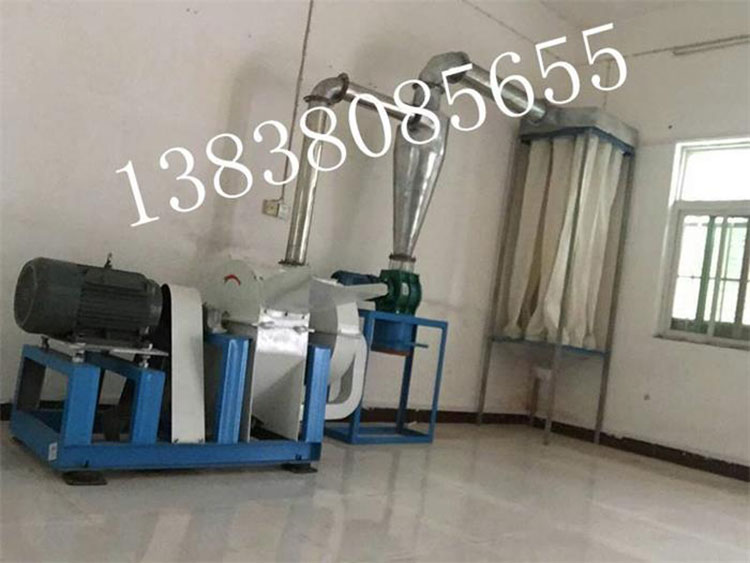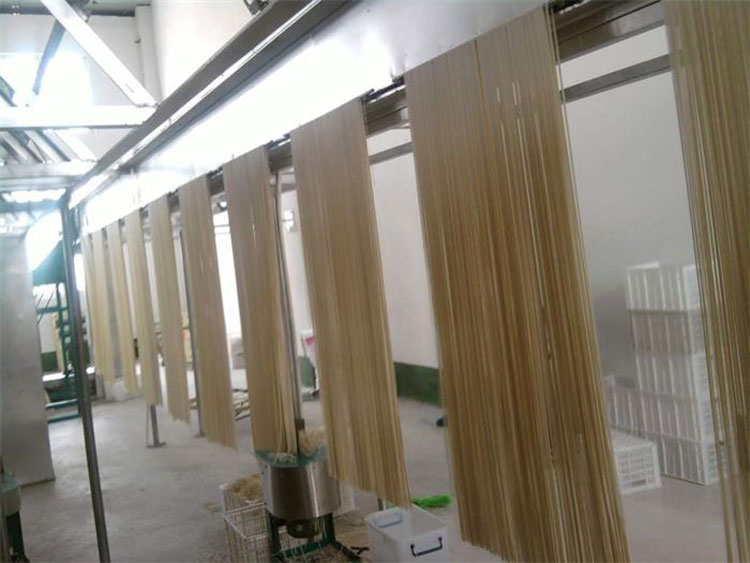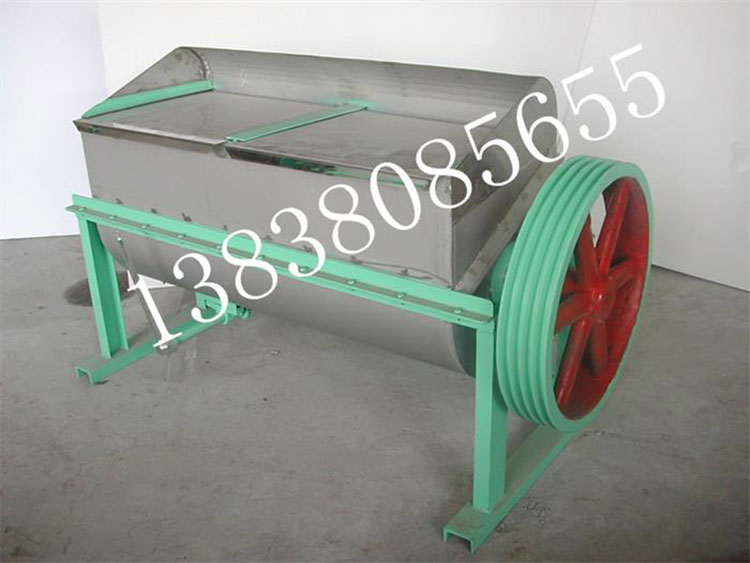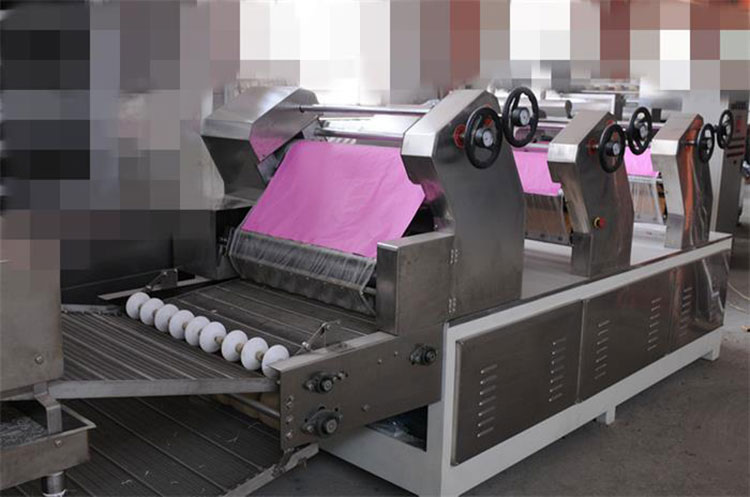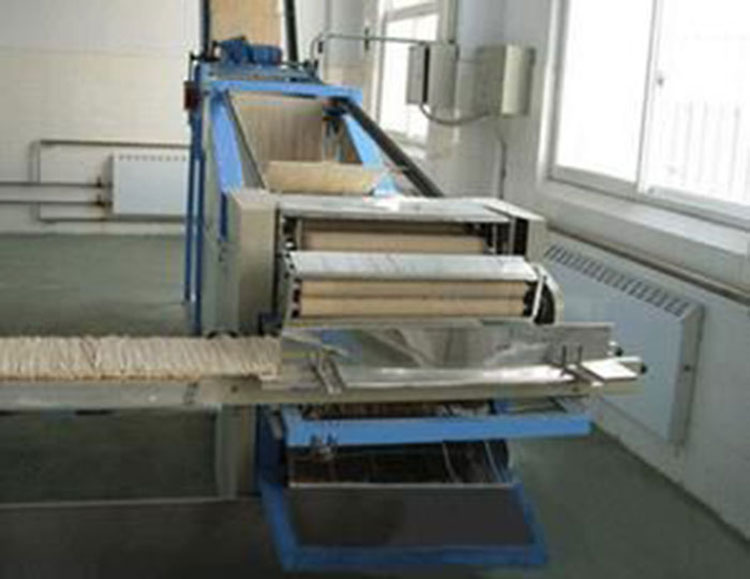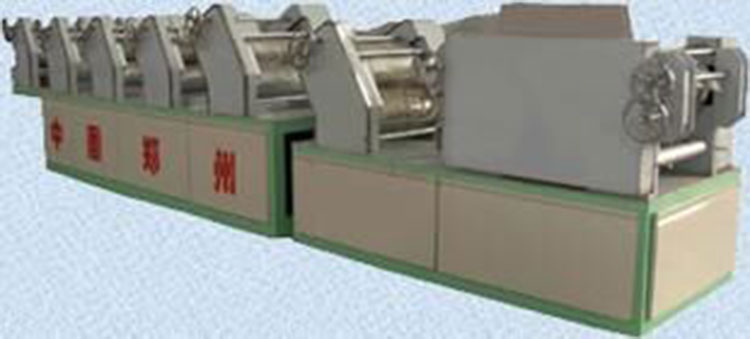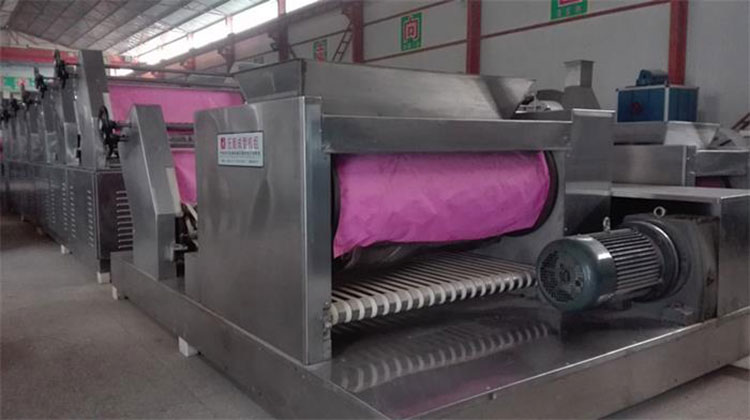





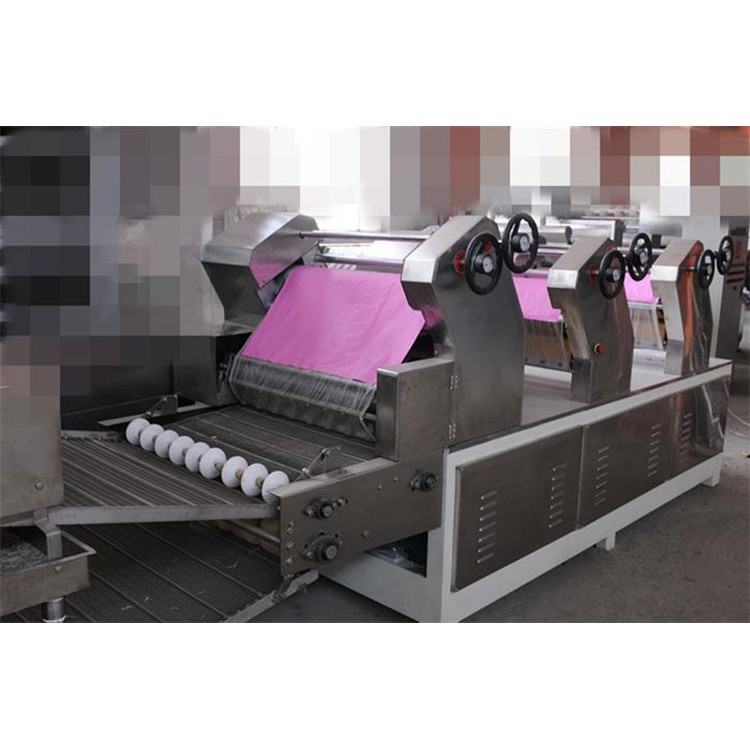






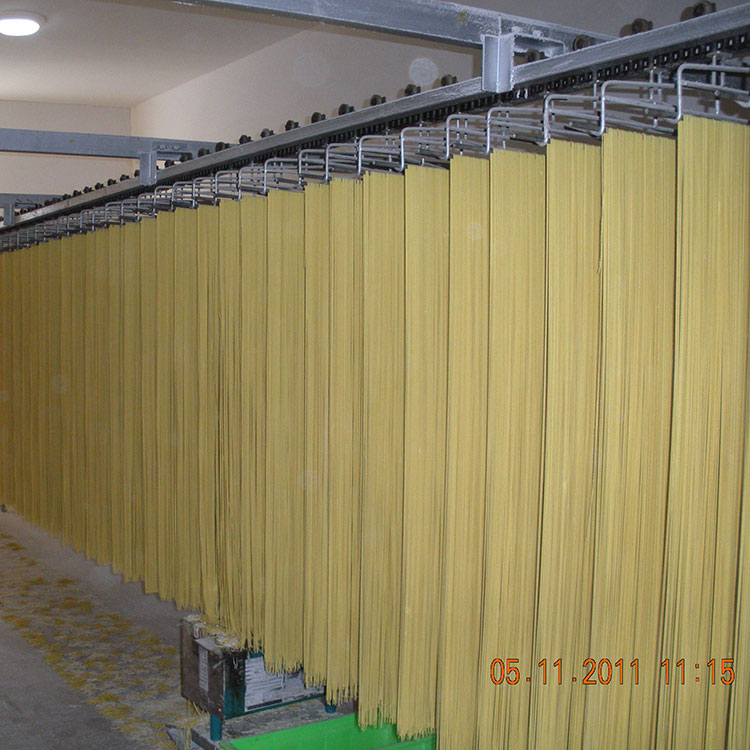
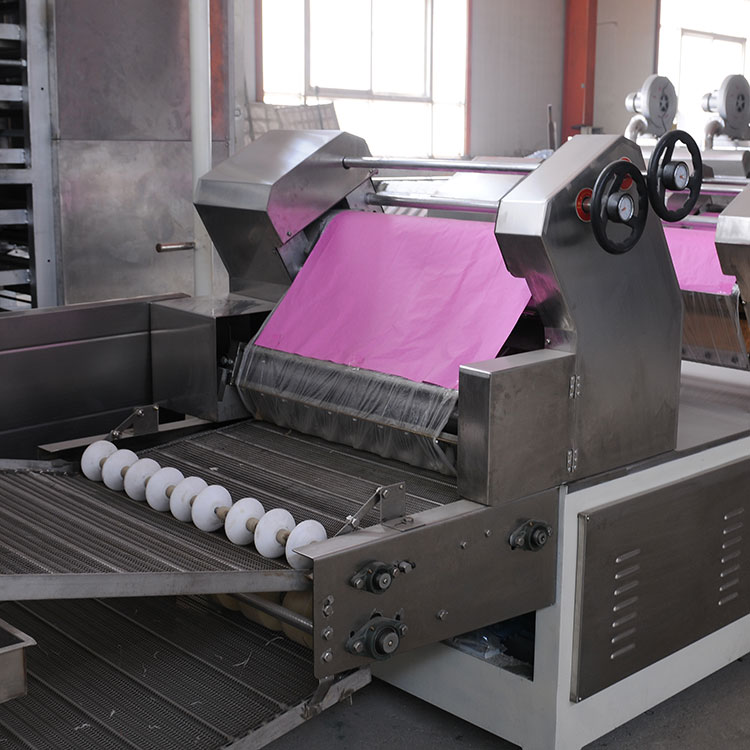

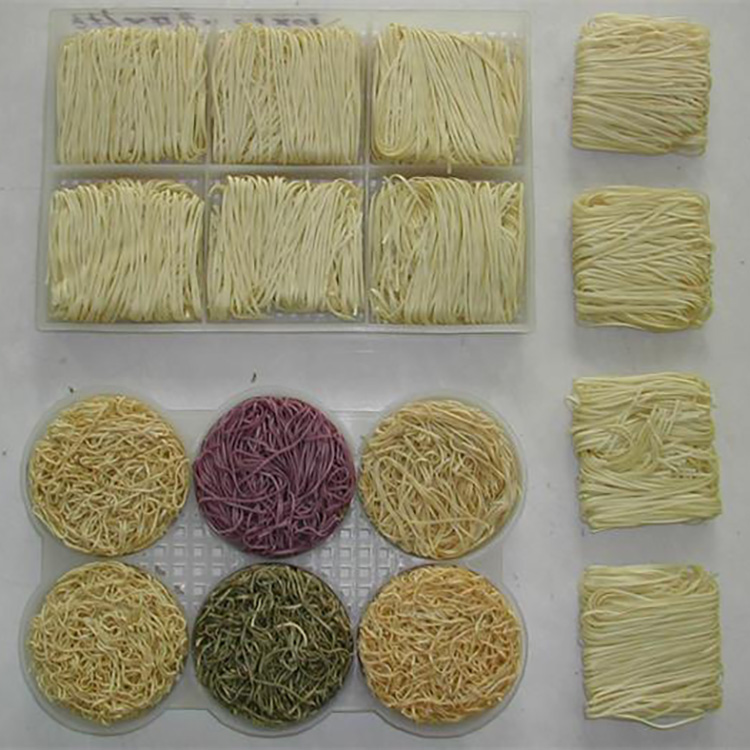
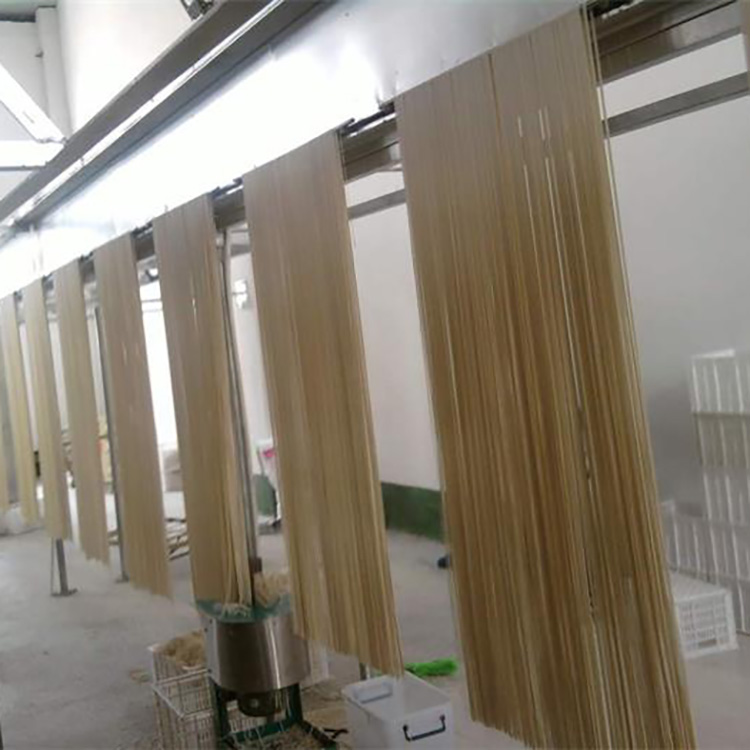
Parameters and features of the new generation noodle machine, featuring automatic cutting, hanging, and drying functions. The new generation noodle machine is compatible with 220V standard voltage, offering more convenient and intuitive operation. It can fully operate the entire process without the need for constant supervision, ensuring complete automation.
Operation Guide
1. Mix the dough: Pour the flour into the dough mixer, then add water according to the prescribed ratio of about 25%, start the mixer, and blend the flour and water until it reaches a granular consistency (for use after 10 minutes).
2. Adjustment: Adjust the roller gap using the handwheel. The reference data for roller gaps in each group is: (except for units above 330). During the adjustment process, the amount of tightening or loosening the handwheel may not be accurately set in one go. The key is to understand the principle, be patient, and if not skilled, stop the machine for adjustment. Once normal, securely lock the handwheel.
3. Operation: Place the mixed flour into the hopper, press the knife and secure the knife guard, then start the machine. The panel from the third group down needs to be manually guided to the next group (repeat for multiple groups). Operation complete.
Common Malfunctions
The panel is not connecting properly?
Due to improper adjustment of roller gaps, phenomena such as broken slabs and excess slabs may occur. For instance, if the previous panel is thin and the next one is thick, and the demand for the next panel is high, this will lead to broken slabs; conversely, there will be excess slabs. Following this logic, when adjusting roller gaps to prevent broken slabs, reduce the gap between the lower roller pair to achieve evenness.
Are the edges of the panel or both sides of the panel uneven in thickness?
It is caused by uneven gaps at both ends of the roller. Therefore, adjust the gaps at both ends of the roller to ensure uniformity.
3. Curved wave-shaped panels and noodles?
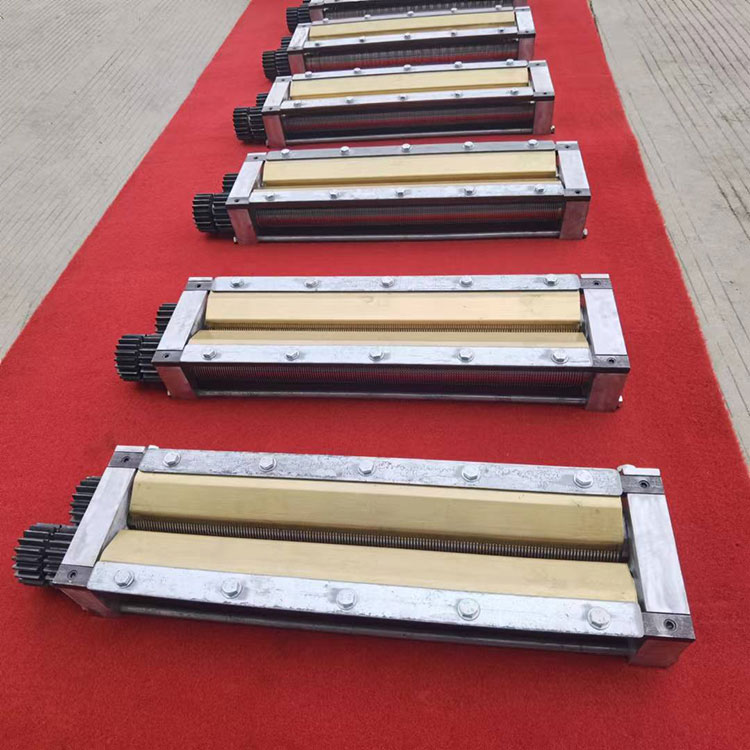
If the installation angle of the scraper, cutting knife, or comb knife is too great or if the comb knife blade is reversed, simply adjust them properly.
4. Coated roller for panels?
It's due to excessive moisture in the flour or loose scraper bolt.
Can't separate the noodles?
The blade of the cross-section does not match the base board. Just adjust the blade edge of the cross-section to the correct position.
6. Noodles break?
It's due to impurities in the flour (leftover residue from the previous mixing) or uneven mixing.
Structural Features
550 Model, 450 Model, 350 Model, 330 Model
The noodle machine roller is made of nickel-chromium alloy double-layer metal centrifugal casting, with a surface hardness up to HRC49-54 and a depth of 14-18MM, ensuring long service life and high noodle quality. It features a compact structure, reliable performance, and innovative design. It is compatible with large-scale low and medium-temperature drying equipment, supports continuous production, and boasts a high level of modernization and automation. It has a unique function to produce noodles under any climate conditions, making it an ideal large-scale and advanced equipment for noodle production.
Model 300-2, Model 260-2, Model 250-1
The noodle machine roller is available in two types: steel roller and cast iron roller. The roller surface is precision ground on a grinder, resulting in a smooth and aesthetically pleasing finish. The noodles produced are even and glossy, ensuring high-quality dried noodles. The rollers are arranged at a 45-degree or 60-degree angle, with wide openings, secure fixation, ease of operation, and safety and hygiene, making them suitable for visual inspection. The transmission uses a reducer and chain drive, with a well-arranged machine layout, reasonable reduction ratio, and distribution, ensuring smooth transmission and accurate power transmission. It also features low noise, no vibration, and superior performance, making it compatible with small-scale drying equipment. It is an ideal product for small and medium-sized dried noodle production enterprises.
250A Model, 250B Model, 200A Model, 200B Model
It boasts compact size, sturdy structure, safety in use, easy operation, and convenient maintenance. The noodles are processed through five rolling passes, resulting in a smooth and dense surface, providing a prerequisite for producing high-quality noodles. The machine utilizes a full gear transmission structure with rolling bearings at the rotating parts, ensuring smooth operation, stable performance, and high production efficiency, making it suitable for medium and small-scale noodle processing enterprises.
60, 100, 125II
Simple to operate, energy-efficient, cost-effective, and easy to maintain, this product is suitable for institutions, companies, and canteens. Its pricing is particularly aligned with the financial budget of Chinese households, making it an ideal choice for a wide range of consumers.
Safety & Maintenance
Operators should carefully study the manual before use and strictly follow the instructions provided.
Do not reverse the machine.
3. Conduct a pre-startup inspection for any abnormal conditions in all parts, and address any issues promptly to prevent accidents.
4. Strictly prevent iron or other hard substances from mixing with the flour to avoid damaging the machinery.
Do not pour the return dough directly into the flour bin.
6. Absolutely no hands allowed in the dangerous areas such as rolls, gears, chains, cutting blades, etc., while the machine is operating.
7. Ensure lubrication of all rotating parts. In areas with oil marks, oil cups, gear, chain components, and oil holes, top up with 20#-30# engine oil twice a shift. After each shift, add a small amount of cooking oil to the cutting tool and roller surfaces.
8. The clutch of the single head (60, 100 models) rolling mill and the noodle blending machine must be engaged only when the machine is shut down.
9. Pre-pressing: Run the machine for 10-15 minutes before pressing. During winter production, maintain the indoor temperature above 10-15 degrees Celsius.
10. Maintain the machine's cleanliness after shutdown, ensuring no remnants or billets are left inside the rolling rolls.
11. Maintain lubrication for all gears and rolling bearings.
12. Absolutely no foreign hard debris is allowed to fall into the roller or gear.
Change bearing grease every six months.
Absolutely no adjustment of the roller gap to 5 millimeters or more while in operation.
MTT Strainer User Instructions
A noodle picking machine is a machine that stacks shaped noodles onto a rod and hangs them in space, serving as a配套 equipment for the instant noodle production line.
Installation Method
Align the base of the picking machine with the holes on the front leg of the hanging machine, connect with M10 bolts, and adjust to the center.
2. The slicing head of the noodle machine and the bottom shaft of the noodle separator are connected by the chain supplied with the main unit, and are tightened with an adjusting wheel.
Adjustment Method:
Before operating the machine, it must be adjusted to ensure the noodles are of the perfect length, fitting exactly on the noodle picker.
Method: Before turning on the machine, manually pull the chain hooks to align them on both sides. Then, start the machine to test the noodle rolling. Adjust the machine by stopping and pulling the chain until the noodles are centered on the noodle rod with the lower ends even.
Production Line Configuration
1. Mixing System
The equipment consists of a flour hoist, flour conveyor, brine mixer, dough mixer, and electrical control cabinet. It controls the incoming flour and mixed brine in a quantitative manner, forming an atomized state, which makes the dough pieces loose and evenly moist and dry.
2. Pasta and Strip Cutting System
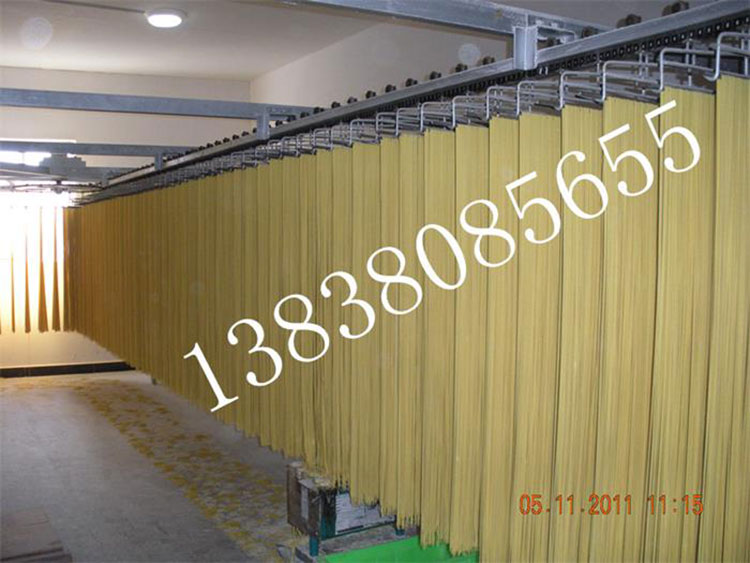
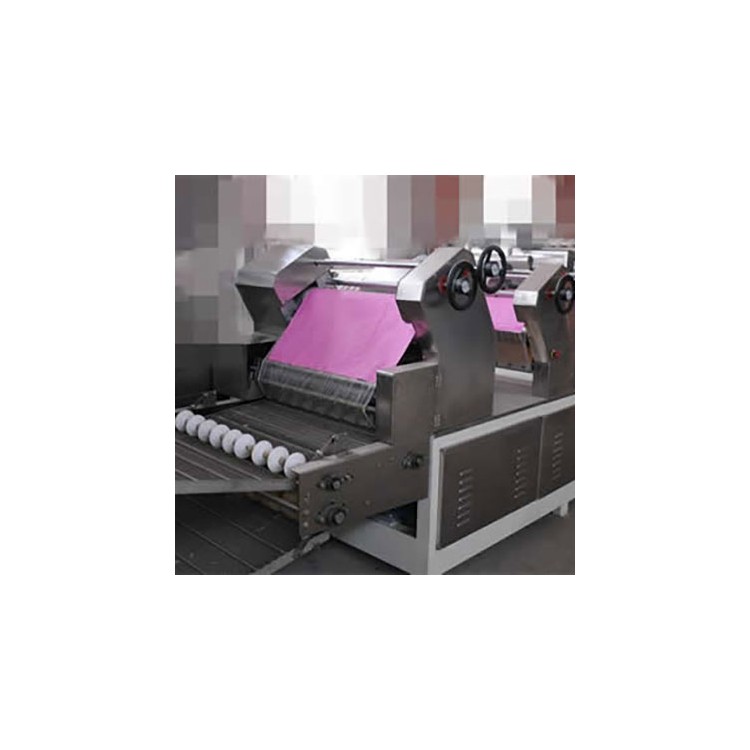
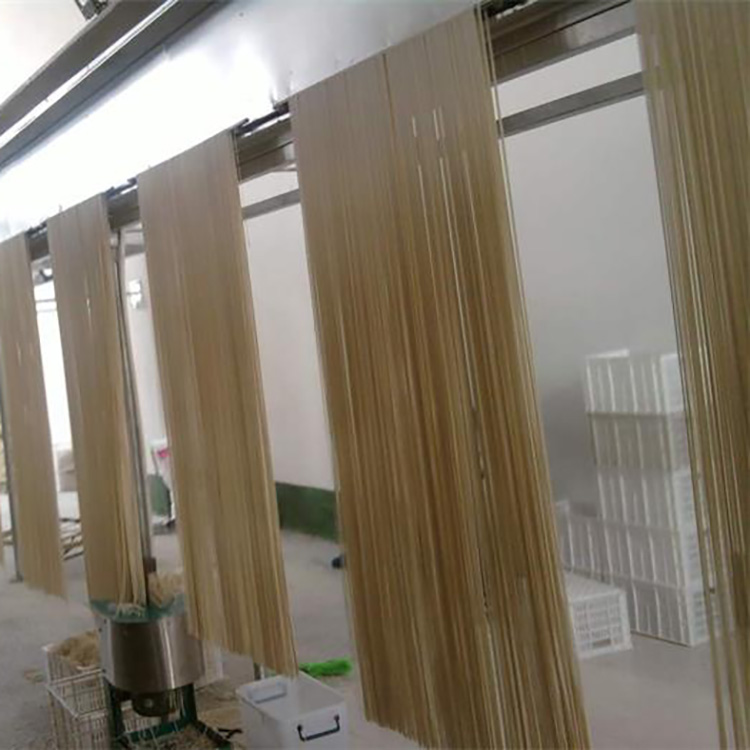
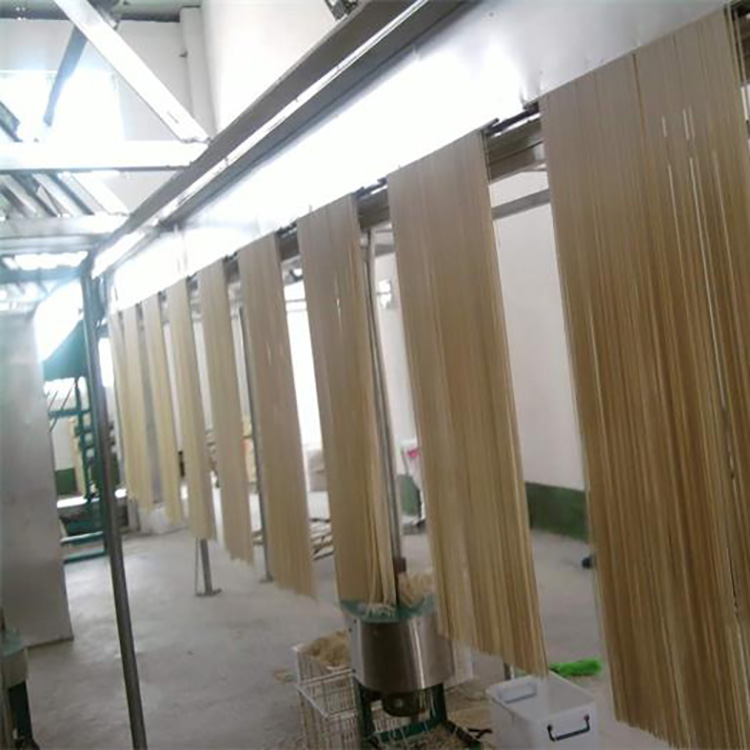
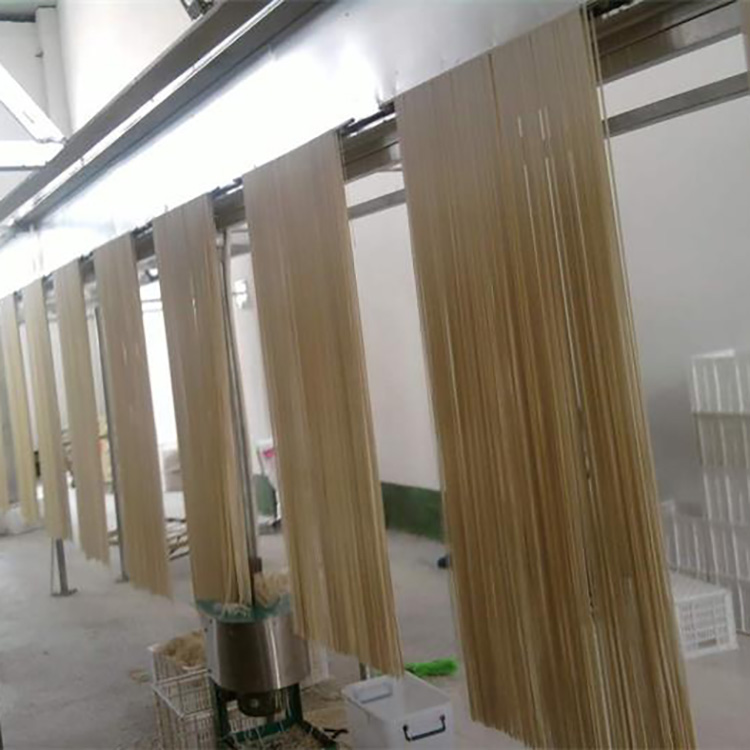
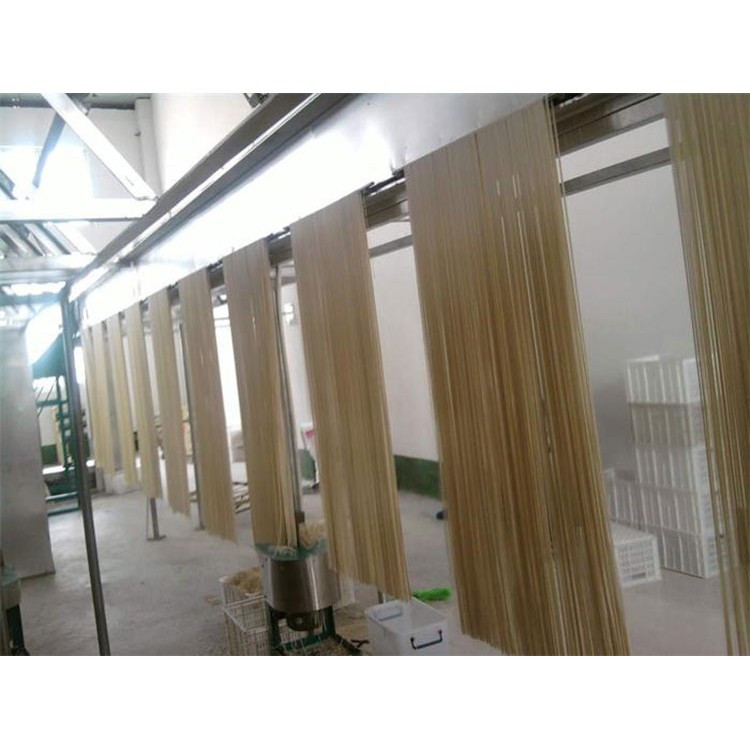
The six sections of the maturing machine, compound machine, calendering machine, strip cutting machine, rod feeding machine, and pickling machine are integrated to complete the noodle shaping stage. The mixed dough is matured for 10 minutes, stirred to fully absorb water and puff up to form a wet gluten network, then sent to the compound machine to simultaneously produce two sheets, which are pressed into one. After that, it undergoes four-level roller calendering at a pressure ratio that does not damage the gluten structure, producing sheets with a thickness of 0.8 to 2 millimeters. The well-pressed sheets are cut into wet noodles of 0.8 to 3 millimeters in various specifications by the cutting blade. The cut noodles, 2400-2600 millimeters in length, are lifted onto the overhead parallel chain by an automatic rod feeding machine.
3. Automatic Tail End Trimming Device for Shelves
Composed of elevators, poles, tail-end trimming, and control cabinets. Wet noodles hanging on steel poles are lifted to the starting point of the drying room operation, controlled by an infrared integrated circuit, and synchronously hung on the hoists of the mobile drying equipment. The tail-end trimming machine is installed at the pre-drying starting point, with the trimmed noodles heads recycled for use immediately, significantly reducing the amount of dried noodle heads as they are pre-cut to a certain length before entering the drying process.
4. Drying System
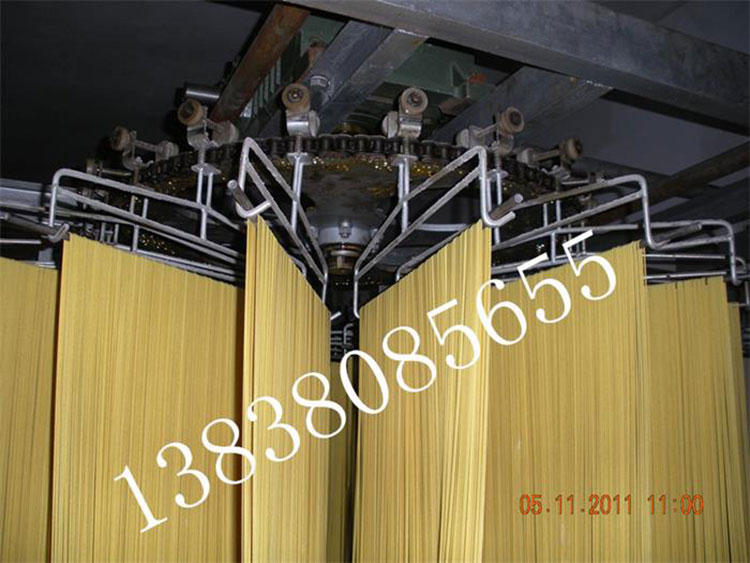
Comprised of a main drive for drying, wire rope, chain hoisting equipment, steel structure cooling fans, exhaust fans, steam heating pipes, sensors, humidity and temperature detection controllers, electrical control cabinets, etc. The mobile wire rope hoisting features stepless speed control, delivering the noodles into three drying zones at a rate of 10-14 rods per minute. Zone 1 uses cold air to set the noodles, preventing elongation and rapid surface drying; Zone 2 maintains humidity and sweating to achieve internal moisture diffusion in the noodles and control the surface dryness through high-temperature and high-humidity drying; Zone 3 cools and dissipates heat, slowly drying the finished product.
5. Discontinued Sliced Product System
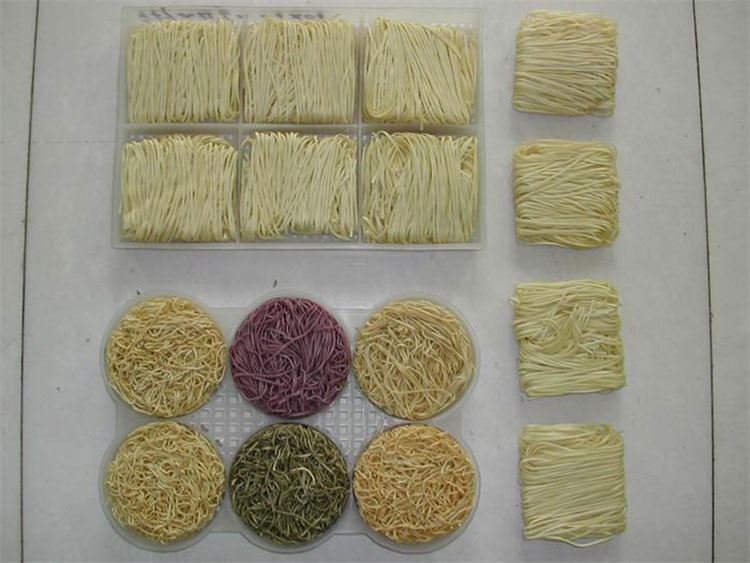
Comprised of de-stackers, shaping machines, slicing machines, and control cabinets, the noodles, as straight as a line, are removed from the hooks by a chain after a 4-5 hour drying process. They are then fed into the slicing machine, cut into segments of 240mm (length adjustable), and packaged into attractive and cost-effective products in 250g and 500g quantities.
Equipment Application
Ideal for wet noodles dehydration and drying processes in dried noodle production.
Key Features
This equipment consists of a single-row double-chain conveyor mechanism, a heating system, a dehumidification system, and a fan system.
Steam, hot water, thermal oil, or hot air can be used as the heat source.
The whole machine has a simple structure, stable and reliable operation, low energy consumption, and easy operation and maintenance.
Low breakage rate, high yield rate; the dried noodles have a true color, are not bent, and have high tensile strength.