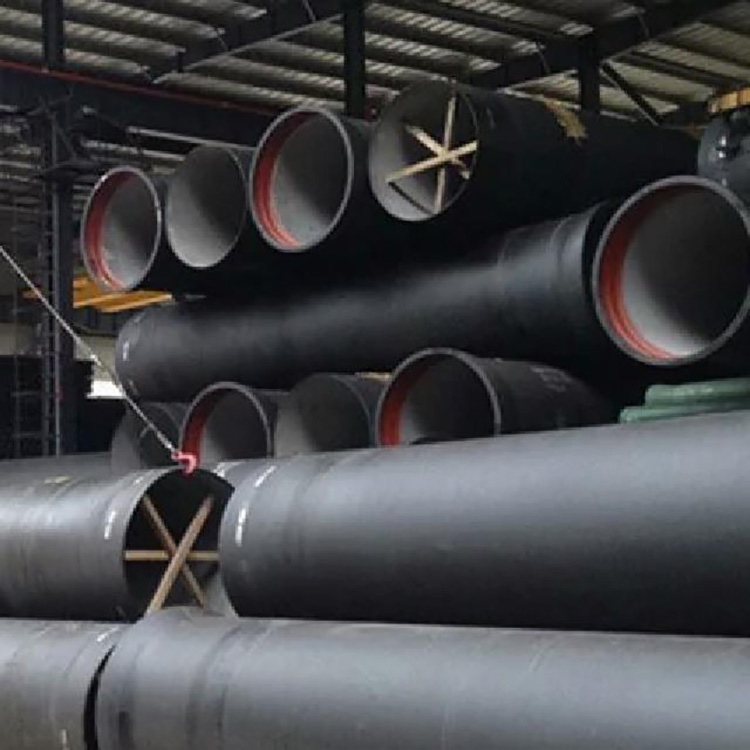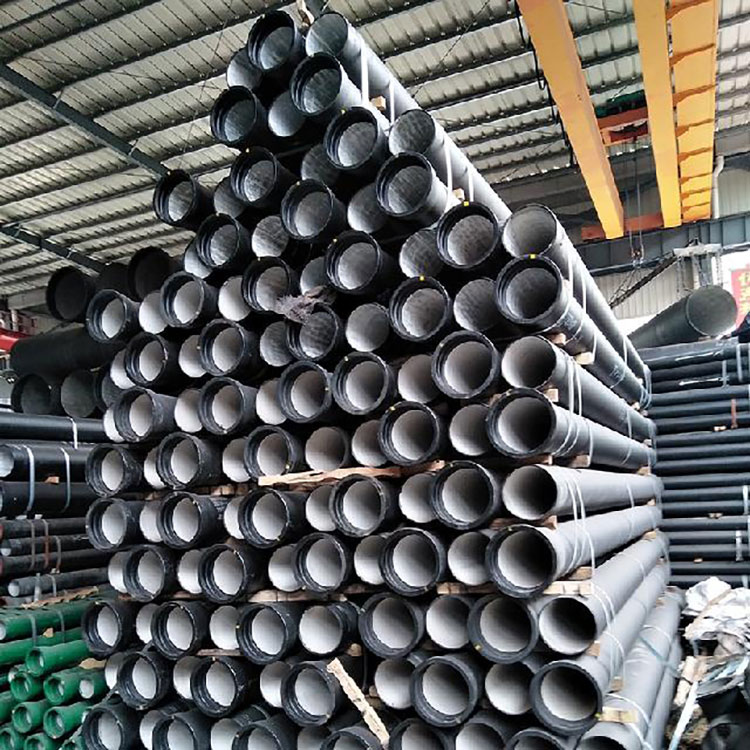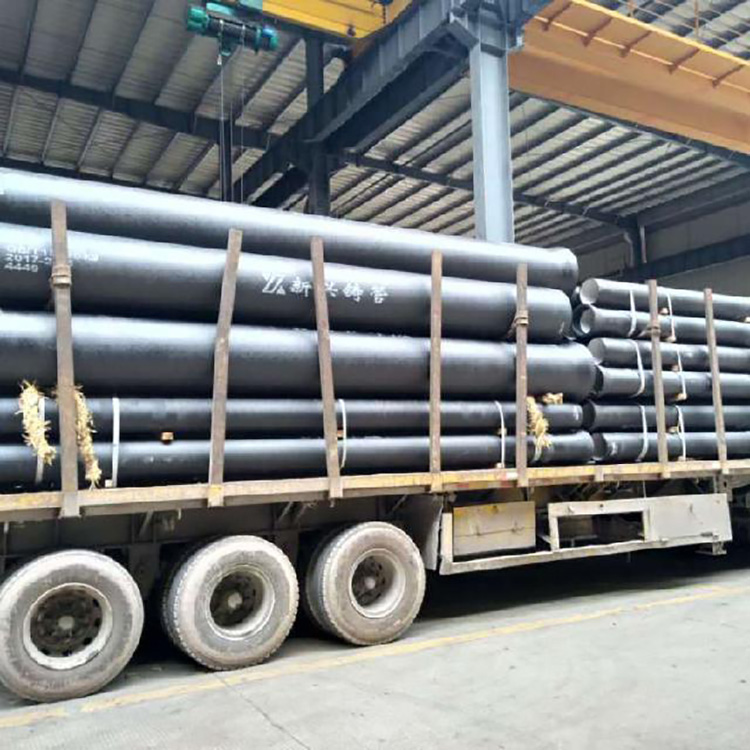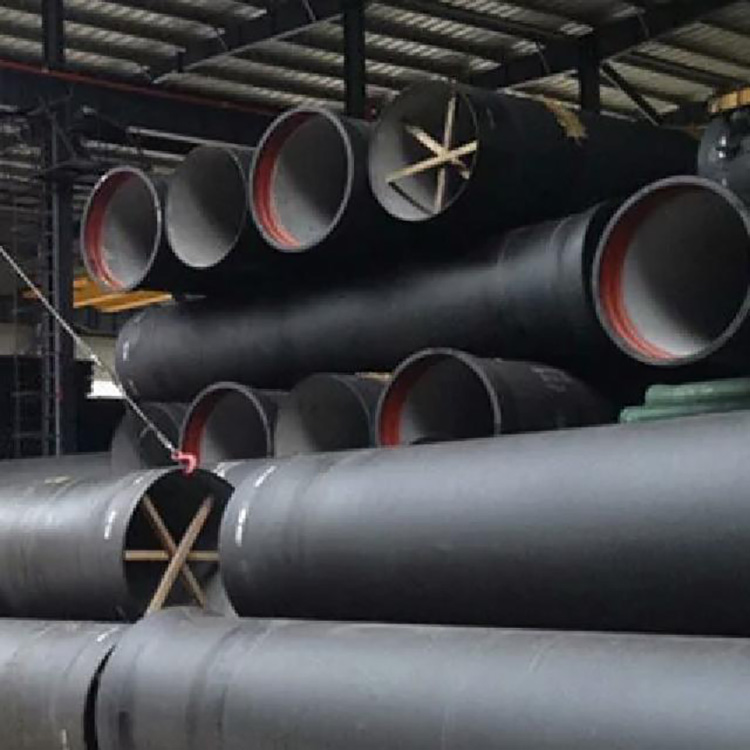

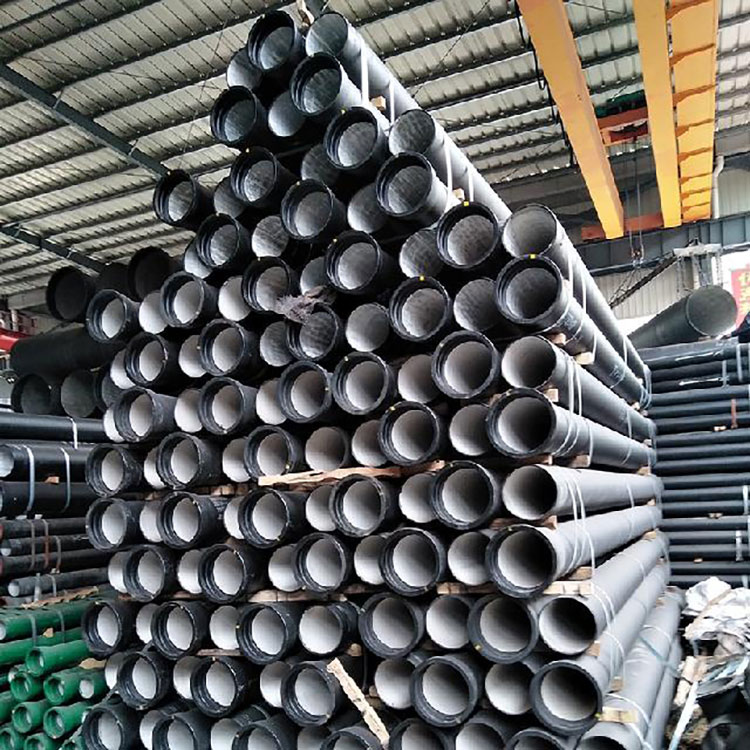
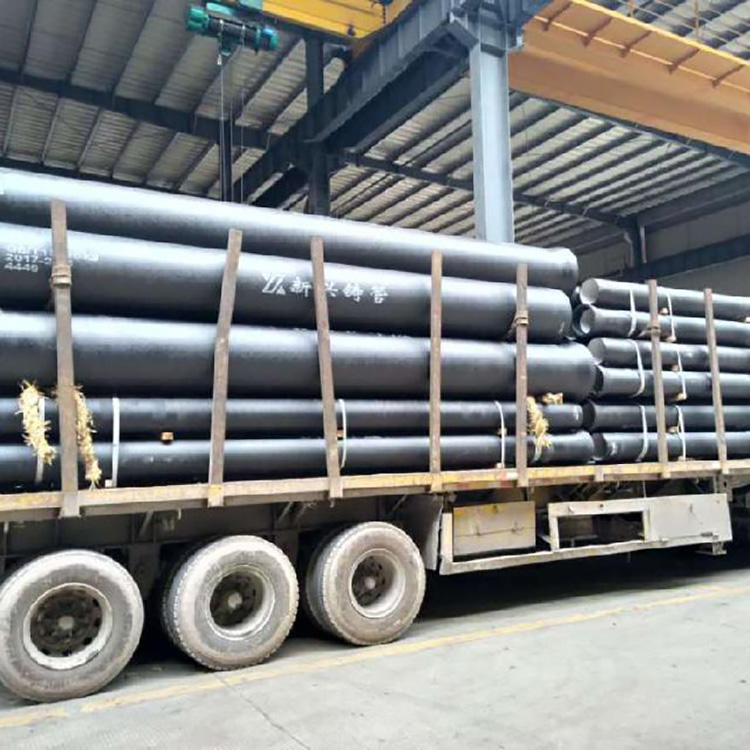














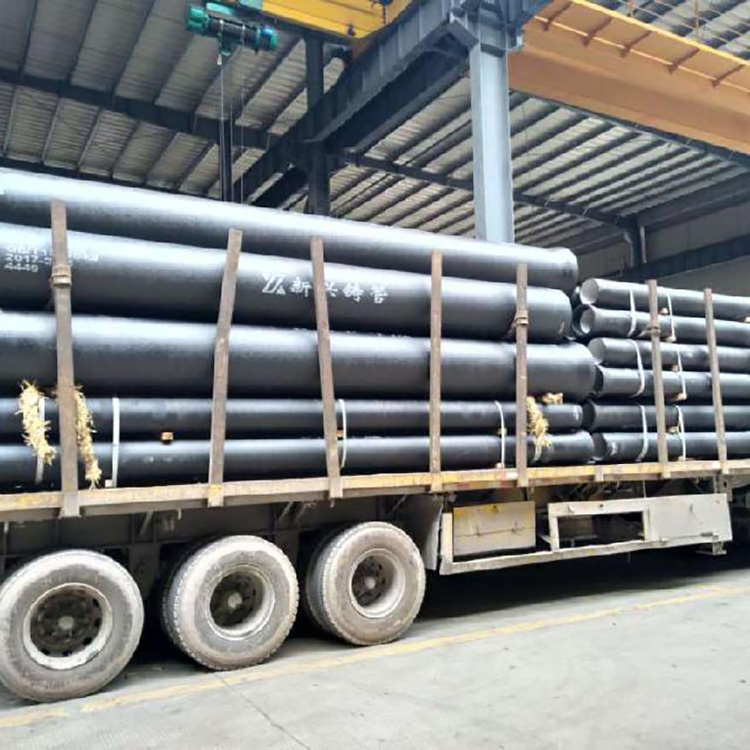
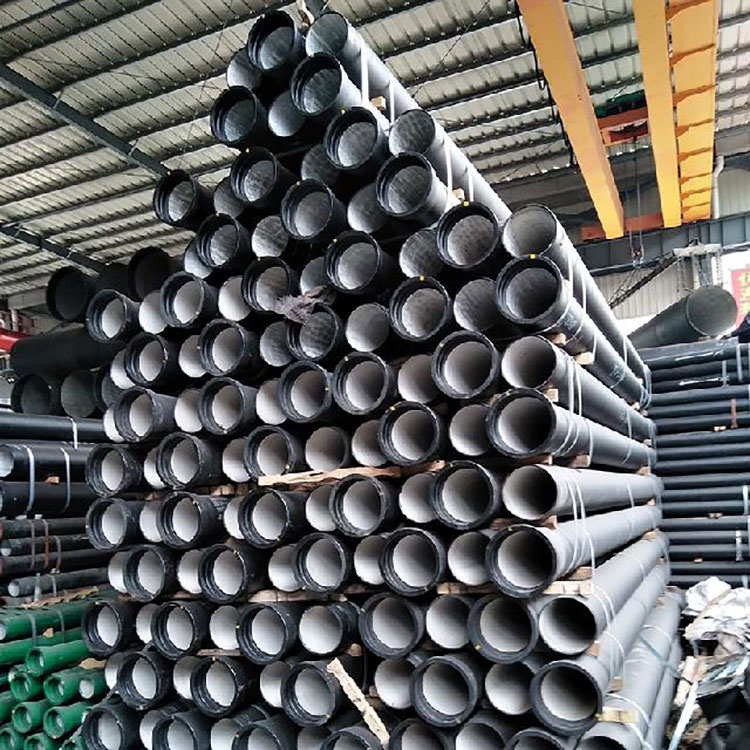
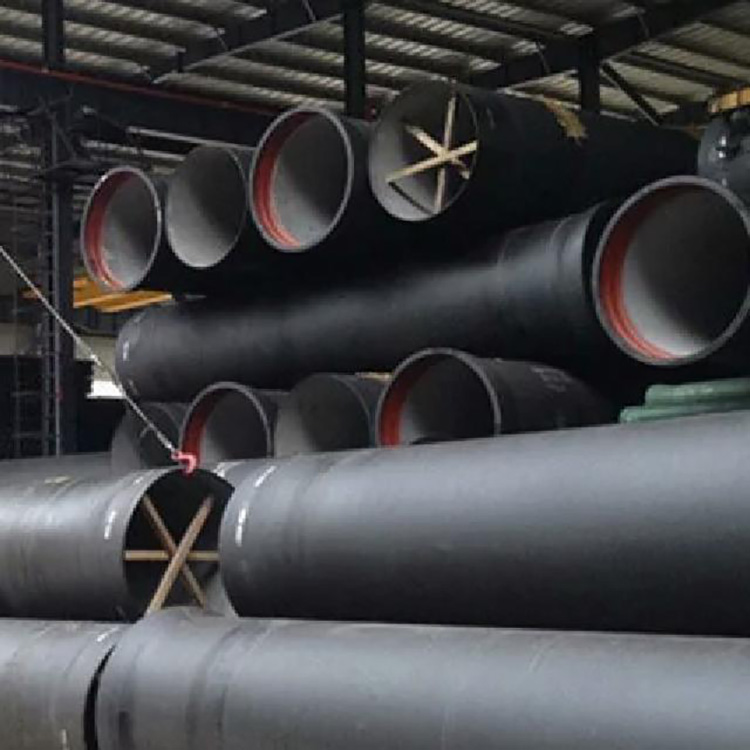
Centrifugal ductile iron pipes are manufactured by casting iron water with a grade of 18 or higher, adding nodularizing agent, and then casting at high speed through a centrifugal ductile iron casting machine. These pipes are referred to as "ductile cast iron pipes" (Ductile Cast Iron Pipes), commonly abbreviated as ball pipes, ductile iron pipes, and spheroidal graphite iron pipes. They are mainly used for the conveyance of tap water and are an ideal material choice for water supply pipelines.
In many regions of our country, ductile iron pipes are used for medium and small diameter pipe connections, employing socket-and-spigot or flanged joint methods; ductile iron must possess superior seismic resistance and sealing properties to allow for limited angles of deflection.
The main components of ductile iron pipes include carbon, silicon, manganese, sulfur, phosphorus, and magnesium, among others.
Standard: International Standard ISO2531:1998 and National Standard GB13295-2008
Ductile Cast Iron Pipes (DCIP), commonly referred to as ball pipes, ball iron pipes, and spheroidal cast iron pipes, are pipes produced by adding spheroidizing agents to casting iron water of No. 18 grade or higher and then casting them at high speed using a centrifugal spheroidal cast iron machine.
Ductile iron pipes are a type of cast iron pipe. The quality requirements specify that the spheroidizing grade of the cast iron pipe should be controlled at levels 1-3 (spheroidizing rate > 80%), thereby significantly improving the material's mechanical properties, combining the essence of iron with the performance of steel. After annealing, the microstructure of the ductile iron pipe consists of ferrite with a small amount of spheroidite, featuring excellent mechanical properties, corrosion resistance, good ductility, and superior sealing. They are easy to install and are primarily used for municipal and industrial water supply, gas transmission, and oil transportation.
A certain number of spherical graphite are distributed on ferrite and spheroidite matrices. The proportion of ferrite and spheroidite in the matrix structure varies depending on the nominal diameter and the required elongation. For small diameters, the spheroidite proportion is generally not more than 20%, while for large diameters, it is typically controlled around 25%.
Mechanical properties
Minimum tensile strength: 420 MPa, minimum yield strength: 300 MPa, minimum elongation: 7%
Bore Size: DN80 - DN1600
Performance
Ductile iron pipes are a type of cast iron, an alloy of iron, carbon, and silicon. The graphite in ductile iron exists in spherical form, typically with a size of 6-7 grades. The quality requirements for the spheroidizing grade of the cast pipes are controlled at 1-3 grades (spheroidizing rate ≥80%), thereby significantly improving the material's mechanical properties, combining the essence of iron with the performance of steel. After annealing, the microstructure of the ductile iron pipes consists of ferrite with a small amount of pearlite, and they exhibit good mechanical properties.
Ductile iron pipes, commonly known as centrifugal ductile iron pipes, possess the essence of iron and the properties of steel. They offer excellent corrosion resistance, good ductility, superior sealing, easy installation, and are primarily used for municipal and industrial water supply, gas, and oil transmission. They are the preferred choice for water supply pipes due to their high cost-performance ratio. Compared to PE pipes, ductile iron pipes are simpler and quicker to install, with better internal and external bearing pressure after installation. In terms of tightness and corrosion resistance, ductile iron pipes provide better tightness and can enhance their corrosion resistance through various protective measures. From a hydraulic performance perspective, since the specification of ductile iron pipes generally refers to the inner diameter while PE pipes refer to the outer diameter, ductile iron pipes can achieve greater flow capacity under the same specifications. In terms of overall installation and maintenance costs, ductile iron pipes offer a superior cost-performance ratio. They are lined with zinc spray and cement sand mortar for corrosion protection.