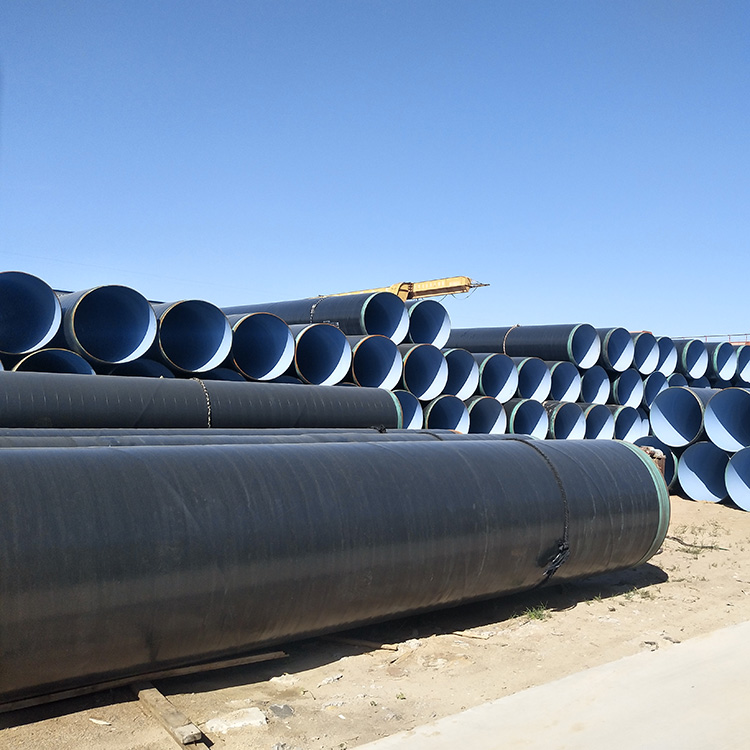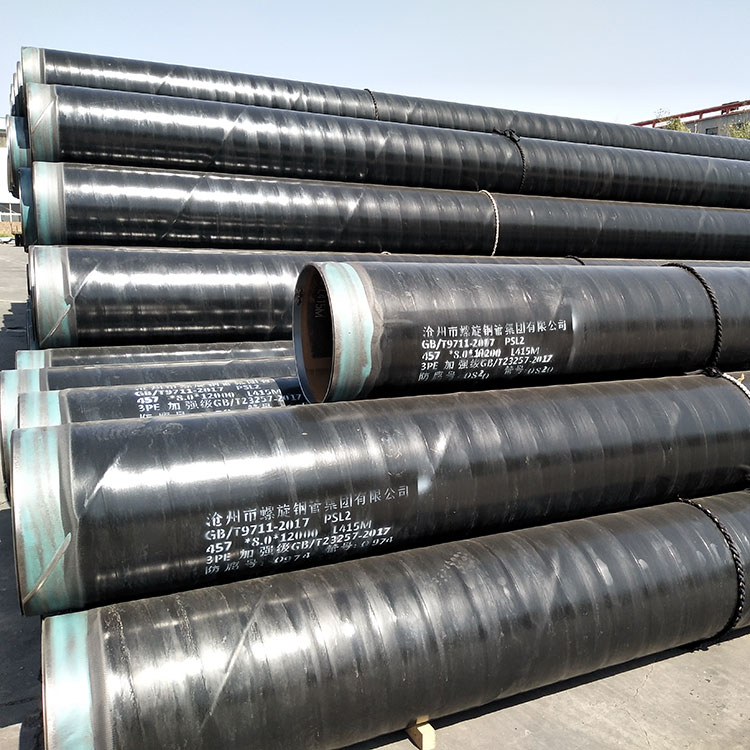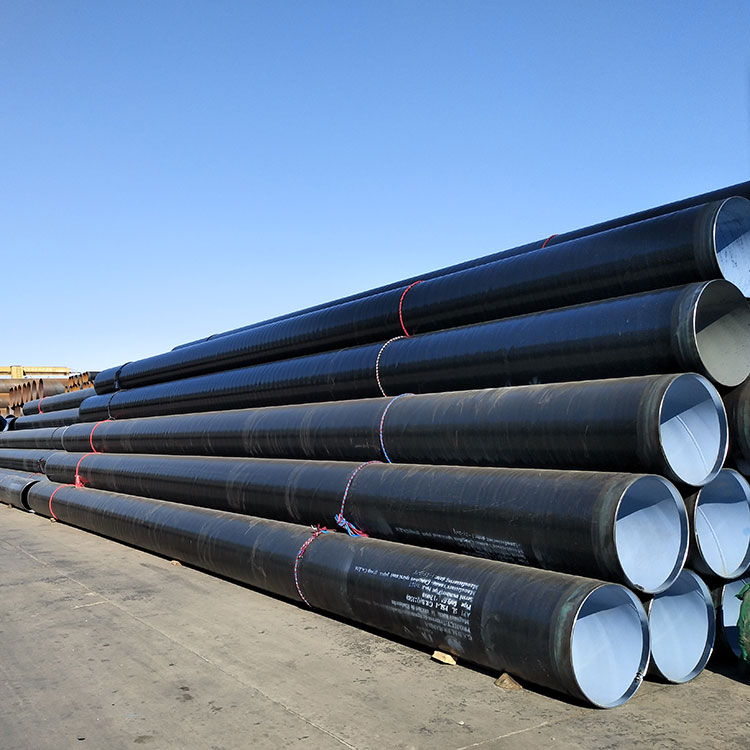

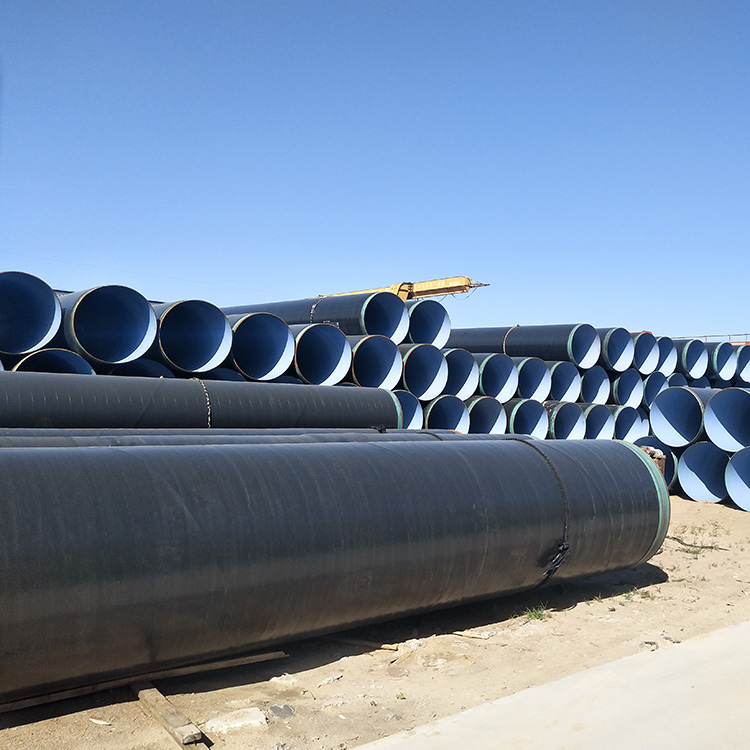

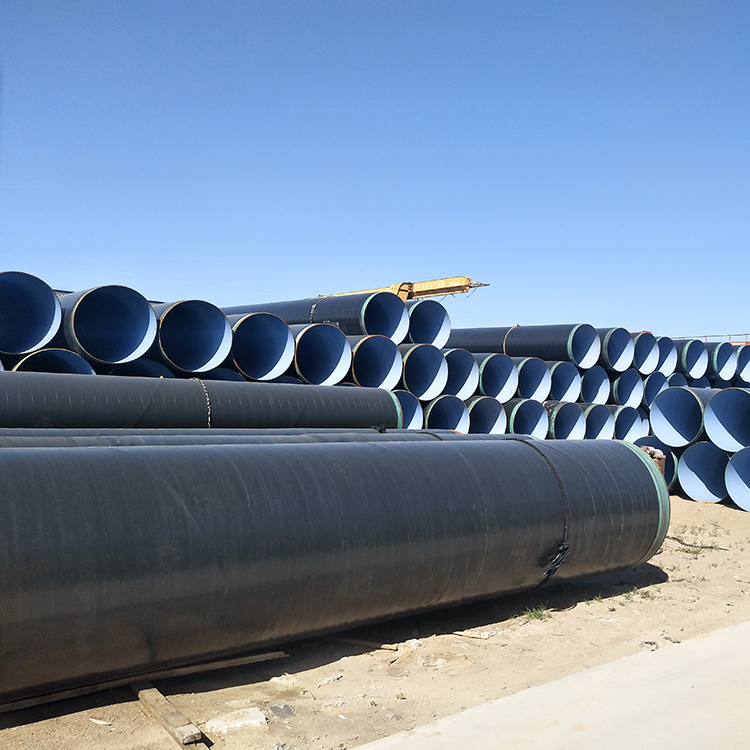
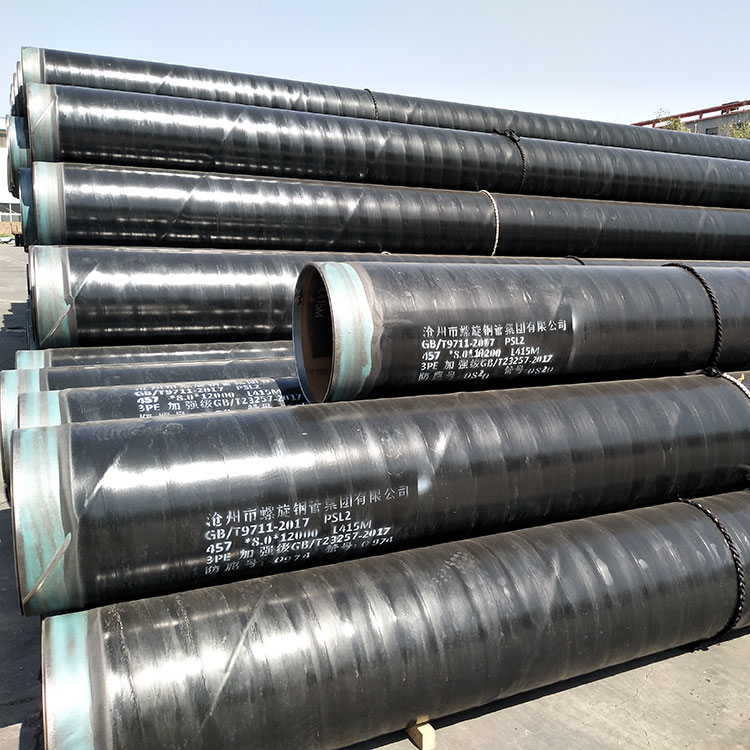
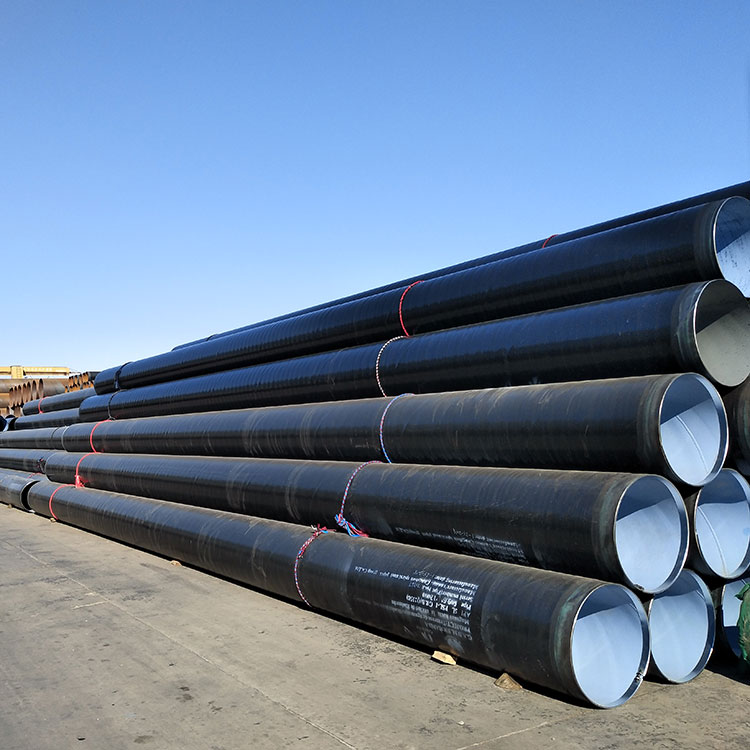












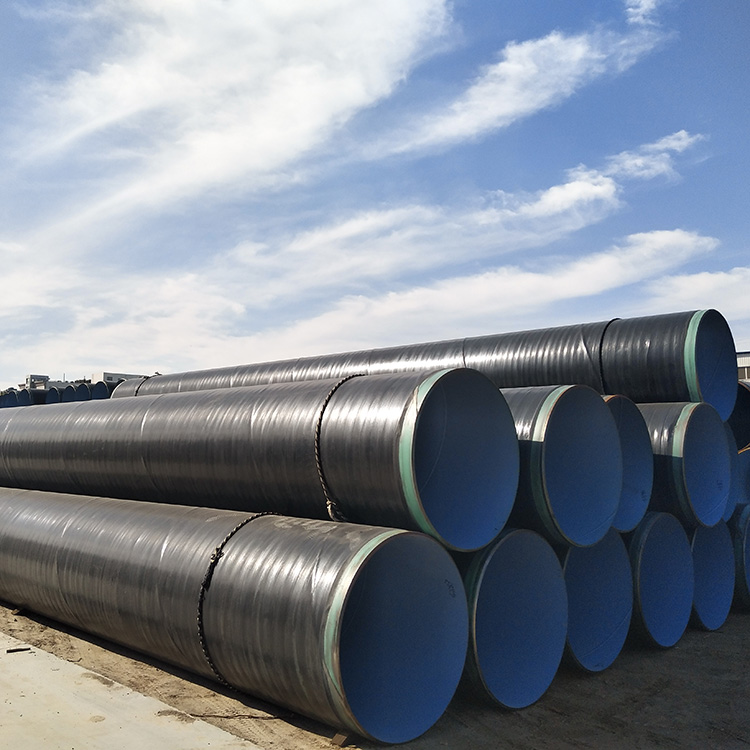
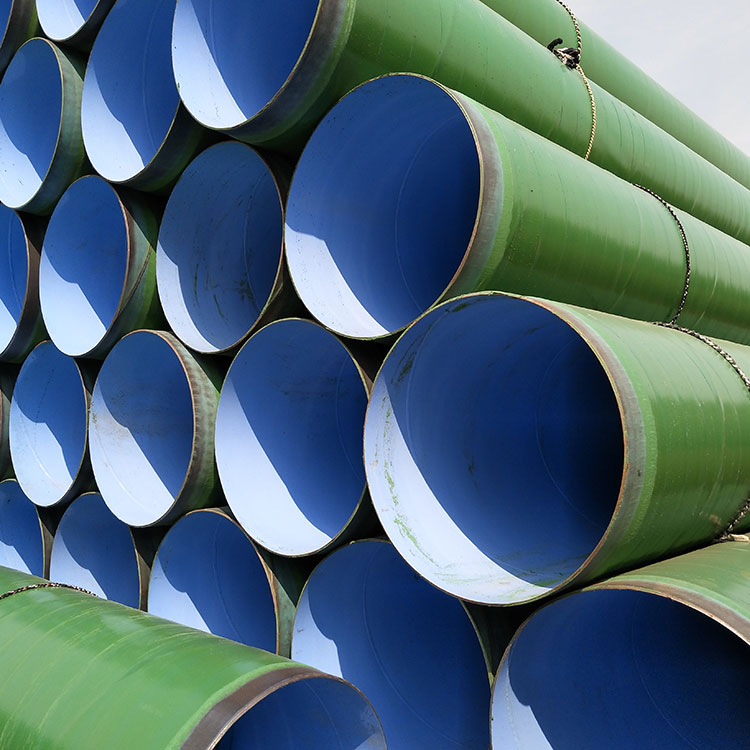
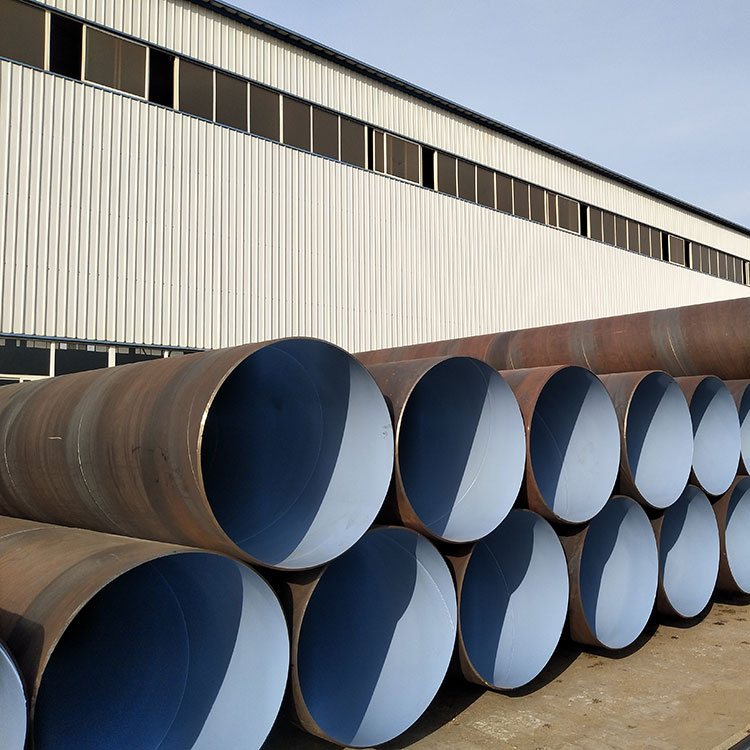
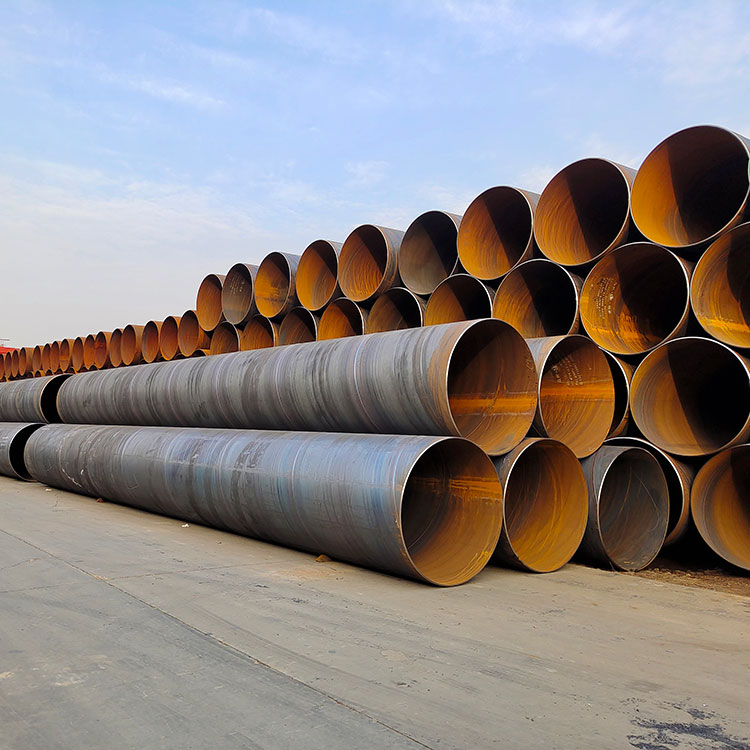
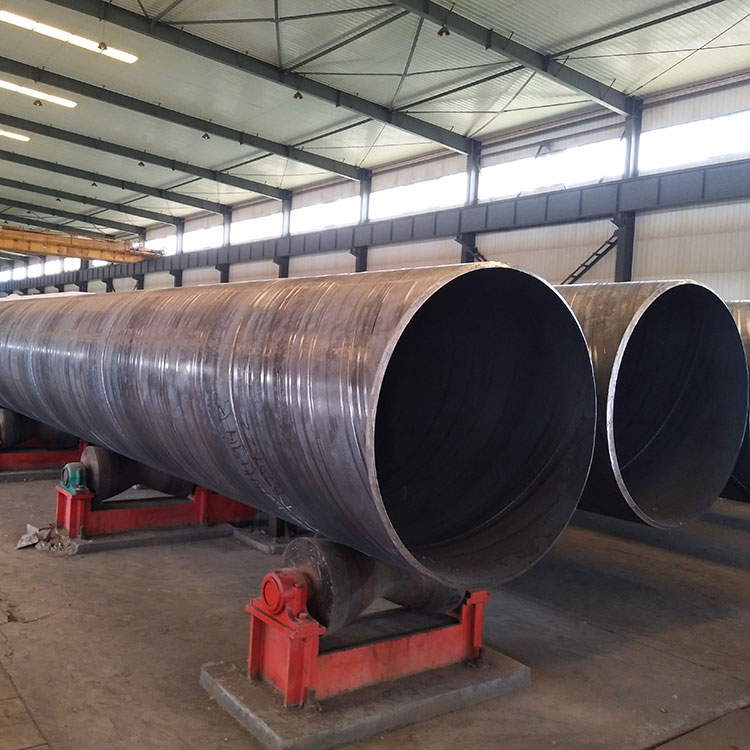
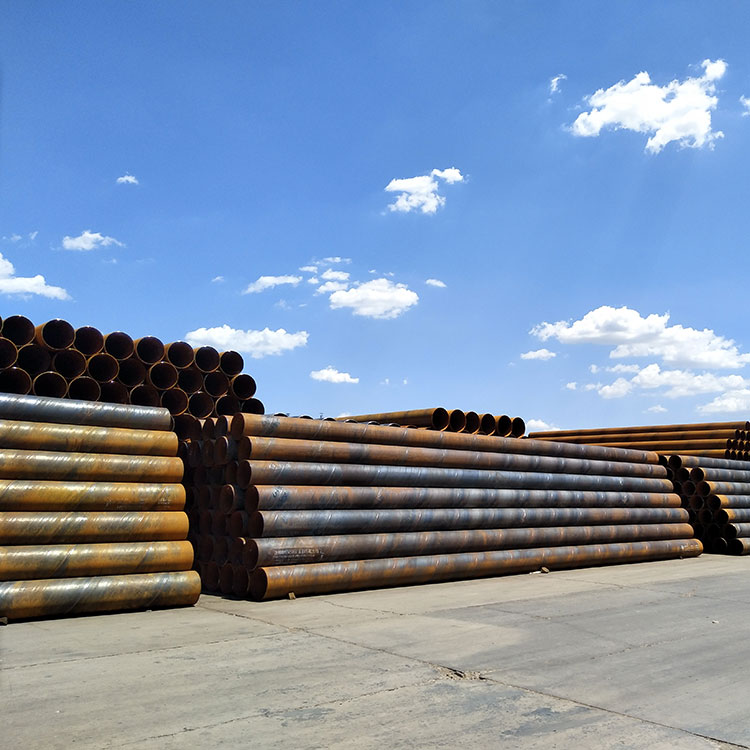
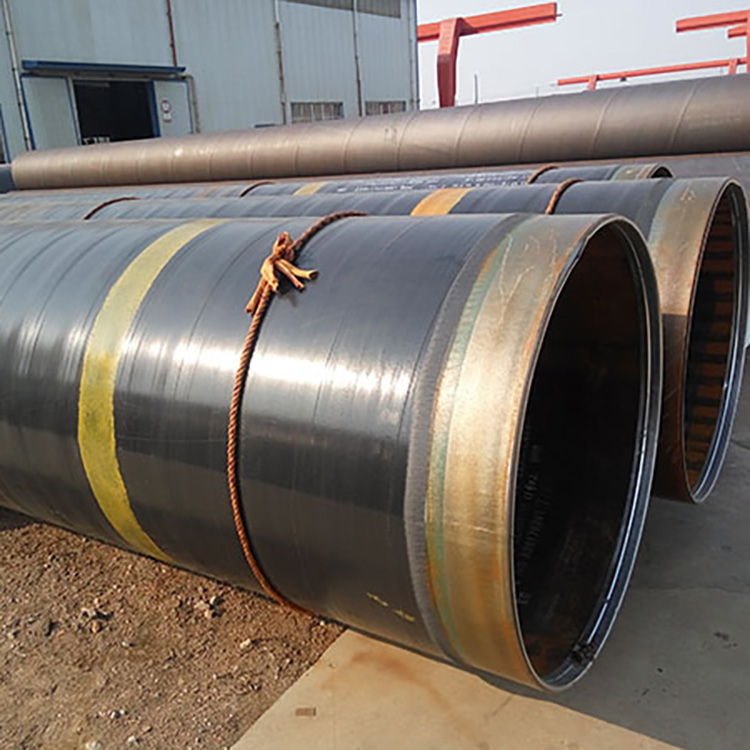
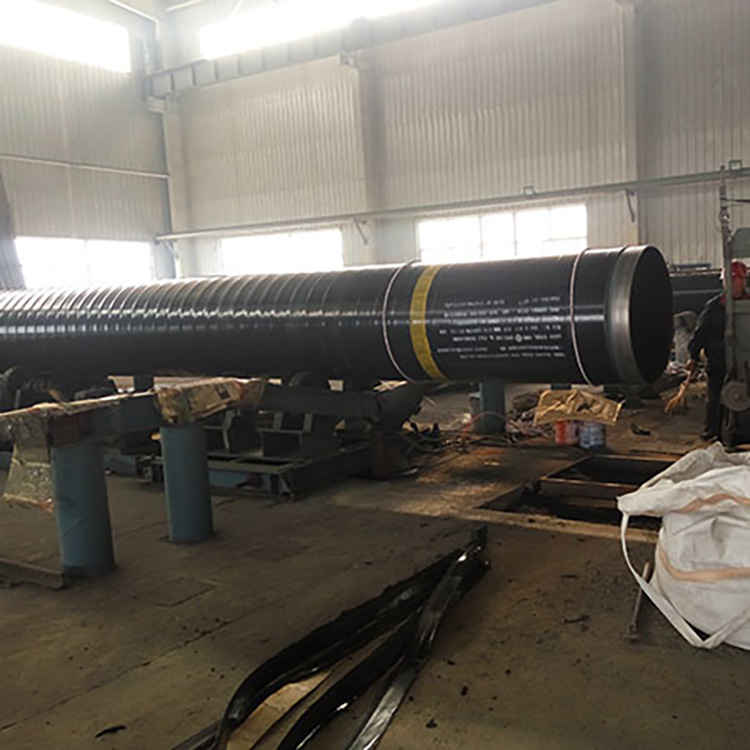
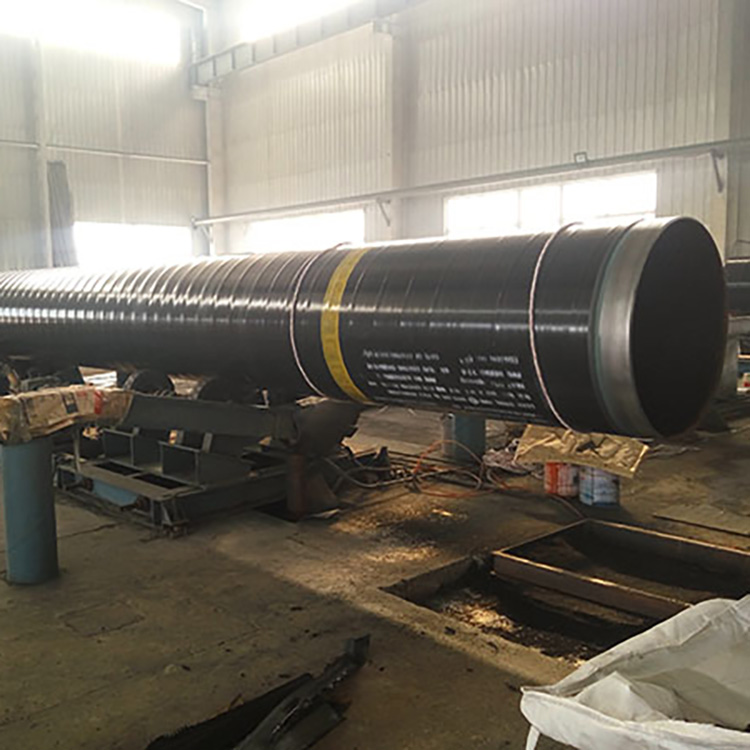

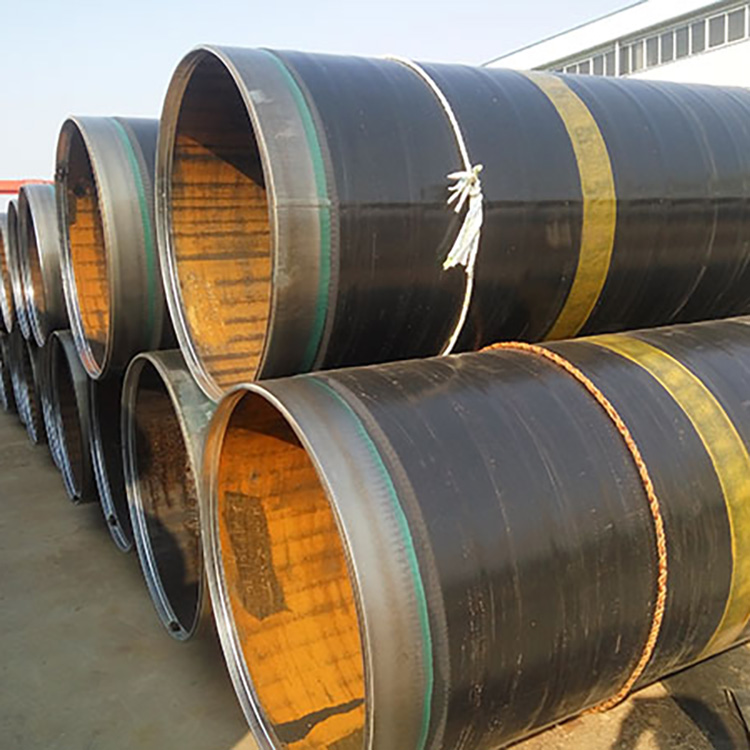
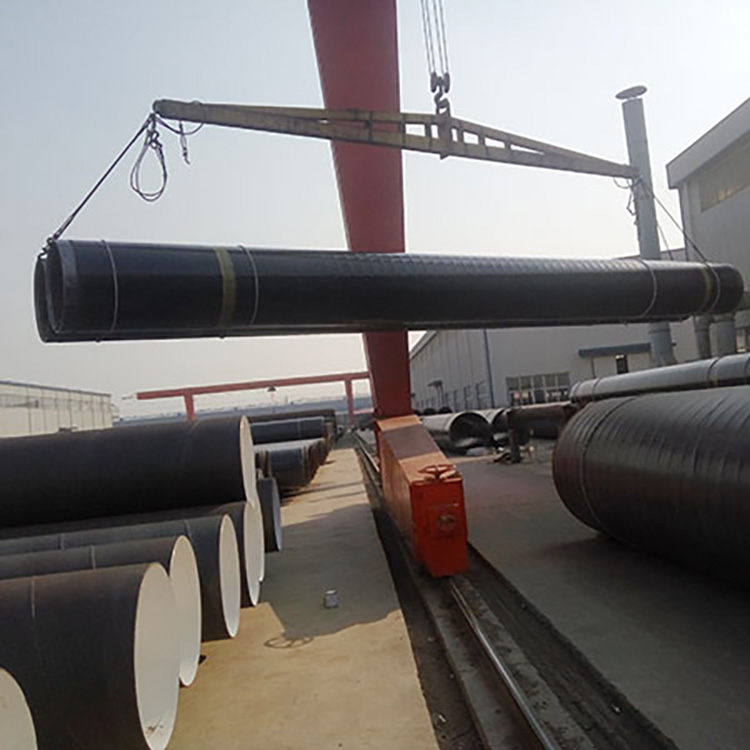
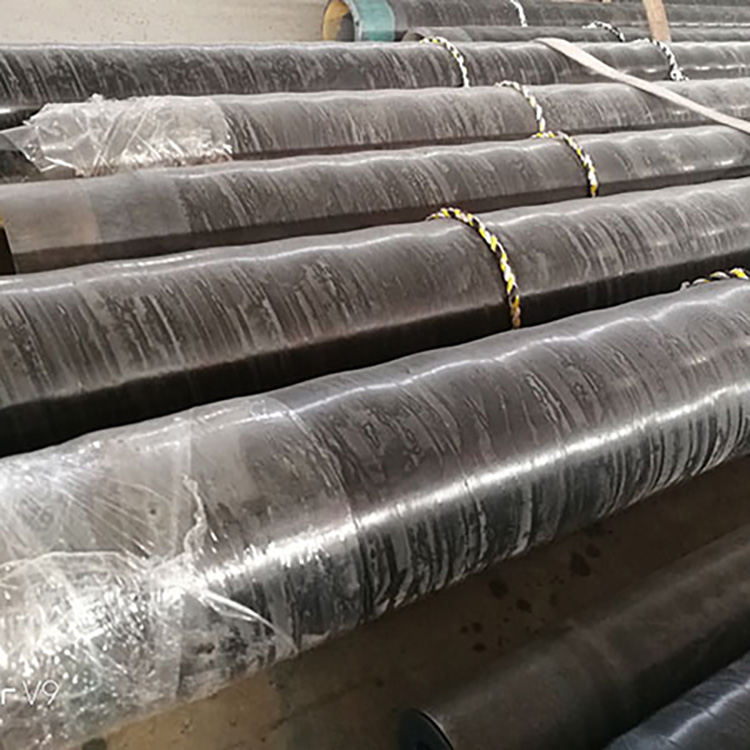

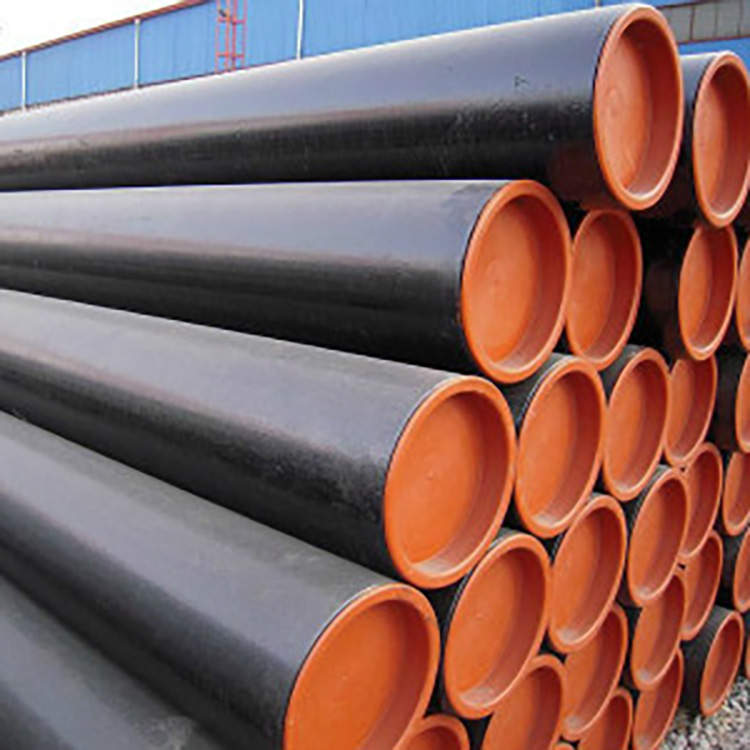
3PE Corrosion-Resistant Steel Pipe Coating Structure:
Epoxy powder coating (FBE > 100 microns)
Double-sided Adhesive (AD) 170~250μm
2.5~3.7mm thick triple-layer polyethylene (PE). The three materials are integrated into one, forming a robust anticorrosive layer that is firmly bonded to steel pipes.
Pipe diameter range: Φ60~Φ1420.
2PE Corrosion-Resistant Pipeline with Double Layer PE Coating Structure
DI adhesive layer (AD)
Two-layer polyethylene (PE), two materials merged into one, with each layer having the same thickness as a three-layer PE.
3PE Coating Steel Pipe and 2PE Coating Steel Pipe Process Differences
1. Similarities between 3PE anti-corrosion steel pipes and 2PE anti-corrosion steel pipes
Both belong to the category of PE corrosion resistance, and are very suitable for application in the oil and gas industry. The production process is the same.
2. Differences between 3PE anti-corrosion steel pipes and 2PE anti-corrosion steel pipes
3PE coated steel pipes have an additional layer of epoxy powder compared to 2PE coated pipes. The epoxy powder offers excellent corrosion resistance, mechanical properties, and strong resistance to peel-off. Although it has the advantages of strict surface treatment, poor weather resistance, and higher water absorption rate, it is suitable for buried pipelines and submarine pipelines. The coating thickness is only 0.3 to 0.5 millimeters, and the service life can reach 40 to 50 years.
3PE Coating Steel Pipe Production Process
The bare pipes undergo sandblasting for rust removal after being heat treated at medium frequency. After rust inspection, they are heated again and then sprayed at a certain temperature. The process starts with powder coating, followed by adhesive coating, and finally polyethylene coating. Strict leak checks are conducted during the spraying. That's basically the production process.