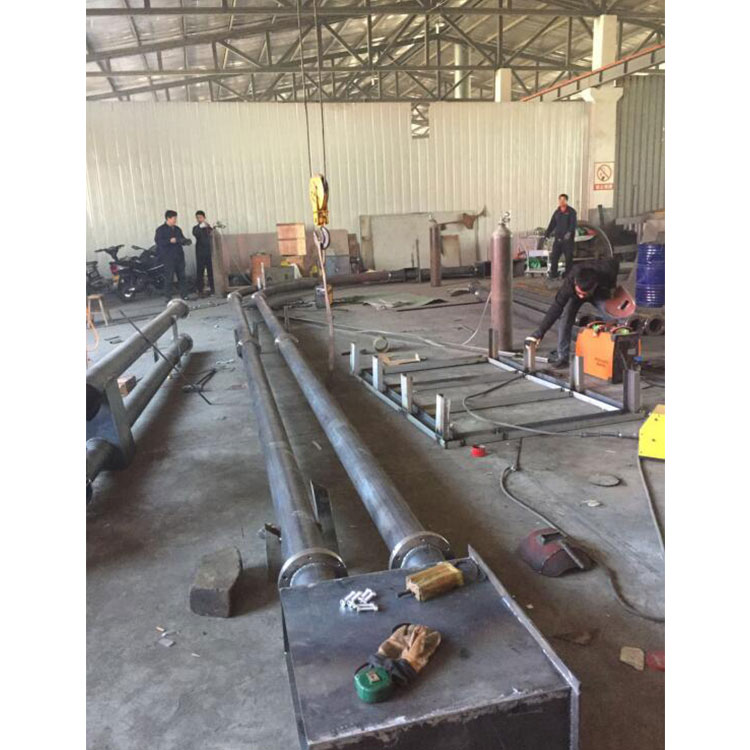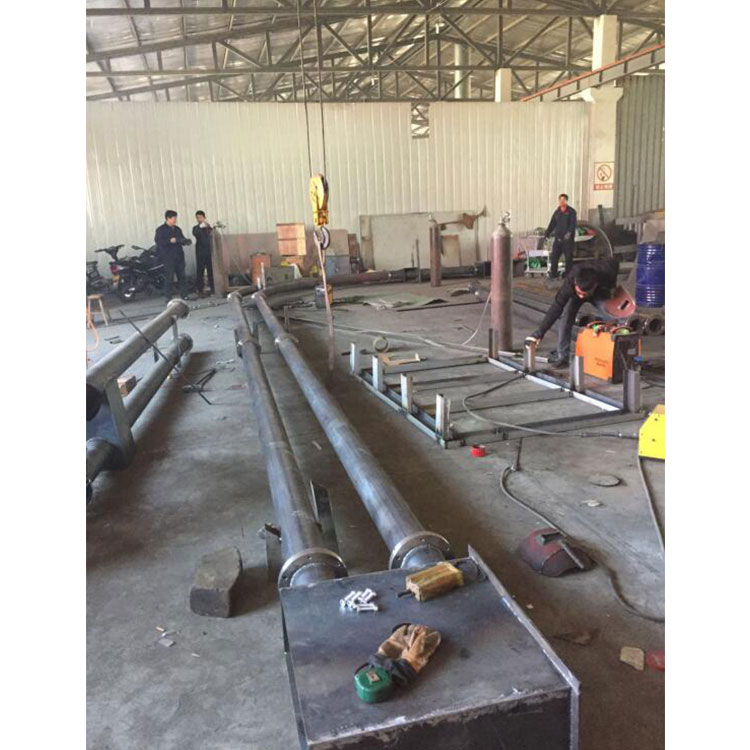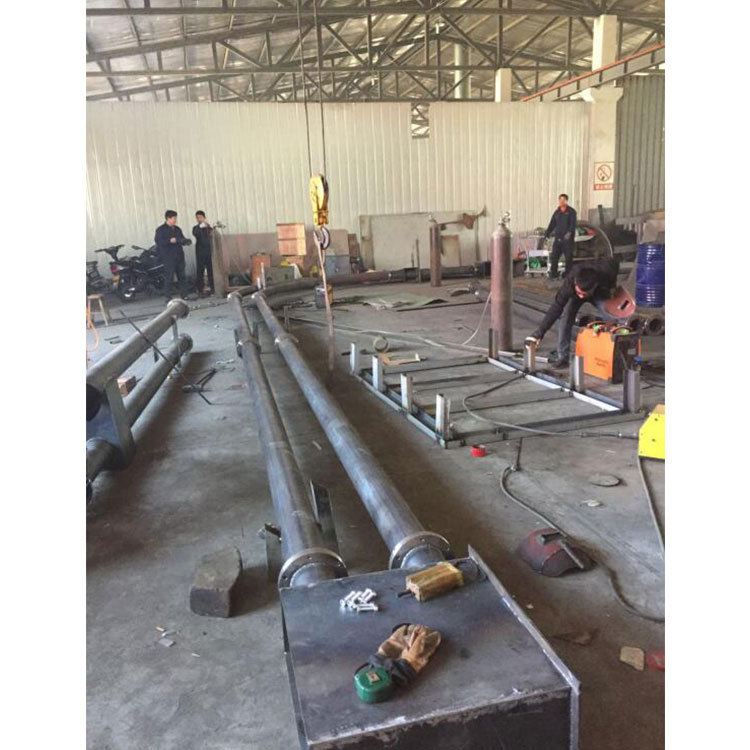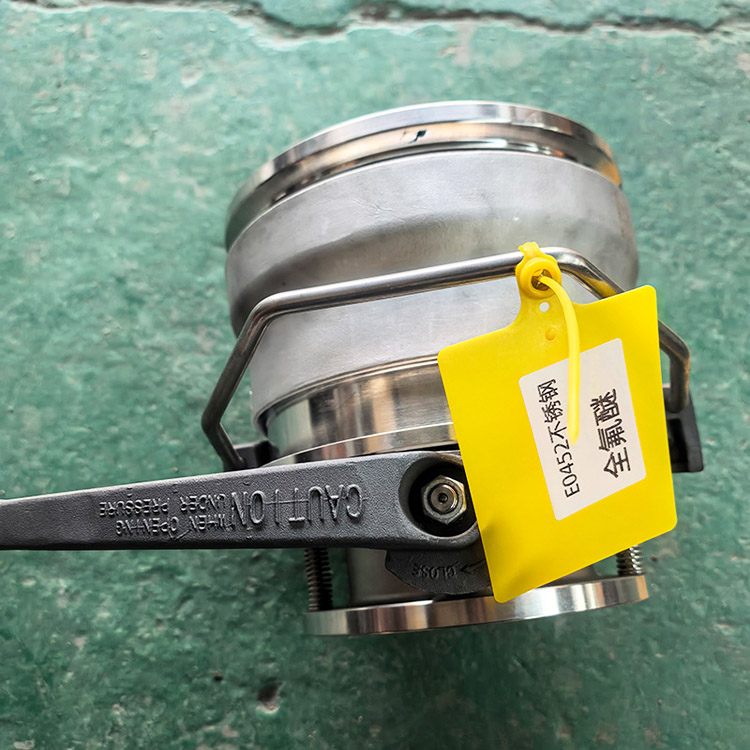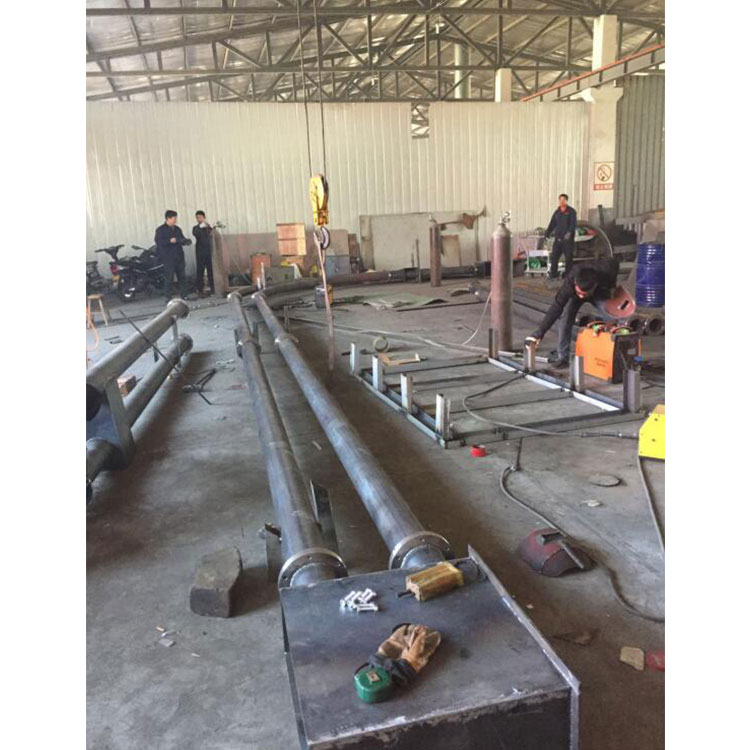









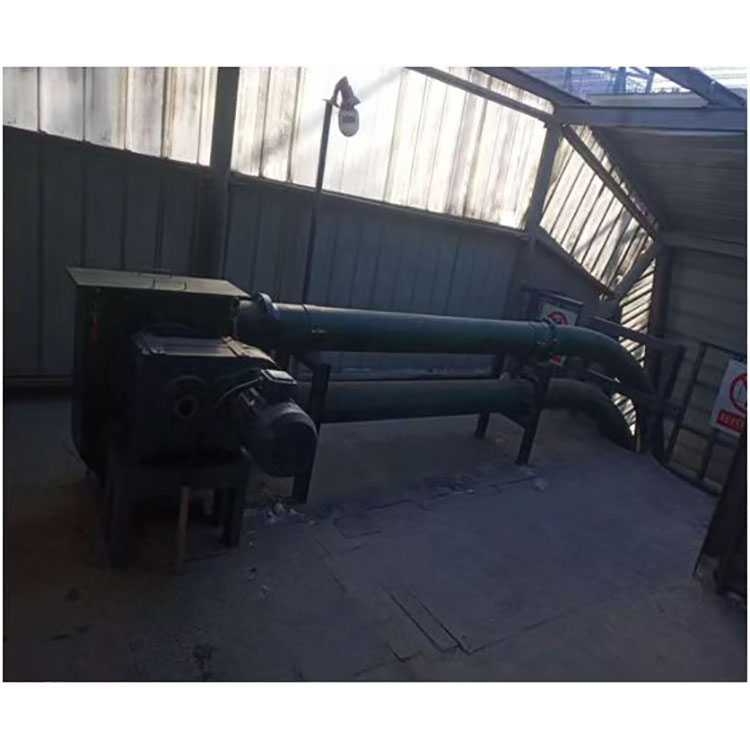


Within the enclosed pipeline, the chain links act as the transmission components to propel material along the pipeline. During horizontal conveyance, the material particles are pushed by the chain links in the direction of motion. When the internal friction between the material layers exceeds the external friction between the material and the pipeline wall, the material moves forward with the chain links, forming a stable flow; during vertical conveyance, the material particles inside the pipeline are pushed upwards by the chain links, as the lower feeding prevents the upper material from sliding down, creating a lateral side pressure, thus enhancing the internal friction of the material. When the internal friction between the material particles is greater than the external friction with the pipeline inner wall and the material's own weight, the material is conveyed upwards with the chain links, forming a continuous flow.
Chain conveyor systems require special attention to the maintenance and care of the chains. The conveying operation of this equipment is driven by a sprocket mechanism that rotates the chains, which are then used to push materials through the annular tube, forming a stable flow. Therefore, any failure in the chains can directly affect the operation of the equipment. As such, the chain conveyor system price is significant, and the chains should be inspected and maintained every 3-6 months.