






Introduction to Neck-Welded Flange
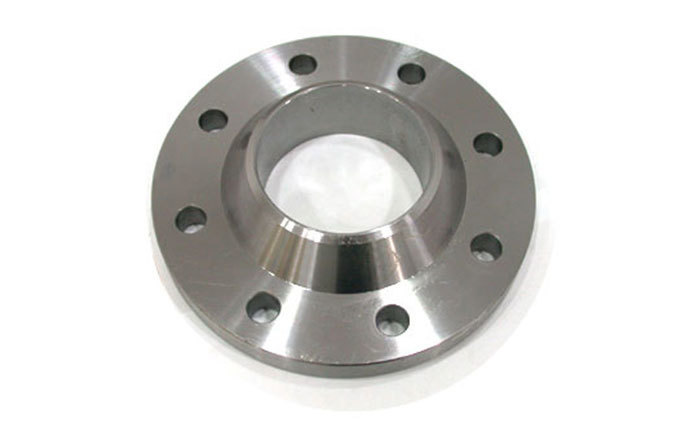
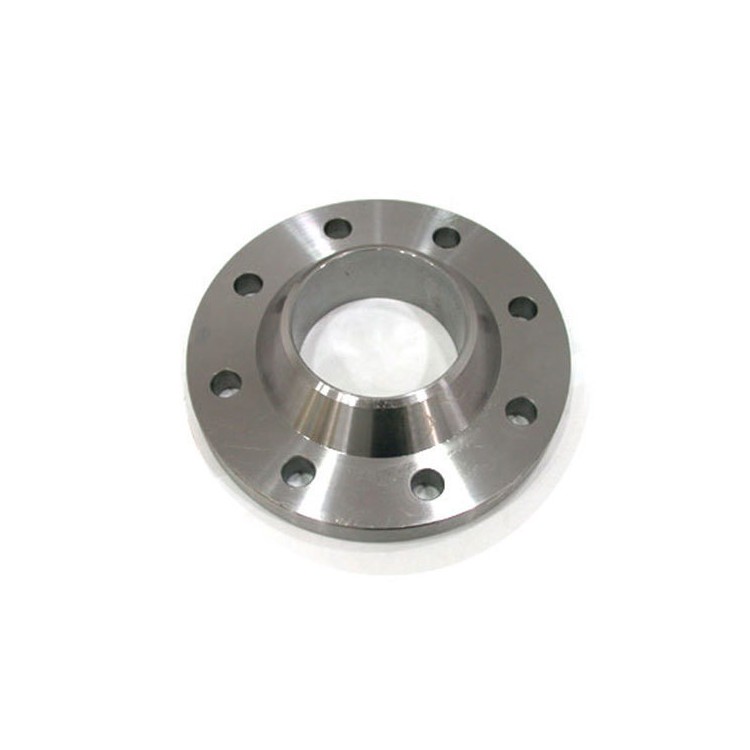
Welding Neck Flange (full name), abbreviated as WN
Socket welding flange, also known as neck flange, welding flange, high neck flange, flange, etc.
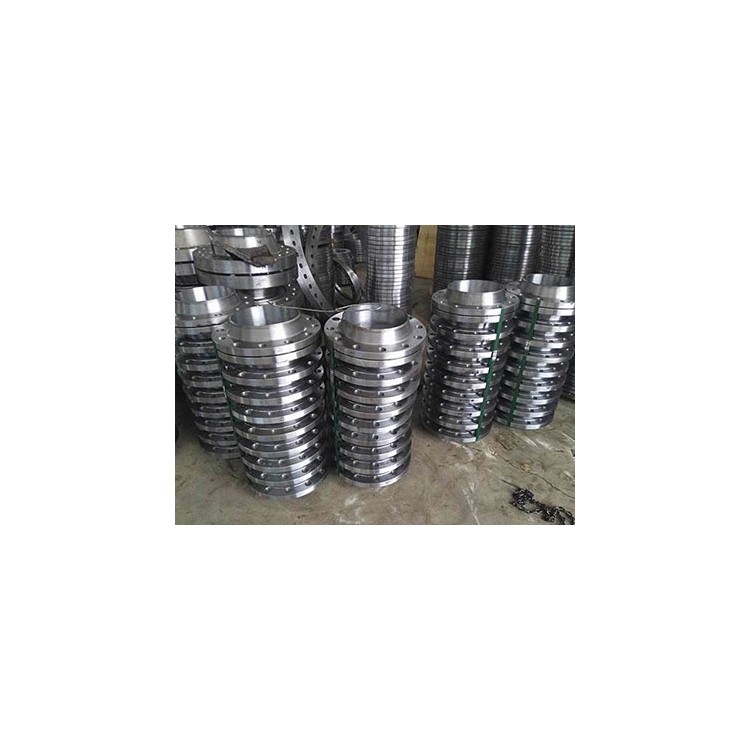
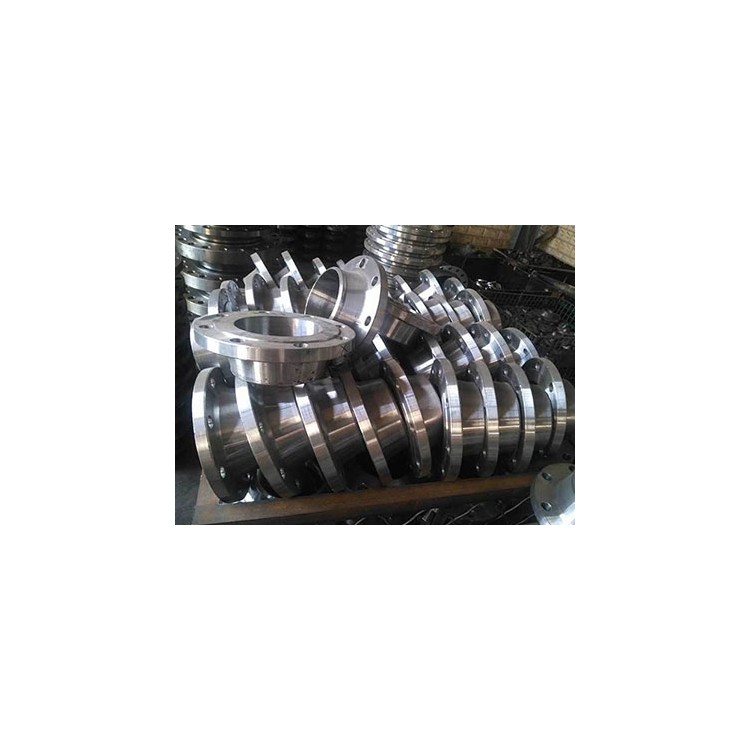
A necked butt welding flange is a type of flange; it refers to a flange that is necked, with a round tube transition, and welded to the pipe.
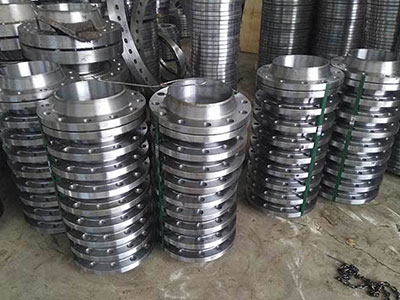
Features of Necked Welding Flange
Aesthetically pleasing, smooth and glossy surface, excellent resistance to acidity and alkalinity, anti-corrosion properties, strong tactile performance.
Welding flanges are resistant to deformation, offer excellent sealing performance, and are widely applicable.
There are appropriate rigidity and flexibility requirements, as well as a reasonable transition of weld bead thinning, with a large distance between the weld and the mating surface, thereby protecting the mating surface from deformation due to welding temperatures.
Pipe suitable for applications with significant fluctuations in pressure or temperature, as well as for high-temperature, high-pressure, and low-pressure pipelines; commonly used for connections on pipes and valves with PN over 2.5 MPa.
Also used in pipelines for transporting expensive, flammable, and explosive media.
Specification Model
DN15-DN4000
Pressure Grade
PN2.5~PN400
Sealing surface type
Socket weld neck flange (RF)
Full Face Flanged Socket Welding Flange (FF)
Oval Face Flanged Weld Neck (MFM) Fittings
Coned Socket Weld Flange (FM)
Convex Flanged Weld Neck Forged Fitting (M)
Sleeve Face Neck Welding Flange (TG)
The concave-convex flanged butt-welding flange (MFM) is for matching use.
Flanged Socket Welding Fitting Material
Carbon Steel Flanges: ASTM A105, 20#, Q235, 16Mn, ASTM A350 LF1, LF2 CL1/CL2, LF3 CL1/CL2, ASTM A694 F42, F46, F48, F50, F52, F56, F60, F65, F70
Stainless Steel Flanges: ASTM A182 F304, 304L, F316, 316L, 1Cr18Ni9Ti, 0Cr18Ni9Ti, 321, 18-8
Alloy Steel Flanges: ASTM A182 F1, F5a, F9, F11, F12, F22, F91, A182F12, A182F11, 16MnR, Cr5Mo, 12Cr1MoV, 15CrMo, 12Cr2Mo1, A335P22, St45.8/Ⅲ
Standard of Implementation
Chemical Industry Standard: HG/T20592-2009, HG/T20615-2009
National Standards: GB/T9115.1-2000, GB/T9115.2-2000, GB/T9115.3-2000, GB/T9115.4-2000
Mechanical Department Standard: JB/T86.2-94
Marine Standard: CB/T47-1999
American Standard: ANSI B16.5, ASME B16.47
Connection Type
Necked butt weld flange is used for welding with necked ends to steel pipes, and the other side is secured with bolts and nuts.
Production Process
Pure forging, semi-finished forging (second choice) are suitable for necked butt-welding flanges and flange blanks.
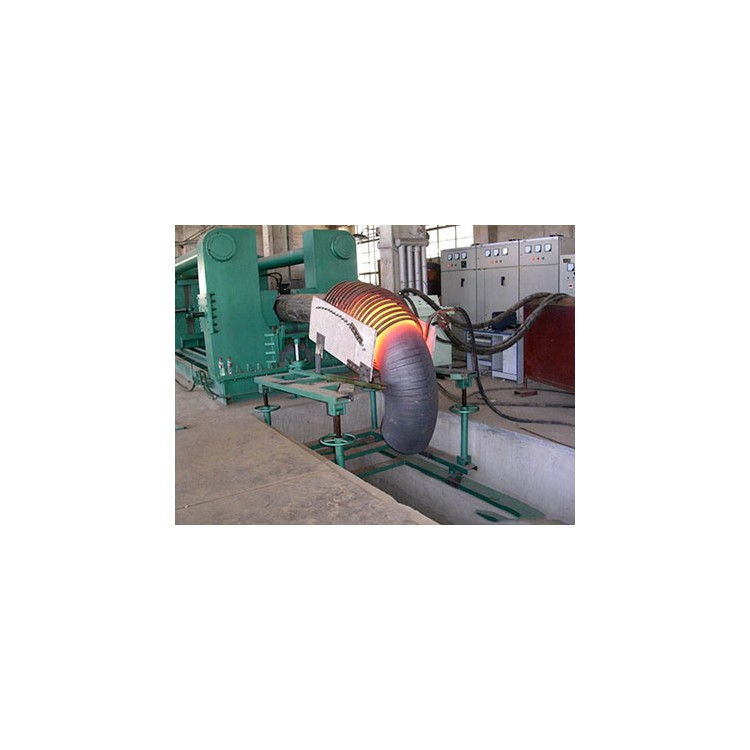
Our necked socket weld flanges are manufactured through a process called die forging, which is fully termed as model forging. The heated billet is placed inside a die mounted on the die forging equipment and forged into shape.
Basic Process of Die Forging: blanking, heating, pre-forging, final forging, upsetting, trimming, quenching, shot blasting.
Common processes include upsetting, lengthening, bending, punching, and shaping.
Common die forging equipment includes die forging hammers, hot die forging presses, flat forging machines, and friction presses, etc.
In layman's terms, forged flanges are of better quality, typically produced through die forging, featuring a finer grain structure and higher strength; of course, they are also more expensive.
Advantages and Disadvantages of Neck Weld Flanges
Advantages: Necked butt-welding flanges are suitable for high-pressure pipelines; ***high pressure, good sealing performance, not prone to deformation; ***resistant to acids and alkalis, strong corrosion resistance, and strong tactile properties.
Disadvantages: Relatively higher price.
Procurement Recommendations
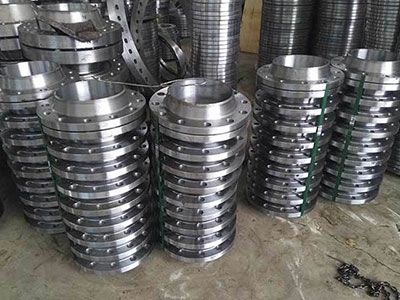
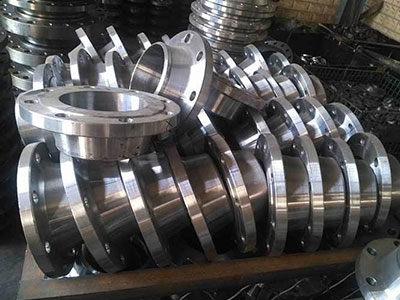
1: It's recommended to purchase from a reputable flange manufacturer, which should have a certain scale of production.
2: manufacturers of flanges need to provide material inspection reports and other relevant documents for neck-welded flanges.
3: Neck weld flanges must have corresponding specification model embossments and markings.