











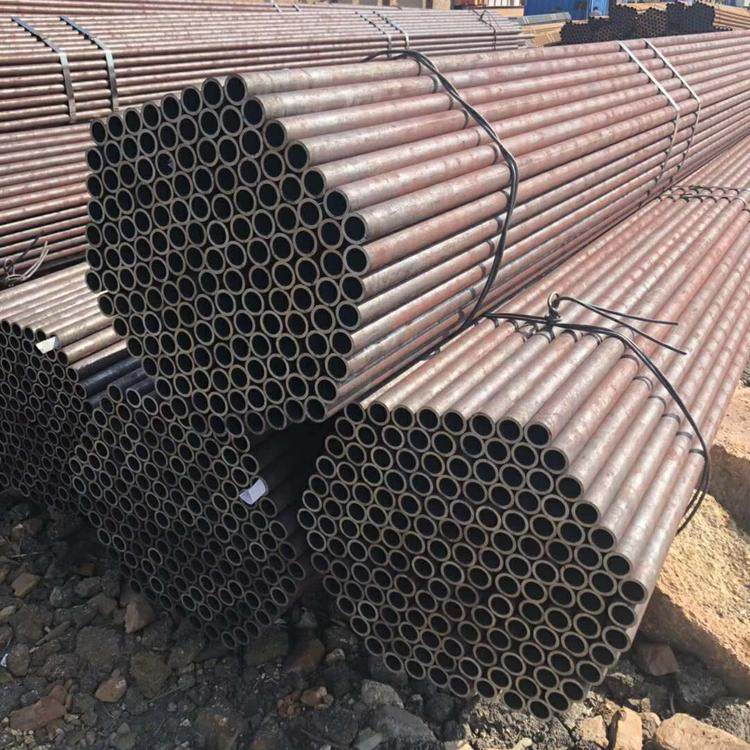
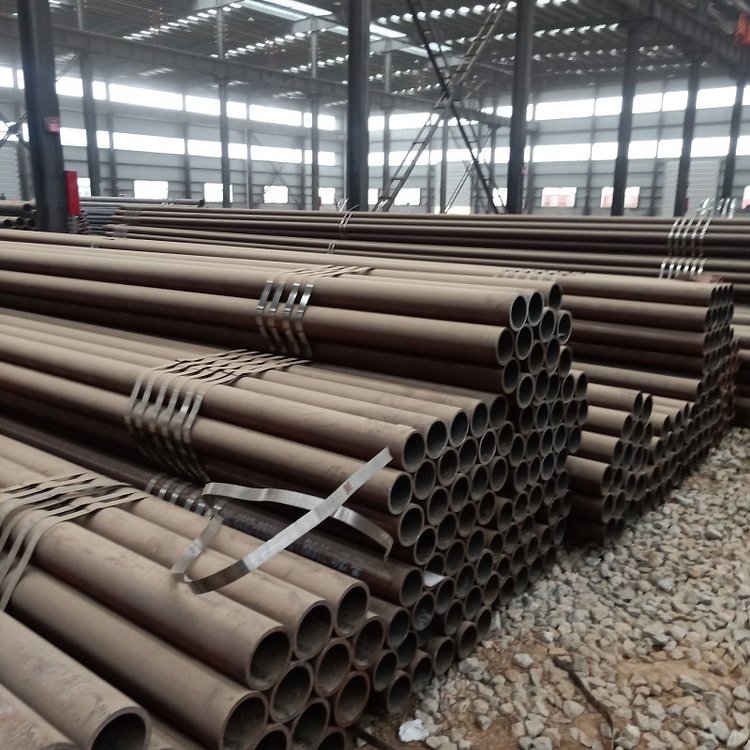

Is hydraulic bonding of stainless steel composite pipes better than rolling bonding? Hydraulic bonding of stainless steel composite pipes involves completely sealing the assembled inner and outer pipes into an airtight long cylinder, then injecting fluid into the cylinder and gradually increasing the pressure on the fluid inside. This causes the inner lining pipe to gradually expand outward in the diameter direction and shorten inward in the axial direction.

After continuous gradual pressure application, the inner sleeve tube ultimately reaches plastic deformation, while the outer base tube remains within the elastic deformation range. Once the pressure gauge indicates that both tubes have reached plastic deformation and the outer base tube is within the required elastic deformation, release the pressure and apply the composite method. Factors affecting composite quality.
The outer tube inner surface is irregular, leading to uneven wall thickness in the outer tube. During mass production, adjusting the pressure of the liquid in the sealed long tube microscopically becomes a "bottleneck" in the production process. This is because the liquid is affected by the "lag characteristics" and "overshoot characteristics" of the adjustment when微量tuning.
To prevent the outer casing from undergoing plastic deformation or even fracturing, it is necessary to reduce the applied pressure during adjustment and try to minimize minor adjustments. This results in the liner tube not achieving sufficient plastic deformation, leading to reduced bonding strength in the bimetallic composite pipe. Typically, this is less than 0.5 Mpa. Due to the characteristics of the hydraulic forming process, the liner tube shortens inward in the axial direction. To ensure the tube mouth is perfectly round, a second check is required.