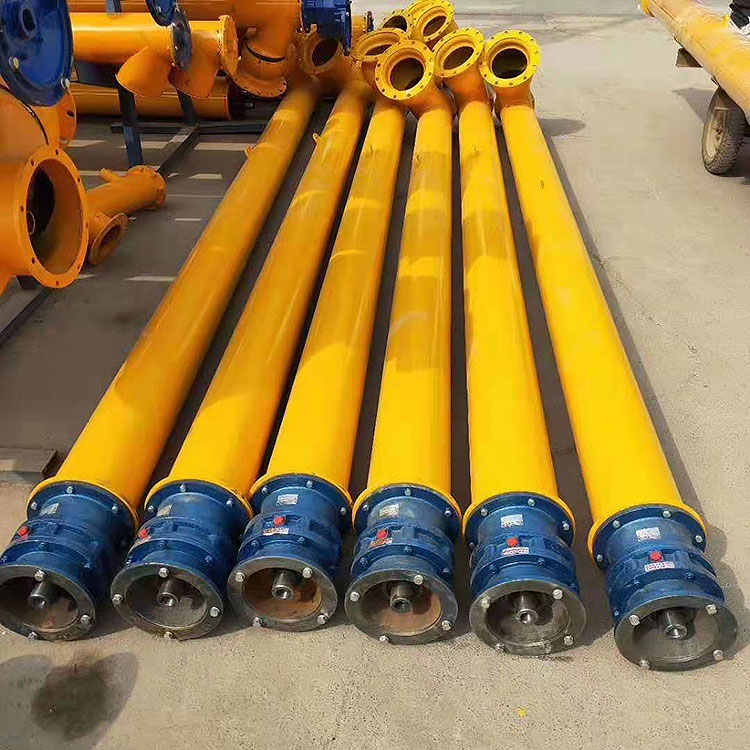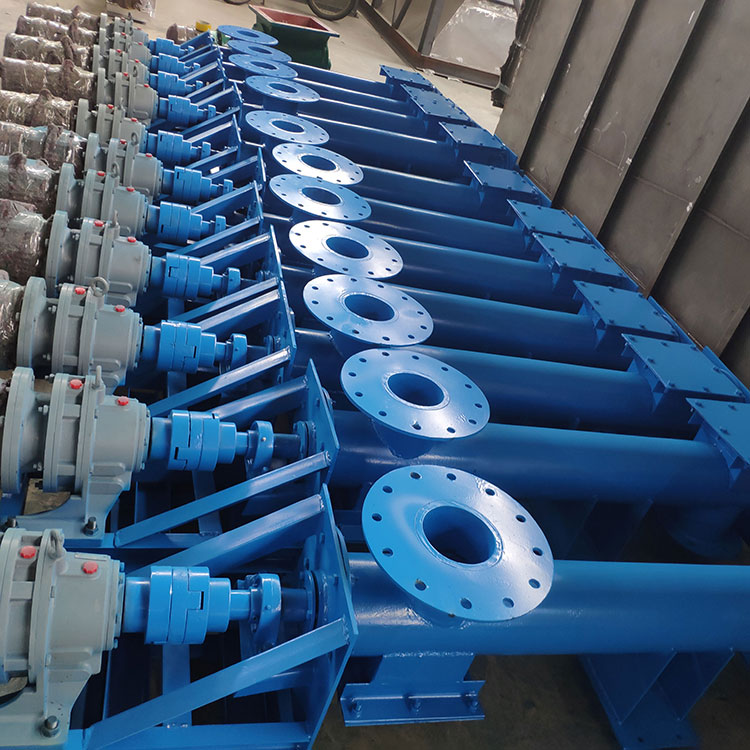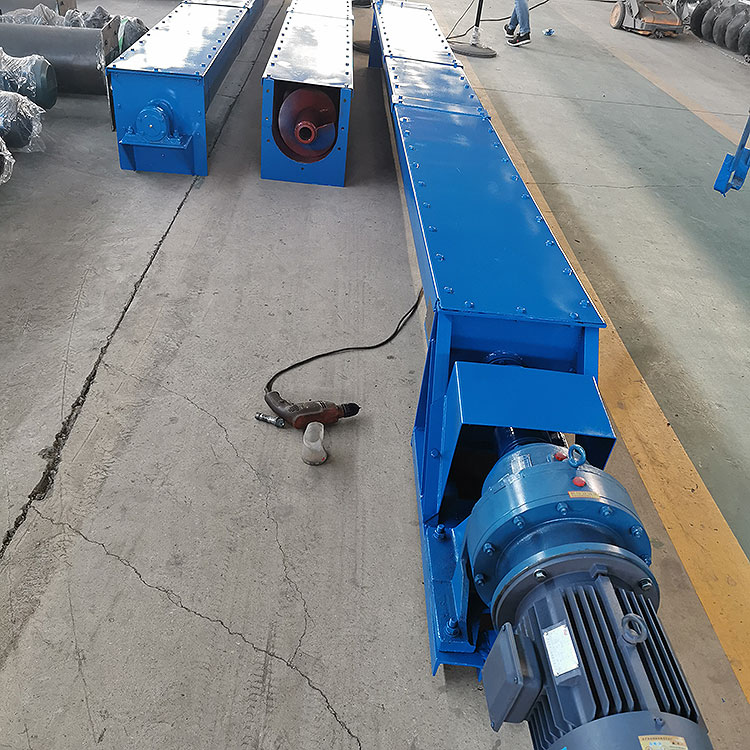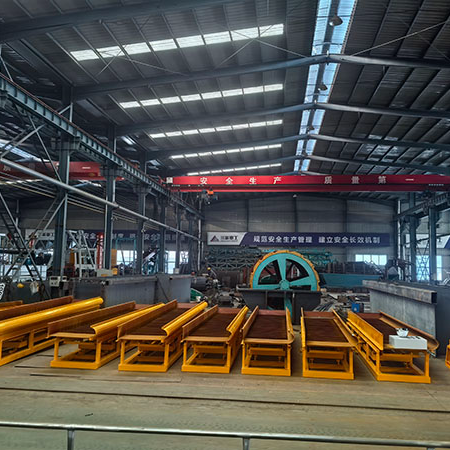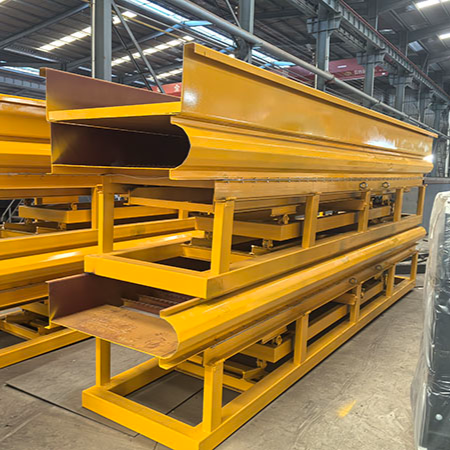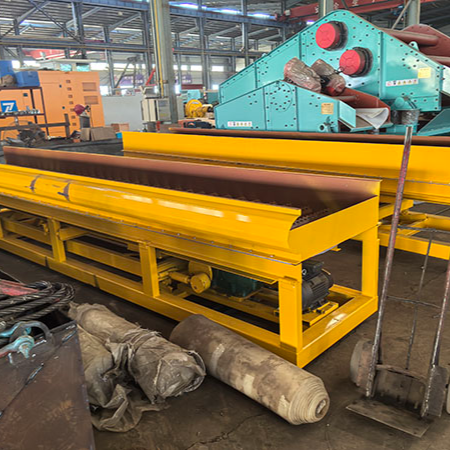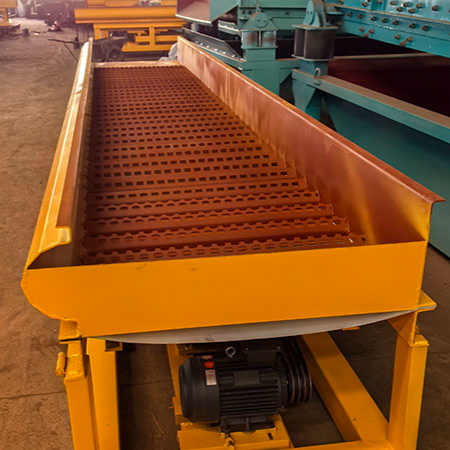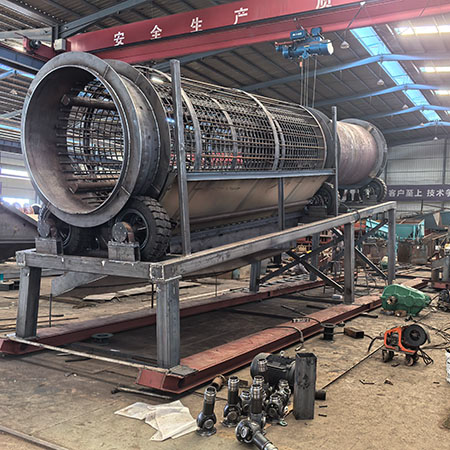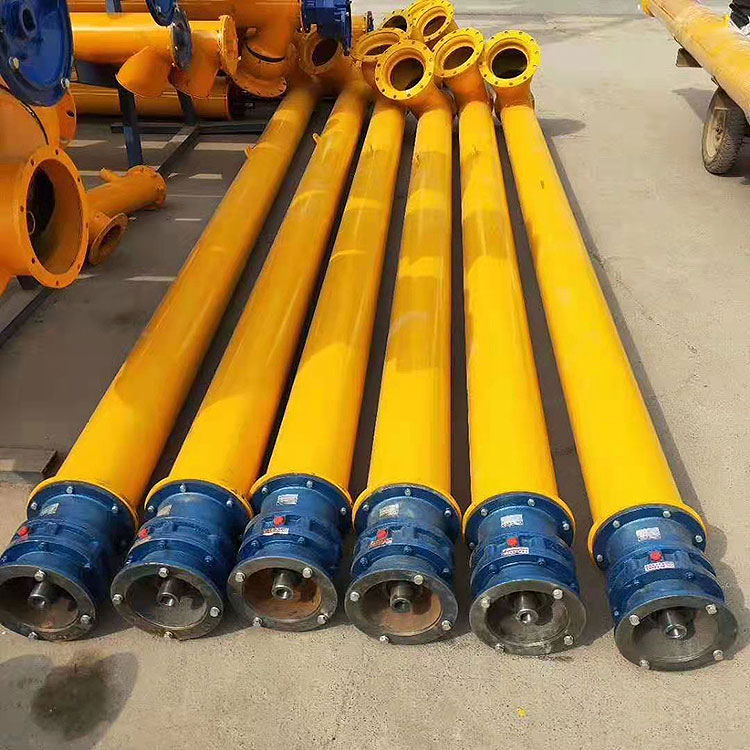

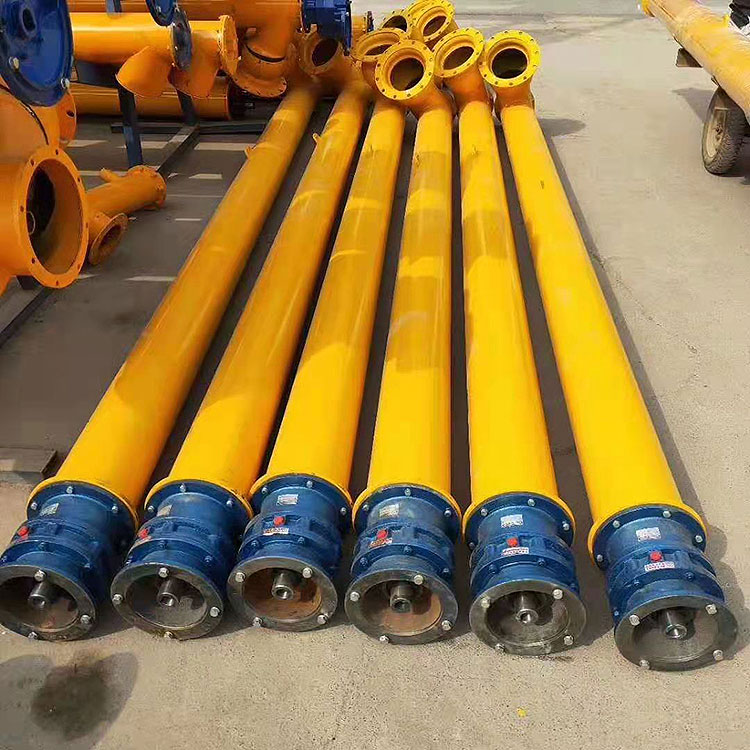
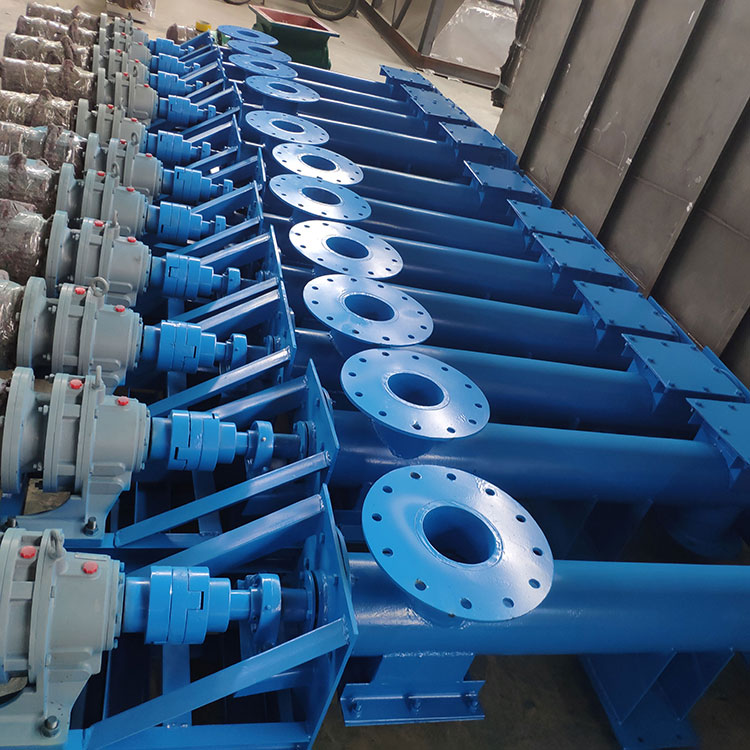
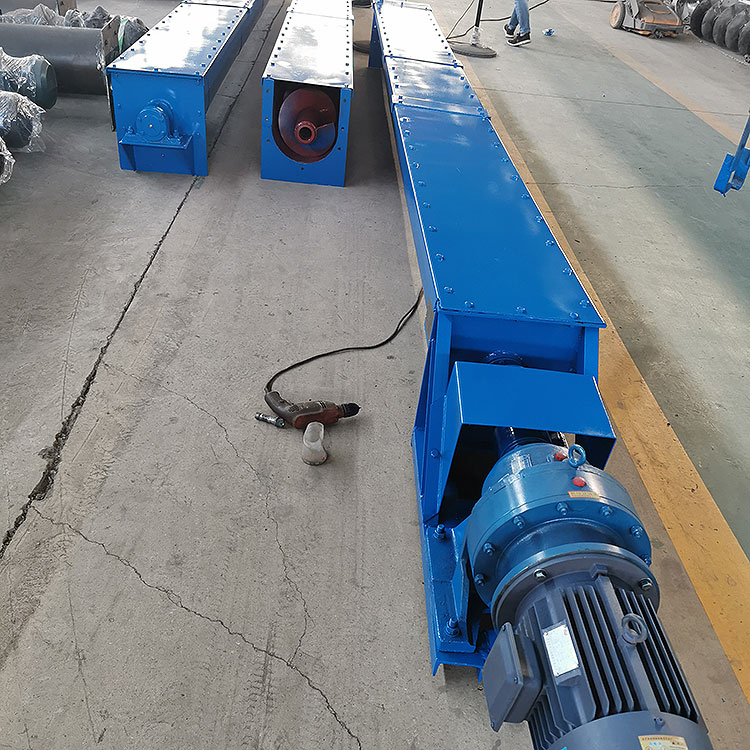









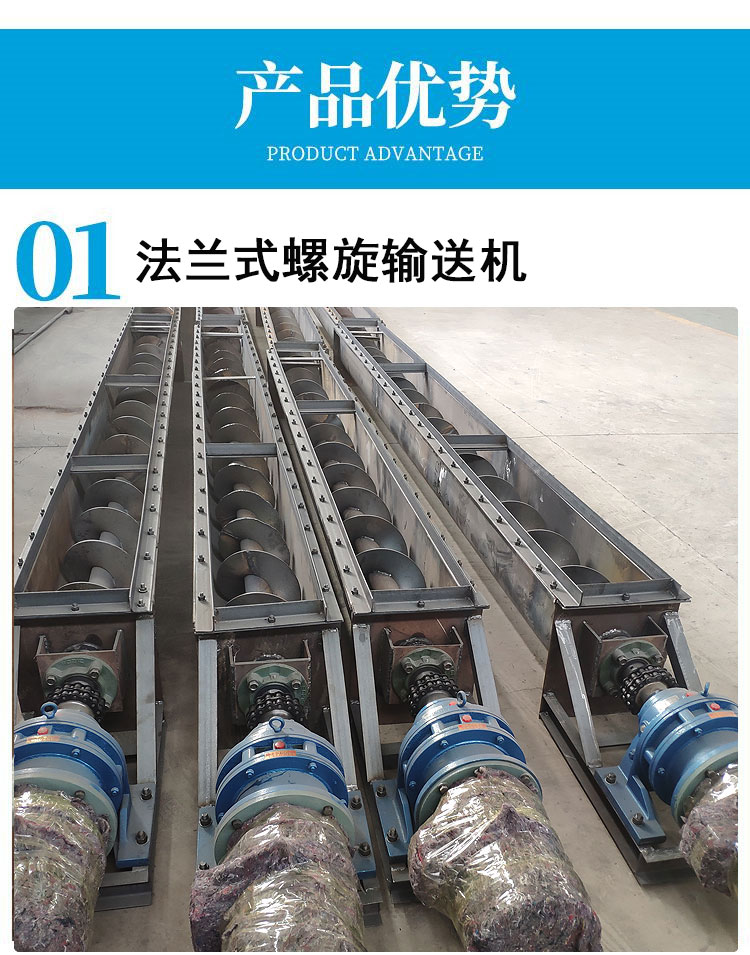
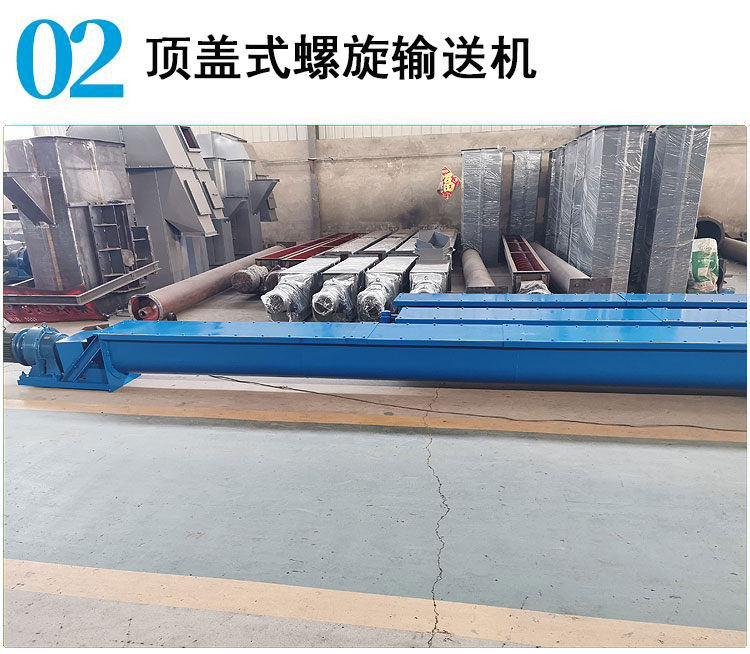
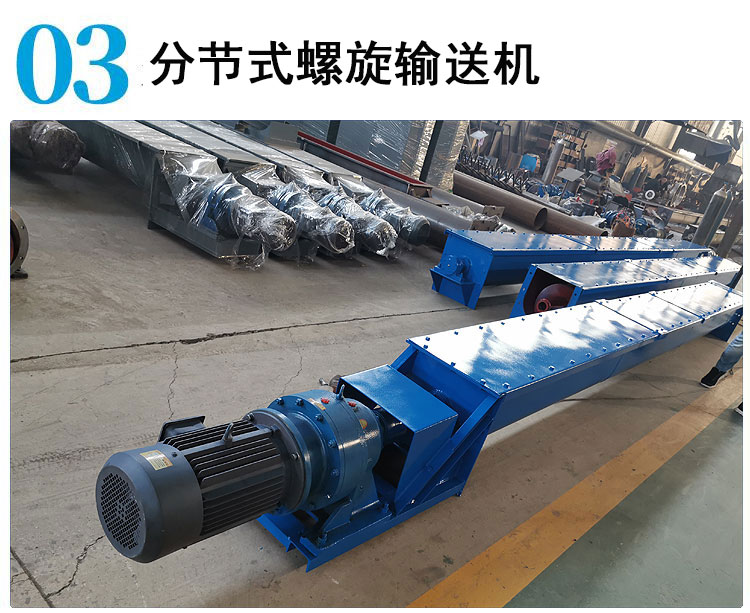
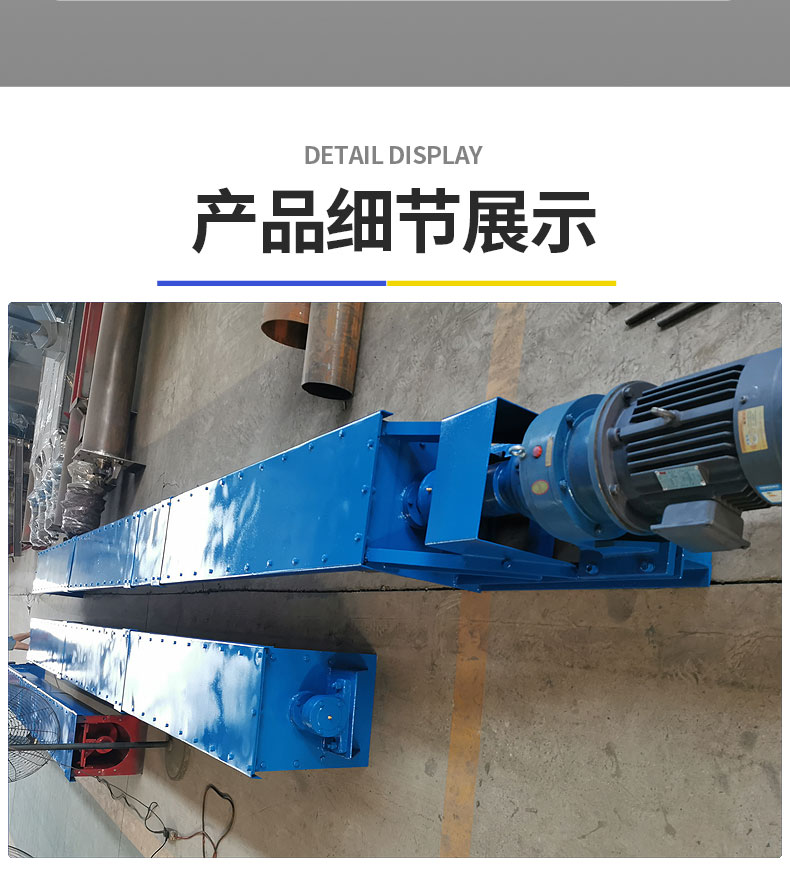
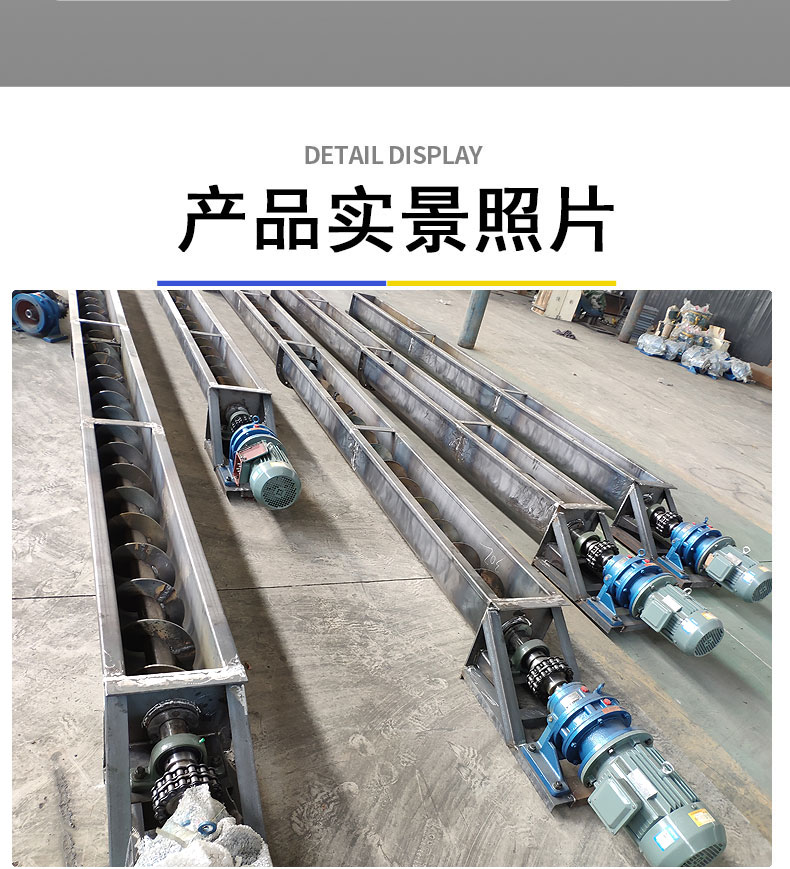
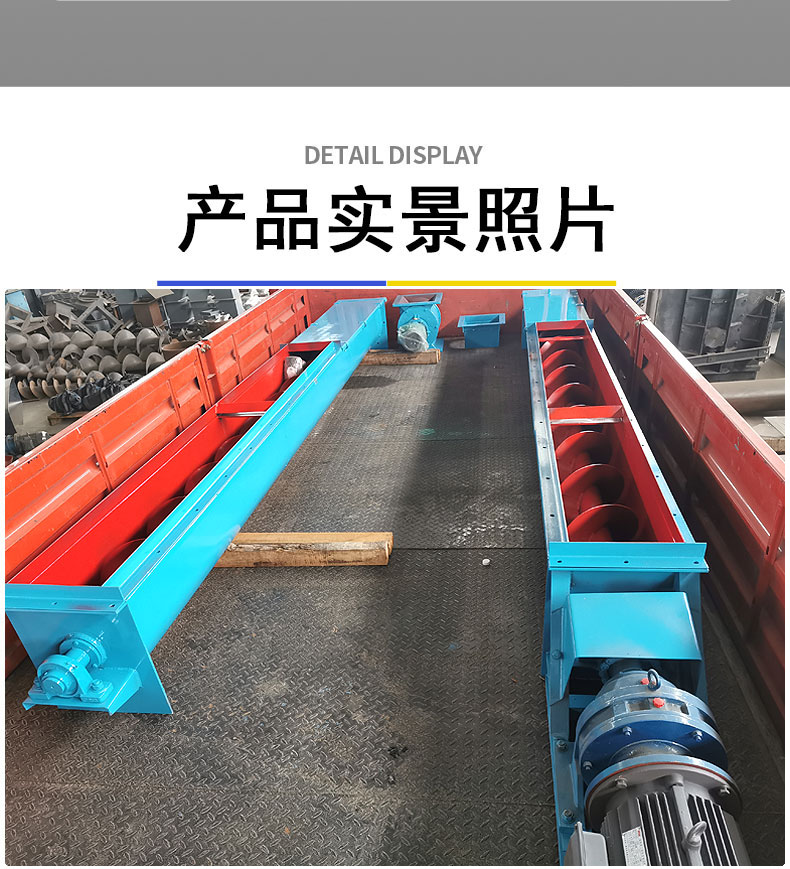
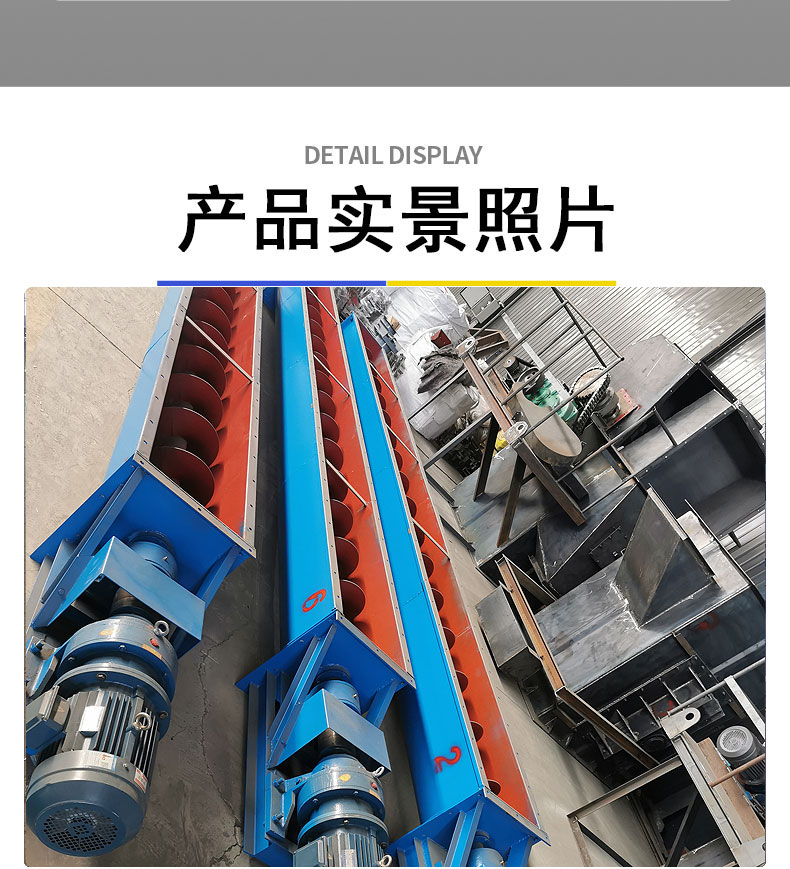
A screw conveyor is a mechanical device that uses an electric motor to drive a spiral to rotate and push materials for transportation purposes. It can transport materials horizontally, inclined, or vertically, featuring simple structure, small cross-sectional area, good sealing, easy operation, easy maintenance, and convenience for enclosed transportation. Screw conveyors are categorized into two types based on the presence of a shaft: shafted screw conveyors and shaftless screw conveyors, and into U-shaped screw conveyors and tube-type screw conveyors. Shafted screw conveyors are suitable for dry powdery materials and small granular materials without adhesiveness (e.g., cement, fly ash, lime, grain, etc.), while shaftless screw conveyors are ideal for transporting materials that are sticky and tend to tangle (e.g., sludge, biomass, waste, etc.). The working principle of a screw conveyor involves the rotating spiral blades pushing the materials, with the force preventing the materials from rotating along with the blades being the material's own weight and the frictional resistance from the conveyor casing. The spiral blades welded to the rotating shaft of the screw conveyor come in various types depending on the material being conveyed, such as solid face, belt face, and blade face. At the terminal of the spiral shaft in the direction of material movement, there is a thrust bearing to counteract the axial reaction force from the material. For longer conveyor lengths, intermediate suspended bearings should be added.
The evolution of screw conveyors includes two types: shafted and shaftless screw conveyors. The shafted screw conveyors consist of a screw shaft, U-shaped trough, cover, feed and discharge ports, and a drive unit, typically available in horizontal, inclined, and vertical configurations. The shaftless screw conveyors, on the other hand, replace the screw shaft with a shaftless design and incorporate replaceable linings within the U-shaped trough, featuring a simpler structure. Materials are fed into the inlet, propelled by the screw, and discharged from the outlet, with the entire conveying process occurring within a sealed trough. Generally, when we refer to screw conveyors, we are talking about the shafted type.
The GX-type screw conveyor is an early model of its kind, primarily designed for conveying powdery, granular, and small piece materials. It is not suitable for transporting materials that are prone to spoilage, sticky, and tend to clog, as well as large pieces, as these can easily adhere to the screw and rotate with it, or cause blockages at the suspension bearing, greatly hindering the conveying process. The main advantages of the GX-type screw conveyor are its significant energy saving and reduced consumption; the head and tail bearings are moved outside the housing, offering good dustproof sealing, low noise, strong adaptability, ease of operation and maintenance, and flexible placement of the inlets and outlets. The drawbacks include high power consumption, rapid wear of components, and severe material粉碎 during transportation.
The LS type screw conveyor is a new generation screw conveyor, modified and designed based on the GX type conveyor. The LS type screw conveyor features a novel structure, reliable performance, wide application range, and significant energy saving and consumption reduction.