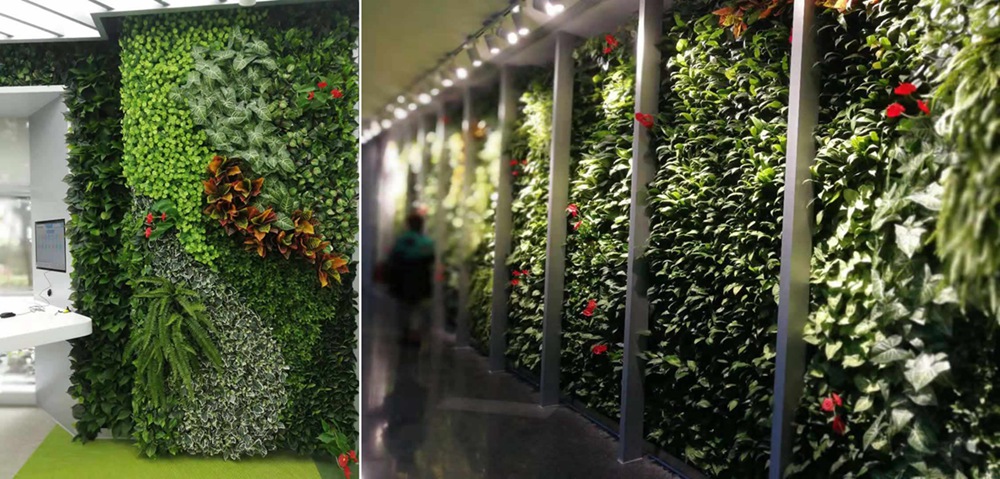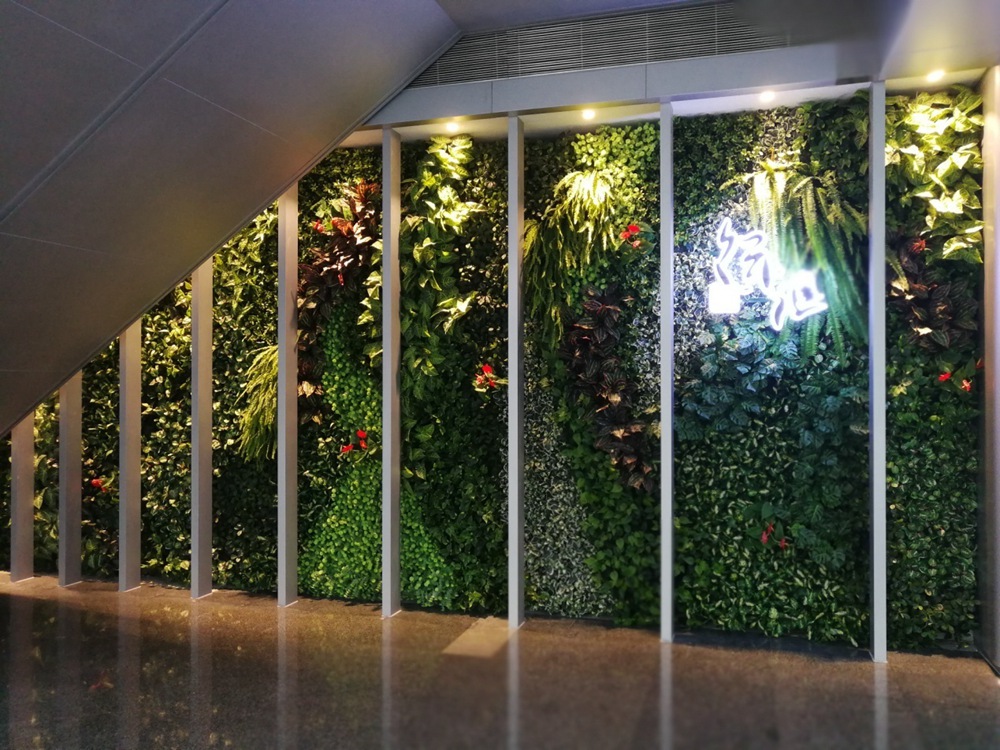
















Green Wall Design, Construction, and Maintenance
Rongwei Gardening, with years of professional green wall maintenance experience, has a profound understanding of what green wall design suits the current environment. At the same time, it ensures that clients' concerns about maintaining the green wall in optimal condition, even better than when it was first installed, are addressed.
A good green wall design must take into account the on-site objective conditions:
1. Lighting
2. Ventilation
3. Temperature
4. Wall Load-Bearing Capacity
5. Functional Features of Green Walls
6. Overall Space Decoration
Thus, it is determined that:
1. Irrigation Techniques
2. Irrigation System Configuration
3. Frame Configuration
4. Container Method
5. Plant Species
6. Plant Arrangement on the Wall
7. Supplemental Lighting Plan
8. Plant Graphic Design
Rongwei helps our users achieve long-term stability in green walls from an economic perspective, and also offers professional design and construction advice from a practical standpoint.
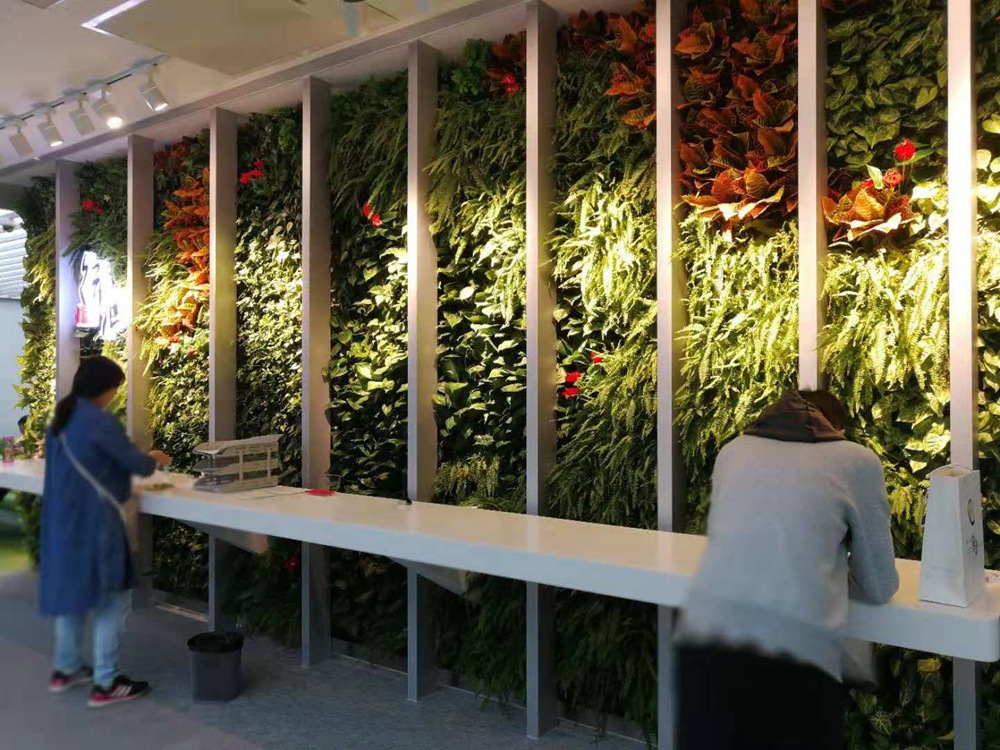
Concept Advantages: Highlighting functional designs that absorb harmful gases, oxygen generation, and humidification, as well as radiation resistance, emphasizing a balance between functionality and aesthetics. Stressing the "healthy, eco-friendly" philosophy, focusing on comprehensive indoor air governance with plants and bamboo charcoal.
Nourishment
1. The formula soil in our plant nutrient solution, "Hai Na Tian Sheng," typically meets the nutritional needs of plants for 2-3 years. When deficiencies arise, different formulations of nutrient solution can be added according to the plant's condition.
2. Pruned plants achieve an initial installation effect that aligns with the design at over 70%. They typically reach the desired look in 1 to 3 months. To maintain the shape of the living wall, we prune off yellow leaves every 1-2 weeks, and generally prune, replant, or replenish the plants 1-2 times a year, based on their growth.
3. Plant wall susceptible to pests and diseases has a lower chance of encountering such issues compared to general landscaping plants. However, during the maintenance of the plant wall, attention should also be given to potential pest and disease problems, preventing them before they occur.
4. Indoor plant wall lighting typically includes plant wall spotlights to compensate for insufficient light. However, if the angle of the spotlights remains unchanged over time, it may result in lush growth of plants directly under the lights while the areas not illuminated by the spotlights show poor growth. Therefore, when maintaining the plant wall, it's also important to periodically adjust the position of the spotlights.
5. Regularly observe the even growth of plants, and if an entire area wilts, check if the substrate is moist and if the system is functioning properly. Ensure every plant receives irrigation.