


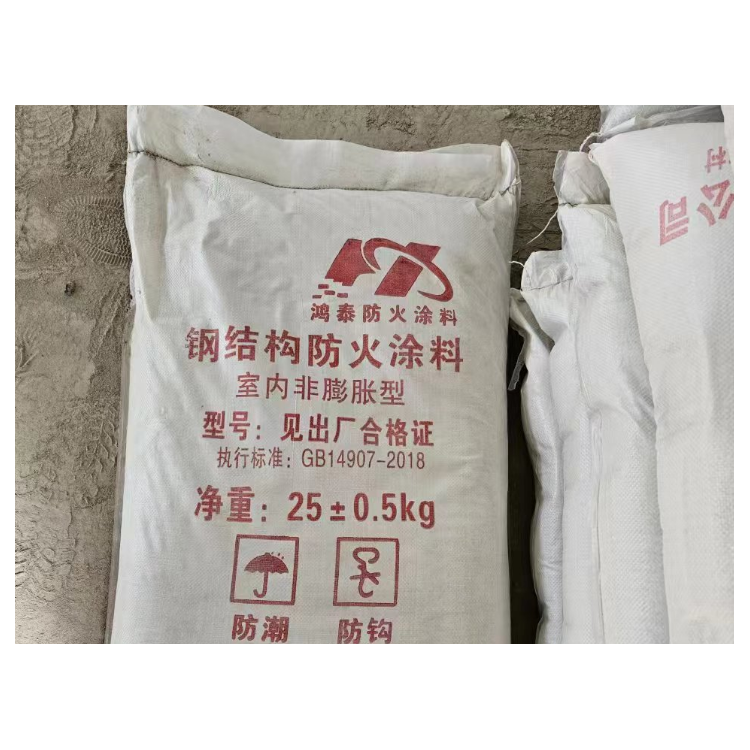





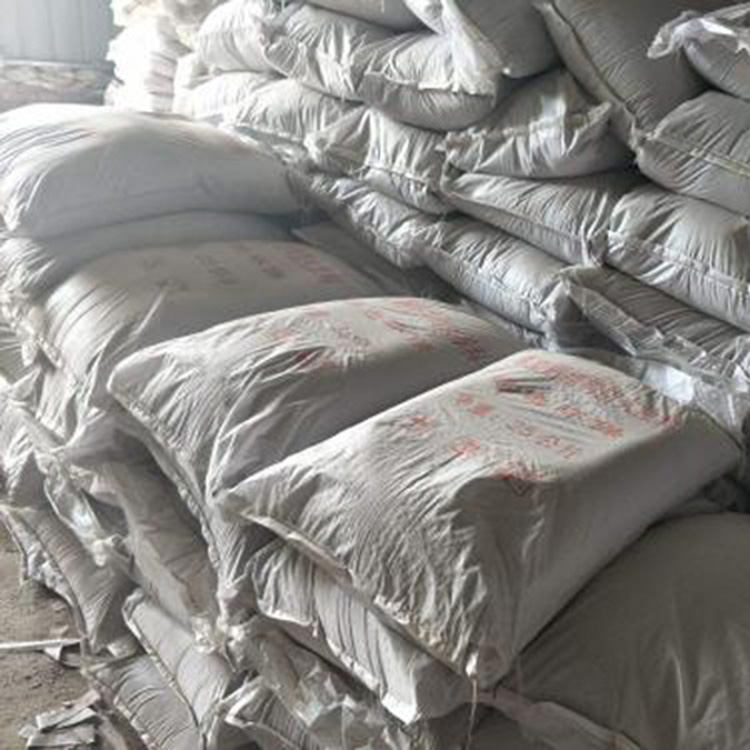
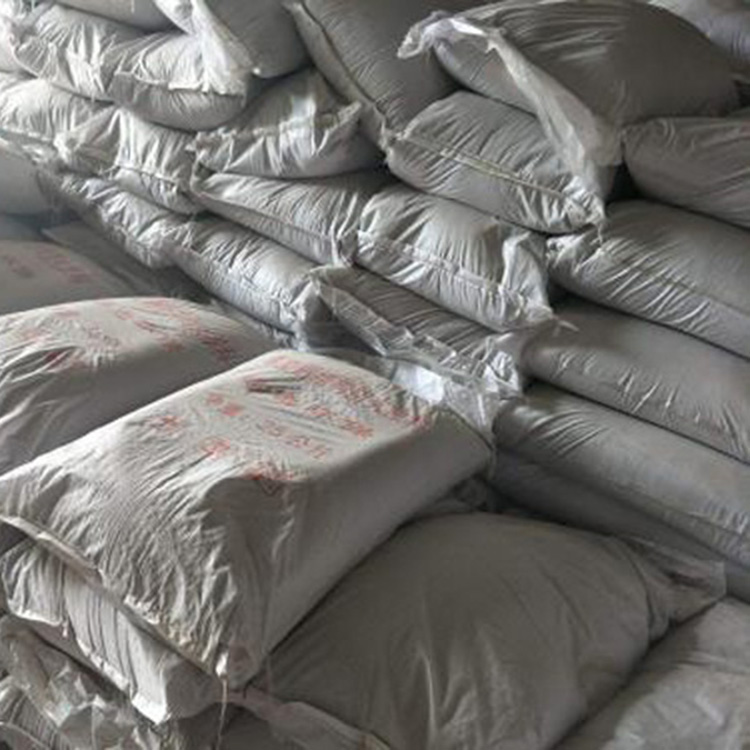
Non-expansive fire-resistant coating for indoor steel structures
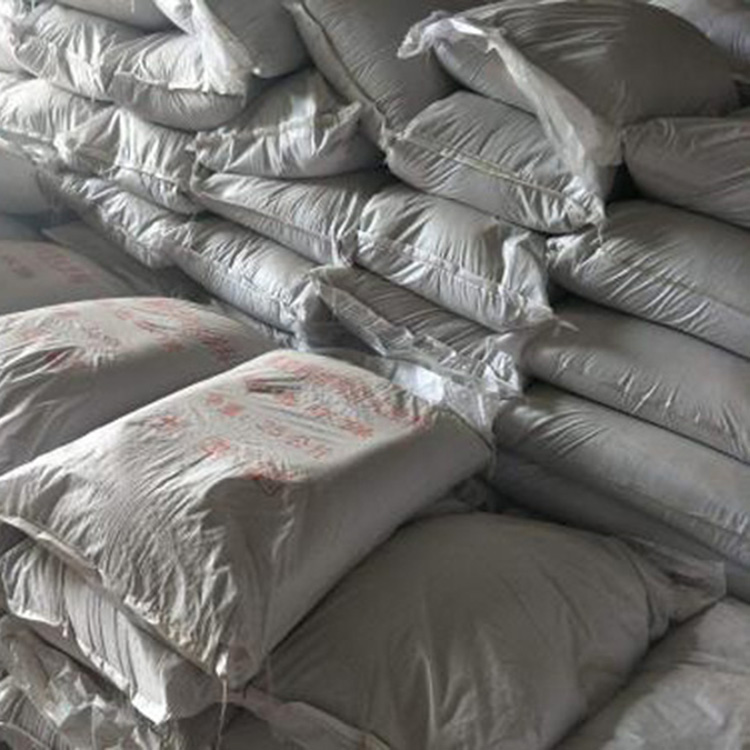
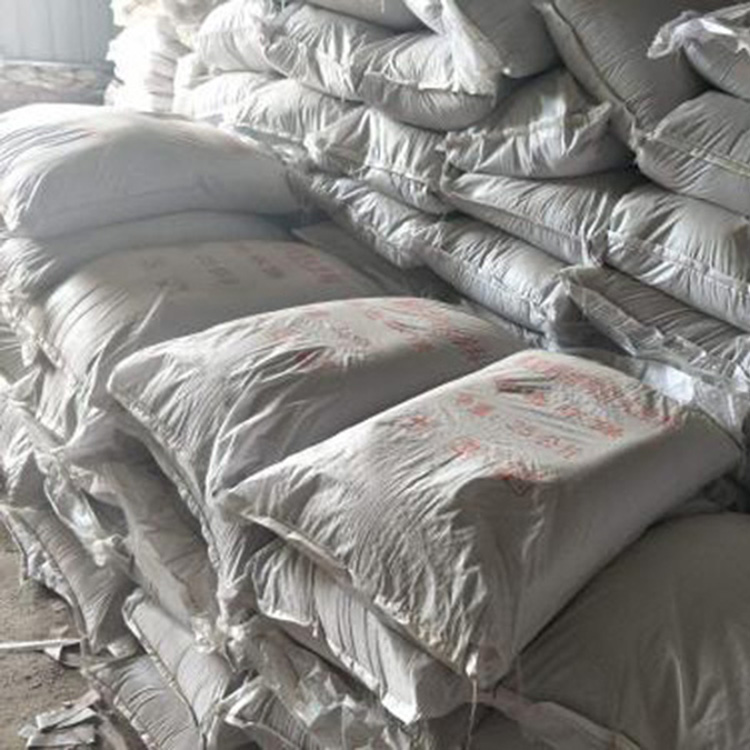
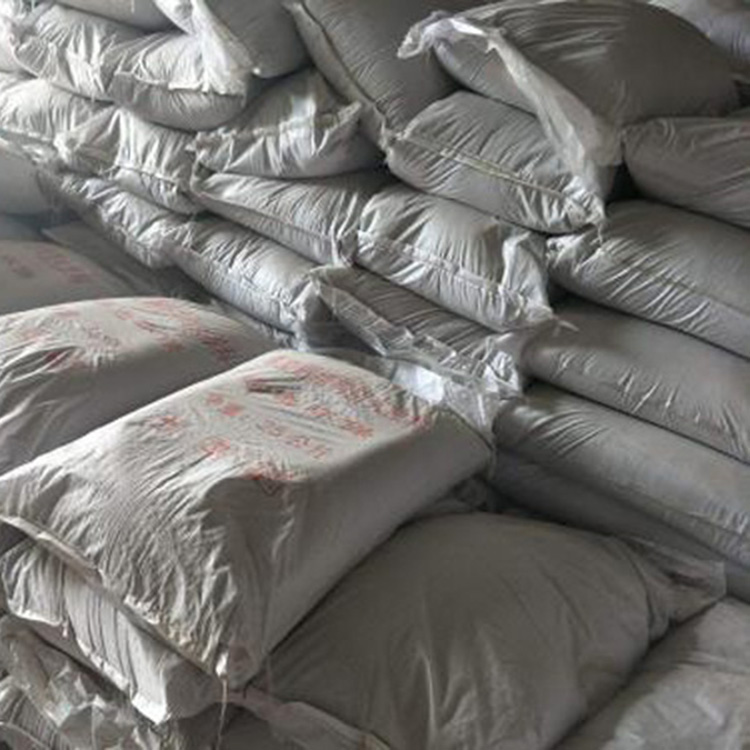
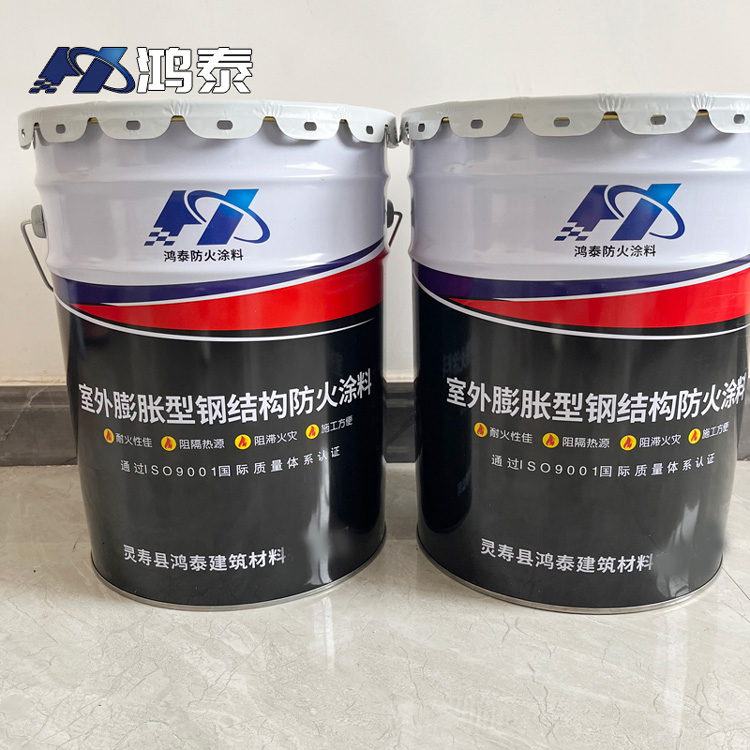
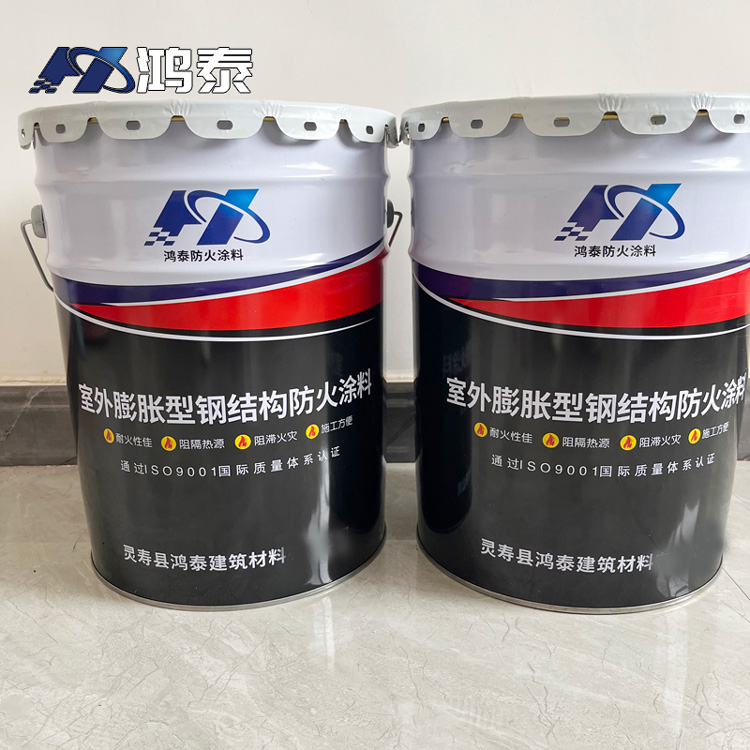
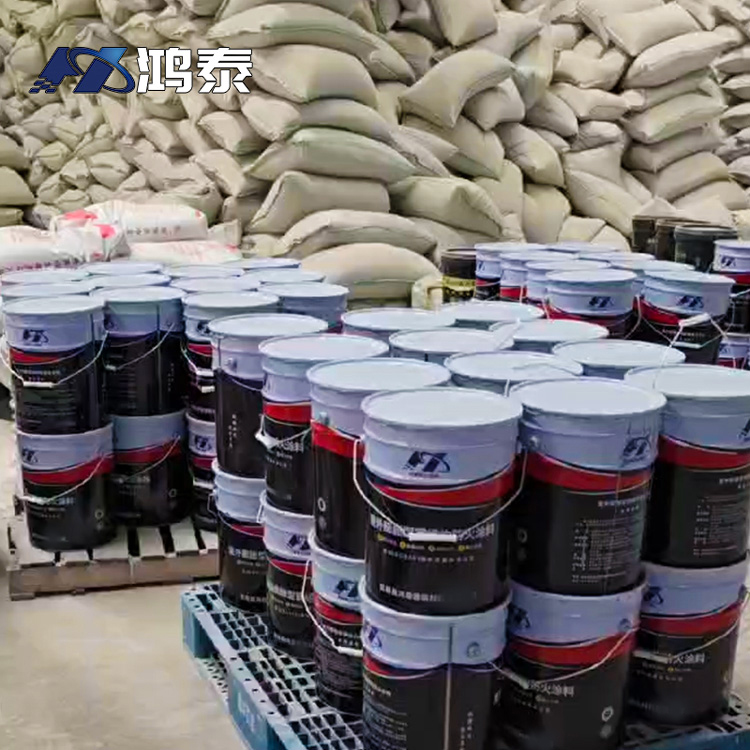
Non-expanding fire-retardant coatings for indoor steel structures refer to coatings with a thickness greater than 7 mm and less than or equal to 45 mm, featuring a granular surface, low density, and low thermal conductivity, with a fire resistance limit exceeding 3 hours.
Due to the inorganic composition of non-expanding fire-resistant coatings, their fire-retardant properties are stable and offer good long-term performance. However, the larger particle size of the coating components results in an uneven finish, which affects the overall aesthetics of the building. As such, they are mostly used in concealed structural applications. During fires, these coatings utilize the granular surface of the material, which has a lower density and thermal conductivity, or the material's heat absorption within the coating, to delay the temperature rise of steel, thereby protecting it.
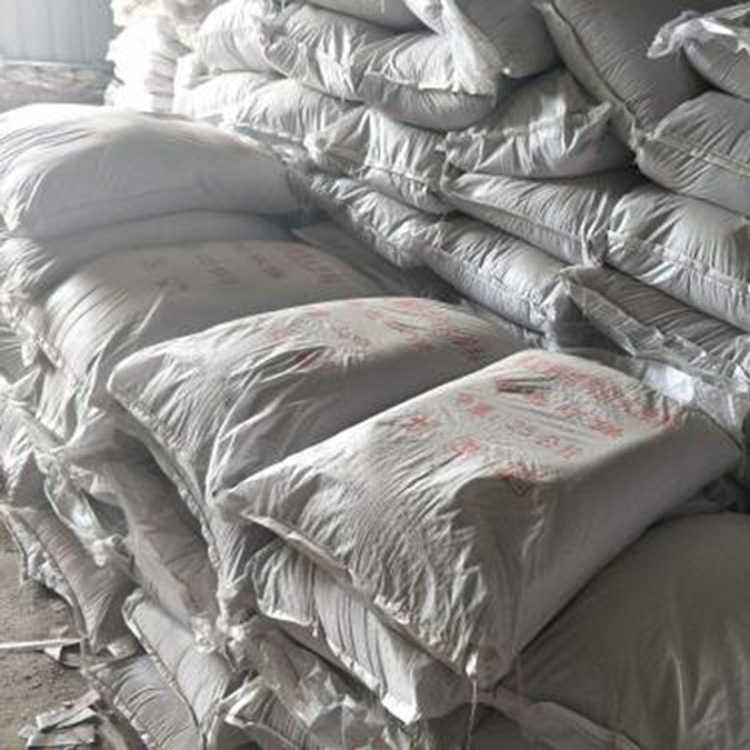
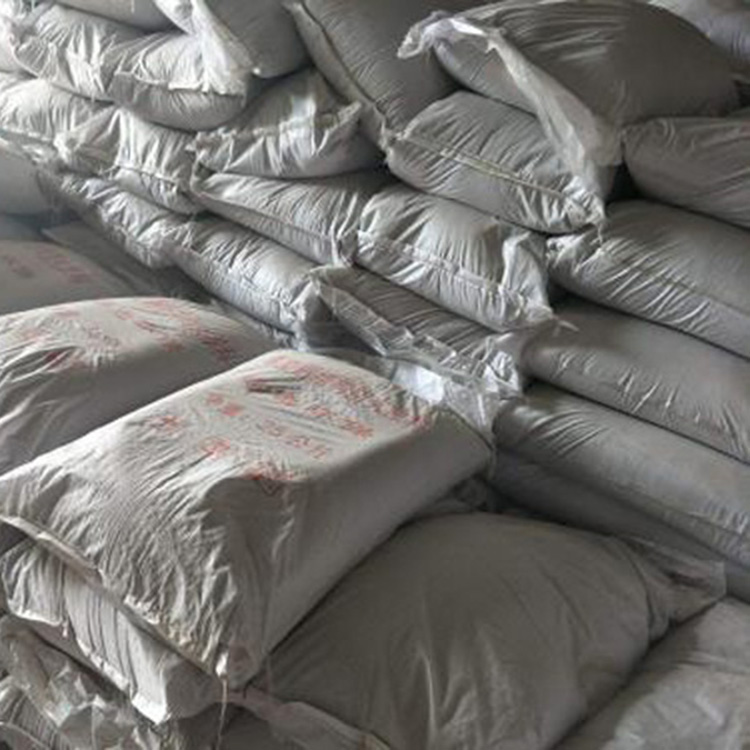
This type of fire-resistant coating is made by mixing appropriate inorganic binders (such as water glass, silicate sol, aluminum phosphate salts, refractory cement, etc.) with inorganic lightweight insulating aggregates (like expanded perlite, expanded vermiculite, sea spath, polystyrene beads, fly ash, etc.), fire-retardant additives, chemical agents, reinforcing materials (such as aluminum silicate fibers, rock wool, ceramic fibers, glass fibers, etc.), and fillers, offering the advantage of lower cost.
Construction commonly employs spraying, suitable for concealed steel structures both indoors and outdoors with fire resistance requirements exceeding 2 hours, as well as high-rise full steel structures and multi-story factory steel structures. For instance: the fire resistance of columns in high-rise civil buildings and columns supporting multiple stories in general industrial and civil buildings should all reach 3 hours, necessitating the use of non-expanding type steel structure fire-retardant coatings for protection.