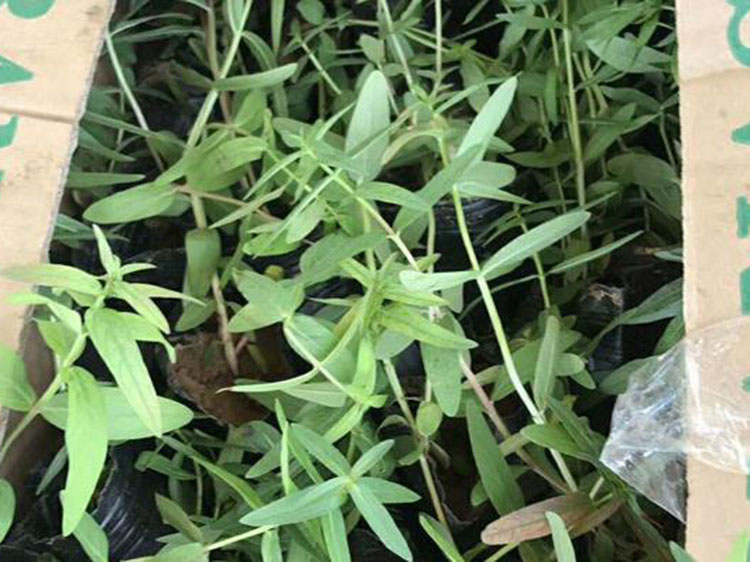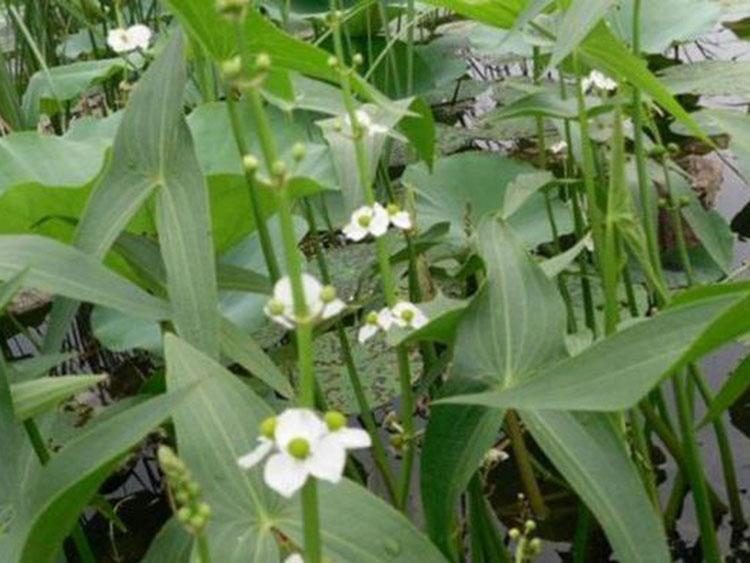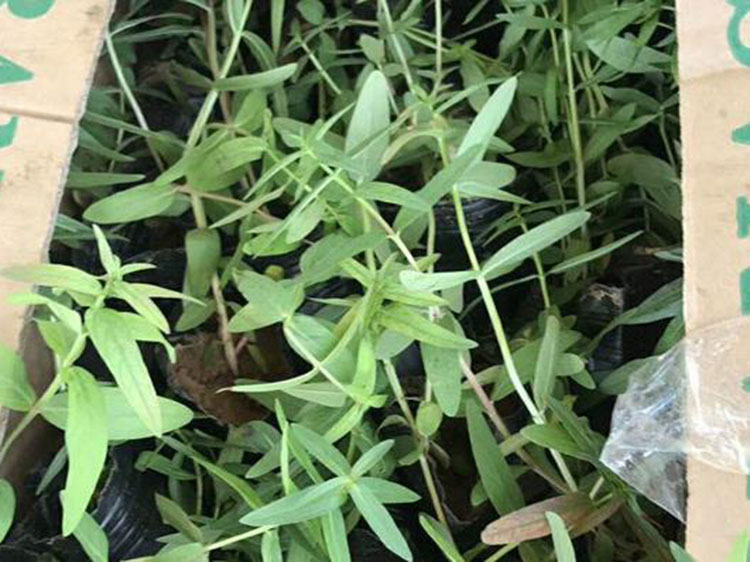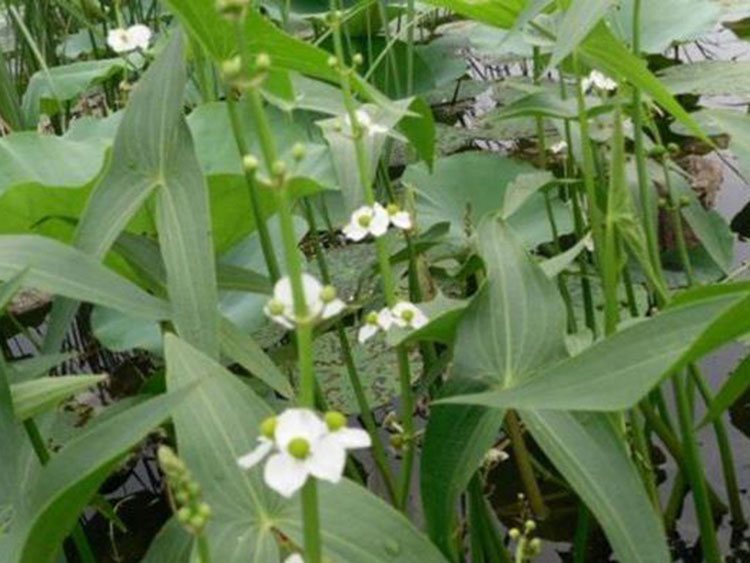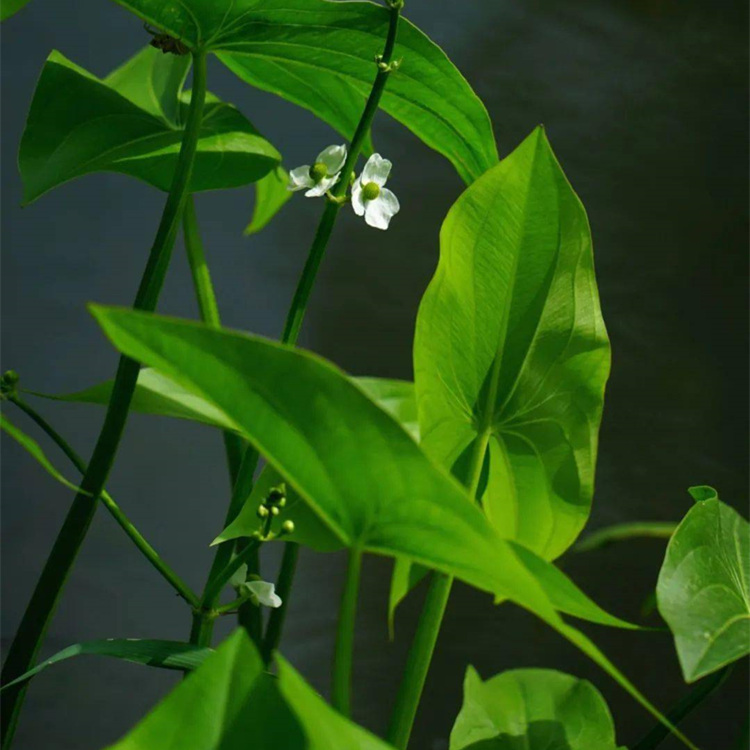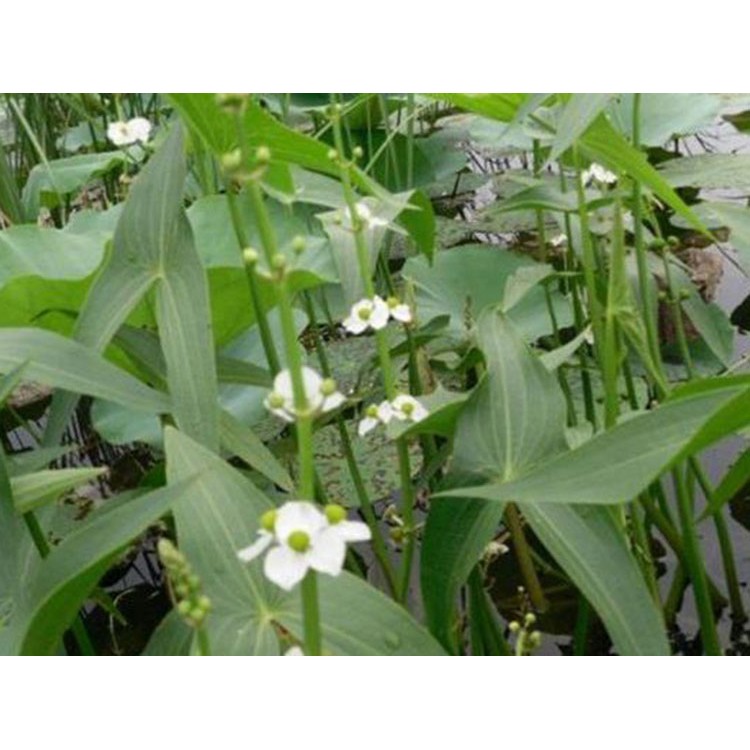

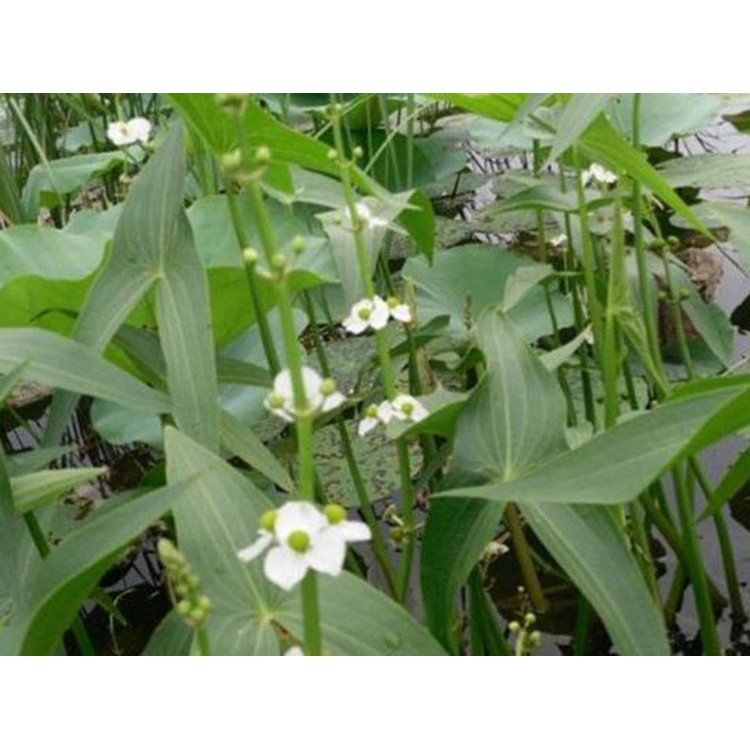


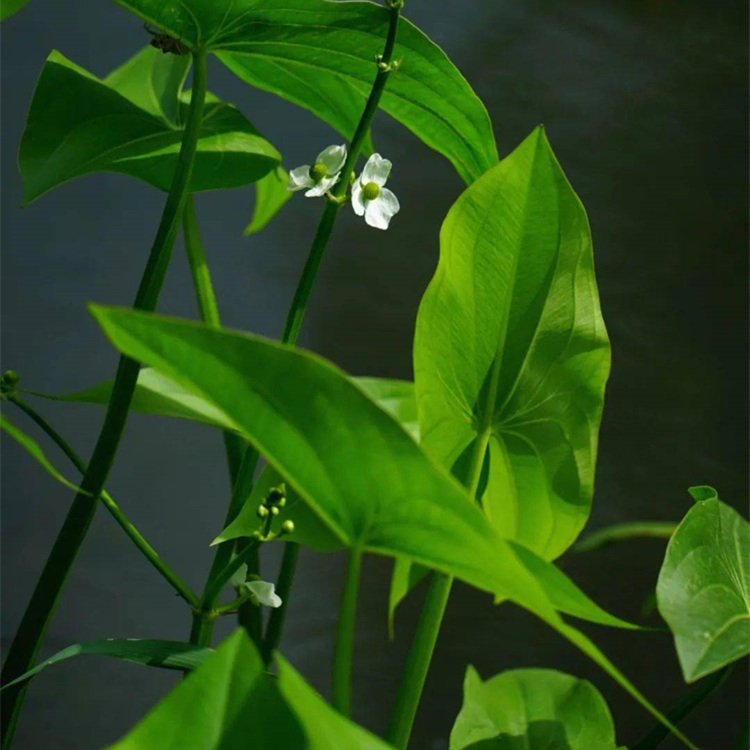





Chinese Water Chestnut, a perennial herb of the Alismataceae family, grows in paddy fields, with leaves resembling arrows and white flowers. It has an underground corm, which is yellowish or whitish, and is used as a vegetable. It is edible. Also known as Zishu. This variety differs from the original in that the plant is tall and robust; the leaves are large and thick, with the terminal lobe rounded at the tip, ovate to broadly ovate; the creeping stem ends in an enlarged corm, which is ovate or spherical, up to 5-8×4-6 cm; the panicle is tall, 20-60 cm long, sometimes over 80 cm, borne at the lower part, with 1-2 whorls of female flowers, the main axis female flowers in 3-4 whorls, located above the lateral branches; male flowers in many whorls, located at the top, forming a large panicle, often lying diagonally in the water during fruiting; the receptacle of the fruiting flowers is broadly globose, diameter 4-5 mm, about 3 mm high. Seeds are brown with small protuberances.
Grown extensively in all provinces and regions south of the Yangtze River in China. Also cultivated in Japan and Korea. The bulbs can be used as vegetables and for other purposes.