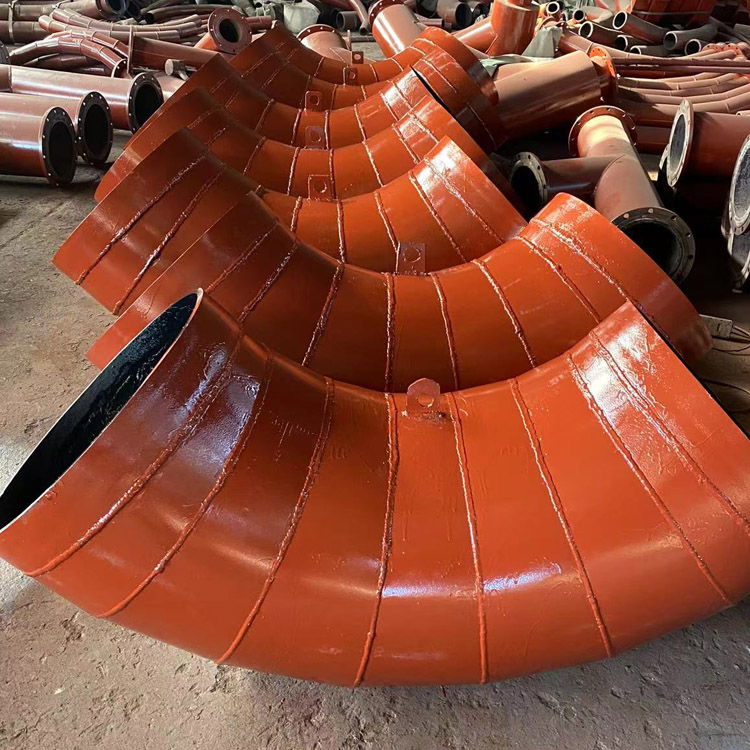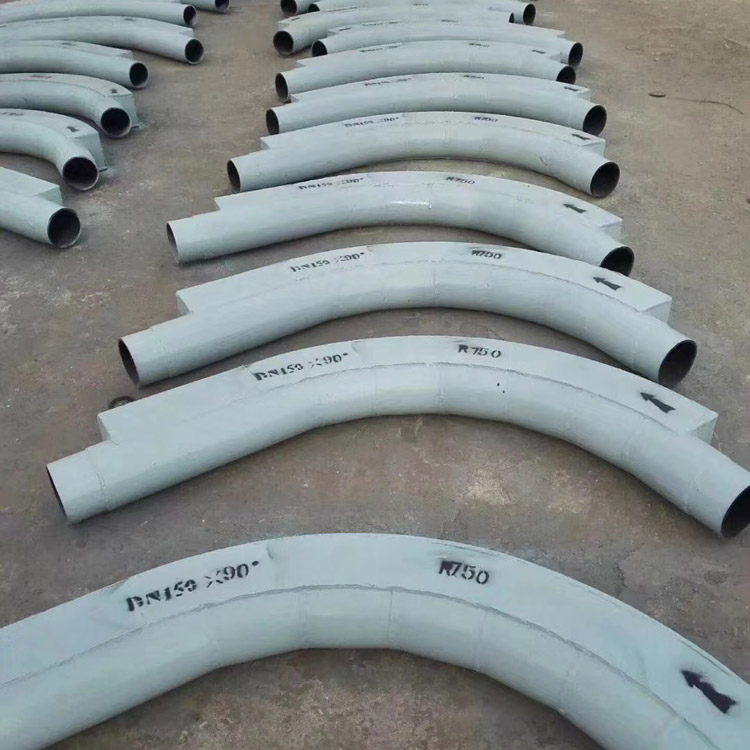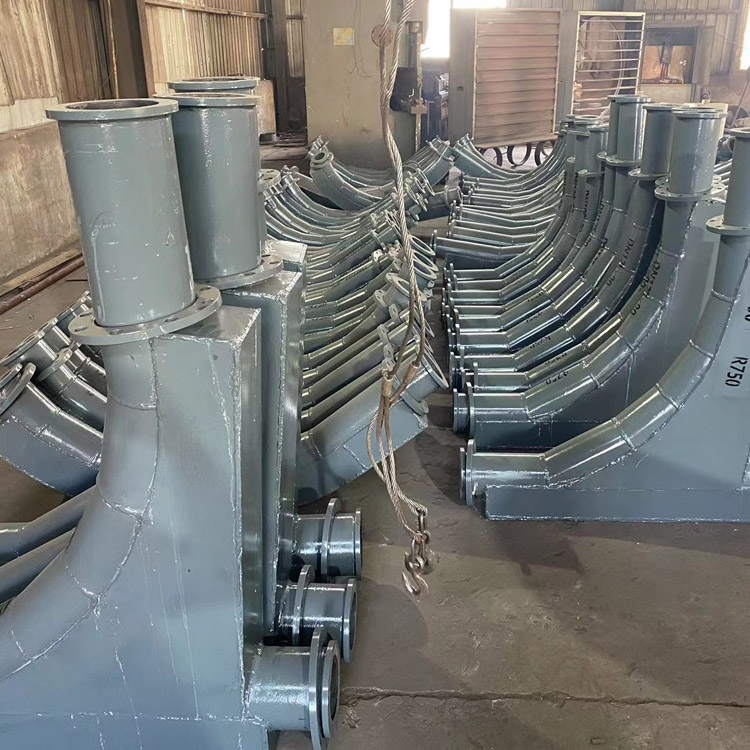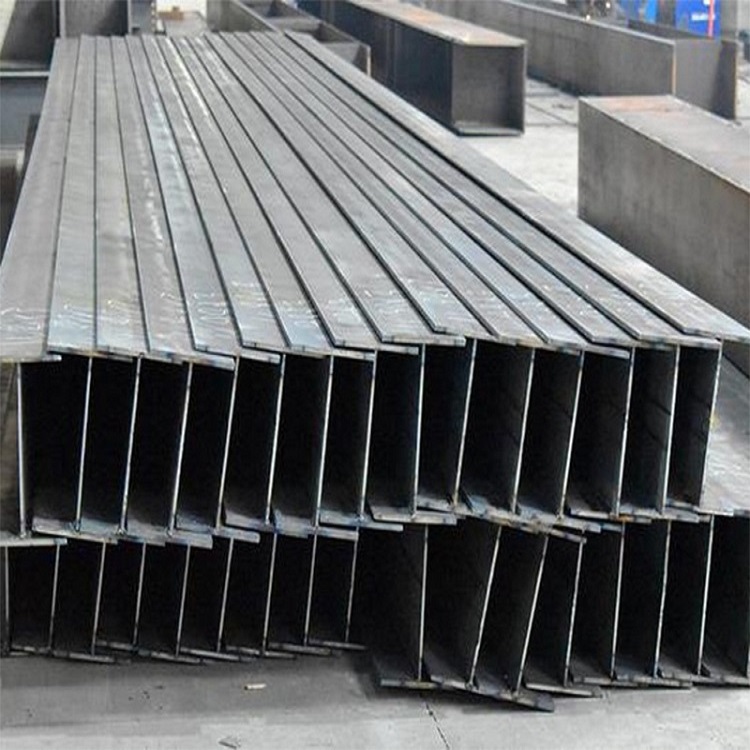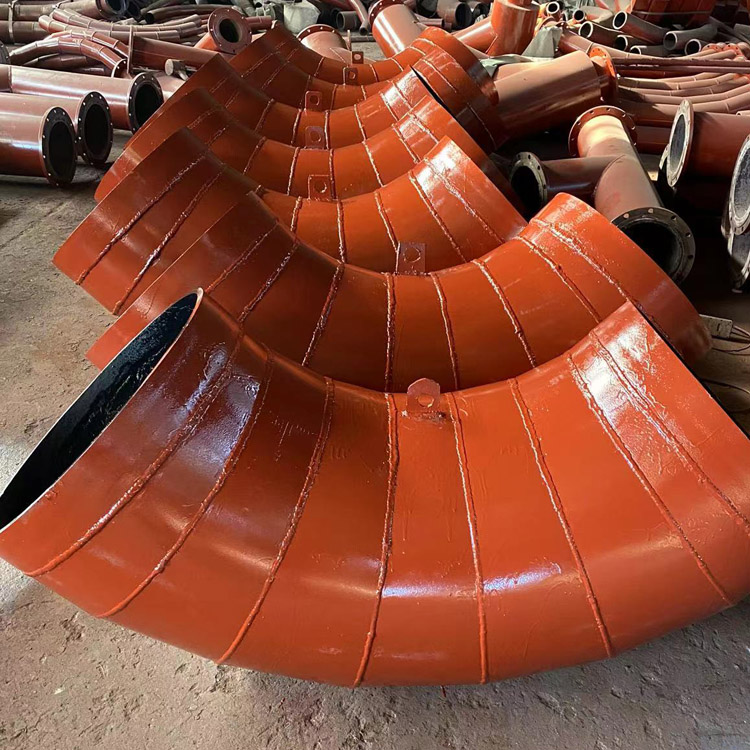

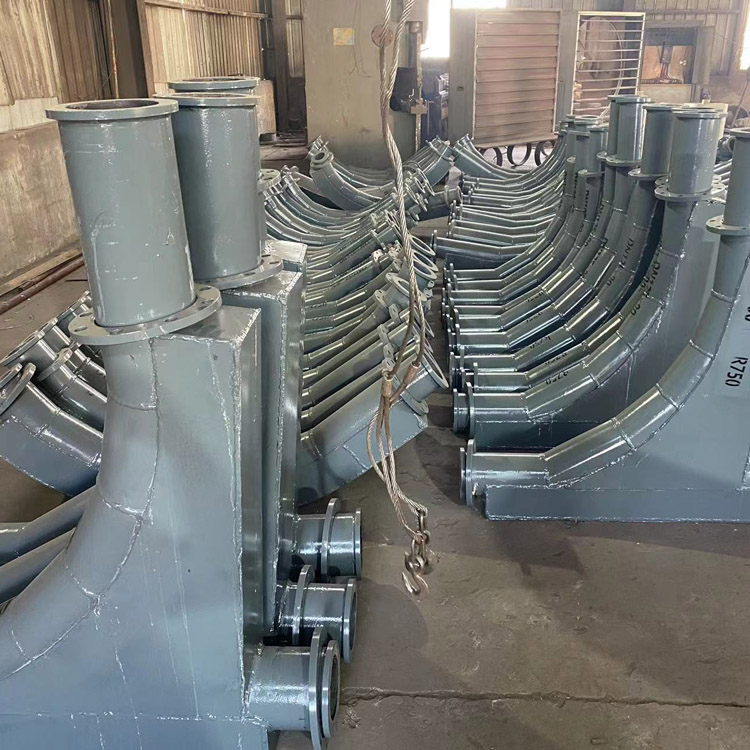












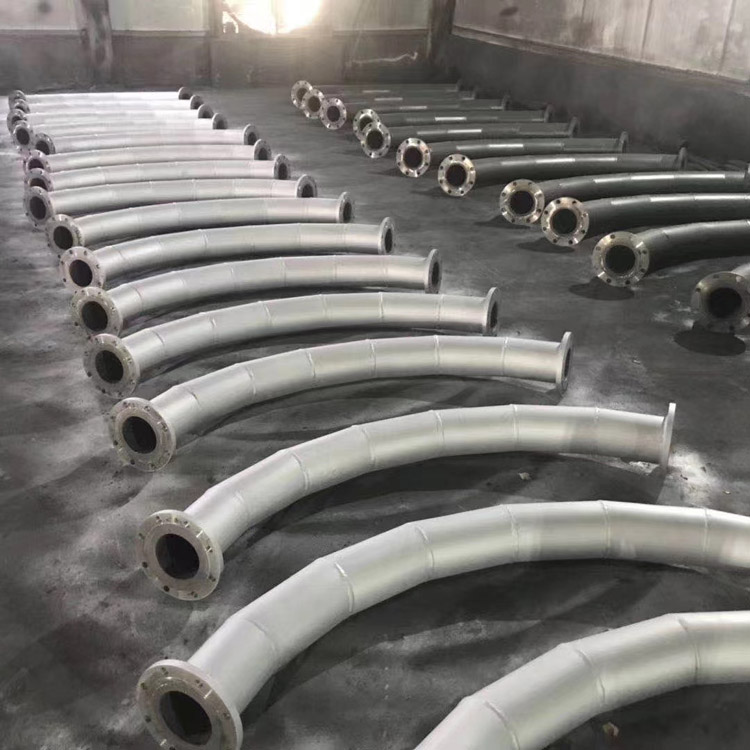
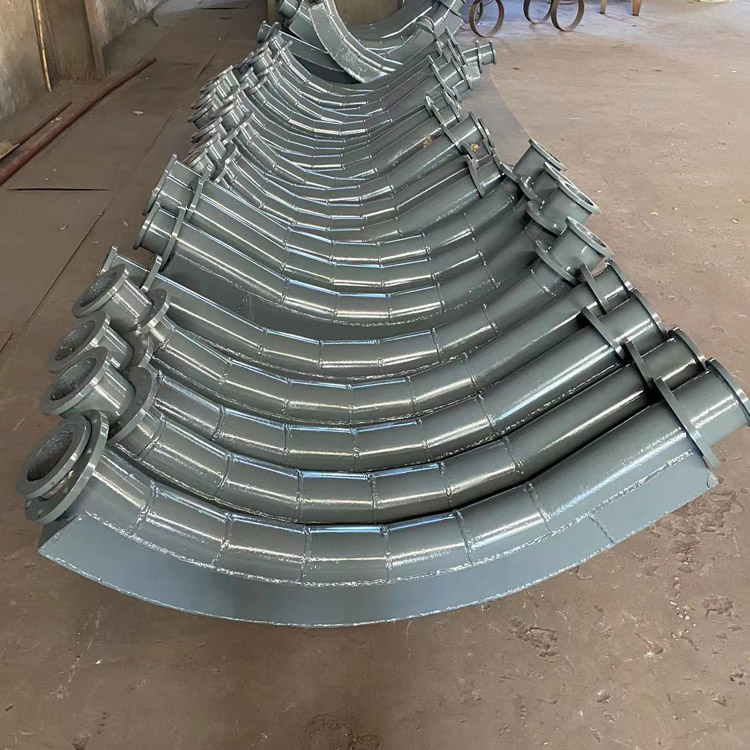


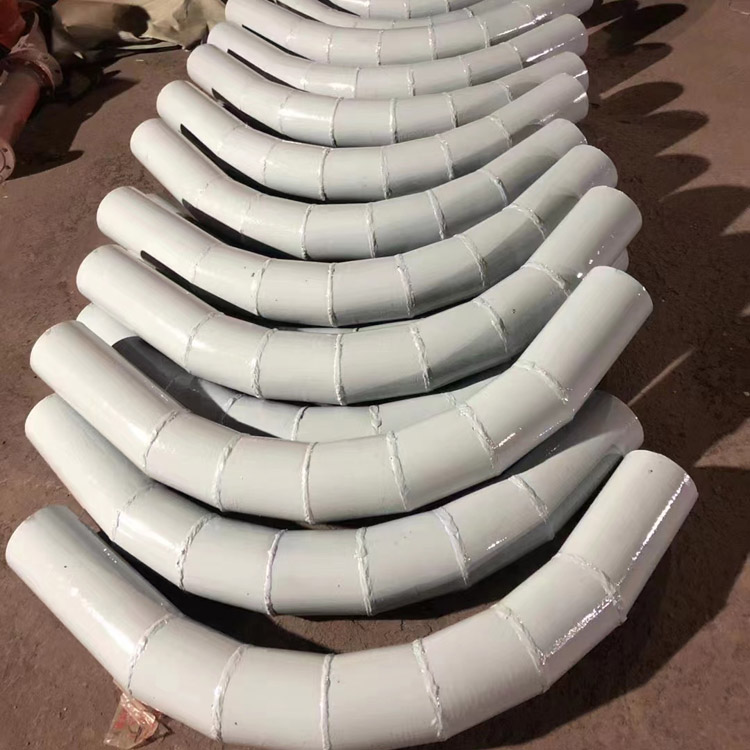
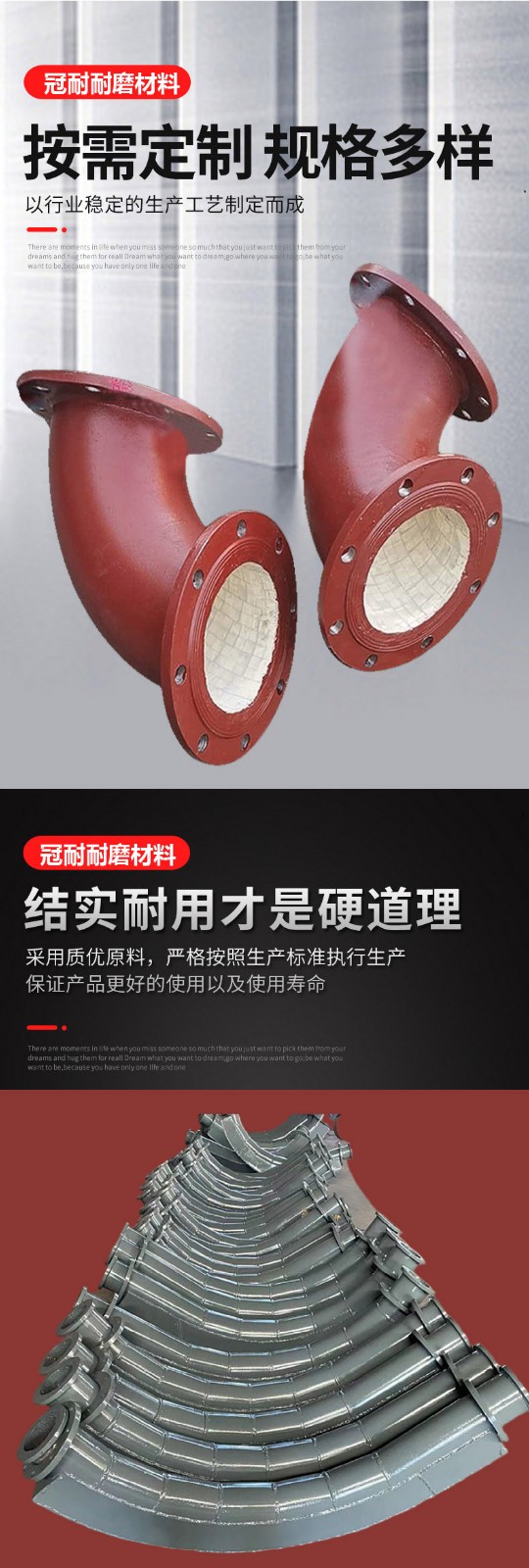
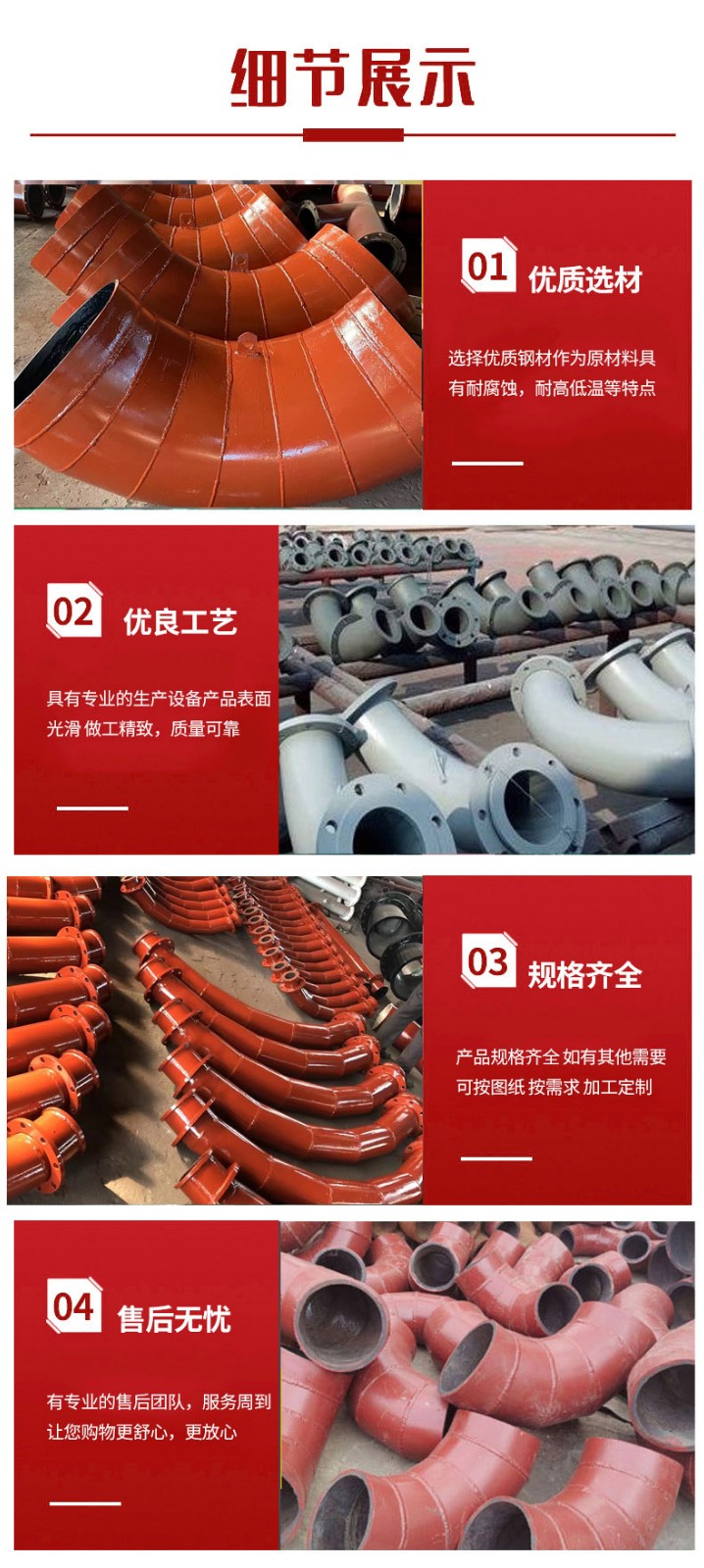
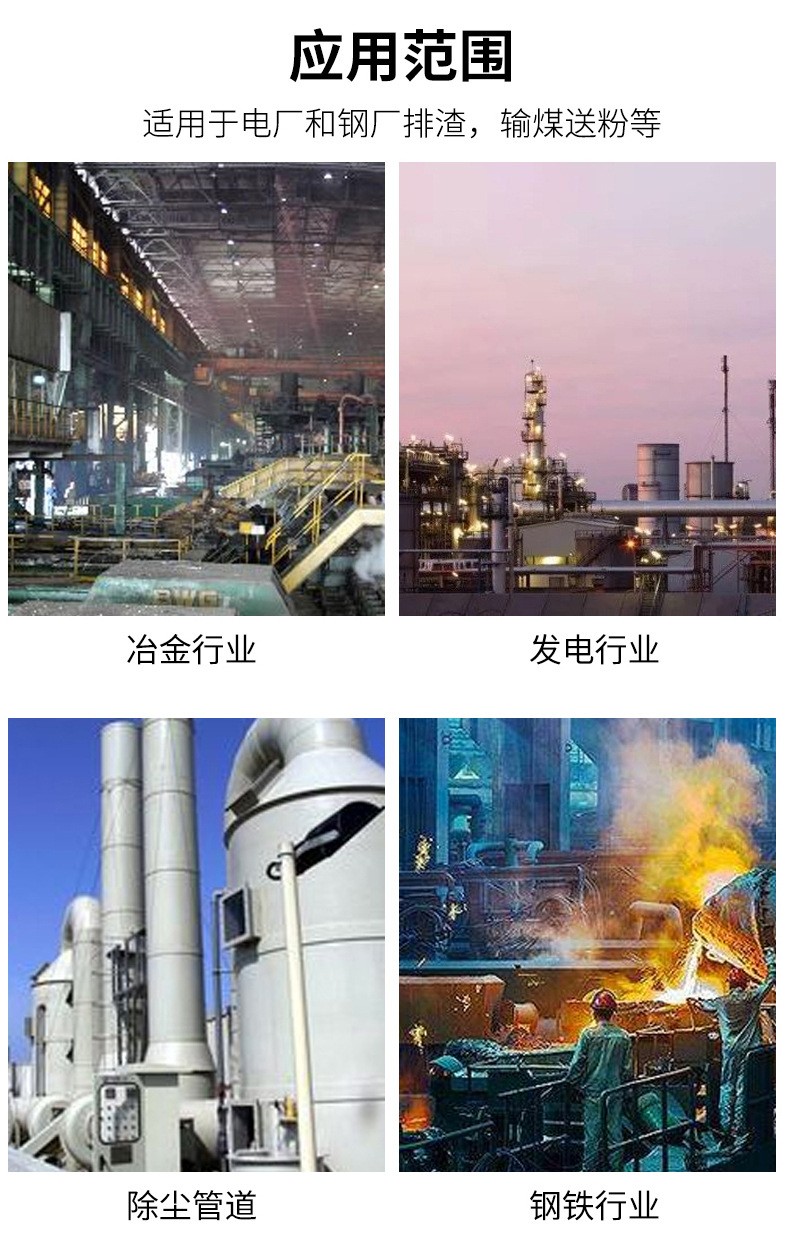
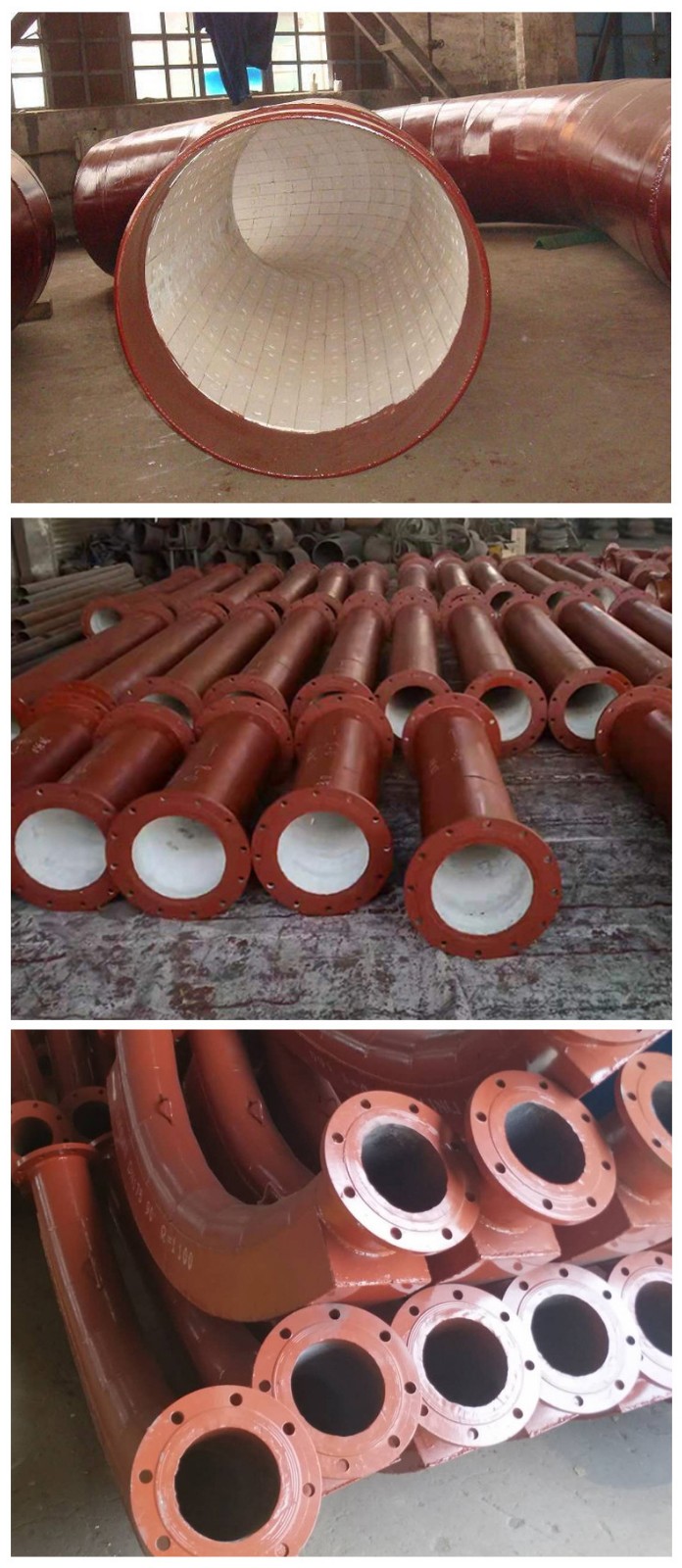
Ceramic wear-resistant elbows have gained market favor and continuously replaced some traditional abrasion-resistant materials. The fundamental reason lies in their superior product quality and the multifaceted advantages they possess over traditional abrasion-resistant materials, such as cast stone, cast steel, and bonded ceramic materials.
Performance Comparison
Cast Stone
Previously, most factories used cast stone elbows, which are characterized by their fragility, cracking, and a wear-resistant surface. The wall thickness ranges from 25-35mm, with some reaching nearly 40mm. After short-term wear and cracking on the inside, coal dust wears through the gaps to the outside, and their lifespan is only one major repair period. Moreover, they often have internal air holes, which can lead to hidden dangers. Once worn through, they cannot be repaired on-site.
Cast Steel
Cast steel (including alloy steel) is widely used in the abrasion-resistant field due to its relatively simple manufacturing process. However, due to the inherent limitations of the material properties and process constraints, the surface hardness of cast steel materials (about 60) is significantly lower than that of ceramics (over 80), with wear resistance only a fraction of, or less than, that of ceramics (specific data can be found in the wear test reports from the Powder Metallurgy Institute of Central South University and the Jet Abrasion Test results from the九州 Industrial Ceramics Research Institute of Japan). Elbows made from this material can wear through after more than a year of operation. Additionally, cast steel pipes are thick-walled and very heavy, have a high carbon content, and poor weldability, requiring on-site heat treatment of the welds, which presents considerable difficulties for installation and maintenance on-site.
3. Apply ceramic tiles
Micro gaps are numerous, with a fragile and brittle nature, prone to localized detachment and failure, and difficult to repair once detached.