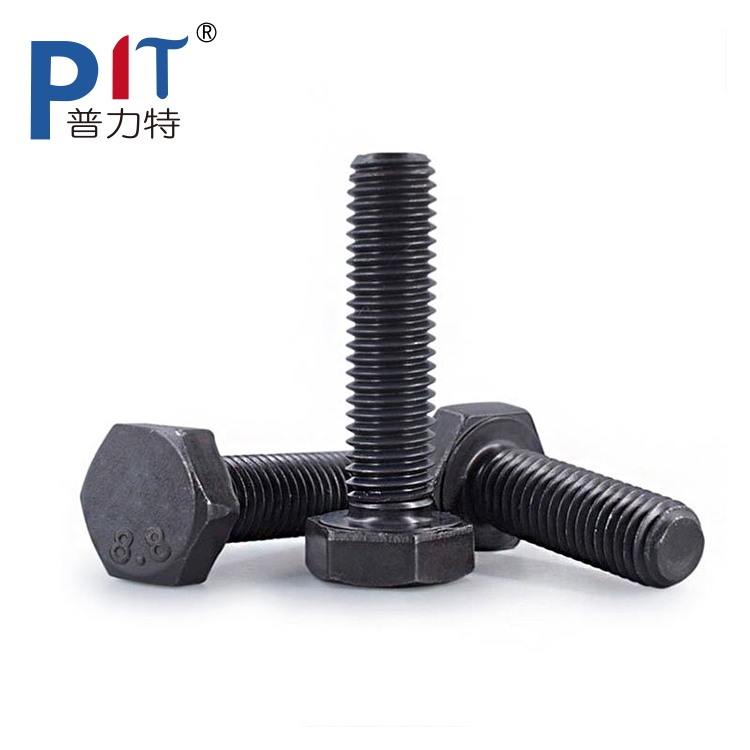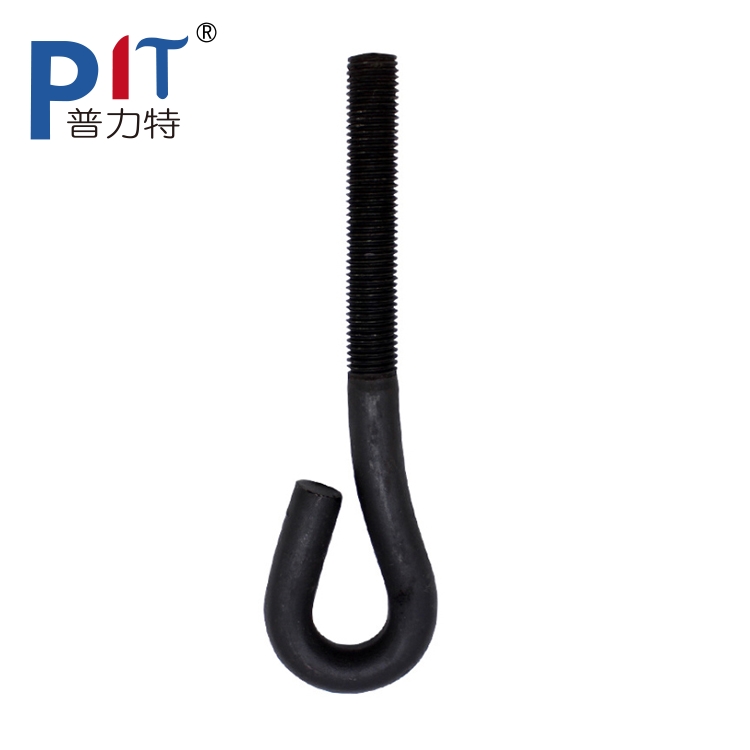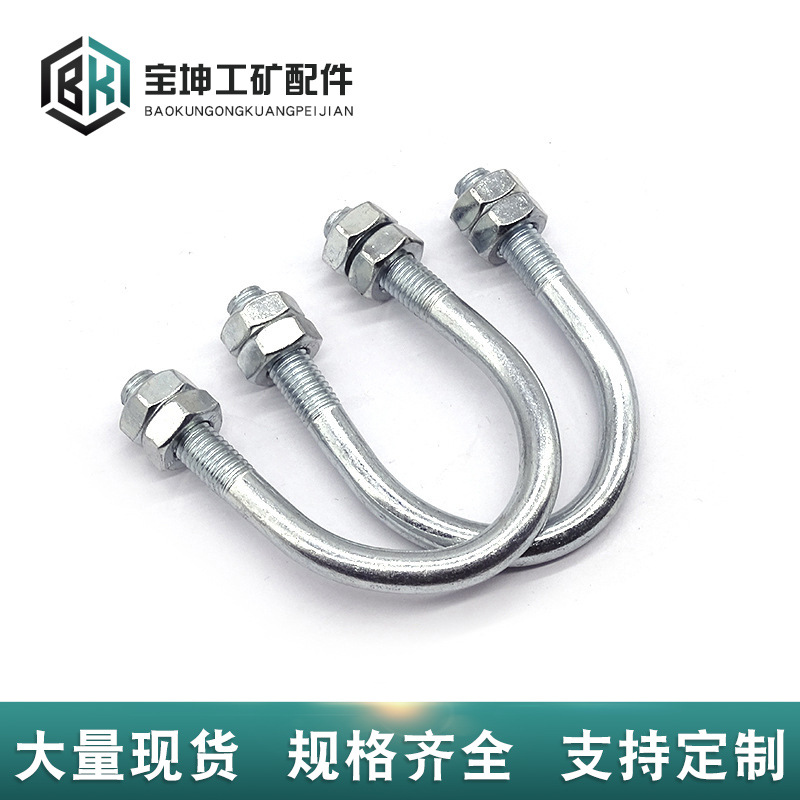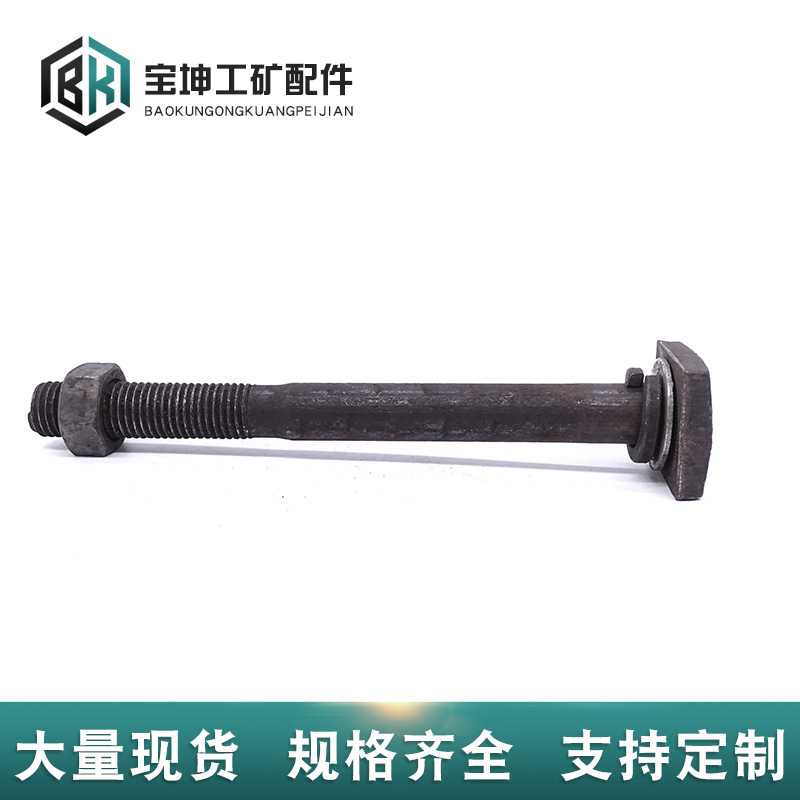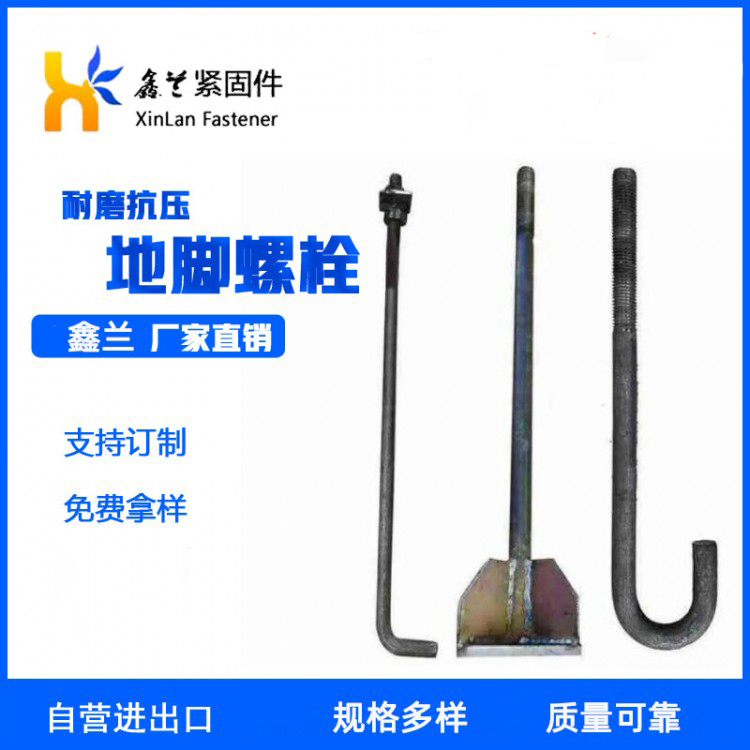



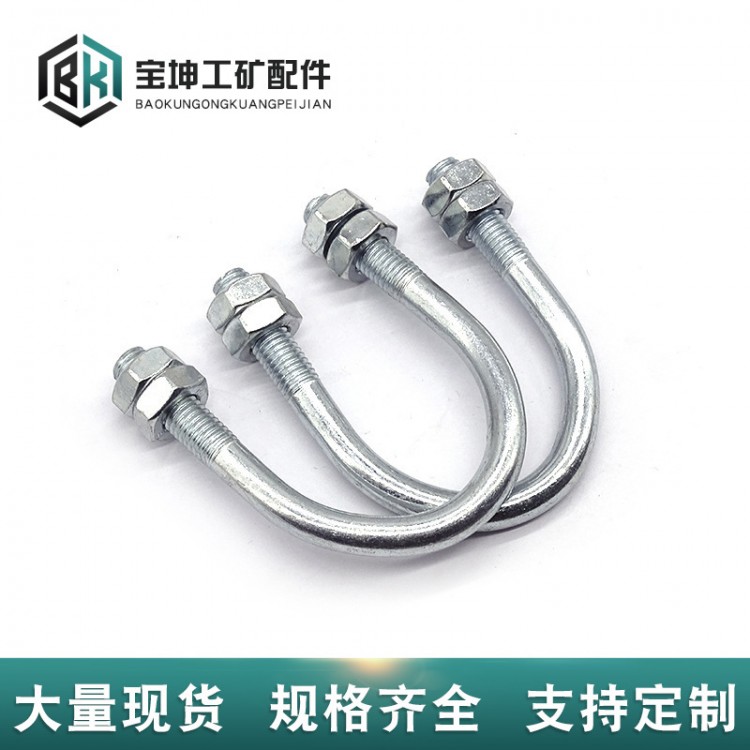
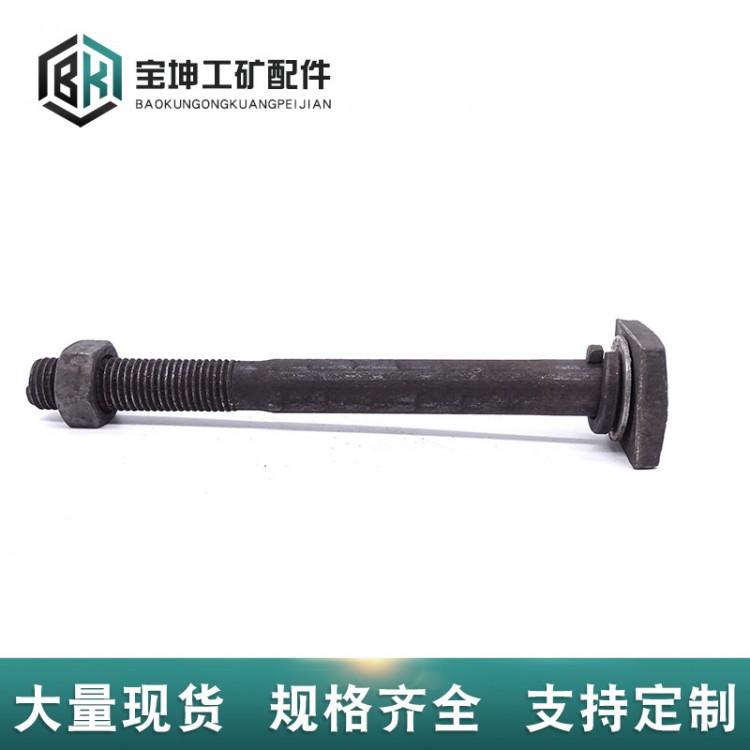


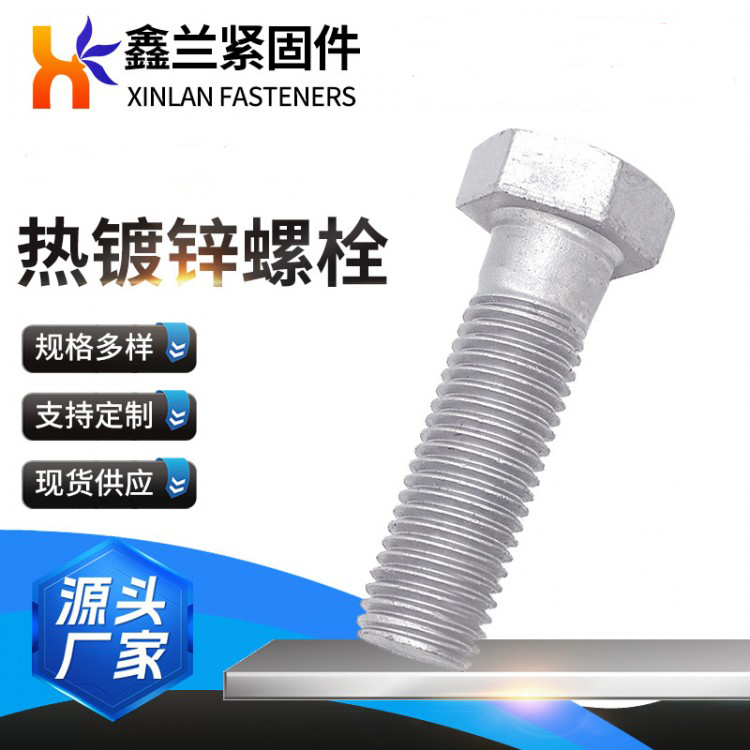





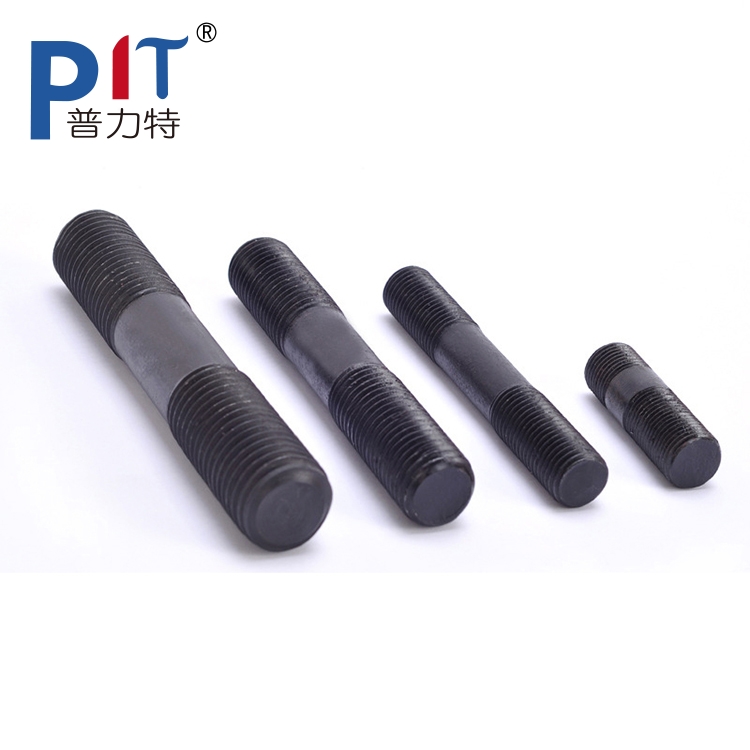

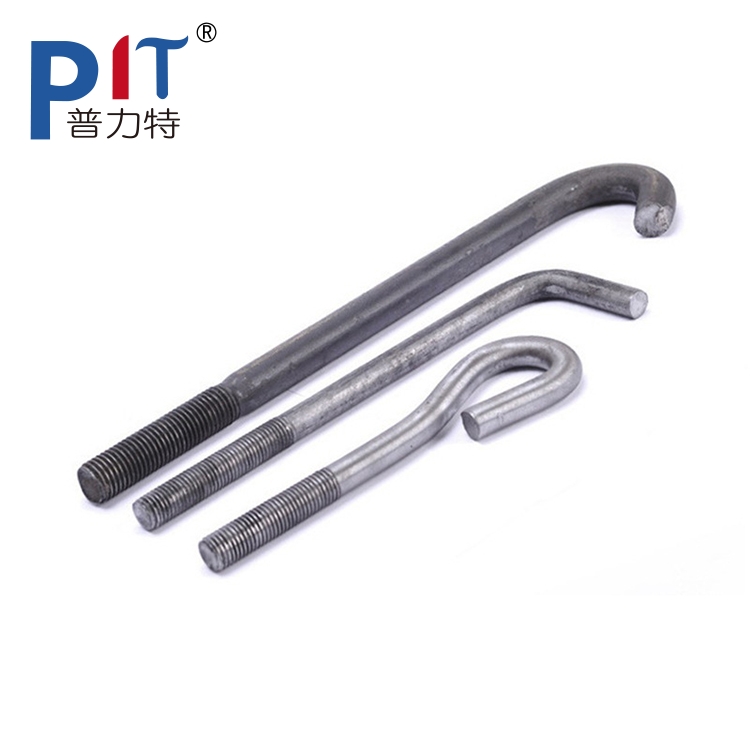
Mechanical components are installed on concrete foundations by embedding the J-shaped or L-shaped end of this bolt into the concrete.
The tensile capacity of the anchor bolts is equivalent to the tensile capacity of the round steel itself, which is calculated by multiplying the cross-sectional area by the allowable stress value (Q235B: 140MPa, 16Mn or Q345: 170MPa), representing the allowable tensile load capacity during design.
Foot bolts are typically made of Q235 steel, which is plain. Threaded steel (Q345) has higher strength and the threads for nuts are not as easy as the plain ones. For plain foot bolts, the burial depth is usually 25 times the bolt diameter, followed by a 90-degree bend hook of about 120mm in length. If the bolt diameter is very large (such as 45mm) and the burial depth is too deep, a square plate can be welded to the bolt end, essentially creating a larger head (though there are certain requirements). The burial depth and bend hook are both designed to ensure the friction between the bolt and the foundation, preventing the bolt from being pulled out and damaged.