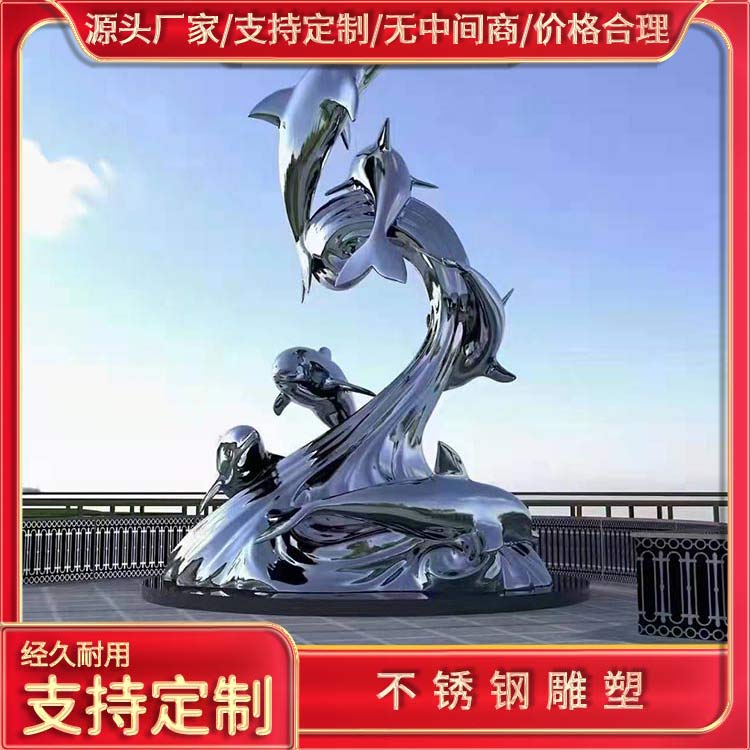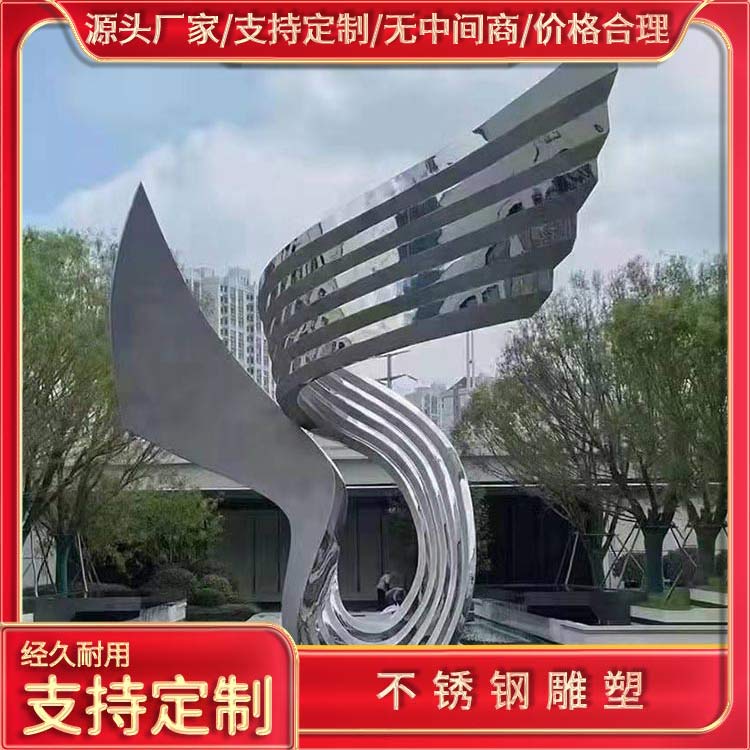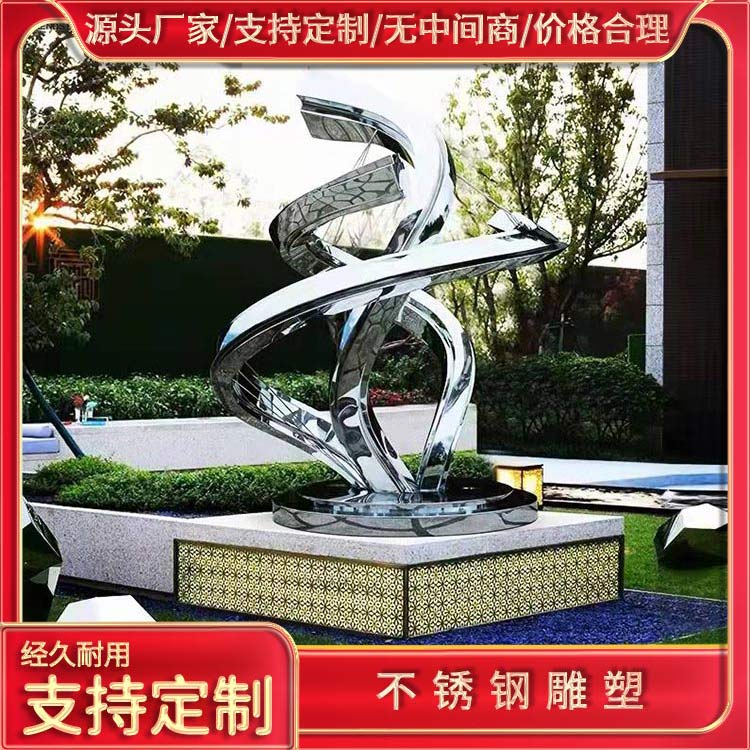


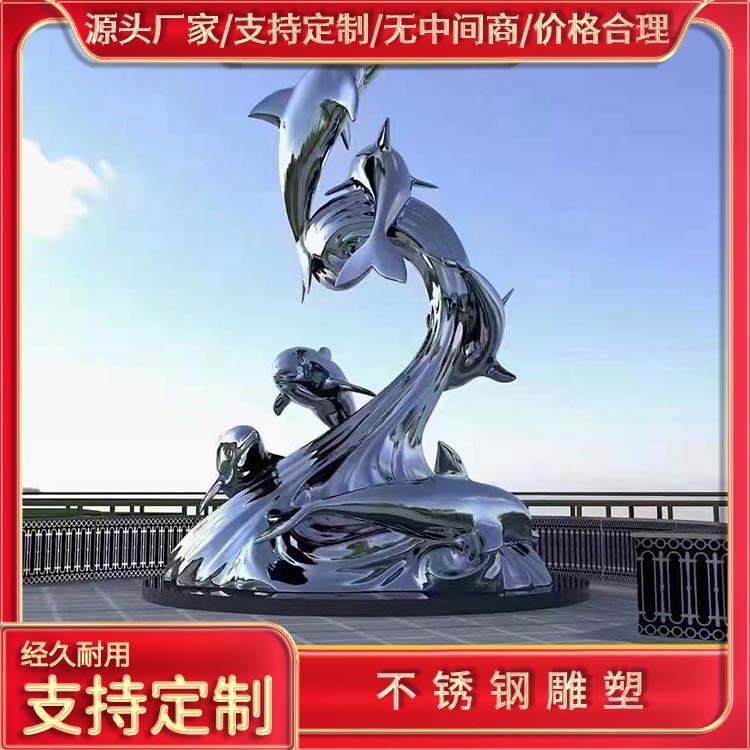
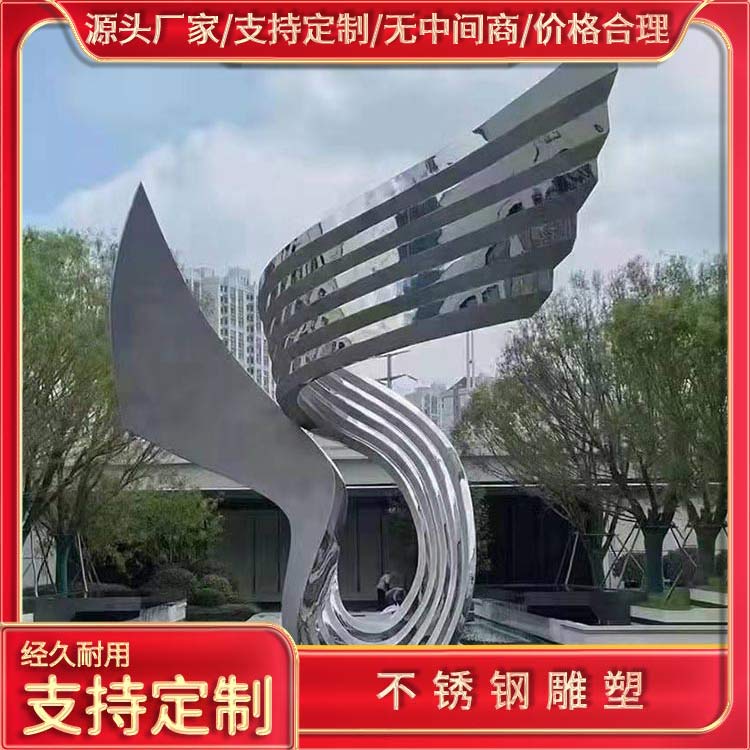
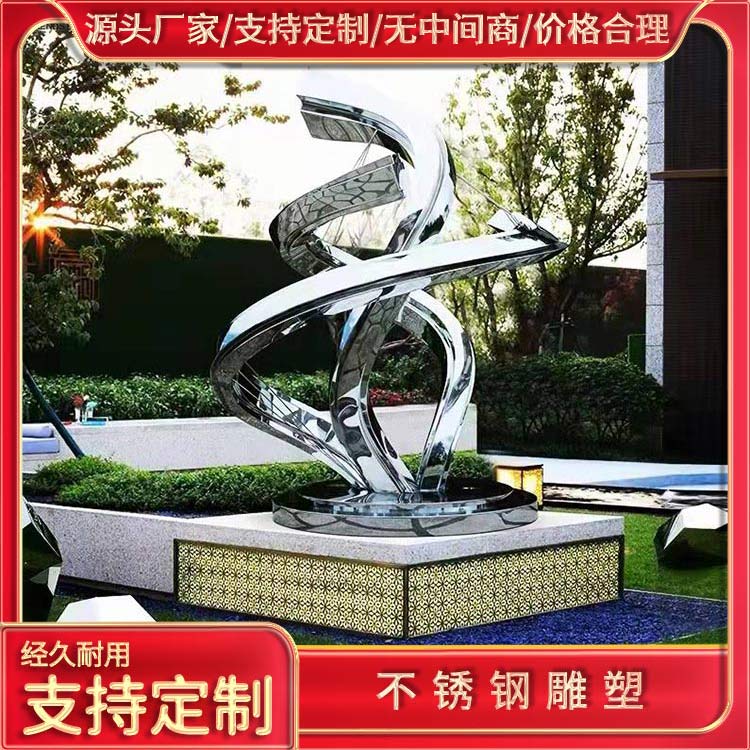


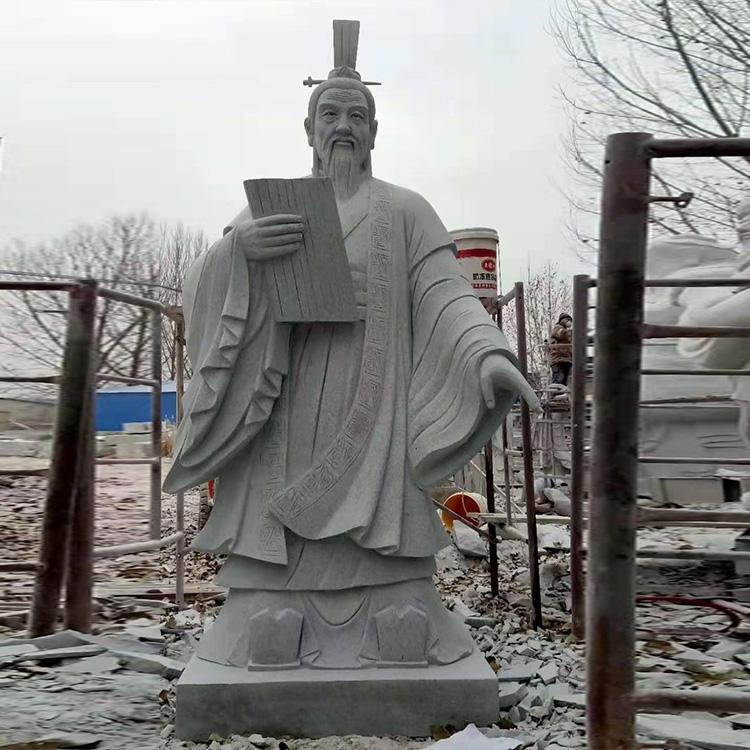
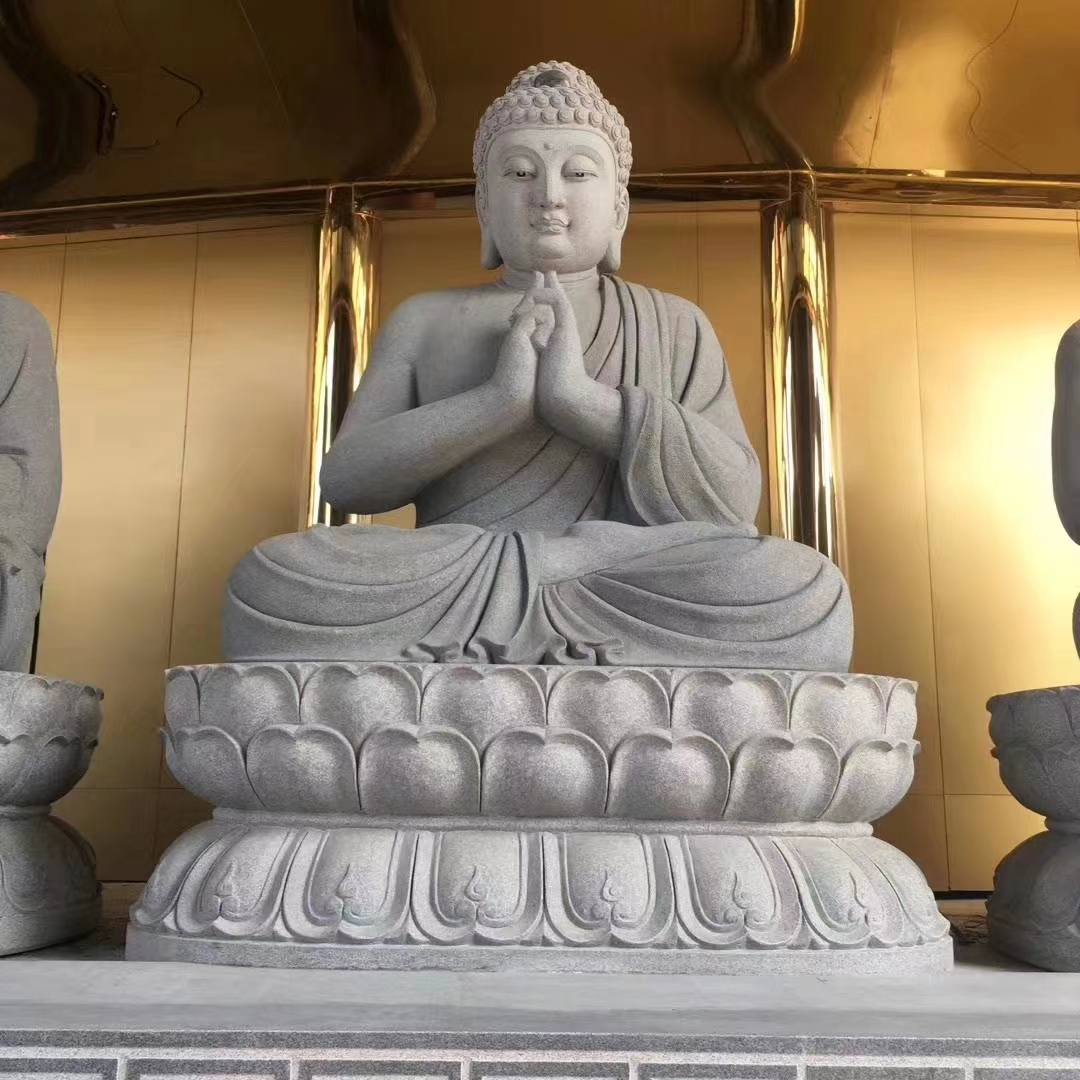
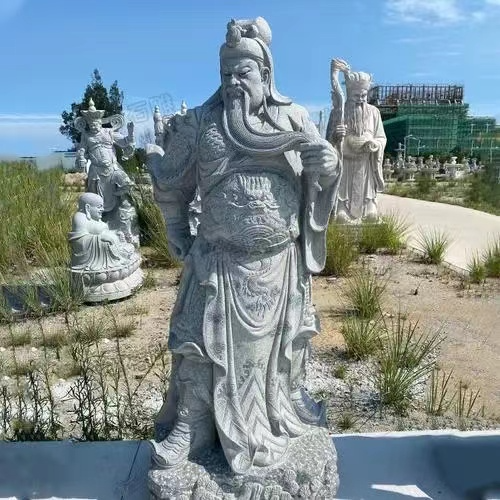
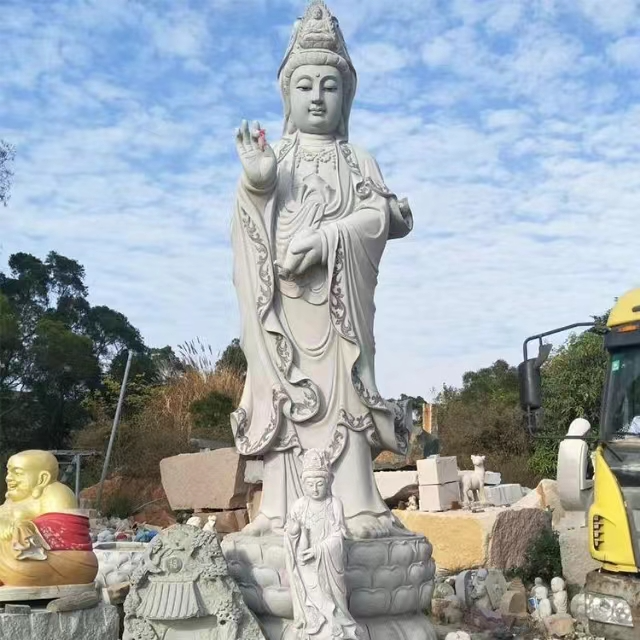
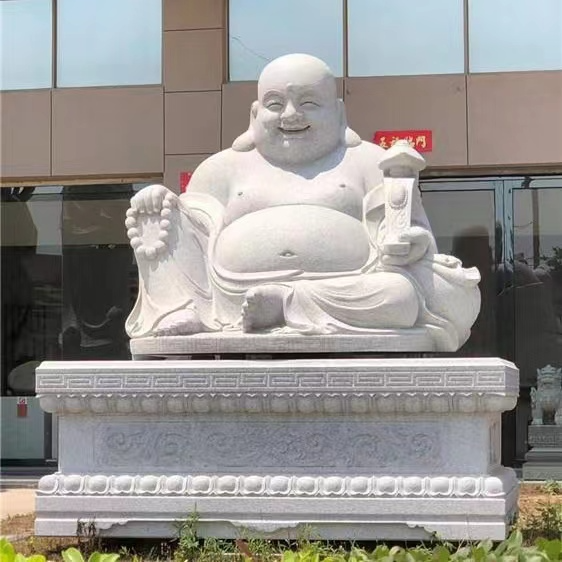






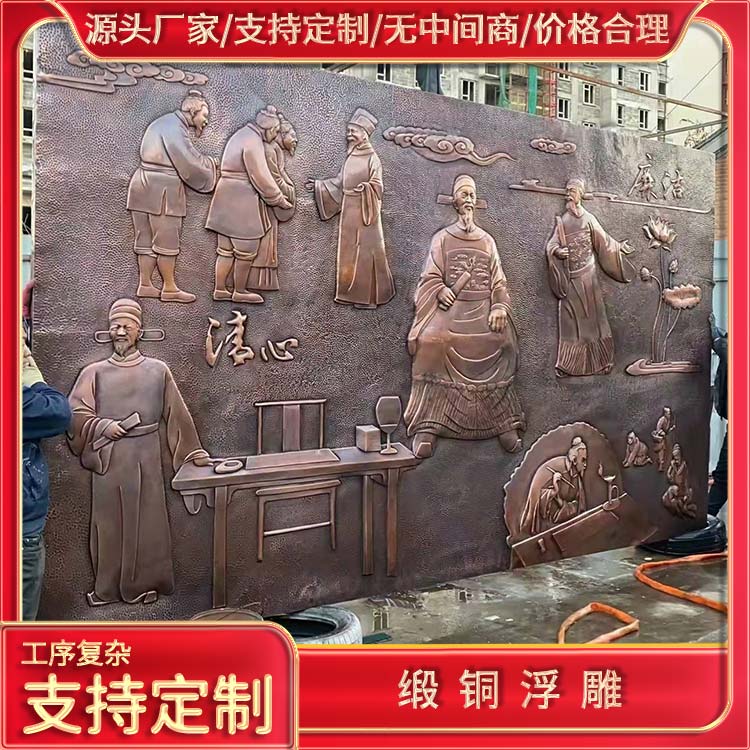



Stainless steel sculptures are a common type of urban sculpture. The material is resistant to corrosion from weak corrosive media such as air, steam, and water, as well as chemical侵蚀 from acids, alkalis, and salts. Due to the numerous advantages of stainless steel sculptures, many urban sculptures are made from this material. Production process of stainless steel sculptures: 1) Create clay models 2) Enlarge the small models to the same scale 3) Cast the clay models into hard material molds 4) Forge the models into stainless steel sculptures 5) Sand the sculptures multiple times 6) Spray fluorocarbon paint on the sculpture surface
Thickness:
Stainless steel sculptures typically come in thicknesses of 1.5mm, 2.0mm, or 3.0mm unless otherwise specified. Thicker sheets are more difficult to shape and are also more expensive.
Installation:
Generally, it is焊接 for durability, with the sculpture's frame welded to the pre-buried iron on the base, and rebar焊接 beneath the pre-buried iron. The length of the rebar and the size of the pre-buried iron are determined based on the sculpture's dimensions. For aesthetic purposes, typically after the sculpture is installed, the base is lined with marble or granite slabs.
Style:
Stainless steel sculptures come in various shapes, including geometric, round, and abstract designs, offering rich content and strong malleability.
Advantages:
1. Surface Treatment: The stainless steel sculpture itself is silver-white with a glossy finish. Different colors can be applied upon request, typically automotive paint. 2. Usage: This product is suitable for outdoor and indoor spaces such as parks, botanical gardens, gardens, residential areas, squares, shopping malls, hotels, inns, and clubs.
3. Advantages of stainless steel material: Resistant to rust, easy to clean, strong wind resistance, durable, and has become the mainstream of modern urban sculpture.