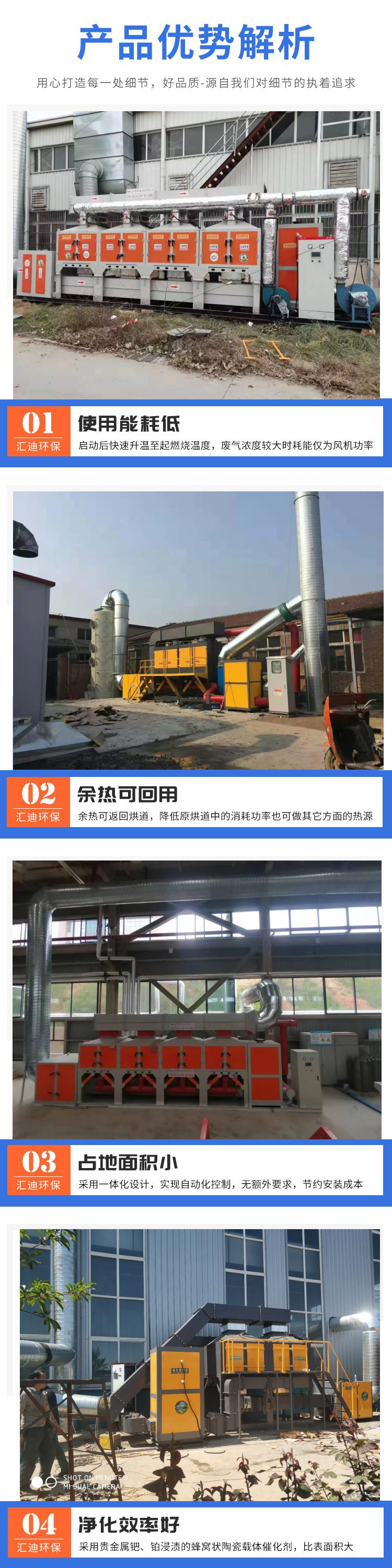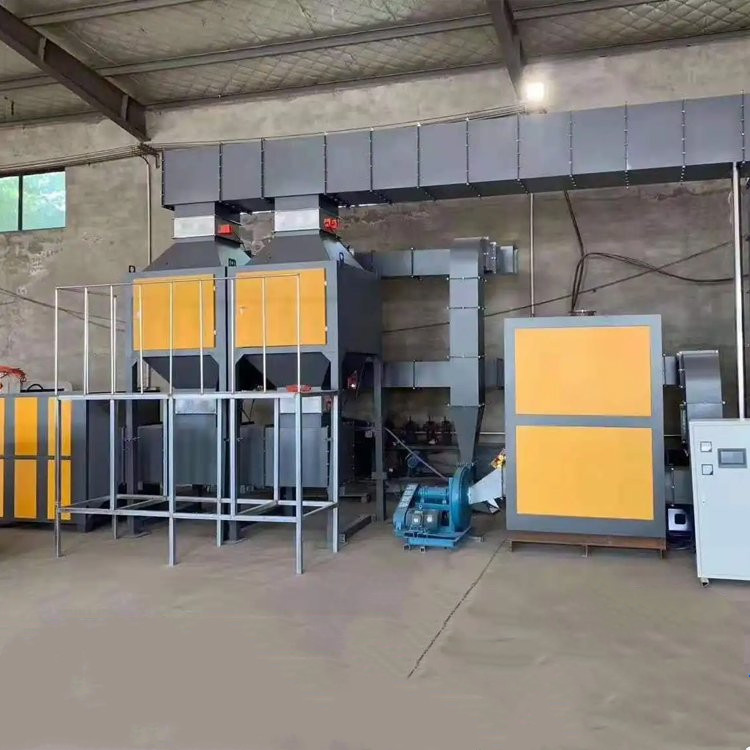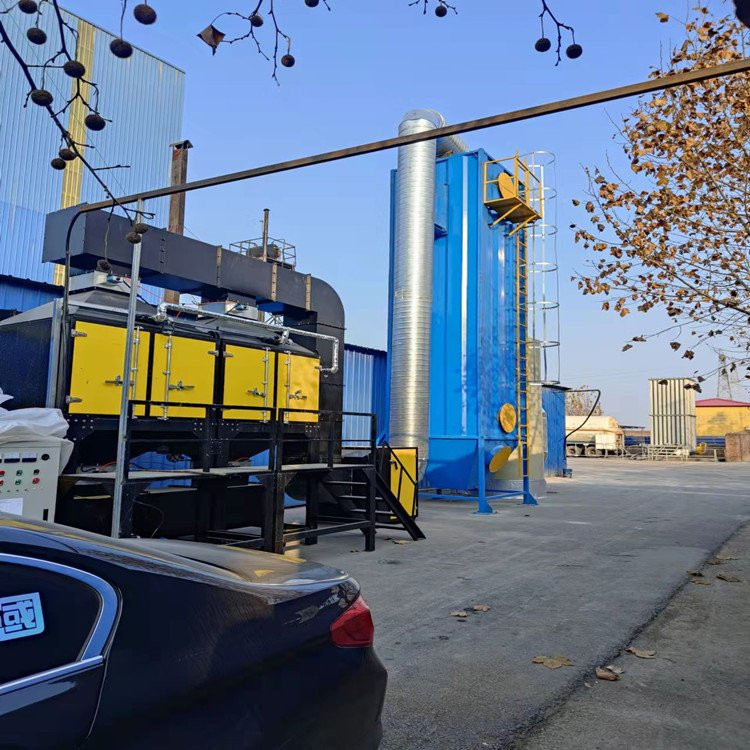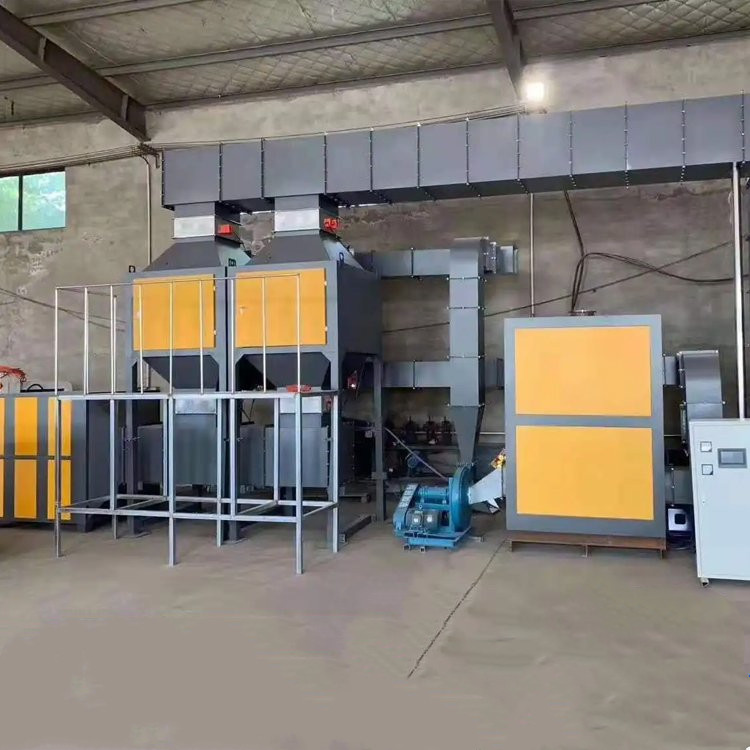

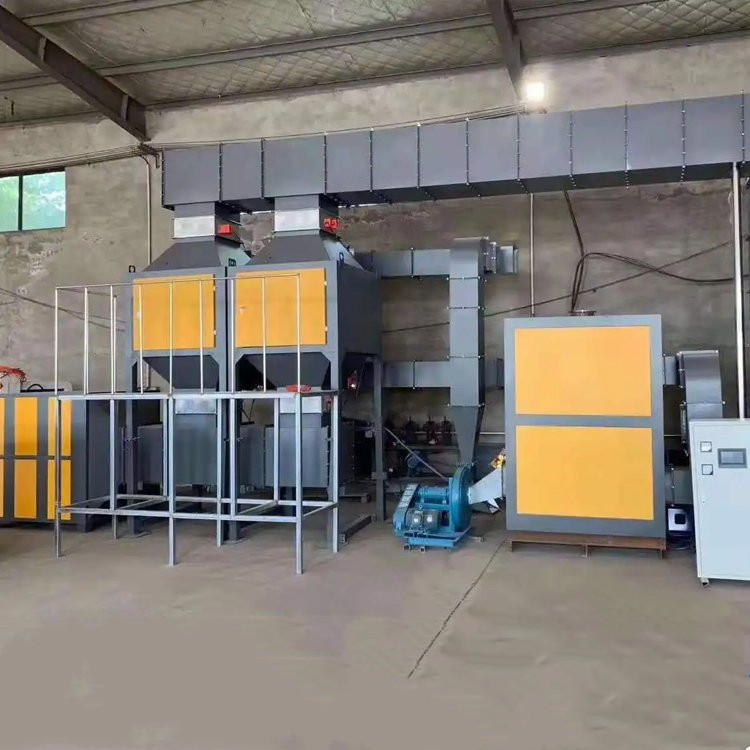








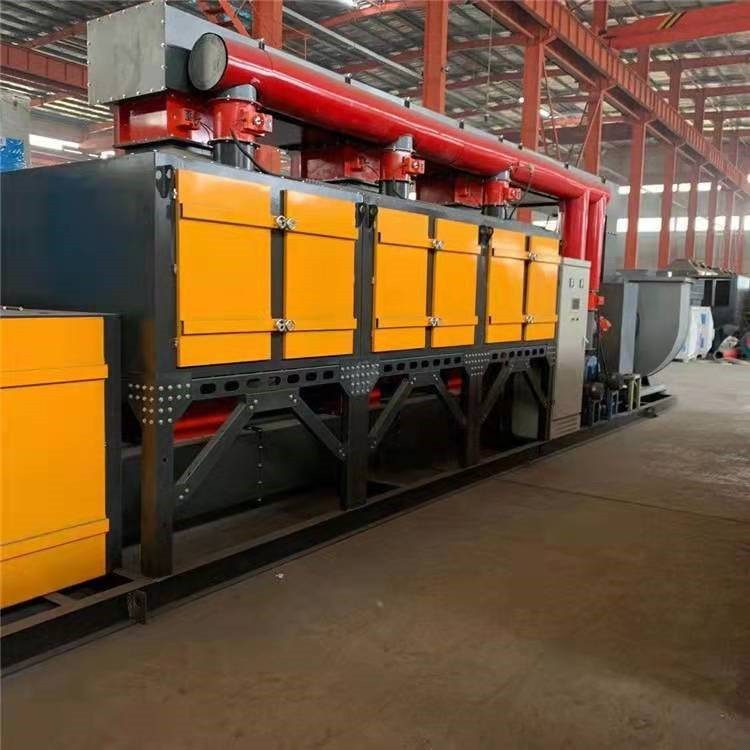
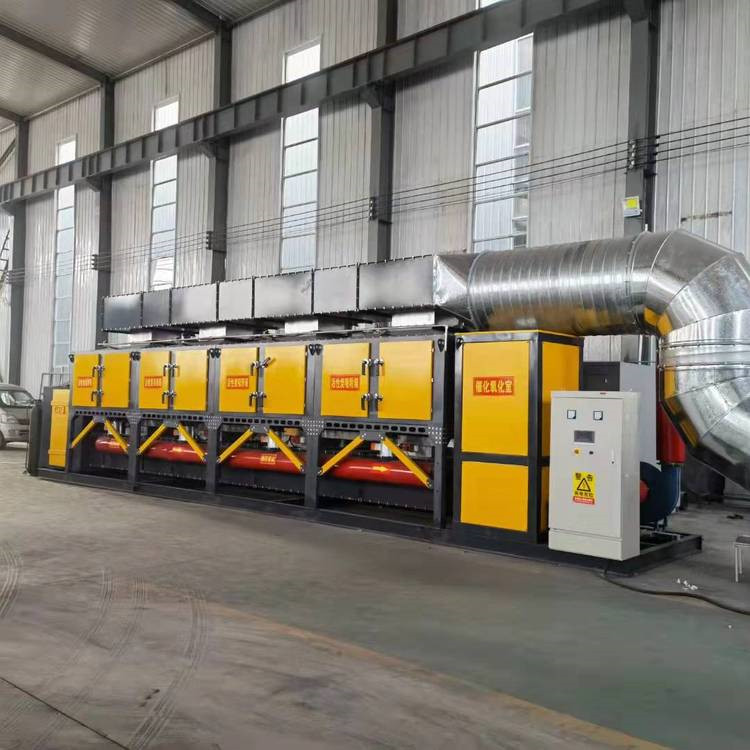
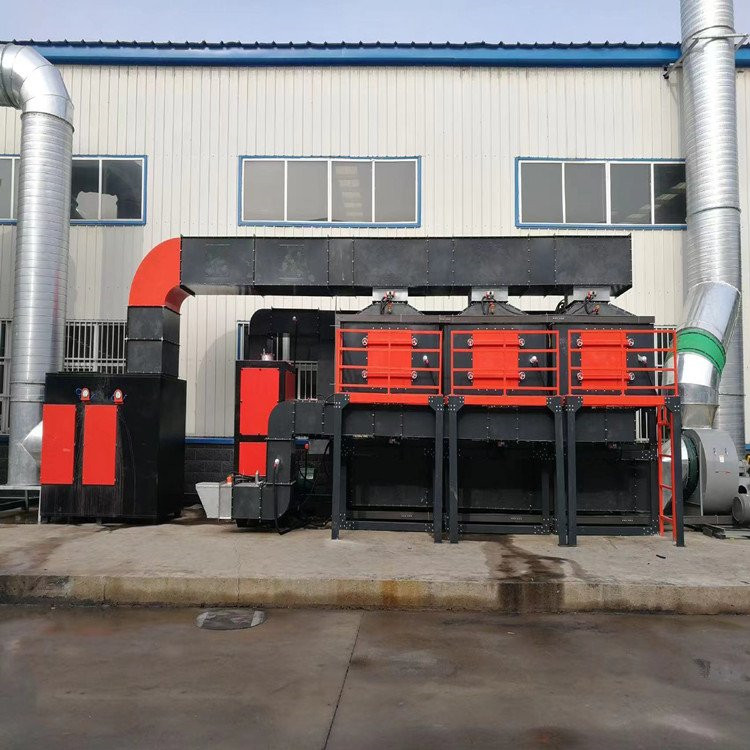
The catalytic combustion equipment mainly consists of a heat exchanger, combustion chamber, catalytic reactor, heat recovery system, and exhaust chimney for purifying flue gas. Its purification principle is that before entering the combustion chamber, the unpurified gas is preheated by the heat exchanger and sent to the combustion chamber, where it reaches the required reaction temperature. The oxidation reaction takes place in the catalytic reactor, and the purified flue gas releases some heat through the heat exchanger before being discharged into the atmosphere through the chimney.
Performance requirements for catalytic combustion equipment: Catalysts are the core of catalytic combustion methods, and a good catalyst must have high catalytic activity, good thermal stability, high strength, and long service life.
Catalytic combustion equipment is suitable for purifying toxic and harmful gases such as combustible gases and vapors. However, for toxic and harmful gases such as large amounts of dust particles and mist droplets, it is easy to cause blockage of the catalytic bed, leading to a decrease in catalytic activity and thus reducing purification efficiency. The catalytic combustion purification method is almost applicable to all industrial production processes that emit hydrocarbons or odorous compounds.
10000 air flow catalytic combustion equipment RCO catalytic combustion device combustion start-up process: When the control system is in standby mode, the equipment will receive a command input to start, and then enter the combustion operation state. The control system needs to check the above and then blow it once. The inverter output signal is used to control the rotation of the fan, because the air flow mainly decreases slowly from low speed to high speed and low speed. When fresh air blows through the disc combustion furnace, there is no residual gas in the furnace, and the ignition process is stable and reliable. The specific operation is that the frequency converter needs to be started initially, and then the PLC simulates the output signal to continuously increase the frequency of the frequency converter from the beginning, so as to reach the frequency after the corresponding time period, and then decrease to complete the frequency sweep. Let's go first. When the device sends out a fire signal, the high-voltage igniter will work normally, but it is also necessary to open the ignition pipe above the valve, and special attention should be paid to igniting small fires. This is because the ultraviolet sensor detects it and ignites it on a small flame, then opens the main air valve at this time. At this point on the catalytic combustion furnace plate, the flame is burned until it approaches the detected ignition temperature, and then the ignition valve is directly closed to complete the entire ignition process and enter the combustion adjustment stage.
Catalytic combustion equipment is a waste gas treatment device that uses catalysts to oxidize and decompose combustible substances in exhaust gas at lower temperatures. Catalytic combustion equipment is suitable for the treatment and purification of continuous exhaust gas. If it works intermittently, not only does it require energy consumption for each preheating, but the reaction heat cannot be recovered and reused, resulting in significant energy waste.