







Brief introduction:
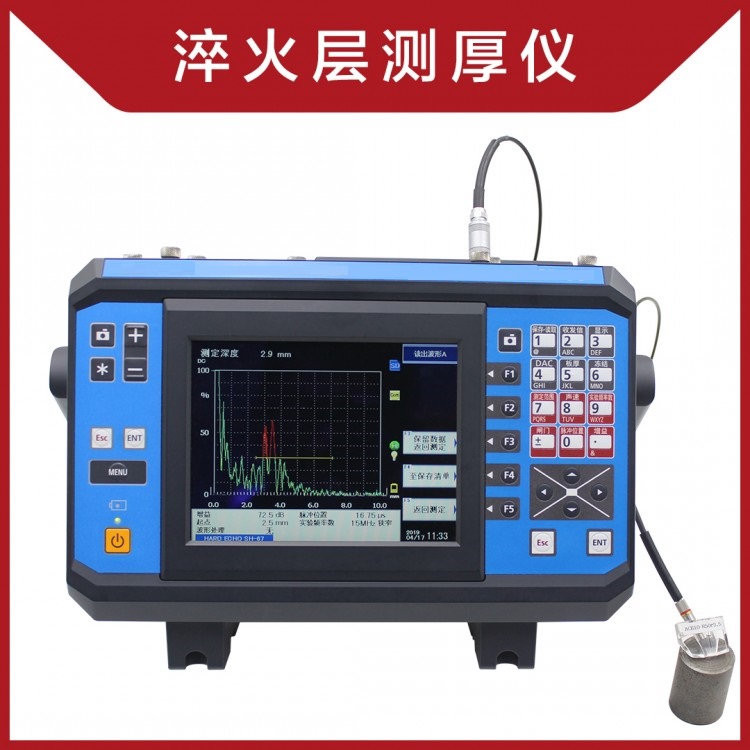
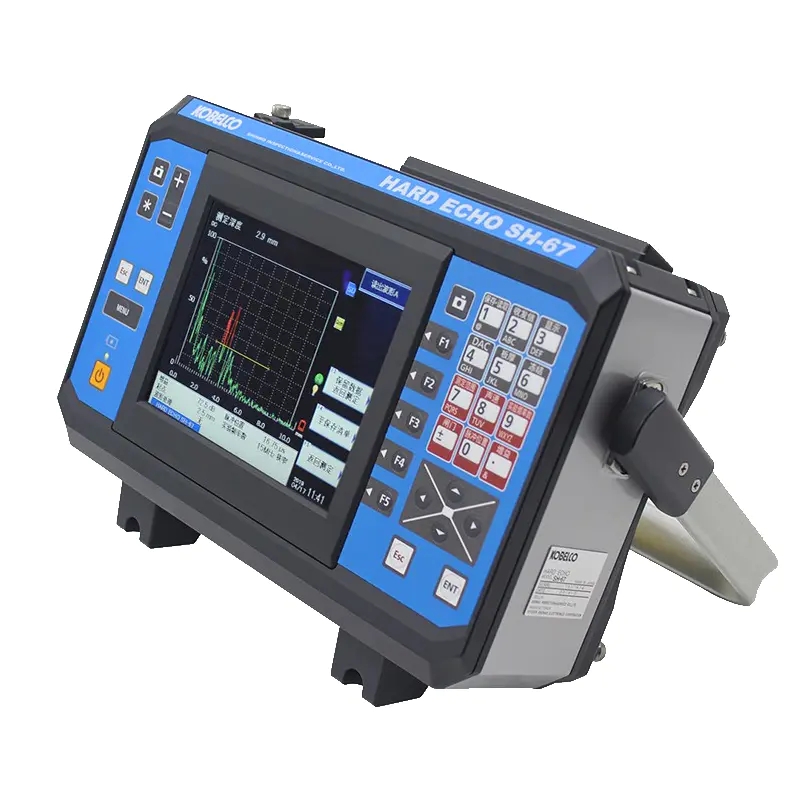
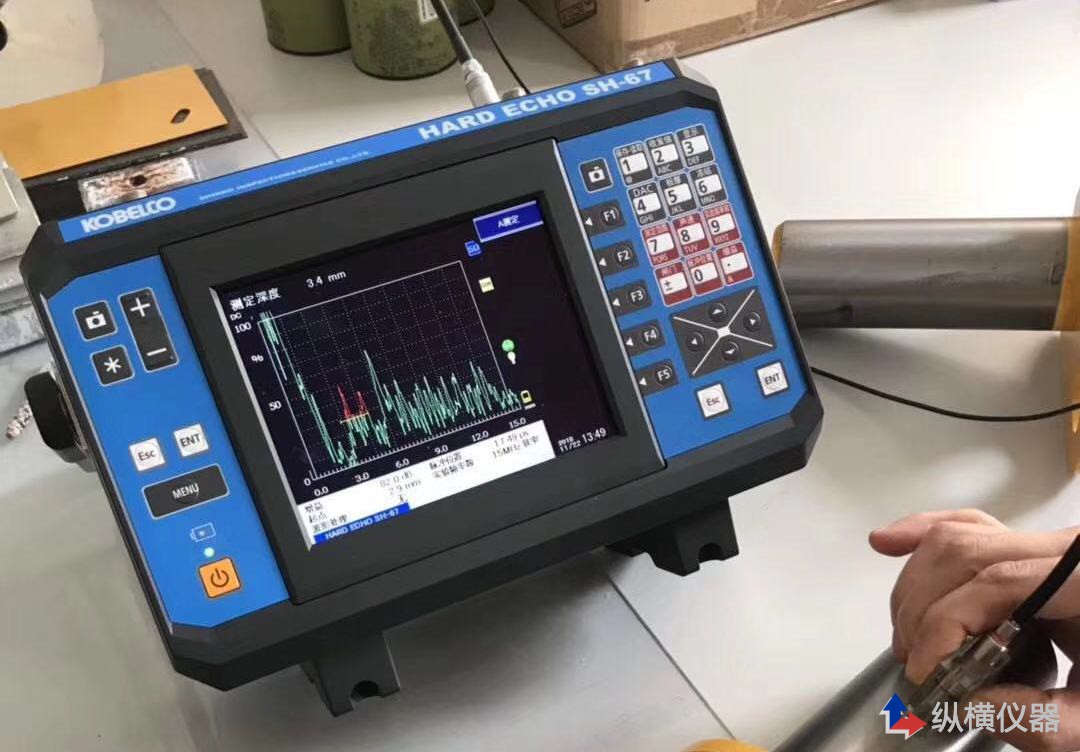
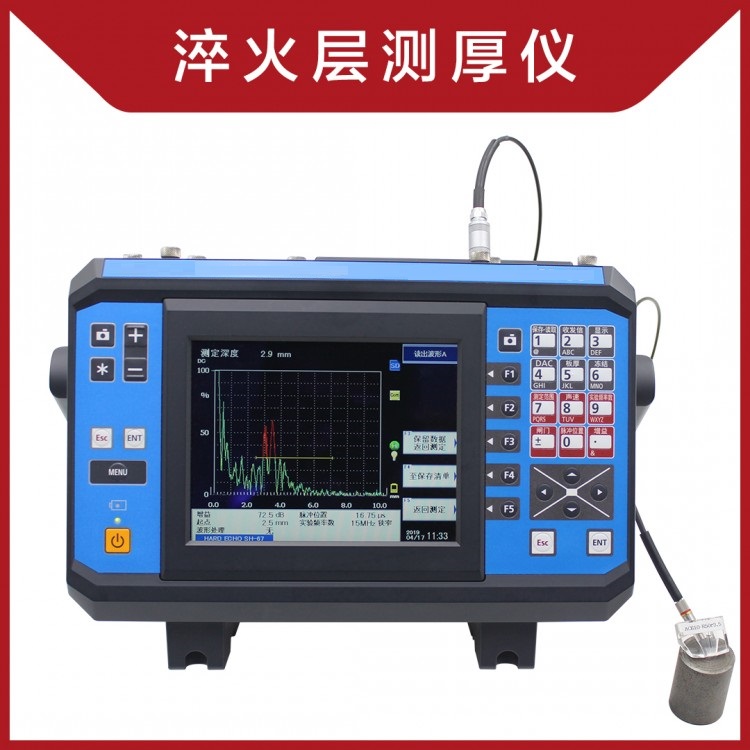
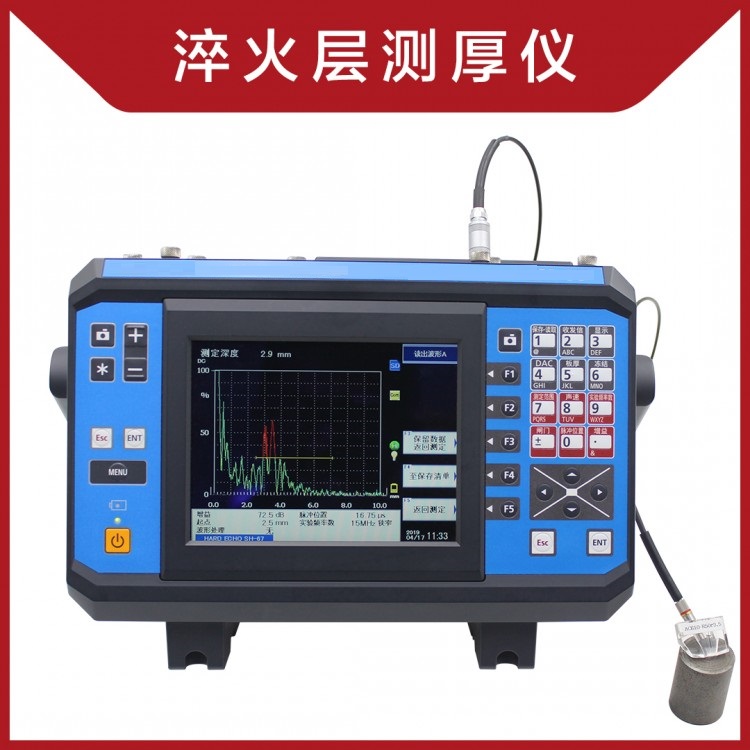
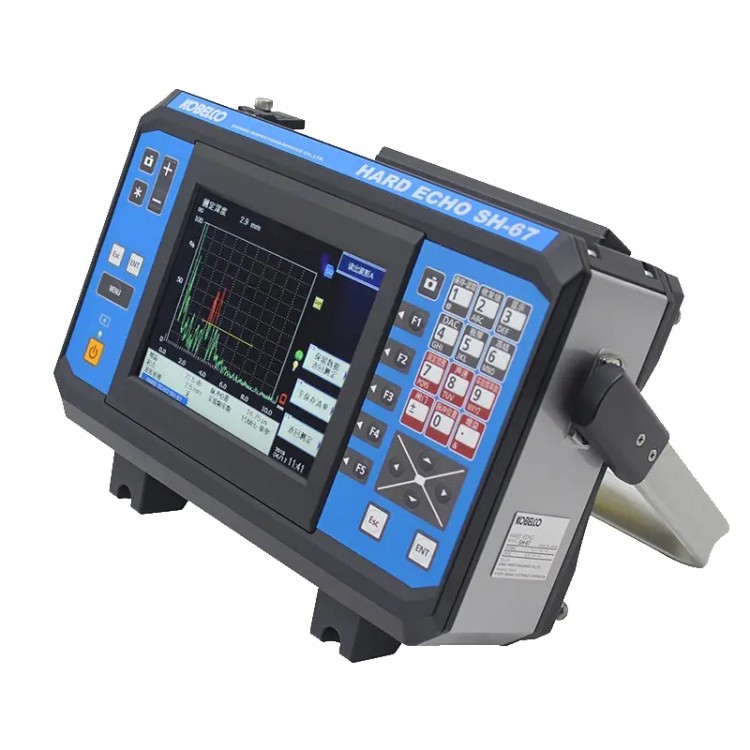
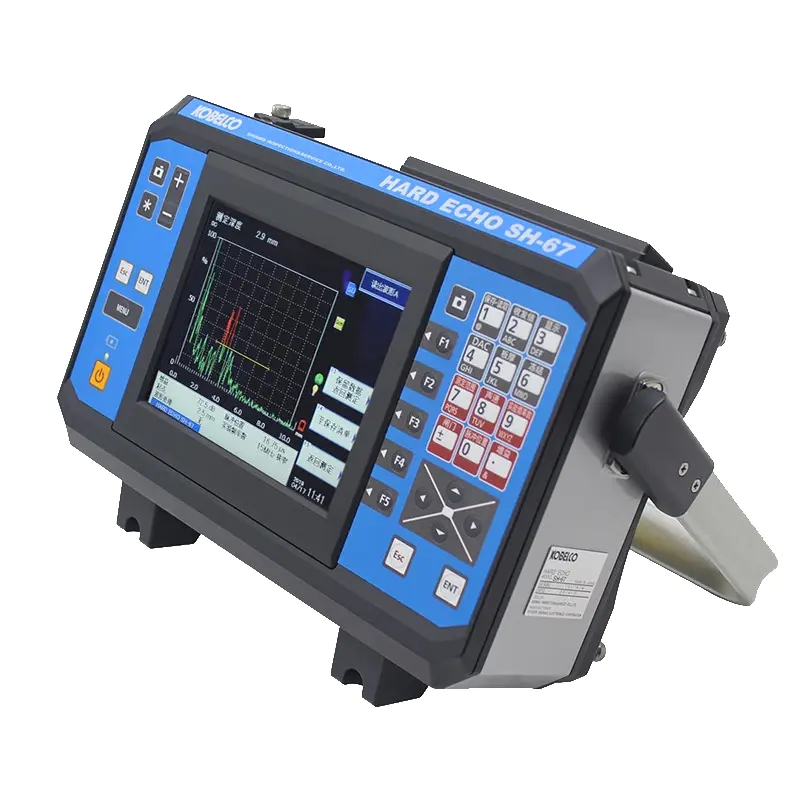
The Japanese Kobe Steel SH-67 quenching hardening layer depth tester is mainly used to detect the depth of induction hardening layers on the surface of various steel materials Instrument features:
① Wide detection range of 0.7~22mm (confirmation of detection required for 15mm and above)
② The device is compact and lightweight, weighing 3.5 kilograms, making it easy to operate on site
③ Simultaneously equipped with both A-scan and B-ultrasound detection methods
④ High detection accuracy, with a resolution of 0.1mm, using the Japanese Kobe Steel SH-67 quenching hardening layer depth tester.
Japanese Kobe Steel SH-67 Quenching and Hardening Layer Depth Measuring Instrument
2、 Technical requirements and main parameter specifications:
1.Hardened layer thickness gaugeHARD ECHO SH-67 Performance and technical specifications of the instrument:
2.Explanation of the depth detection range of the hardened layer:
detection depth0.7~15mmIt can only detect the depth of the surface hardening layer, but cannot detect the hardness of the hardening layer. detection0.7~2mmThe thickness of the hardened layer has certain requirements for surface roughness. General RequirementsRa≤0.8um.
3.Description of the shape of the inspected part:
In principle, different types of workpieces should use different fixtures, but for workpieces with similar or similar shapes, one fixture can be used for measurement. If the gear module is8All the gears mentioned above can be measured by selecting a set of tooth surface and root retainers. Diameter greater than150mmThe above circular rings only require the use of small grooves for their inner and outer racewaysRgreater than5(Including inner and outer raceways)Each holder can measure all tracks.
4.Detection accuracy:(1).Repeated detection accuracy at the same location:±0.1mm
(2).Determination resolution:0.1mm
5.Material description of the inspected parts:
All steel materials with surface deep hardening layers can be tested by induction hardening,Material of the tested part:42CrMo、50Mn、40Cr、45、 40CrNiMoThe thickness of the surface induction hardening layer of carbon steel (except for special quenching processes and special materials). Testing for carburizing and nitriding treatment is relatively difficult.
6Description of surface roughness requirements for the tested parts:
There are no special requirements for detecting the surface roughness of the parts, and the rough turning surface, milling tooth surface, and grinding surface can all be accurately detected.
7.Testing Qualification Description:
The user of the thickness gauge does not require professional qualifications, and the general staff can operate it after training. However, those who specialize in heat treatment or have experience in ultrasonic wave operation will be more likely to quickly master the operation method.
8.Data output instructions: Directly output the depth value of the hardened layer, and have storage and export printing functions.
9.On site applicability description of the instrument:
The instrument has a small volume (external specifications:110(D)×180(H)×286(W)), lightweight about3.5KGTherefore, it is easy to carry, fast to detect, dustproof and waterproof, suitable for on-site and laboratory testing needs.
10. Instructions for debugging the instrument before testing:
After calibration with only one test block, it is possible to detect parts of different sizes and shapes.Standard samples of parts that do not require testing.
12. Operating System Support Instructions:supportWindows 2000/XP,The interface is available in Japanese, English, and Chinese. We can provide one set of instruction manuals in both Chinese and English.
13. The instrument adopts a fully sealed design and has functions such as shock resistance, dust prevention, and waterproofing.
Japanese Steel CorporationSH-67 Depth verification of quenched and hardened layer
14Working environment conditions:
1)Working temperature0~45℃,Storage temperature:-20℃~65℃Relative humidity less than95%.
2)Power supply220±10%, frequency50/60Hz.
3)The device has dual functions of AC and DC, and a lithium battery can provide DC power for a continuous working time of not less than4hour.
4)No noise is generated during equipment operation.