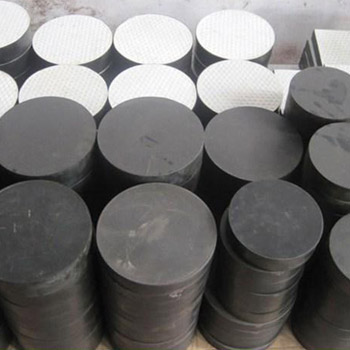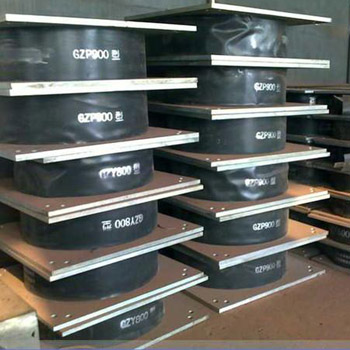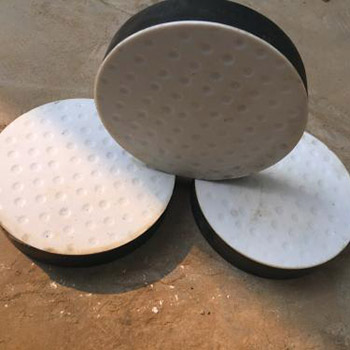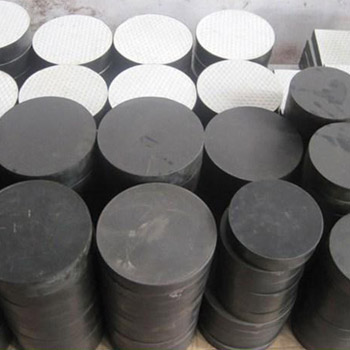

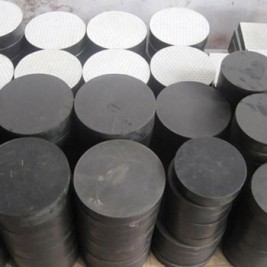
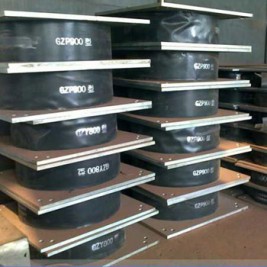
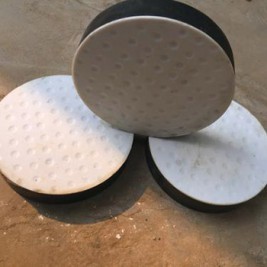












Introduction: Bearing vibration and seismic loads during operation
Material: Rubber
Suggested retail price: 20
Selection and quality assessment of rubber bearings:
Quality factors.
1. The adhesive of the rubber used is the main factor affecting the quality of the plate rubber bearings. Currently, due to fierce market competition, suppliers of rectangular rubber bearings face significant price pressure from customers. Many rubber bearing manufacturers reduce costs by using inferior rubber. This can be seen from the appearance. Good rubber has a shiny and dark surface, and can feel a little elasticity when pressed with fingers. Rubber with poor quality has a dull and dull surface. However, the true quality of the adhesive requires experimentation. Simply judging from aspects such as compressive elastic modulus and shear elastic modulus cannot detect quality issues. Generally, intermediate adhesive layer film testing is required to detect problems.
2. Internal steel plate: The steel plate is the guarantee of the bearing capacity of the plate rubber support, so the thickness of the steel plate must meet the standard. The rectangular rubber support must be made of finished plates, and bending plates must be avoided. Rust removal and sandblasting must be done in the treatment to ensure the adhesion between the rubber and the steel plate. (Some defective manufacturers use scrap iron sheets instead of thick steel plates, or replace thick steel plates with thin ones, resulting in insufficient storage capacity of product strength and easy occurrence of serious problems. Currently, some places require testing for ultimate compressive strength in order to discover this quality defect.)
3. Production process: The production of laminated rubber bearings has not yet been fully automated, and the steps before vulcanization are mostly manual operations. The quality of processes such as cutting, laminating, etc. is closely related to the proficiency of workers. The vulcanization time and temperature control on the vulcanizing machine are also very important. The vulcanization time of rubber bearings of different specifications is different. If the corresponding vulcanization time cannot be reached, it will form entrapment, and the rubber inside will not be fully vulcanized, affecting product quality.
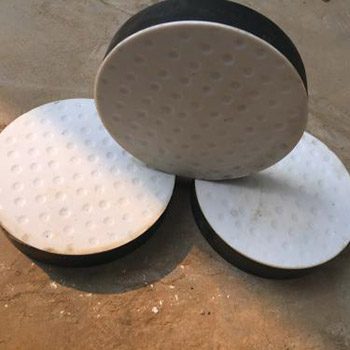
The factors that affect the quality of laminated rubber bearings are as follows:
The rubber gel used in highway plate rubber bearings is the main factor affecting the quality of plate rubber bearings. Currently, due to fierce market competition and strong price pressure from customers, many rubber bearing manufacturers reduce costs by using inferior rubber. This can be seen from the appearance. Good rubber has a shiny and dark surface, and can feel a little elasticity when pressed with fingers. Rubber with poor quality, such as rectangular rubber bearings, has a rough surface and no luster. But the true quality of the glue needs to be tested, judging from aspects such as compressive elastic modulus and shear elastic modulus.