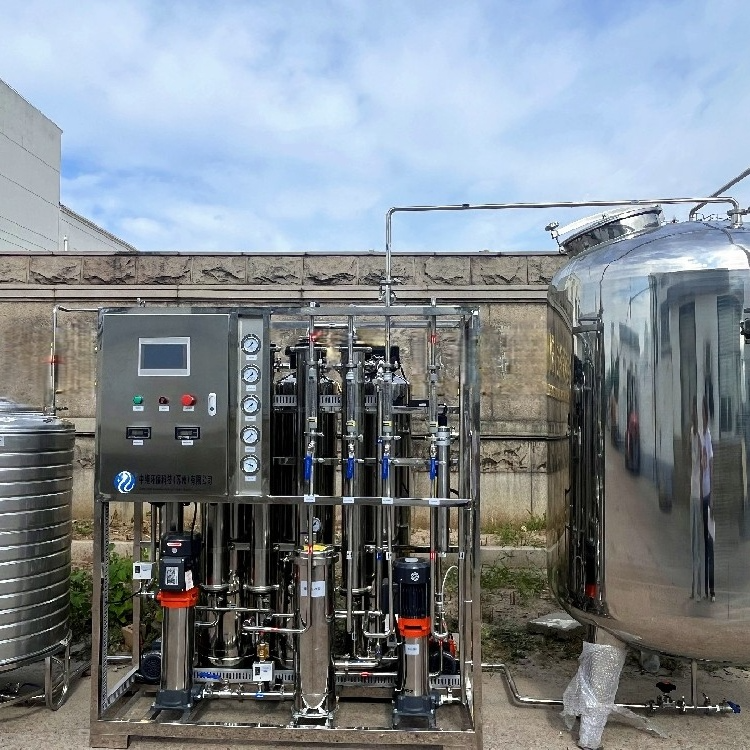
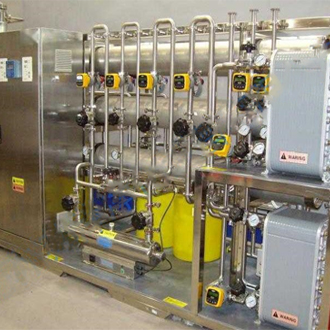
Pure Water Equipment, Ultra-Pure Water Equipment, Recycle...

Maintaining pH in RO systems is not just about adjusting acidity or alkalinity; it's a crucial strategy that spans pretreatment, membrane operation, and post-treatment, directly impacting membrane performance, scaling tendencies, system recovery rates, and the final water quality. The core principle of pH control is to manipulate the chemical equilibrium and physical state of these key substances by adjusting the concentration of hydrogen ions, thereby optimizing the membrane separation process, preventing membrane fouling and scaling, and ultimately achieving stable and efficient system operation.
Pre-treatment Stage: Creating a "Friendly" Inflow Environment for RO Membranes
1. Objective: To protect RO membranes from damage caused by colloids, particulates, microorganisms, oxidizers, and scaling of insoluble salts. pH adjustment primarily serves to aid in coagulation/flocculation and scaling tendency control during this stage.
2. Control Logic and Principles:
Optimizing Coagulation/Flocculation: The electrical properties and efficiency of the coagulant added (such as aluminum salts, iron salts) during the hydrolysis process to form charged flocs are significantly affected by pH. There is a pH range (usually 6-8 for aluminum salts, 5.5-8.5 for iron salts) within which:
The hydrolyzed products carry the most positive charge, effectively neutralizing the negative charge of colloidal particles in water (charge neutralization). The resulting flocs (flocculants) are dense and exhibit excellent sedimentation or filtration properties.
The principle is that pH affects the hydrolysis pathway, product form (monomers, poly-nuclear hydroxide complexes, amorphous precipitates), and surface charge of metal salts. Deviation from pH can lead to loose flocs, slow sedimentation, or residual dissolved metals (which may contaminate the RO membrane).
3. Inhibit the scaling tendency of calcium carbonate
Principle: The presence of HCO3- and CO32-With CO2Our carbonic acid balance system. Lowering the incoming water pH (acidification) promotes the following reaction to proceed to the right:
CO32- + H+ =HCO3-
HCO3- + H+ = H2CO3 =CO2 + H2O
Effect: Treatment of scaling-prone carbonate ions (CO3)2-Converted into non-scaling bicarbonate ions (HCO3-) and carbon dioxide (CO2) that can be removed subsequently.2Significantly reduce the Langlier Saturation Index (LSI) or the Steve and David Saturation Index (S&DSI), enabling the system to operate at higher recovery rates without precipitating CaCO3.3No Chinese content provided.
Acidifying Agent Selection: Typically, sulfuric acid (H₂SO₄) is used...2SO4Please consider the SO4.2-Or Cl-Subsequent impacts of the introduction (such as calcium sulfate scaling tendency, corrosiveness, and effects on ion exchange resins, etc.).


b2b.china9.net © Zhongshang 114 Hebei Network Technology Co., Ltd.Address: Room 6009, Oriental New World Center, No.118 East Zhongshan Road, Qiaoxi District, Shijiazhuang City, Hebei ProvincePlatform Service Hotline: 4006299930