


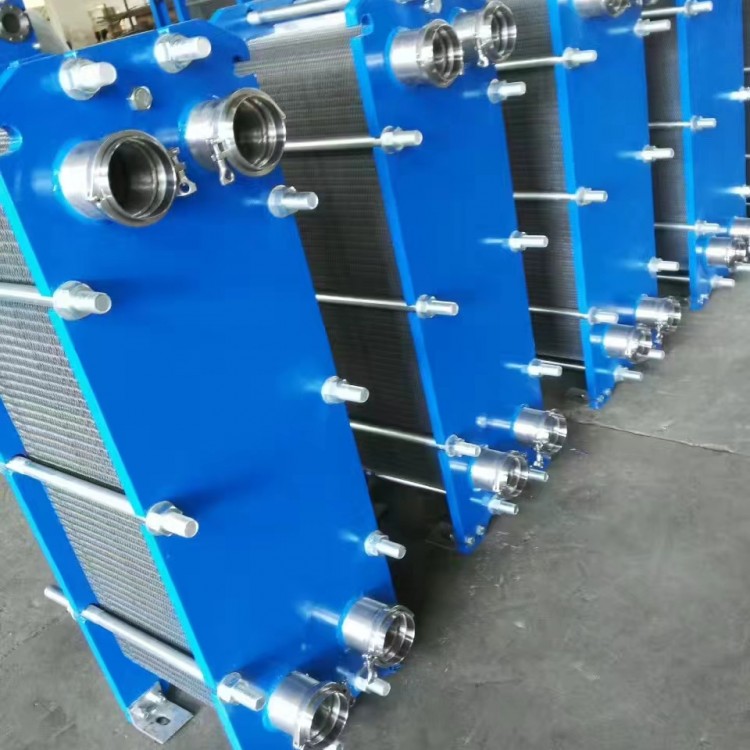


Tube-in-tube coolerCleaning:
1. Physical Cleaning Methods: Fixed tube sheet types can be cleaned with a pump brush, while for pull-out core types, such as floating head types, the tube bundles can be removed for cleaning. 2. Chemical Cleaning: When scale changes from loose to dense and hard, mechanical cleaning methods are no longer effective. Acid cleaning is then recommended. Hydrochloric acid can easily dissolve calcium carbonate and magnesium carbonate scale without preheating, so the acid cleaning solution is typically a room temperature hydrochloric acid solution. Although acid cleaning can effectively loosen scale and restore the normal state of the cooler surface, hydrochloric acid is corrosive to copper tubes. To protect the cooler tube walls from erosion by hydrochloric acid, additives must be added to the acid cleaning solution, which are substances that strongly delay the metal dissolution process. The additives we use arePhenyltriazoleBC-801 water stabilizer, with a usage concentration of around 3%. According to experience, if mechanical cleaning is performed on time, acid washing can be carried out once every 2a-3a; otherwise, it is necessary to perform acid washing once a year.
1. Tube-type coolers utilize bare tubes (unfinned) for heat transfer, featuring high surface heat transfer coefficient and strong anti-pollution capability.
2. The tube of the shell-and-tube cooler is made of copper and is processed into finned heat exchangers, offering a compact product with a large heat exchange area.
3. Spiral-shaped guide vanes in the tube-type cooler ensure a continuous and uniform spiral flow of the cooled liquid, overcoming the heat exchange efficiency issues caused by the baffle plates in a cross-flow design.

4. Tubular coolers use胀管式封口, overcoming adverse changes caused by high-temperature welding of materials.
5. Tube-type coolers feature excellent structural performance, stable sealing, high heat transfer efficiency, compact structure, and minimal floor space.
