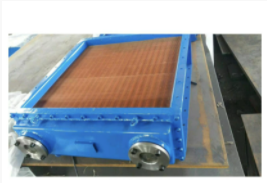
In plate heat exchangers, since different media involved in the heat exchange can be corrosive to the corresponding plate materials, it is crucial to select the appropriate plate material based on the specific heat exchange medium.
904L, SUS890L stainless steel
This is a high-value Austenitic stainless steel that balances cost and corrosion resistance, offering excellent corrosion resistance, particularly suitable for common acids like sulfuric and phosphoric acids, as well as halides (including Cl- and F-). Due to its higher content of Cr, Ni, and Mo, it boasts good resistance to stress corrosion, pitting, and crevice corrosion. It is applicable in chlorinated media conditions.
2: 254 SMO High-Strength Stainless Steel
Ultra-low carbon high-grade stainless steel, improved by increasing Mo content for the 316 type, boasts excellent resistance to chloride pitting and crevice corrosion, suitable for mediums such as saltwater and inorganic acids that cannot use 316 type.
Three: Titanium
Non-alloyed titanium is lightweight with a density of 4.51, capable of naturally forming a passivation protective film (Ti2O3), and exhibits "self-healing" properties if damaged, making it more corrosion-resistant than stainless steel. It is a typical material suitable for chloride-containing media (Cl- concentration > 200mg/L, temperature ≤ 130℃). It is actually corrosion-free in seawater and other chloride solutions (such as CaCl2) at temperatures not exceeding 120℃. Generally, it can be used in seawater below 135℃ and saltwater solutions (NaCl) of various concentrations below 165℃.
Titanium exhibits excellent corrosion resistance in organic acids (such as concentrated nitric acid, concentrated carbonic acid, etc.) below their boiling points and in dilute alkaline solutions.
Titanium has poor corrosion resistance in solutions like H2SO4, HCl, HF, and aqua regia. In certain concentrated chloride solutions at high temperatures (above 120℃), such as wastewater with pH > 7 and chloride concentration > 200mg/L, crevice corrosion or stress corrosion may occur. In such cases, titanium-palladium alloys should be chosen.
Titanium-Palladium Alloy
This is a non-alloyed titanium that has been added with palladium (0.12% to 0.25%), thereby significantly enhancing its corrosion resistance in acidic media, particularly under less stringent conditions. For instance, it exhibits excellent corrosion resistance against nitric acid with a concentration up to 70%, hydrochloric acid containing oxidizing ions (such as Fe+ and Cu+), and electroplating solutions. Additionally, it can also be used in dilute sulfuric acid with a concentration of ≤10% and a temperature of ≤70°C.
Nickel 200
This is a pure nickel plate with over 99% nickel content. It is primarily used for high-concentration (50% to 70%) and high-temperature (up to boiling point) caustic alkali solutions such as NaOH and KOH. However, it is highly susceptible to crevice corrosion caused by chlorides like brackish water.
Six: Hastelloy C-276
Excellent corrosion resistance: virtually unaffected by Cl-; corrosion-resistant to various concentrations of sulfuric acid, one of the few materials suitable for hot concentrated sulfuric acid; widely used in organic acids (such as formic acid, acetic acid), high-temperature HF acid, and certain concentrations of hydrochloric acid (<40%), phosphoric acid (≤50%), chlorides, fluorides, and organic solvents (such as methanol, ethanol).
Seven: Monel 400
The Ni(about 70%)-Cu(about 30%) nickel-based alloy exhibits excellent corrosion resistance in media such as sulfuric acid with a concentration below 80% and a temperature not exceeding 50℃ to 100℃, hydrofluoric acid with a concentration below 50% and a temperature below 100℃, acetic acid, and caustic alkali. It is particularly suitable for acidic chloride solutions and brackish or saltwater under certain working conditions, and boasts good high-temperature resistance. However, it is not suitable for concentrated sulfuric acid, hydrochloric acid, and nitric acid, and is highly sensitive to corrosion by mercury (which may sometimes be present as an impurity).
Incoloy 825
The material is suitable for sulfuric acid at various concentrations in low temperatures; it exhibits good corrosion resistance in solutions of caustic alkalis (such as NaOH) with concentrations of 50% to 70% and does not produce stress corrosion cracking. However, it is highly susceptible to crevice corrosion caused by chlorides. Additionally, its forming properties are not optimal, making it an uncommon material for sheet use.