New material technology R&D; technical service, technolog...


Product Recommendation
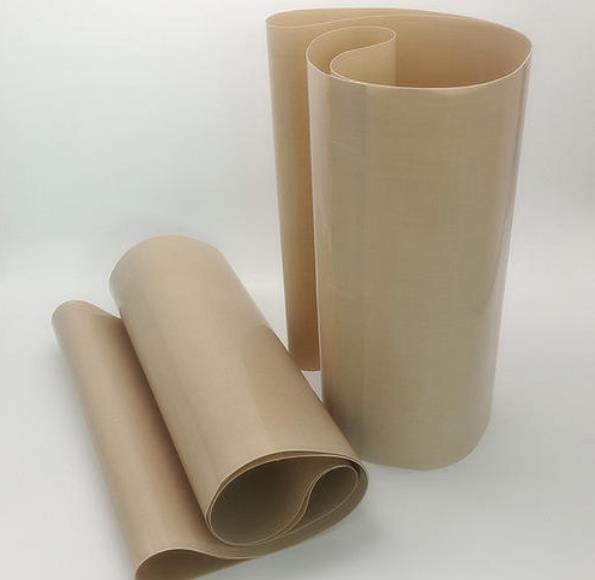
There are two types of Teflon conveyor belts: Teflon mesh conveyor belts and Teflon high-temperature fabrics. Both are made by coating Teflon (PTFE) resin on glass fiber fabrics to form the base fabric of Teflon conveyor belts. Today, Chongqing Teflon will discuss the main performance characteristics and precautions for use of Teflon conveyor belts.
The Teflon conveyor belts are categorized into two types: Teflon mesh conveyor belts and Teflon high-temperature fabrics. Both are made by coating Teflon (PTFE) resin onto glass fiber fabrics to form the base fabric of Teflon conveyor belts. Today, Chongqing Teflon will discuss the main performance features of Teflon conveyor belts and precautions for use.
I. Key Performance Features of Teflon Conveyer Belts
1. Engineered for temperature ranges from -196°C to 300°C, this material boasts climate resistance and anti-aging properties. In practical applications, it maintains its integrity even after being exposed to 250°C for 200 consecutive days, with no decrease in strength or weight loss. After 120 hours at 350°C, the weight reduction is only approximately 0.6%. At -180°C, it retains its original softness.
2. Non-adhesive Surface: Smooth and resistant to sticking, it is easy to clean off various oils, stains, or other attachments; almost all adhesive substances like paste, resin, and paint can be simply removed.
3. Resistant to chemical corrosion, capable of withstanding the erosion from strong acids, alkalis, and various organic solvents.
4. Highly resistant to drugs and non-toxic. Virtually resistant to all pharmaceutical items.
5. High insulation properties (dielectric constant: 2.6, tangent less than 0.0025), UV-resistant, and antistatic.
6. Easy to use and long-lasting.
Section 2: Important Precautions for Using Teflon Conveyer Belts
To prevent the idler from being covered by material, causing poor rotation, and to avoid leakage material getting stuck between the roller and belt, pay attention to the lubrication of the moving parts of the conveyor belt, but do not soil the belt with oil.
Prevent Teflon conveyor belts from starting under load.
3. Belt deviation has occurred; timely corrective measures should be taken.
4. In the event of local damage to the conveyor belt, use artificial cotton to make timely repairs to prevent expansion.
5. Prevent Teflon conveyor belts from being blocked by frames, pillars, or bulky materials, and avoid any abrasion or tearing.


b2b.china9.net © Zhongshang 114 Hebei Network Technology Co., Ltd.Address: Room 6009, Oriental New World Center, No.118 East Zhongshan Road, Qiaoxi District, Shijiazhuang City, Hebei ProvincePlatform Service Hotline: 4006299930